














































































Is Ardh Kumbh Smaller or Spiritually Equal to Kumbh?
Is Ardh Kumbh smaller or spiritually equal to the Kumbh Mela? A honest, heartfelt comparison of scale, frequency, faith, and divine grace.
Is Ardh Kumbh Smaller or Spiritually Equal to Kumbh?
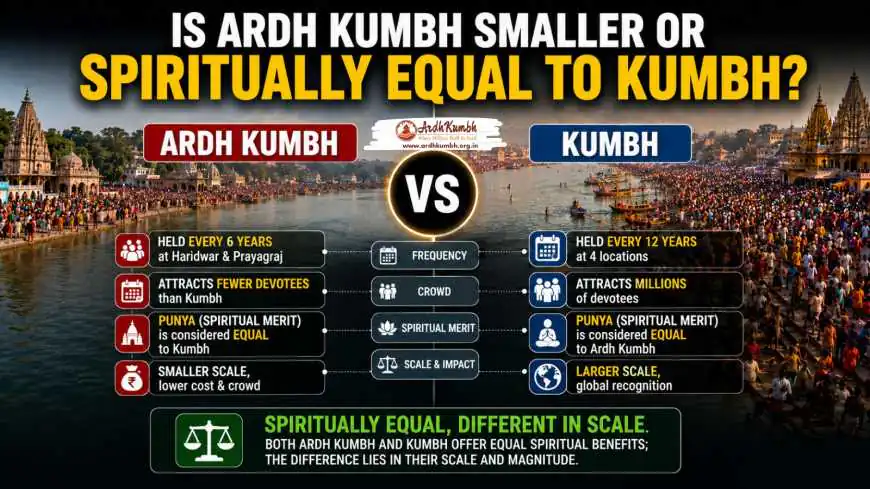
Let me answer the question directly, and then I will explain why the answer is more complex than a simple yes or no. In scale and frequency, the Ardh Kumbh is smaller. It happens every 6 years (not 12), and it is held in two cities (Haridwar and Prayagraj) rather than all four rotating locations. In spiritual power, the Ardh Kumbh is equal to the Purna Kumbh — and in some ways, even more intense. But that equality is not automatic. It depends on you. Let me break this down piece by piece, because this is one of the most misunderstood questions about the entire Kumbh tradition.
What "Smaller" Actually Means – The Facts
Let me give you the facts first, because facts matter. The word "Ardh" means half. The Ardh Kumbh happens every 6 years — which is half the 12-year gap of the Purna Kumbh. The Ardh Kumbh is held in Haridwar and Prayagraj , while the regular Kumbh Mela rotates among four cities: Haridwar, Ujjain, Nashik, and Prayagraj. The Ardh Kumbh lasts about 4 months (107 days) , while the Purna Kumbh typically lasts about 45 days. So yes, in terms of frequency (how often it happens), the Ardh Kumbh is "smaller" — it happens twice as often, which some people interpret as "less rare" and therefore "less special." In terms of geographic scope, the Ardh Kumbh is "smaller" — it happens in fewer cities. But here is the catch. None of these measurements — frequency, duration, number of cities — has anything to do with spiritual power. A diamond does not become less valuable because you see it twice as often. The Ganges does not become less holy because the astrological alignment happens every six years instead of twelve. The "smaller" label is about logistics, not grace.
What "Spiritually Equal" Means – The Heart of the Matter
Now let me talk about spiritual equality. Here is the truth that the Naga Sadhus and the elders will tell you if you ask them quietly, away from the crowds. The grace of the Ganges does not follow a calendar. The river does not check the position of Jupiter before deciding whether to purify your soul. The astrological alignments are not switches that turn the holiness on and off. They are indicators — signs that point to a time when the spiritual energy is particularly accessible. But accessible does not mean "only available then." The Ganges is always holy. The dip is always powerful. The prayer is always heard. The difference between the Ardh Kumbh and the Purna Kumbh is not a difference in the quality of the grace. It is a difference in the intensity of the collective faith that gathers at that time. And collective faith is not a fixed quantity. It depends on the pilgrims. If crores of people come to the Ardh Kumbh with full hearts and deep surrender, the spiritual power of that Ardh Kumbh can equal — or even exceed — a Purna Kumbh that sees fewer pilgrims or more distracted pilgrims. Spiritual equality is not given by the stars. It is created by the people.
What the Scriptures Say – A Surprising Answer
Let me take you to the scriptures. The Puranas describe the Kumbh Mela as the time when the nectar of immortality (Amrit) fell at four places on Earth. The sin of bathing in the Ganges during a Kumbh is destroyed. The merit is multiplied. But here is what the scriptures do not say. They do not say that the Ardh Kumbh has "half the merit." They do not rank the Kumbhs in a hierarchy of spiritual value. The Ardh Kumbh is mentioned in later texts as a concession — a recognition that not everyone can wait 12 years for a sacred bath. But a concession is not a demotion. If a king gives you a thousand gold coins today and another king gives you the same thousand gold coins next year, are the coins different? No. The grace is the same. The blessing is the same. The only difference is the waiting time. The scriptures honor all Kumbhs. They do not rank them. That ranking is a modern invention, born from our obsession with "best," "biggest," and "once-in-a-lifetime."
Trending Guides Now

Are Medical Facilities Adequate for Elderly Pilgrims?
Read Guide →
Can Families Attend Ardh Kumbh Comfortably Together?
Read Guide →
Can Elderly Pilgrims Participate Safely in Kumbh?
Read Guide →
Can Elderly Pilgrims Avoid Heavy Crowds at Kumbh?
Read Guide →
Dharamshala Stay During Ardh Kumbh: Free & Budget Guide
Read Guide →
Best Routes to Reach Haridwar for Ardh Kumbh Mela
Read Guide →
Haridwar Weather by Month: Best Time to Plan Your Visit
Read Guide →
Complete Haridwar Packing Checklist for Every Season
Read Guide →The Experience of Pilgrims – What They Actually Report
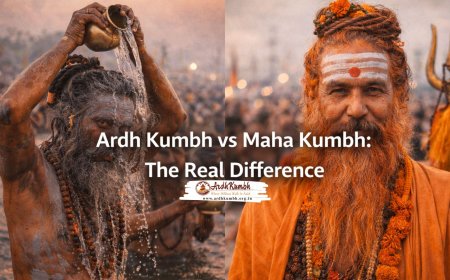
Let me tell you what pilgrims actually say. I have spoken to dozens of people who have attended both the Ardh Kumbh in Haridwar and the Purna Kumbh in Prayagraj. Not one of them has ever said: "The Ardh Kumbh felt half as spiritual." Not one. What they say is: "They are different." The Ardh Kumbh in Haridwar has the mountain Ganges — colder, faster, wilder. The ghats are narrower, so the crowd feels more compressed and more intense. The Himalayan peaks are visible in the distance, adding a layer of awe that Prayagraj's flat plains do not have. The Purna Kumbh in Prayagraj has the Sangam — the confluence of the Ganges, Yamuna, and the mythical Saraswati — which many pilgrims find uniquely powerful. The Maha Kumbh (every 144 years) has the rarity factor — the knowledge that you are part of something that happens once in several lifetimes. But rarity is not the same as spiritual depth. A rare event can be shallow. A common event can be profound. The pilgrims' reports are clear: both Kumbhs can change your life. The difference is not in the power of the river. The difference is in the feeling of the place.
The Role of Your Intention – The Hidden Variable
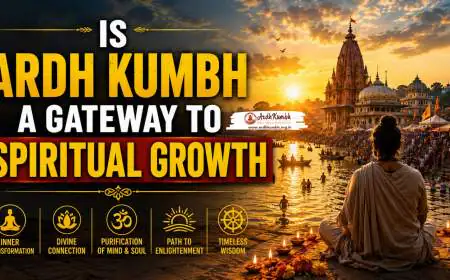
Here is the variable that no one talks about. You. Your intention. Your preparation. Your surrender. A pilgrim who comes to the Ardh Kumbh after six years of sadhana, with a heart full of forgiveness and a mind full of mantras, will have a deeply spiritual experience — far deeper than a distracted tourist who stumbles into the Purna Kumbh on a whim. The river responds to openness, not to calendars. So when you ask "Is the Ardh Kumbh spiritually equal to the Kumbh?" the real answer is: It is equal if you make it equal. The river does not shortchange you because you came in an "Ardh" year. The river gives you exactly what you bring. If you bring half a heart, you get half an experience. If you bring a full heart, you get a full experience. The label "Ardh" applies to the frequency, not to the grace. Do not confuse the two.
The Danger of Ranking Sacred Things
Let me say something that might make some people uncomfortable. Ranking sacred things is dangerous. It is a trap. Once you start saying "this Kumbh is more powerful than that Kumbh," you have reduced the sacred to a commodity. You have started treating divine grace like a product with different grades — premium, standard, economy. That is not spirituality. That is consumerism in religious clothing. The Ganges does not have a "peak season" and an "off season." The stars do not withhold their blessings on certain years. The Naga Sadhus do not meditate harder during the Purna Kumbh than during the Ardh Kumbh. They meditate the same. The river flows the same. The mantras vibrate the same. The only thing that changes is the crowd size and the media attention. Do not let the hype of the Purna Kumbh convince you that the Ardh Kumbh is a consolation prize. It is not. It is a full, complete, legitimate pilgrimage in its own right. Treat it with the same reverence, and it will reward you with the same grace.
The Special Gifts of the Ardh Kumbh
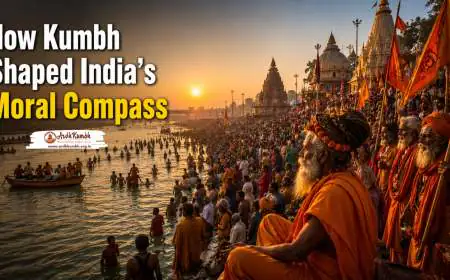
Let me tell you what the Ardh Kumbh has that the Purna Kumbh does not. First, the mountain Ganges. At Haridwar, the river is fresh from the Himalayas. It is colder, cleaner, and faster. Many pilgrims find that intensity uniquely powerful. Second, accessibility. Haridwar is closer to Delhi and better connected by train and road than Prayagraj. For many pilgrims, the Ardh Kumbh is their only realistic chance to attend a Kumbh. That accessibility is not a weakness. It is a gift — a recognition that spiritual grace should not be locked behind impossible logistics. Third, frequency. Because the Ardh Kumbh happens every six years, you can attend it more than once in your life. You can grow with it. You can come as a beginner, return as a seeker, and return again as a teacher. That continuity — the ability to build a relationship with the same river over decades — is a profound spiritual advantage. The Purna Kumbh, with its 12-year gap, is harder to attend regularly. The Ardh Kumbh welcomes you back. That is not "smaller." That is more accessible. And accessibility is a form of grace.
What the Naga Sadhus Told Me
Let me end this section with a memory. I asked an old Naga Sadhu at the last Ardh Kumbh: "Maharaj, is this Kumbh smaller than the Purna Kumbh?" He looked at me with something between pity and amusement. Then he laughed — a loud, chesty laugh that made his ash-covered belly shake. He said: "Son, do you think the Ganges measures her children? Do you think she has a scale? 'Oh, this one came in a Purna year, give him extra grace. Oh, this one came in an Ardh year, give him half.' No. She gives everything she has to everyone who comes. The only question is: do you have the capacity to receive it? That capacity is not written in the stars. It is written in your heart." Then he picked up his trishul and walked toward the river, shouting "Har Har Gange." I have never forgotten that answer. I hope you do not either.
The Only Question That Matters
So after all these words, let me tell you the only question that actually matters. Not "Is the Ardh Kumbh smaller?" Not "Is it spiritually equal?" The only question that matters is: Will you go? Will you stand in that cold water? Will you let the crowd press against you? Will you cry at the aarti? Will you let go of something you have been holding for years? The river does not care what you call the year. She cares that you came. She cares that you tried. She cares that you opened your heart, even a little. That is the spiritual equality of the Ardh Kumbh. Not a mathematical equation. A living invitation. The invitation is open. The year is 2027. The place is Haridwar. The river is waiting. The question is not "Is it equal?" The question is "Are you ready?" Only you can answer that.
Frequently Asked Questions