




































































Can Elderly Pilgrims Participate Safely in Kumbh?
Complete safety guide for senior citizens at Kumbh Mela. Tips for health, mobility, bathing, accommodation, and making the pilgrimage comfortable.
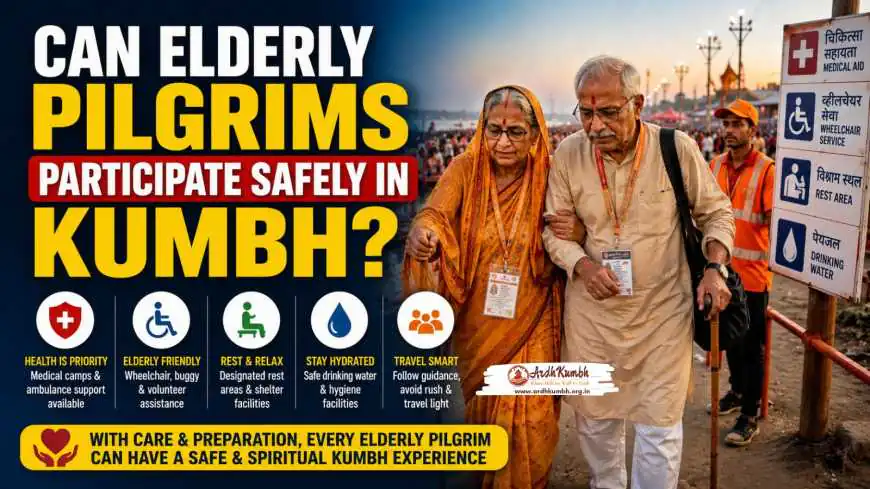
Quick Answer: Can Elderly Pilgrims Participate Safely in Kumbh?
Yes, elderly pilgrims can participate in Kumbh safely with thoughtful planning, realistic physical limits, and appropriate precautions. Large Kumbh gatherings can involve long walking distances, crowds, waiting, uneven surfaces, weather exposure, and limited opportunities to rest, so older adults should plan around their individual mobility and comfort. 🙏
For safer participation, elderly devotees should avoid unnecessary crowd congestion, stay hydrated, wear comfortable footwear, carry essential medicines, and take regular rest breaks. Traveling with a trusted companion or family member is particularly helpful. It is also wise to choose accommodation with convenient access to transportation and essential facilities rather than prioritizing a distant location. For the holy bath, elderly pilgrims should avoid entering crowded or difficult areas if conditions feel unsafe and follow instructions from local authorities and event personnel. Anyone with significant mobility limitations or other individual concerns should seek appropriate medical advice before traveling. With sensible preparation and flexibility, seniors can experience the spiritual significance of Kumbh while reducing avoidable physical risks.
The Truth About Age and Pilgrimage: It Is Possible
Let me start by addressing the fear that keeps many senior citizens away. Yes, the Kumbh is crowded. Yes, the walking distances are long. Yes, the Ganga water is cold. But none of these are automatic disqualifiers for elderly pilgrims. The key is matching the pilgrimage to the person. A seventy-year-old who walks daily and has no major health issues will have a completely different experience than an eighty-year-old with heart problems and limited mobility. Both can attend. But their plans will look very different. The active senior might walk to the ghat, stand in the regular queue, and take a full snan. The frail senior might use a wheelchair, take the reserved queue, and have a symbolic dip where a volunteer pours Ganga water over their head while they sit safely on a platform. Both are valid. Both are spiritually meaningful. The Kumbh does not judge you by how deep you go into the water. It judges you by the sincerity of your heart. So stop worrying about what others will think. Focus on what your elderly loved one can safely do.
Pre-Pilgrimage Health Check: Non-Negotiable First Step
Before you even book your tickets, do this one thing. Take your elderly pilgrim to their doctor for a complete health check-up. This is not optional. This is survival. The doctor needs to check blood pressure, heart condition, blood sugar levels, lung function, joint health, and medication reviews. Ask the doctor directly — "Is my parent safe to travel to a crowded, physically demanding event?" Get the answer in writing. Also ask for specific medical advice — what medications to carry extra, what warning signs to watch for, what to do in an emergency. If the doctor says no, listen. As painful as it is to cancel a dream, a heart attack on a crowded ghat is a nightmare you do not want. If the doctor says yes with conditions, follow every single condition. Get vaccinations updated — especially flu and pneumonia vaccines because the Kumbh crowd is a germ factory. Get a dental check-up too. Tooth infections can turn deadly when medical help is far away. This preparation might feel excessive. But elderly pilgrims who skip this step are the ones who end up in emergency wards.
Trending Guides Now

Is Ardh Kumbh Really Different From Kumbh Mela?
Read Guide →
Ardh Kumbh vs Maha Kumbh: The Real Difference Explained
Read Guide →
How Many Days Are Actually Enough for Ardh Kumbh?
Read Guide →
Things You Should Never Do at Ardh Kumbh
Read Guide →
Ardh Kumbh 2027 Dates (Official) - Haridwar Snan Schedule
Read Guide →
Dharamshala Stay During Ardh Kumbh: Free & Budget Guide
Read Guide →
Official Progress Report of Haridwar Ardh Kumbh 2027 Infrastructure Projects
Read Guide →
Where to Find 24-Hour Pharmacies in Haridwar During Ardh Kumbh 2027 Emergencies
Read Guide →Medication and Medical Kit: Pack Like a Pharmacist
Once your elderly pilgrim is medically cleared, pack their medications with obsessive care. Here is a checklist. First, all prescription medicines in their original bottles with clear labels. Do not transfer to unmarked containers. Second, at least ten days of extra supply beyond your planned stay. Flights get delayed. Trains get cancelled. Do not run out of blood pressure pills in a tent. Third, a printed medication list with dosages and timing. Fourth, a doctor's letter explaining all conditions and prescriptions — useful if you need help from a medical camp. Fifth, emergency medications — nitroglycerin spray for heart patients, glucose powder for diabetics, inhaler for asthma. Sixth, basic first aid — bandages, antiseptic cream, pain relief spray, oral rehydration salts. Seventh, copies of medical records — ECG reports, recent blood work, discharge summaries from any past hospitalizations. Keep all of this in a waterproof bag that never leaves your side. Do not check it in luggage. Do not leave it in the tent. Elderly pilgrims without their medications are elderly pilgrims in danger.
Choosing the Right Accommodation for Senior Citizens
Where your elderly pilgrim sleeps at the Kumbh can make or break their entire experience. Let me be brutally honest. Tent cities are fun for young people. For senior citizens, many tents are disasters — no proper beds, no attached bathrooms, long walks to toilets, thin walls that let in every noise, and floors that become muddy when it rains. If you can afford it, book pavilion-style accommodation with solid beds, attached western toilets, heating (winter Kumbh can be freezing), and room service. Several spiritual organizations and private companies offer such facilities. If budget is tight, look for ashrams or guest houses just outside the main Mela grounds. They are quieter, cleaner, and safer. Avoid anything that requires climbing steep stairs. Avoid anything more than a five-minute walk from a road where vehicles can reach. And here is a pro tip — book a room on the ground floor. Even one flight of stairs becomes a major obstacle for an elderly pilgrim after a long day. Your parent's knees will thank you.
Mobility Aids: Wheelchairs, Walkers, and Sticks
Pride kills elderly pilgrims. I have seen too many senior citizens refuse to use a wheelchair or a walker because they did not want to look weak. Then they fell. Then they broke a hip. Then their Kumbh ended in a hospital. Do not let this happen to your loved one. If they have any mobility issues at home, they will have worse issues at the Kumbh with its uneven ground, slippery steps, and massive crowds. Get them a lightweight wheelchair that folds for transport. Rent one at the Mela if flying with it is difficult — advance booking services exist. If they can walk but need support, get a four-wheeled walker with a seat. It gives them a place to rest every few minutes. A simple wooden stick or hiking pole provides stability on slippery ghat steps. Label all mobility aids with your name and phone number. They get lost. And here is the most important advice — use the aids consistently. Not just when they feel tired. From the moment you leave your accommodation until you return. Fatigue hits elderly pilgrims suddenly. One moment they are fine. The next moment their legs give out. Do not take that risk.
Reserved Queues and Special Access for Seniors
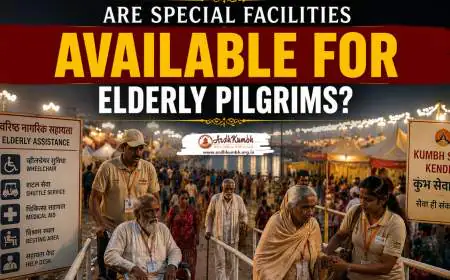
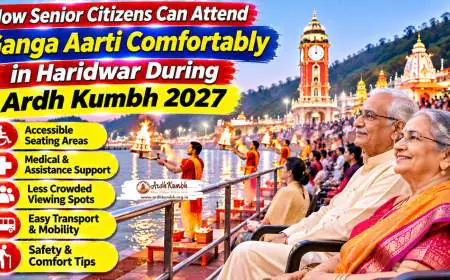
Here is something most people do not know. The Kumbh Mela administration creates reserved queues for elderly pilgrims, disabled persons, and pregnant women at all major ghats on Shahi Snan days. These queues are shorter, calmer, and have seating arrangements while waiting. They also have volunteers who assist with walking, carrying items, and even lifting seniors over slippery patches. To access these reserved queues, you may need to show proof of age (any government ID works) or a doctor's certificate for disability. Do not be shy. Do not try to use the regular queue to "prove" your parent is strong. The regular queue is a crushing mass of humanity. I have seen strong young people faint in there. Your elderly pilgrim belongs in the reserved queue. That is why it exists. Also look for wheelchair ramps at designated ghats. Not every ghat has them. Ask volunteers for directions to the accessible ghats before you start walking. A little research saves hours of exhausting detours.
The Bathing Process: Safe Snan for Seniors
Now let us talk about the moment everyone is waiting for — the holy dip. For elderly pilgrims, the snan needs to be planned with extreme care. Here is a step-by-step guide. First, do not take them to the main bathing area where millions enter at once. Go to a less crowded ghat or use the reserved queues. Second, check the water temperature before they enter. Winter Ganga water can cause cold shock — sudden constriction of blood vessels that triggers heart attacks. If the water is too cold, do not force a full dip. A symbolic snan — where a volunteer pours water over their head while they stand on a platform — is perfectly acceptable. Third, never let them walk alone on wet, slippery stone steps. Hold their arm. Better yet, have two people — one on each side. Fourth, limit time in water to less than two minutes. Hypothermia is real. Fifth, dry them immediately after coming out. Cold wind on wet skin is dangerous. Have a large towel and a warm woolen shawl ready. Sixth, change into dry clothes right away. Wet clothes steal body heat rapidly. Seventh, give them something warm to drink — ginger tea or warm water — within minutes of the snan. This restores internal temperature. Follow these steps, and your elderly pilgrim will have a safe, beautiful, memorable snan.
Medical Facilities for Seniors Inside the Mela
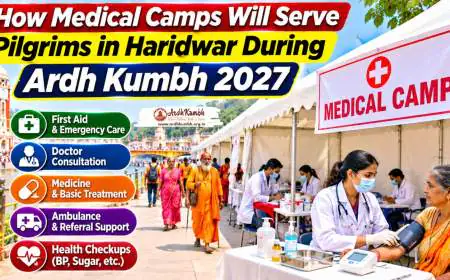
Here is something that should give you comfort. The Kumbh Mela has one of the largest temporary medical infrastructures in the world. For elderly pilgrims, this includes dedicated geriatric care at several locations. Central hospitals with inpatient beds, ICUs, and ambulances operate 24/7. Satellite medical camps are scattered throughout the Mela grounds — never more than a ten-minute walk from any sector. Mobile medical vans patrol crowded areas. Cardiac care units are available at major hospitals. Free medicines for common conditions — blood pressure, diabetes, arthritis, respiratory issues — are distributed at government camps. Private clinics run by charitable organizations offer specialized care. Eye check-ups, dental care, and physiotherapy are also available at select locations. Keep a map of medical facilities on your phone. Know the location of the nearest hospital to your accommodation. Save the Mela medical helpline number in your phone. And here is the most important advice — do not wait if something feels wrong. Chest pain, sudden weakness, confusion, difficulty speaking — these are strokes or heart attacks. Call the helpline immediately. Minutes matter for elderly pilgrims.
Food and Hydration: Special Care for Senior Digestion
Elderly pilgrims have delicate digestive systems. The Kumbh is full of tempting street food — chaat, jalebis, samosas, kachoris. Most of it is delicious. Most of it will also destroy your parent's stomach. Stick to simple, freshly cooked, hot meals. The langar food — dal, rice, roti, vegetables — is usually safe because it is cooked in massive quantities and served immediately. Avoid dairy products like raita, paneer, or kheer unless you are certain about refrigeration. Avoid raw salads and cut fruits from street vendors — they may have been washed in unclean water. Avoid ice in drinks unless from a packaged source. Stick to bottled water only — check that the seal is intact. Oral rehydration salts should be taken every morning if the weather is warm. Small, frequent meals are better than three large ones. Carry snacks from home — dry biscuits, roasted chana, nuts. And here is a golden rule — if your elderly pilgrim has not eaten in four hours, stop and feed them. Low blood sugar in seniors looks like confusion, weakness, and unsteadiness. It is easily preventable with regular, small meals.
Weather Challenges: Heat, Cold, and Rain
The Ardh Kumbh in Haridwar happens during winter (January to February). The Ardh Kumbh in Prayagraj can be winter or summer depending on the cycle. You need to prepare for extremes. In winter, the Ganga water is bone-chillingly cold. The nights can drop to near freezing. Pack thermal underwear, woollen socks, gloves, beanies, and heavy shawls for your elderly pilgrim. Layer clothing — it traps warm air better than one thick jacket. Keep hot water bottles for sleeping. In summer Kumbh, heat stroke is the real danger. Pack light cotton clothes in light colors. Wide-brimmed hats and sunglasses are essential. Cooling towels — the ones you wet and snap — work wonderfully. Portable fans that hang around the neck are cheap and effective. Rain turns the Mela grounds into mud pits. Pack non-slip waterproof shoes for your elderly pilgrim. A sturdy umbrella that doubles as a walking stick. Ponchos are better than raincoats — easier to put on and remove. Check the weather forecast every morning and plan your day accordingly. Do not take your senior out in extreme conditions just because you have a schedule. The pilgrimage can wait a day. Their health cannot.
Emotional and Mental Well-being of Elderly Pilgrims
Let me talk about something most guides ignore. The mental health of elderly pilgrims. The Kumbh is overwhelming. The noise, the crowds, the constant moving, the unfamiliar sleeping arrangements — all of this causes anxiety, confusion, and disorientation in seniors, especially those with early dementia or cognitive decline. Watch for signs — repeating questions, unusual irritability, withdrawal, saying they want to go home, forgetting where they are. If you see these signs, do not push them to "enjoy more." Listen to them. Maybe they need a rest day in a quiet room. Maybe they need to skip the Shahi Snan crowd and bathe on a regular day. Maybe they need to go home early. There is no shame in any of these choices. Also, elderly pilgrims often feel like a burden — slowing down younger family members, needing help with basic tasks. Reassure them constantly. Tell them, "I am honored to do this for you." Tell them, "You are not a burden. You are my blessing." These words matter more than any logistics. A senior pilgrim who feels loved and respected will handle physical hardships much better than one who feels guilty and unwanted.
The Role of Family Caregivers: You Are Their Lifeline
If you are reading this because you are bringing an elderly parent or grandparent to the Kumbh, let me speak directly to you. You are their lifeline. Not the volunteers. Not the medical camps. Not the police. You. So here is what you need to do. Do not drink alcohol even one drink — you need full alertness at all times. Do not take sleeping pills — you need to wake up if they call for help at night. Stay within arm's reach at all times in crowded areas. Hold their hand — not just their sleeve, not their bag strap. Their hand. Memorize their medical history — allergies, conditions, medications. Keep a recent photo on your phone in case they get lost. Agree on a meeting point before entering any crowded area. Do not assume they can hear you — look at their face when you speak. Do not assume they understand instructions — ask them to repeat back what you said. Do not leave them alone with strangers, no matter how kind those strangers seem. Do not let them use public toilets without going in first to check cleanliness and safety. Do not let anyone else push their wheelchair — you push it. You know their limits. You will be tired. You will be frustrated. You will question why you agreed to this. But when you see their face after they take that snan — the peace, the tears, the gratitude — you will know. It was worth everything.
When to Say No: Signs That Your Elderly Pilgrim Should Not Go
I am going to end the practical advice with something difficult. Sometimes, the answer to "Can my elderly pilgrim attend the Kumbh?" is no. Here are the red flags. Unstable heart condition — recent heart attack, uncontrolled angina, heart failure. Severe COPD or lung disease requiring oxygen at home. Advanced dementia where they wander or become aggressive when confused. Recent major surgery (within three months). Untreated high blood pressure (readings consistently above 160/100). Active cancer undergoing chemotherapy or radiation. Severe arthritis making walking impossible even with a wheelchair. Frequent falls at home (more than two falls in the past six months). Bedsores or unhealed wounds. Incontinence that cannot be managed with adult diapers (changing them in Mela toilets is nearly impossible). If your elderly loved one has any of these conditions, have an honest conversation. Maybe they can watch the Kumbh on TV. Maybe they can do a Ganga puja at home. Maybe a virtual darshan through live stream is enough. It is heartbreaking to say no to a lifelong dream. But bringing them to the Kumbh when their body cannot handle it is not love. It is risk. And the Ganga does not want your parent's life. She wants their devotion. Devotion can happen from anywhere.
One Last Dip Before the Final Journey
Here is the deepest truth about elderly pilgrims at the Kumbh. For many, this is not just a pilgrimage. This is goodbye. They know their bodies are failing. They know this might be their last chance to touch the Ganga before they leave this world. And that is why they want to come, even when it is hard, even when it is risky, even when their children plead with them to stay home. There is something in the Ganga water that calls to the elderly — a promise of moksha, of liberation, of release from the cycle of birth and death. When you see an eighty-five-year-old woman being carried to the river by her grandsons, do not pity her. She is not suffering. She is completing her life's mission. When you see a ninety-year-old man sitting on a platform while water is poured over his head, do not worry about him. He has been waiting for this moment for decades. The Kumbh is hard for elderly pilgrims. It demands everything from them. But it also gives them something that no hospital bed, no comfortable home, no amount of family love can give. It gives them peace. The peace of knowing they did what they came here to do. The peace of feeling the Ganga on their skin one last time. The peace of leaving this world with their spiritual box checked. If that is what your elderly loved one wants, help them go. Help them safely. Help them with love. And then stand back and watch them touch eternity.
Frequently Asked Questions