



































































Is Photography Allowed or Disrespectful at Kumbh?
Complete guide to photography at Kumbh Mela. What is allowed, what is disrespectful, rules for photographing sadhus, and ethical tips for pilgrims.
Quick Answer: Is Photography Allowed or Disrespectful at Kumbh?
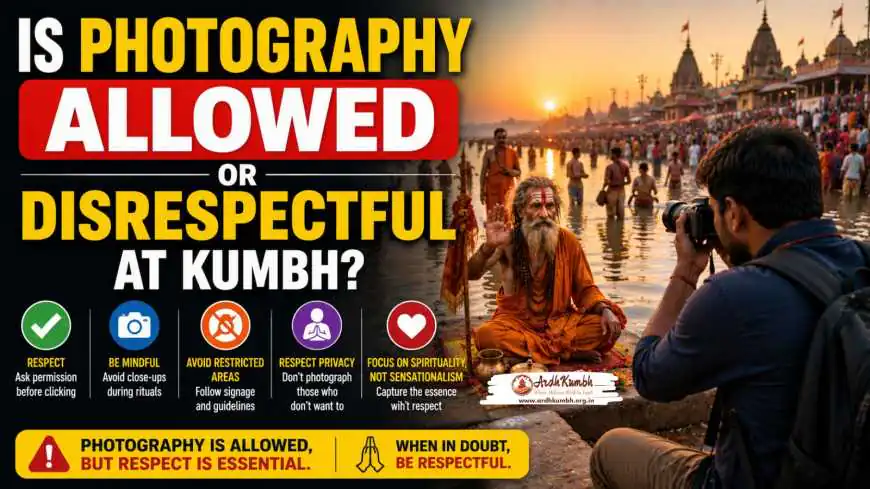
Photography at Kumbh is not inherently disrespectful, but it should be approached with sensitivity and respect for the religious nature of the gathering. Visitors may want to capture the atmosphere, architecture, crowds, rituals, and personal memories, but not every moment or person should be photographed. 🙏
Before taking pictures, pay attention to local rules, restricted areas, and instructions from authorities or event organizers. Avoid photographing people during private, emotional, or deeply religious moments without their permission. Extra sensitivity is important around sadhus, saints, bathing areas, religious ceremonies, and sacred rituals. Do not obstruct pilgrims, enter restricted spaces for a photograph, or use photography in a way that disrupts worship. 📸 When unsure, ask permission or simply observe. For first-time visitors, the best approach is to treat photography as secondary to the pilgrimage itself. Respectful photography means keeping a reasonable distance, following site-specific restrictions, and ensuring that capturing an image does not interfere with another person’s faith, privacy, safety, or spiritual experience.
The Short Answer: Yes, But With Rules
Let me give you the straight answer first. Photography is allowed at the Kumbh Mela. There is no official ban on cameras, smartphones, or even professional gear. The Mela administration understands that people want to document their pilgrimage and share it with loved ones. However — and this is a big however — allowed does not mean anything goes. There are unwritten rules, cultural sensitivities, and moments when photography is deeply disrespectful. You can photograph the crowds, the tents, the langar, the processions, the Ganga, and the overall atmosphere. But the moment you point your lens at a pilgrim bathing, a sadhu meditating, or a family in a private moment of prayer, you enter dangerous territory. The difference between a respectful photographer and an obnoxious tourist is simple. The respectful one asks permission. The obnoxious one does not. The respectful one knows when to stop. The obnoxious one keeps clicking. Be the respectful one.
Photographing Naga Sadhus: Proceed with Extreme Caution
Let me address the most common question. Naga Sadhus — the ash-covered, trident-carrying, naked or semi-naked ascetics — are the most photographed subjects at the Kumbh. They are also the most likely to react angrily if you photograph them without permission. Here is why. Many Naga Sadhus have renounced the world, including their privacy and identity. But they have not renounced their dignity. When a tourist shoves a camera in their face while they are bathing, praying, or simply sitting, it feels like an invasion. Some sadhus will ignore you. Some will cover their face. Some will shout. Some have been known to snatch cameras and throw them into the Ganga. I have seen it happen. So here are the rules for photographing Naga Sadhus. First, never photograph them naked. Wait until they are dressed or at least partially covered. Second, ask permission by folding your hands and pointing to your camera. A nod means yes. A head shake or turned face means no. Respect that. Third, offer a donation — many sadhus expect a small dakshina (offering) in exchange for a photo. A ten or twenty rupee note is fine. Fourth, do not use flash. It disturbs their meditation. Fifth, do not photograph during Shahi Snan when they are in a state of intense spiritual focus. Sixth, never laugh or make jokes while photographing. These are not circus performers. They are renunciants who have given up everything. Treat them with the respect they deserve.
Trending Guides Now
Are Medical Facilities Adequate for Elderly Pilgrims?
Read Guide →
Things You Should Never Do at Ardh Kumbh
Read Guide →
Can Families Attend Ardh Kumbh Comfortably Together?
Read Guide →
Can Elderly Pilgrims Participate Safely in Kumbh?
Read Guide →
Ardh Kumbh 2027 Dates (Official) - Haridwar Snan Schedule
Read Guide →
Dharamshala Stay During Ardh Kumbh: Free & Budget Guide
Read Guide →
Official Progress Report of Haridwar Ardh Kumbh 2027 Infrastructure Projects
Read Guide →
Where to Find 24-Hour Pharmacies in Haridwar During Ardh Kumbh 2027 Emergencies
Read Guide →Photographing Women Pilgrims: A Strict No-No Without Permission
Let me be absolutely clear about this. Photographing women pilgrims without their explicit permission is never okay at the Kumbh. Never. I do not care how beautiful the light is. I do not care how picturesque her sari looks. I do not care that she is in a public space. Women at the Kumbh are there for spiritual purposes, not to be subjects for your portfolio. Many come from conservative backgrounds. Many are bathing or changing clothes. Many are elderly and would be deeply humiliated if photographed. The Mela administration has received countless complaints from women about photographers — both amateur and professional — invading their privacy. Some photographers have even been physically confronted by angry family members. Do not be that person. If you want to photograph a woman pilgrim, here is the only acceptable method. Ask politely. Fold your hands. Say "Mata ji, ek photo?" (Mother, one photo?). If she says yes, take one or two photos quickly and then show her the result with a smile. If she says no, apologize, fold your hands again, and walk away. No arguments. No sneaky shots from a distance. No zoom lens from across the crowd. Just respect. It is not complicated.
The Golden Rule: Always Ask Permission
Here is a rule that will solve ninety percent of your photography problems at the Kumbh. Always ask permission before photographing an individual person. It does not matter if they are a sadhu, a householder, a child, or an elderly villager. Ask. How do you ask when you do not speak the language? Use gestures. Point to your camera. Raise your eyebrows in a questioning expression. Fold your hands in namaste. Nine times out of ten, the person will understand. They will either nod yes, wave you away, or ignore you. If they nod yes, take your photo and then show it to them. This small act of sharing builds trust and often leads to more photos, conversations, and even chai. If they wave you away, apologize immediately — another namaste — and leave. Do not take a "candid" shot as you walk away. That is still disrespectful. And here is something that will surprise you. Many pilgrims will say yes. Some will even pose, adjust their clothing, and smile. They are not camera-shy. They just want to be asked. They want to be treated as human beings, not as exotic subjects. Asking permission is not just polite. It is the difference between connection and exploitation.
What Not to Photograph: The Red Lines
Let me give you a clear list of things you should never photograph at the Kumbh, under any circumstances. First, anyone bathing or changing clothes at the ghats. This includes both men and women. A person in water is vulnerable. Do not exploit that. Second, anyone in distress — a lost child crying, an elderly person fainting, an accident victim. Documenting someone's trauma for your Instagram is disgusting. Put your camera down and help instead. Third, dead bodies if a death occurs at the Mela. This happens occasionally due to natural causes. Photographing a corpse is a violation of the family's grief. Fourth, police or security personnel in sensitive areas. You may be arrested. Fifth, any ritual inside a closed tent or ashram unless you are explicitly invited. Sixth, anyone who has clearly said no to you. Do not be sneaky. Seventh, any child without their parent's permission. This is non-negotiable. Eighth, any sadhu during deep meditation — even if they said yes earlier, they did not say yes to being photographed mid-prayer. Ninth, anyone using a toilet or washing area. This should be obvious. Tenth, any accident or stampede situation where your flash could cause panic. These are not suggestions. These are ethical red lines. Cross them, and you are not a photographer. You are a trespasser.
Smartphone Photography vs Professional Gear
Here is a reality check. Smartphone photography is generally more accepted at the Kumbh than professional cameras with huge zoom lenses. Why? Because smartphones feel less intrusive. When you pull out a massive DSLR with a telephoto lens, you immediately look like a professional or a journalist. People become suspicious. They wonder if you are making money from their images. They wonder if their photo will end up on some website without their consent. A smartphone, on the other hand, looks like what most pilgrims themselves use. It feels casual, personal, and less threatening. That does not mean you can be careless with a smartphone. The same permission rules apply. But you will find that people are more relaxed around a phone camera than around a professional rig. If you are a serious photographer with professional gear, here is my advice. Use a smaller lens. Avoid the giant white telephoto lenses that scream "press." Dress like a pilgrim, not like a photojournalist on assignment. And always, always lead with respect and a smile. Your gear does not give you special rights. It gives you special responsibilities.
Drone Photography: Mostly Banned for Good Reason
Let me save you from a very expensive mistake. Drone photography is heavily restricted at the Kumbh Mela. In fact, for ordinary visitors, it is completely banned. The Mela administration and government authorities consider the Kumbh a no-fly zone for civilian drones. Why? Because millions of people packed into a small area create a security nightmare. A single drone crashing into a crowd could cause a stampede. A drone with malicious intent could cause unimaginable harm. Only authorized media agencies with special permits and security clearances are allowed to fly drones. If you bring your personal drone to the Kumbh, expect it to be confiscated at entry points. If you manage to sneak it in and fly it, expect arrest. I have seen it happen. A foreign tourist thought the rules did not apply to him. He flew his drone over the Shahi Snan. Within minutes, police had located him, seized his drone, and taken him to the station. His pilgrimage ended in a cell. Do not be that person. Leave your drone at home. The ground-level photos are more than enough to capture the magic of the Kumbh.
The Ethics of Sharing Photos on Social Media
You have taken beautiful, respectful photos at the Kumbh. Now what? Social media is the obvious answer — Instagram, Facebook, WhatsApp. But pause for a moment. Did the people you photographed give you permission to share their faces with the entire world? Some did. Some did not. Some nodded yes to a photo but never imagined that photo would reach millions of strangers online. Here is an ethical guideline. Do not post close-up portraits of identifiable pilgrims without their explicit consent for online sharing. This is especially true for women, children, and sadhus who have renounced worldly recognition. Do not post photos that could embarrass someone — a person mid-sneeze, a child crying, an elderly person looking confused. Do not post photos of people in vulnerable moments — bathing, sleeping, eating messily, or showing physical distress. Do not add funny captions or memes to photos of pilgrims. They are not your entertainment. Do not geotag specific locations where vulnerable people gather — women-only zones, medical camps, lost and found centers. If you must share, blur faces or post only wide-angle crowd shots where no individual is identifiable. And here is the hardest rule — if you would not want a stranger to post a photo of your grandmother on the internet without asking, do not do it to someone else's grandmother.
Official No-Photography Zones at the Kumbh
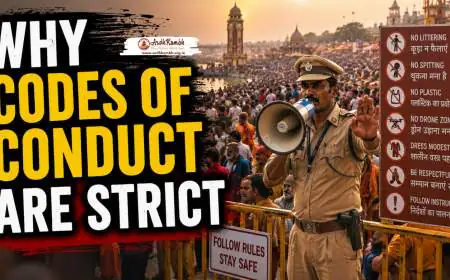
There are specific areas at the Kumbh where photography is officially prohibited by the administration. Know them. Women-only bathing zones — absolutely no photography, no exceptions. Medical camps and hospital tents — patients have a right to privacy. Security checkpoints and police control rooms — photographing these can get you arrested as a security threat. Inside any akhara's private camp unless you have explicit permission from the mahant (chief). Search and rescue operation areas — your presence distracts the teams. VIP and restricted zones marked with signage. Railway station platforms during peak rush — photography is not banned but is highly discouraged because it adds to congestion. Any area marked with a red or yellow 'No Photography' sign — these are placed at sensitive locations. Violating these official no-photography zones can result in confiscation of your camera, fines, or even detention. The Mela administration takes these restrictions seriously because they are designed to protect pilgrim safety and dignity. Respect them.
When to Put the Camera Down Entirely
Here is the most important advice I can give you. There are moments when you should put your camera down entirely. Not because photography is banned. Because photography would steal something precious from you. The Shahi Snan at 4 AM, when the first rays of sun hit the Ganga and millions of diya float on the water — that moment is not for your lens. It is for your soul. The moment when your elderly parent takes their first dip in sixty years — that is not for Instagram. It is for memory — the kind you keep in your heart, not your phone. The moment when a sadhu looks at you and smiles, not because you have a camera, but because you are both human — that smile will not survive being photographed. It will freeze and die. Keep it alive by keeping your camera down. I have seen photographers spend entire days at the Kumbh looking through a viewfinder. They leave with thousands of photos and zero memories. They saw the Kumbh through a rectangle. They never felt the cold Ganga water. They never tasted the langar khichdi. They never had a conversation with a stranger. Do not be that photographer. Take photos. Document your journey. But also experience your journey. The Kumbh happens once every six or twelve years. Do not watch it through a screen.
The Photographer's Dharma
Let me end with a concept from the Gita — dharma, or righteous duty. If you are a photographer at the Kumbh, you have a dharma. It is not to get the best shot. It is not to go viral. It is not to prove your artistic talent. Your dharma is to witness with reverence and to document without exploitation. Every time you raise your camera, ask yourself three questions. Am I capturing this moment for myself or am I stealing something from this person? Would I want someone to photograph me in this situation without asking? Is this photo worth more than the dignity of the person I am photographing? If the answer to any of these questions makes you uncomfortable, lower your camera. The Kumbh has been happening for thousands of years without photography. It will continue long after your camera is obsolete. You are a guest at this sacred gathering. Act like one. Take photos. But take them with permission, with respect, with gratitude, and with the awareness that every person you photograph is not a subject. They are a pilgrim, just like you. They have come to wash away their sins, not to be your content. Remember that. And your photography will not be disrespectful. It will be a prayer.
Frequently Asked Questions