









































































Perfect Three-Day Haridwar and Rishikesh Spiritual Itinerary During Ardh Kumbh 2027
Plan the perfect 3-day Haridwar and Rishikesh spiritual itinerary for Ardh Kumbh 2027 — snan dates, Ganga Aarti timings, temple ropeways, travel and practical tips.

Quick Answer ⚡ The perfect three-day Haridwar and Rishikesh spiritual itinerary during Ardh Kumbh 2027 balances Kumbh snan, Ganga Aarti, hilltop darshan and Rishikesh's ashram calm. Day 1 covers Har Ki Pauri, a Ganga snan, the Mansa Devi and Chandi Devi ropeways, and the evening Ganga Aarti at Har Ki Pauri. Day 2 begins with a snan on a Kumbh bathing date (if your travel aligns) and then transfers to Rishikesh for Triveni Ghat, Parmarth Niketan, Ram Jhula and Laxman Jhula, ending with the Parmarth Niketan Ganga Aarti. Day 3 is a slower Rishikesh morning — Beatles Ashram, a yoga session, Neelkanth Mahadev or Gita Bhawan — before returning to Haridwar for departure. The Ardh Kumbh runs from 14 January to 20 April 2027 with 10 bathing festivals and three principal Amrit Snans on 6 March, 8 March and 14 April (provisional). Build your dates around those snan days and book accommodation 3–6 months ahead.
At a Glance 🔎
| Day | Base | Highlights | Why It Matters |
|---|---|---|---|
| Day 1 | Haridwar | Har Ki Pauri snan, Mansa Devi, Chandi Devi, Ganga Aarti | The Kumbh core; the gateway ritual |
| Day 2 | Haridwar → Rishikesh | Kumbh snan (if aligned), Triveni Ghat, Parmarth Niketan, Ram Jhula, Laxman Jhula | The transition from Mela to ashram |
| Day 3 | Rishikesh → Haridwar | Beatles Ashram, yoga, Neelkanth Mahadev or Gita Bhawan, return | The integration and departure |
Ardh Kumbh 2027 Snan Calendar: Dates That Should Shape Your Itinerary
The Ardh Kumbh 2027 in Haridwar will feature 10 major bathing festivals from 14 January to 20 April 2027, including three 'Amrit Snans' on 6 March (Mahashivratri), 8 March (Phalguna Amavasya) and 14 April (Mesh Sankranti) . Some later announcements have mentioned 11 Amrit Snans, including Dev Doli on 15 March and Chaitra Purnima on 20 April .
| Date (2027) | Festival | Snan Type |
|---|---|---|
| 14 January | Makar Sankranti | Bathing festival |
| 6 February | Mauni Amavasya | Bathing festival |
| 11 February | Basant Panchami | Bathing festival |
| 20 February | Magh Purnima | Bathing festival |
| 6 March | Mahashivratri | Amrit Snan |
| 8 March | Phalguna Amavasya | Amrit Snan |
| 7 April | Nav Samvatsar | Bathing festival |
| 14 April | Mesh Sankranti | Amrit Snan |
| 15 April | Ram Navami | Bathing festival |
| 20 April | Chaitra Purnima | Bathing festival / reported Amrit Snan |
Note 📌 Dates are provisional and subject to official confirmation. The Amrit Snan count has varied across announcements. Verify with the Mela administration before travel.
Expert Tip 💡 If your three-day window overlaps with an Amrit Snan date, prioritise the snan over every other activity. The spiritual merit of a Kumbh snan on an Amrit Snan day is the purpose of the pilgrimage. Everything else can wait.
Trending Guides Now

Planning a Haridwar Trip for Large Family Groups: Complete Guide
Read Guide →
Complete Haridwar Travel Guide for Families Visiting with Kids During Ardh Kumbh 2027
Read Guide →
Two-Day Haridwar and Rishikesh Itinerary for Families During Ardh Kumbh 2027
Read Guide →
Haridwar with Kids: A Family-Friendly Travel Guide
Read Guide →
Ardh Kumbh 2027 Dates (Official) - Haridwar Snan Schedule
Read Guide →
Dharamshala Stay During Ardh Kumbh: Free & Budget Guide
Read Guide →
Essential Checklist Before Leaving for Haridwar Ardh Kumbh 2027
Read Guide →
The Story Behind King Bhagirath and Haridwar's Sacred Connection During Ardh Kumbh 2027
Read Guide →Day 1: Haridwar — The Kumbh Gateway
Haridwar is the first gateway of the Char Dham Yatra and the ritual heart of the Ardh Kumbh. Day 1 should be slow, early and deliberate.
Morning: Ganga Snan at Har Ki Pauri
Arrive at Har Ki Pauri before sunrise. The Brahma Kund is the amrit drop site, and the pre-dawn hours are the traditional window for Ganga snan.
-
Take sankalp — state your name, purpose and intention.
-
Dip three times with a mantra — Om Namah Shivaya or Har Har Gange.
-
Offer water back to the Ganga.
-
Give daan according to capacity.
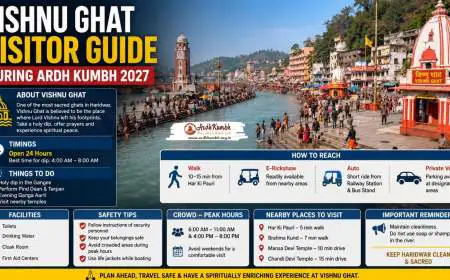
Har Ki Pauri is free to enter, and the ghat steps are public . Footwear must be removed before entering the paved ghat perimeter .
Mid-Morning: Mansa Devi and Chandi Devi by Ropeway
After snan and breakfast, take the Mansa Devi ropeway from Bilwa Parvat. The ropeway costs roughly ₹165 return for adults and ₹125 for children, and runs approximately 7 AM to 6 PM . The temple entry is free .
Then cross to Chandi Devi. A combined ticket for both temples is roughly ₹290–₹340 . The Chandi Devi ropeway takes about 3 minutes and costs roughly ₹210–₹350 return per adult .
Pro Tip 🧭 Take the ropeway up and walk down from Mansa Devi. You skip the return queue, get the view on the way up, and the descent takes half the time of the climb .
Evening: Ganga Aarti at Har Ki Pauri
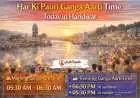
The Ganga Aarti at Har Ki Pauri is performed by the priests of the Shri Ganga Sabha, an institution established in 1916 by Pandit Madan Mohan Malaviya .
| Season | Morning Aarti | Evening Aarti |
|---|---|---|
| Summer (April–September) | 05:00–05:45 AM | 06:30–07:15 PM |
| Winter (October–March) | 06:00–06:45 AM | 05:30–06:15 PM |
Source: Haridwar DMC
Arrive 60–75 minutes early for a seated spot . Malviya Dweep (Clock Tower Island) offers the widest panoramic angle, and Birla Ghat steps are elevated and ideal for senior citizens . Entry is free .
Local Insight 📍 In Haridwar, the Brahma Kund currents are deceptively fast . Hold the stainless steel safety chains while bathing. Locals will tell you the real power of the ghat is felt in the quiet hour before dawn, not during the evening spectacle.
Day 2: Haridwar to Rishikesh — From Mela to Ashram
Day 2 is a transition day. If your dates align with a Kumbh bathing festival, bathe first and then travel. If not, leave early for Rishikesh.
The Haridwar to Rishikesh Transfer
Haridwar to Rishikesh is about 23–25 km and takes 45–60 minutes by road via Raiwala .
| Mode | Cost | Time | Notes |
|---|---|---|---|
| Private taxi | ₹600–₹1,200 | 45–60 min | Door-to-door; easiest |
| Bus | ₹30–₹170 | 40–60 min | Frequent; drops at Rishikesh bus stand |
| Train | ₹10 | ~1 hour | Two unreserved locals daily (05:10, 10:35) |
Avoid travelling on Kumbh bathing days (6 March, 8 March, 14 April 2027), when roads jam or close .
Afternoon: Triveni Ghat and Parmarth Niketan
Triveni Ghat is the more local, less curated aarti experience in Rishikesh — smaller, quieter, and closer to how the ritual has been done for generations . The morning aarti at Triveni Ghat is highly recommended for a peaceful, non-crowded experience .
Parmarth Niketan on the Swarg Ashram side runs the largest and most elaborate aarti in Rishikesh — a 45-minute sunset ceremony with gurukul children chanting, camphor lamps and floating diyas .
| Season | Parmarth Niketan Aarti Start |
|---|---|
| Winter (Nov–Feb) | 5:30 PM |
| Spring (Mar–Apr) | 6:00 PM |
| Summer (May–Oct) | 6:00 PM |
Source: Plan Your Package
Arrive by 5:15 PM in peak season and 5:00 PM in winter for a front-bench spot . Entry is completely free .
Evening: Ram Jhula and Laxman Jhula
Walk across Ram Jhula and Laxman Jhula — the iconic suspension bridges with panoramic views of the Ganges and the Himalayan foothills . The area around Laxman Jhula has cafés, yoga schools and ashrams .
Expert Advice ✨ Do not try to see everything on Day 2. The point of Rishikesh is slowness. Choose one aarti (Parmarth or Triveni), one bridge walk, and one meal by the river. That is a complete day.
Day 3: Rishikesh Depth and Return
Day 3 is for the quieter, deeper side of Rishikesh before returning to Haridwar.
Morning: Yoga, Beatles Ashram or Neelkanth Mahadev
-
Yoga session — Rishikesh is the yoga capital; most ashrams offer drop-in morning classes.
-
Beatles Ashram (Chaurasi Kutia) — where The Beatles stayed in 1968; the graffiti-covered meditation halls and forest setting offer a unique cultural experience . Entry ticket is not included in most tours; check locally.
-
Neelkanth Mahadev Temple — a Shiva temple about 32 km from Rishikesh, associated with the Samudra Manthan; allow half a day for the round trip.
-
Gita Bhawan — a spiritual complex with bookshops and a peaceful riverside setting .
Afternoon: Return to Haridwar
Return to Haridwar by taxi or bus. If your train departs from Haridwar Junction, allow at least 2 hours of buffer on Kumbh crowd days.
Optional: Char Dham Gateway Ritual
If you are continuing to the Char Dham Yatra, Haridwar is the first gateway. The Char Dham temples open in spring, typically around Akshaya Tritiya (expected 9 May 2027, subject to confirmation). Take a second sankalp at Brahma Kund before departing for the hills.
Pro Tip 🧭 Keep Day 3 light. The most common mistake is to over-schedule and arrive at the station exhausted. The spiritual itinerary should end with stillness, not sprinting.
Where to Stay: Haridwar and Rishikesh Options
| Location | Best For | Options |
|---|---|---|
| Haridwar (near Har Ki Pauri) | Kumbh snan, aarti access | Ganga Lahari, Hotel Alpana, Crystal Ganga Heights |
| Haridwar (1–3 km out) | Flexibility, lower rates | Renest Haridwar, Hotel Ramaya Inn, Ambrosia Sarovar Portico |
| Haridwar (ashrams) | Budget, spiritual atmosphere | 115 ashrams and 51 registered dharamshalas listed for 2027 |
| Rishikesh (Ram Jhula / Laxman Jhula) | Yoga, cafés, ashram life | Parmarth Niketan, Gita Bhawan, boutique stays |
| Rishikesh (Triveni Ghat area) | Local aarti, town access | Guest houses and mid-range hotels |
Local Insight 📍 Hotels within 500 metres of Har Ki Pauri are the first to sell out for Amrit Snan dates. If you need early check-in after an overnight train, look at properties 1–3 km out with more flexibility.
Practical Tips for the Three-Day Itinerary
-
Book accommodation 3–6 months ahead if your dates overlap with 6 March, 8 March or 14 April.
-
Carry a government photo ID — required at hotels and for Kumbh registration.
-
Keep cash — ₹500–₹1,000 in small notes for parking, e-rickshaws and daan.
-
Wear quick-dry, modest clothing for snan and aarti.
-
Remove footwear before the ghat perimeter; use free municipal shoe counters .
-
Hold the safety chains at Brahma Kund — the currents are fast .
-
Avoid travelling between Haridwar and Rishikesh on Amrit Snan days .
-
Use biodegradable diyas for deep daan .
-
Save the Kumbh Helpline (1902) and police emergency (112) on your phone.
-
Carry a recent photograph of all family members for lost-and-found purposes.
Expert Tip 💡 The Brahma Muhurta is the best window for snan and silence. The Mela is quietest then, and the spiritual field is least cluttered.
Frequently Asked Questions