






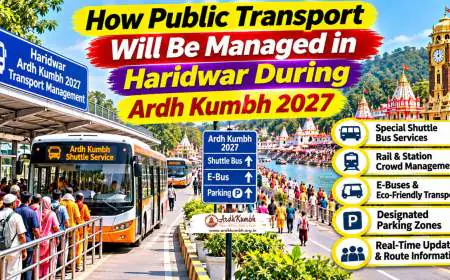


































































How Public Transport Will Be Managed in Haridwar During Ardh Kumbh 2027
How public transport will be managed in Haridwar during Ardh Kumbh 2027 — 150 e-buses, shuttle routes, railway upgrades, NHAI corridors and snan-day restrictions.
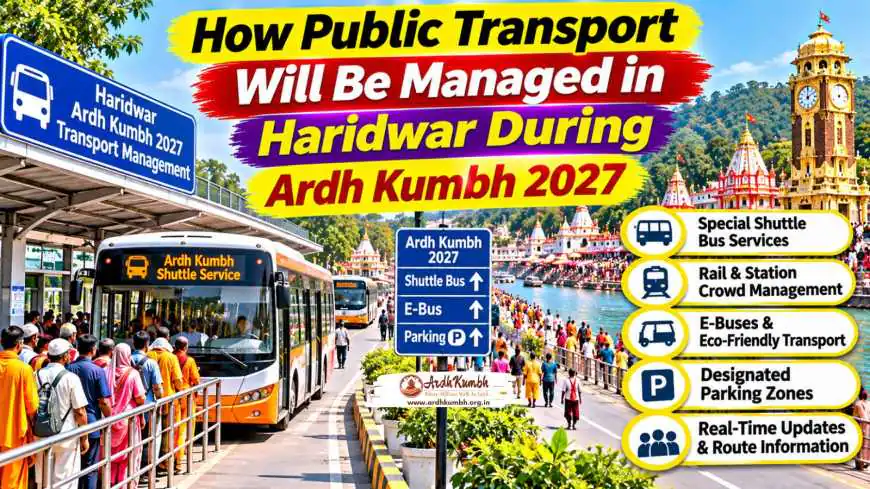
Quick Answer ⚡ Public transport management in Haridwar during Ardh Kumbh 2027 is built on a simple but massive principle: keep private vehicles out of the city core and move pilgrims by public fleets. The plan rests on five pillars. First, 150 electric buses will operate inside the Mela area for the first time, alongside Uttarakhand Transport Corporation (UTC) buses and a proposed 250 new buses approved by the state cabinet. Second, Haridwar railway station is being redeveloped for ₹460 crore under the Amrit Bharat scheme, with five holding areas totalling over 19,000 capacity and 15 additional trains on major snan days. Third, NHAI is completing a 51-km six-lane Spur to Haridwar (about 92% complete) and a 15-km Haridwar Bypass to divert through-traffic away from the ghats. Fourth, shuttle buses will connect outer parking zones to Har Ki Pauri, with fares expected between ₹10 and ₹50. Fifth, e-rickshaws, cycle-rickshaws and the new Ganga Sarathi electric golf carts will handle last-mile connectivity. On Amrit Snan days, private vehicles will be stopped outside the city, and walking will be the most reliable option for the final stretch.
At a Glance 🔎
| Component | Key Detail |
|---|---|
| Mela e-buses | ~150 electric buses inside the Kumbh area (first time) |
| New UTC buses | 250 buses approved; 109 to be purchased in the first tranche |
| Railway upgrade | ₹460 crore redevelopment; 5 holding areas, 19,000+ capacity |
| Extra trains | 15 additional trains on major snan days (33 pairs normally) |
| Road projects | 51-km Spur (~92% complete) and 15-km Bypass (~77% complete) |
| Shuttle fares | ₹10–₹50 per trip (estimated) |
| Last-mile fares | E-rickshaw ₹20–₹100; shared auto ₹20–₹40 |
| Snan-day rule | Private vehicles stopped outside city; walking recommended |
The Integrated Transport Plan: Five Pillars of Pilgrim Movement
The Ardh Kumbh 2027 is expected to draw an estimated 10–17 crore pilgrims across 97 days from 14 January to 20 April 2027. Moving that many people requires a layered system, not a single solution.
Pillar 1: The Railway Backbone
The Indian Railways is the primary long-distance carrier for Kumbh pilgrims. Haridwar Junction handles about 50,000 passengers on normal days, rising to 85,000 on snan festivals. During the Kumbh, that pressure multiplies.
Pillar 2: The Bus Fleet
The Uttarakhand Transport Corporation (UTC) and private operators provide the regional and intra-city bus network. The state is expanding the fleet substantially for 2027.
Trending Guides Now
How Queue Management Works During Major Bathing Days at Ardh Kumbh
Read Guide →
How Crowd Diversion Routes Work During Peak Ardh Kumbh 2027 Days
Read Guide →
How Authorities Prepare for Peak Pressure
Read Guide →
How Security Screening Works at Ardh Kumbh 2027 Entry Points
Read Guide →
Ardh Kumbh 2027 Dates (Official) - Haridwar Snan Schedule
Read Guide →
Dharamshala Stay During Ardh Kumbh: Free & Budget Guide
Read Guide →
Essential Checklist Before Leaving for Haridwar Ardh Kumbh 2027
Read Guide →
The Story Behind King Bhagirath and Haridwar's Sacred Connection During Ardh Kumbh 2027
Read Guide →Pillar 3: The Shuttle Network
Shuttle buses are the bridge between outer parking and the ghats. They are the backbone of the park-and-ride model.
Pillar 4: The Road Corridors
NHAI is building bypasses and spurs to divert through-traffic away from Haridwar's congested core, freeing inner roads for pilgrim transport.
Pillar 5: Last-Mile Connectivity
E-rickshaws, cycle-rickshaws, shared autos and electric golf carts move pilgrims the final 1–3 km to the ghats, especially where private vehicles are banned.
Expert Tip 💡 The success of the 2027 transport plan depends on coordination between these five pillars. A train that arrives on time is useless if no shuttle is waiting. The administration has appointed a dedicated Mela Officer (Railway) to coordinate between railways and the Mela administration.
Railway Management: The ₹460 Crore Upgrade and Beyond
The railway system is the largest single transport intervention for Ardh Kumbh 2027.
Haridwar Station Redevelopment
Haridwar railway station is being redeveloped for ₹460 crore. The project includes:
-
Renovated railway yard.
-
Temporary and permanent transit areas for devotee accommodation.
-
New platforms (two additional platforms are planned).
-
Permanent holding area and expanded waiting halls.
-
Dormitory facilities.
-
Revamped waiting rooms, improved lighting, digital signage and food stalls.
-
Foot overbridge, parking facilities, lifts and facilities for persons with disabilities.
-
Modernisation under the Amrit Bharat scheme.
Holding Areas and Capacity
Five holding areas will be created at Haridwar station, with a combined capacity of over 19,000 pilgrims. A permanent holding area is part of the plan. Similar holding areas of about 10,000 capacity each will be built at Motichur and Jwalapur stations.
Entry and Exit Route Separation
A critical crowd management measure is the separation of entry and exit routes at Haridwar station. Reserved and unreserved passengers will have separate entry paths, and separate exit arrangements will be developed for passengers heading in different directions. Mock drills will test these arrangements before the Mela.
Additional Trains
On normal days, 33 pairs of trains operate. On major snan days, 15 additional trains will run, and this number can be increased as needed. The Mela administration and Indian Railways have also discussed running 100 pairs of trains during the Ardh Kumbh, and 11 railway stations have been earmarked for upgrades.
Station Upgrades Beyond Haridwar
Motichur and Jwalapur stations will see enhanced passenger facilities. Jwalapur is particularly important because most devotees arrive there and use Haridwar station for their return journey. A proposal for train stoppages at these stations has been put forward.
Local Insight 📍 Jwalapur is the arrival station that many pilgrims overlook. If your train stops there, you are closer to the Mela area than you think, and e-rickshaws are readily available. Do not assume Haridwar Junction is your only option.
Bus Fleet Augmentation: 250 New Buses and 150 Electric Buses
The bus network is being massively expanded to handle intra-city and regional pilgrim movement.
The Cabinet Approval
The Uttarakhand cabinet has approved the purchase of 250 new buses. Due to a GST rate reduction from 28% to 18%, the budget previously allocated for 100 buses will now cover 109 buses. The state has also flagged off 59 new standard buses for the UTC, and the Roadways Employees Joint Council has demanded a ₹665 crore budget for 1,110 new buses for the Kumbh.
Electric Buses Inside the Mela Area
For the first time, electric buses will operate inside the Kumbh Mela area. Under the PM E-Bus Sewa scheme, 150 electric buses are proposed for Dehradun and Haridwar. These zero-emission buses will reduce noise and air pollution in the Mela zone, where crores of pilgrims will gather.
The 37 Electric Buses and Temporary Bus Stations
The Mela administration has planned temporary bus stations on the Kanwar Yatra model at sites including Rishikul, Bairagi Dweep and Gaurishankar. 37 electric buses were being prepared as of July 2026. A shuttle from Roorkee was also being considered.
Pro Tip 🧭 Electric buses are quiet and clean, but they have limited range. Expect them to operate on fixed loops within the Mela area rather than long-distance routes. For regional travel, UTC diesel buses will remain the workhorse.
Shuttle Bus Services: Routes, Fares and Frequency
The shuttle bus network is the operational heart of the 2027 transport plan. It is designed as a high-frequency, low-cost system connecting distant parking areas to the Mela and ghats.
The Planned Routes
| Route | From | To | Purpose |
|---|---|---|---|
| Route 1 | Parking Zone A (Bahadrabad side) | Har Ki Pauri | Main pilgrim route |
| Route 2 | Parking Zone B (Jwalapur side) | Har Ki Pauri | Alternative pilgrim route |
| Route 3 | Haridwar Railway Station | Kumbh Mela Fair Area | Arrival/departure connectivity |
| Route 5 | Kumbh Mela Fair Area | Chandi Devi Ropeway Base | Temple connectivity |
Fares, Frequency and Timings
-
Fare range: ₹10–₹50 per trip (estimated; official rates to be announced).
-
Frequency: Every 5–15 minutes on peak days.
-
Operating hours: 24/7 during Amrit Snan; early morning to late night on regular days.
-
Payment: On-board payment or QR-based digital passes.
The Official Caveat
As of October 2026, no parking sites, shuttle routes or vehicle rules had been officially announced for Haridwar Kumbh 2027. The official website has sections for shuttles, parking and park-and-ride, but no details were published. The routes and fares above are planned, not final. Verify locally before travel.
Expert Tip 💡 If you are travelling with elders or children, pre-plan your shuttle route based on your parking zone. Do not assume you can figure it out on the day. The Mela is not the place for improvisation with a tired family.
Road Infrastructure: NHAI's Bypass and Spur Projects
The road network around Haridwar is being upgraded to divert through-traffic and reduce congestion in the city core.
The 51-km Spur to Haridwar
The Spur to Haridwar is a 51-kilometre six-lane access-controlled corridor linking the Delhi–Dehradun Economic Corridor with Haridwar. It has recorded nearly 92% physical progress, with about 46 km completed. It runs from Halgoya Mustakam to NH-58 near Bhaderi Rajputana. Once operational, vehicles from Delhi, Meerut and Saharanpur can bypass inner-city roads.
The 15-km Haridwar Bypass
The Haridwar Bypass (Package-I) is a 15-kilometre four-lane highway that has reached about 77% physical progress, with nearly nine kilometres finished. It starts at Bahadrabad and terminates near the Chandi Devi Temple on NH-34, diverting traffic away from Har Ki Pauri, Chandi Chowk and Shankaracharya Chowk.
Flyovers and Underpasses
NHAI is constructing flyovers, vehicular underpasses and service roads at junctions including Purkazi, Phaloda, Manglaur, Bahadrabad and Jwalapur on the Haridwar–Muzaffarnagar highway.
Advanced Traffic Management System (ATMS)
An ATMS is being implemented along the Spur, the bypass and the Haridwar–Muzaffarnagar corridor for real-time monitoring and quicker emergency response.
Expert Advice ✨ The Spur and Bypass will not eliminate congestion inside Haridwar. They will reduce through-traffic, freeing inner roads for shuttles and pedestrians. Your last-mile experience will still depend on the shuttle network.
Last-Mile Connectivity: E-Rickshaws, Autos and Ganga Sarathi
The final 1–3 km to the ghats is where the transport plan meets reality. Private vehicles are banned near Har Ki Pauri, so last-mile options are essential.
E-Rickshaws
E-rickshaws are the most economical and eco-friendly option. Fares range from ₹20 to ₹100 for the 1.5–3 km journey from Haridwar station to Har Ki Pauri, taking 10–15 minutes. They are available outside the railway station and bus stand.
Shared and Private Autos
-
Shared auto: ₹20–₹40 per person, 10–15 minutes.
-
Private auto: ₹80–₹150, 10–15 minutes.
-
Cycle-rickshaw: ₹15–₹50, 15–20 minutes.
Taxis and Cabs
Taxis cost ₹150–₹250 for the station-to-ghat journey and are best for families with luggage.
Ganga Sarathi Electric Golf Carts
Haridwar has introduced the Ganga Sarathi electric golf cart service to help devotees travel through the zero zone around Har Ki Pauri. The service connects the Post Office, Har Ki Pauri and the Bhimgoda barrier. This is a cleaner, quieter option for the final stretch, and it was introduced with the 2027 Kumbh in mind.
Walking
Walking is free and takes 20–30 minutes from the station to the ghat through the main bazaar. On peak crowd days when vehicles are restricted, walking is the most reliable option.
Local Insight 📍 E-rickshaw drivers near Haridwar station know the back routes through the bazaar that cars cannot take. If you are stuck, ask a local for the walking shortcut. It is often faster than waiting in traffic.
Parking and the Park-and-Ride Model
The parking strategy is the flip side of the shuttle strategy. You cannot have shuttles without parking zones.
Large Parking Spaces at Entry Points
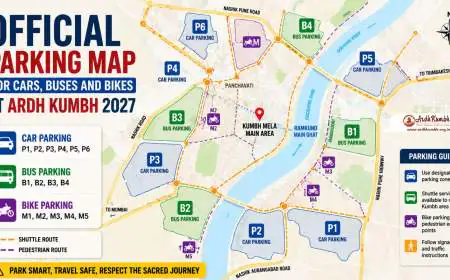
Mela Officer Sonika has stated that large parking spaces are being developed at entry points, from where devotees will be transported directly to the fair area. This is intended to reduce traffic congestion within the city.
The 2021 Precedent
For the April 2021 Shahi Snans, the Mela police barred vehicles from entering Haridwar city from 8 to 15 April 2021 and sent them to temporary parking by the direction they came from.
| Coming From | 2021 Parking (as reported) |
|---|---|
| Delhi, Meerut, Muzaffarnagar | Daksh Dweep parking; small vehicles diverted towards Laksar road |
| Saharanpur, Haryana, Punjab | Dhirwali, with Nehru Yuva Kendra, Gurudwara and Peeth Bazar |
| Najibabad, Kotdwar, Nainital | Gauri Shankar and Neeldhara |
| Dehradun, Rishikesh | Cars to Dudhiyabandh, Saptarishi and Shantikunj; state buses to Motichur |
The 2027 Plan
The 2027 plan is expected to follow a similar directional logic, with outer parking zones and shuttle connections. The master plan directed by the Chief Minister marks every sector, route, parking area, ghat and camp site.
Pro Tip 🧭 Note the direction you are arriving from and check which parking zone corresponds to it. Do not drive to the ghat expecting to find parking. You will be turned back.
Snan Day Management: Restrictions, Diversions and Walking
Snan days are the stress test of the transport system. The rules change dramatically.
The Core Restriction
On Amrit Snan dates (6 March, 8 March and 14 April 2027), vehicle movement will be restricted near Har Ki Pauri. Private vehicles, taxis and auto-rickshaws will not be allowed near the ghats during peak bathing days. Pilgrims will park at designated parking zones on the city's outskirts and use shuttle buses for the final leg.
Walking Distances
On major snan days, expect to park outside the city and walk. Walking is the most reliable option on these days, especially after the snan when shuttle queues can be long.
Alternative Exit Routes
The administration is preparing alternative exit routes to prevent stampedes and manage crowd flow. Separate routes for pedestrians, taxis, shuttle buses and emergency vehicles are recommended.
The AI Layer
AI-based systems will assist crowd management at Haridwar station and across the Mela. Real-time monitoring, headcount tracking and crowd density analysis will help authorities anticipate bottlenecks.
Expert Advice ✨ On Amrit Snan days, do not plan to leave the city immediately after the snan. Rest at your accommodation, let the crowd thin, and travel later. The roads will be clearer by afternoon.
Technology and Coordination: The Digital Backbone
The transport plan is supported by a digital layer that coordinates the physical system.
AI and CCTV
AI-powered CCTV surveillance will monitor crowd density and traffic flow. The Command and Control Centre will coordinate responses across police, transport and Mela authorities.
Mobile Applications and Helplines
Mobile applications, helplines and information centres will provide real-time information to devotees. The Kumbh Helpline (1902) operates 24×7.
The Mela Officer (Railway)
A dedicated Mela Officer (Railway) has been appointed to coordinate between the railways and the Mela administration. This is a critical role — railway arrivals must be synchronised with shuttle departures.
Expert Tip 💡 Download the official Kumbh app once it is available. Real-time shuttle tracking and parking zone updates will save you hours of confusion.
Practical Guide for Pilgrims: Using Public Transport in 2027
-
Arrive by train if possible. Railways are the most efficient long-distance option and avoid parking and diversions.
-
Know your station. Jwalapur is often the arrival station; Haridwar Junction is the departure station.
-
Use the shuttle. Park at the designated zone and take the shuttle to Har Ki Pauri. Do not drive to the ghat.
-
Carry ₹500 in small notes for e-rickshaws, shuttles and autos.
-
Walk on snan days. Private vehicles will be stopped outside the city.
-
Use Ganga Sarathi for the zero zone around Har Ki Pauri.
-
Avoid inter-city travel on Amrit Snan days (6 March, 8 March, 14 April).
-
Save the Kumbh Helpline (1902) and police emergency (112).
-
Travel light — shuttles and e-rickshaws have limited luggage space.
-
Be patient. The system is designed for crores, but queues are inevitable.
Pro Tip 🧭 The Brahma Muhurta is the best window for snan. Shuttles will be less crowded before 5 AM. If you can arrive the night before, you will avoid the morning rush.
Frequently Asked Questions