








































































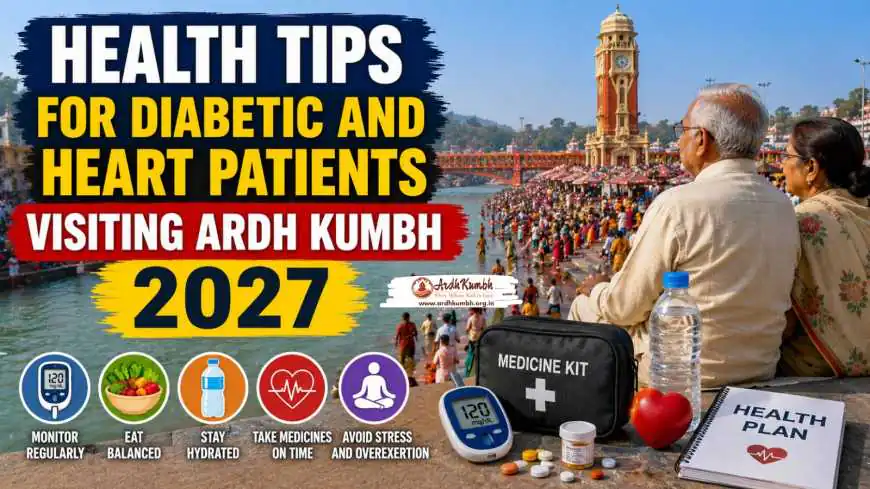
Health Tips for Diabetic and Heart Patients Visiting Ardh Kumbh 2027
Essential health tips for diabetic and heart patients visiting Ardh Kumbh 2027. Learn about medical facilities, precautions, diet, and emergency care for a safe pilgrimage.
Health Tips for Diabetic and Heart Patients Visiting Ardh Kumbh 2027
So, you have decided to attend the Ardh Kumbh 2027 in Haridwar—a once-in-a-lifetime spiritual journey that millions of devotees dream of. But if you or a loved one are managing diabetes or a heart condition, the excitement is probably mixed with anxiety. The question weighing on your mind is simple: can you safely undertake this pilgrimage with a chronic health condition? The answer is a resounding yes. With the right preparation, medical support, and awareness, diabetic and heart patients can absolutely participate in the Ardh Kumbh 2027 and have a spiritually fulfilling experience.
The Ardh Kumbh 2027 is expected to draw between 6 to 7 crore devotees to Haridwar. The physical demands are real—long walks, crowded ghats, exposure to heat and cold, and changes in routine. But the Uttarakhand government has invested heavily in healthcare infrastructure, with an estimated ₹54 crore budget for health services. The system includes 2,924 beds reserved across government and private hospitals, 40 ambulances, and 35 temporary hospitals. Senior pilgrims account for 60-80% of medical emergencies at mass gatherings, but most of these—including heatstroke, cardiac events, and dehydration—are preventable with proper preparation. This guide will help you prepare, protect yourself, and enjoy the divine experience safely.
Why the Ardh Kumbh Poses Unique Health Risks 🌊
Before we dive into the solutions, let us understand the challenges.
The Physical Demands Are Real
A typical day at the Kumbh involves walking 8-12 kilometers on uneven stone ghats. The combination of crowds, heat, standing in queues, and the physical act of bathing in the Ganga can strain even healthy bodies. For diabetic and heart patients, these demands can be particularly challenging.
Trending Guides Now
Senior Citizens Safety Guide for Kumbh Mela Visit
Read Guide →
Wheelchair and Accessibility Services During Ardh Kumbh 2027
Read Guide →
Best Time for Senior Citizens to Take Holy Dip in Haridwar During Ardh Kumbh 2027
Read Guide →
How Senior Citizens Can Attend Ganga Aarti Comfortably in Haridwar During Ardh Kumbh 2027
Read Guide →
Ardh Kumbh 2027 Dates (Official) - Haridwar Snan Schedule
Read Guide →
Dharamshala Stay During Ardh Kumbh: Free & Budget Guide
Read Guide →
Official Progress Report of Haridwar Ardh Kumbh 2027 Infrastructure Projects
Read Guide →
Where to Find 24-Hour Pharmacies in Haridwar During Ardh Kumbh 2027 Emergencies
Read Guide →The Heat Factor
The Ardh Kumbh runs from January to April, with the weather ranging from cold winter mornings to intense summer heat. Senior pilgrims face reduced heat tolerance due to aging bodies having lower thirst perception and reduced sweating efficiency. Dehydration happens silently.
Cold Water Shock
Bathing in the Ganga during winter months can be a shock to the system. Cold water causes blood vessels to constrict, increasing blood pressure and putting extra strain on the heart. During the Maha Kumbh 2025, at least 11 devotees suffered heart attacks, with two being critical. This is not meant to scare you—it is meant to prepare you.
Medication Challenges
-
Insulin requirements change with increased physical activity
-
Beta-blockers reduce the heart's ability to respond to heat stress
Crowd-Related Risks
For diabetics, the risk of hypoglycemia increases with unexpected physical exertion. For heart patients, the stress and anxiety of crowds can trigger cardiac events. Senior citizens, who account for 80-85% of deaths at pilgrimage events, are particularly vulnerable.
Before You Go: Essential Pre-Travel Preparation 🩺
Your health at the Ardh Kumbh begins before you pack your bag. Here is what you need to do.
1. Consult Your Doctor (4-6 Weeks Before)
Book an appointment with your physician at least one month before travel. Discuss your itinerary, the physical demands, and any concerns.
Essential Tests for Diabetic and Heart Patients:
2. Get a Doctor's Letter
Ask your doctor for a written letter in English and Hindi listing:
-
All your medical conditions
-
Current medications with dosages
-
Emergency protocols (what to do in case of a cardiac event or severe hypoglycemia)
3. Medication Planning
-
Never assume you can find your specific prescriptions in Haridwar
-
For insulin: carry insulin with ice packs and a sugar-testing machine
4. Wear a Medical Alert Bracelet
If you have diabetes, epilepsy, or a heart condition, wear a medical alert bracelet. In an emergency, this can save precious time.
5. Start Physical Preparation
The Kumbh involves extensive walking. Start walking at home 2-3 months before your trip. Build up your stamina gradually.
6. Consider Travel Insurance
Invest in travel insurance that covers pre-existing conditions. This can save you from devastating medical bills. Senior citizens and those with chronic illnesses are at higher risk and should not skip this step.
What to Carry: Your Personal Medical Kit 🎒
Pack a dedicated medical kit with these essentials:
For Diabetic Patients
For Heart Patients
| Item | Purpose |
|---|---|
| Portable BP monitor | Check blood pressure regularly |
| Nitroglycerin tablets | For chest pain (if prescribed) |
| Aspirin | For emergency use (if recommended by doctor) |
| Emergency contact card | With doctor's name and emergency protocols |
General Essentials
-
Paracetamol for fever
-
Antacids for stomach issues
-
ORS packets (critical for preventing dehydration)
-
Hand sanitizer and wet wipes
-
Reusable water bottle to stay hydrated
-
First-aid kit with bandages and antiseptic cream
Understanding the Medical Infrastructure at Ardh Kumbh 2027 🏥
Knowing where to go for help can save precious time in an emergency. The healthcare system at Ardh Kumbh 2027 is built on a three-tier hierarchy.
Tier One: First-Aid Posts (Every 500 Meters)
You will never be more than 10 minutes away from a first-aid post. These small tents or kiosks are staffed by paramedics and nurses. They handle:
-
Blisters from walking
-
Dehydration
-
Minor cuts
-
Dizziness
-
Upset stomachs
Everything is free. Between 60-70% of all medical cases resolve at this tier.
Tier Two: Sector Hospitals (One Per 5-6 Sectors)
Each sector hospital serves approximately 1.5 million pilgrims. These operate 24x7 with doctors, nurses, and support staff. They handle:
-
Fractures and burns
-
Respiratory infections
-
Hypertensive crises
-
Diabetic emergencies
Tier Three: Central Referral Hospital
At the heart of the system is the Central Referral Hospital, a 100-bed facility that can expand to 300 beds. This is where serious cases are treated.
Ambulance Network
The ambulance network includes:
-
Basic first aid ambulances
-
ICU-equipped ambulances with oxygen and heart monitoring
-
Motorbike response units for fast movement through dense crowds
-
Boat and bike ambulances to transport sick devotees quickly during peak days
Ganga Snan Tips for Diabetic and Heart Patients 🌊
The holy dip is the highlight of the Kumbh, but for diabetic and heart patients, it requires extra precautions.
The Cold Water Risk
Bathing in cold water causes blood vessels to constrict, increasing blood pressure. This is particularly dangerous for heart patients. Do not immerse yourself suddenly—enter the water slowly to allow your body to adjust.
Safe Bathing Protocol
-
Do not bathe alone—always have a companion nearby
-
Do not go beyond waist-deep
-
Use the safety chains provided at the ghats
When to Skip the Dip
If you have:
-
Open wounds that cannot be protected
-
Uncontrolled blood pressure (above 140/90)
-
Recent cardiac event (within the last 3 months)
-
Active infection or fever
...it is safer to skip the dip and perform your Rituals from the ghat steps. The spiritual merit is not diminished by prioritizing your health.
Daily Health Management During the Pilgrimage 🩺
For Diabetic Patients
Blood Sugar Monitoring:
-
Check blood sugar before and after bathing
-
Check blood sugar every 4-6 hours when travelling long distances
-
Changes in meal times and activity levels can upset blood glucose levels
Eating Habits:
-
Eat small, frequent meals to keep blood sugar steady
-
Always carry water and drink enough so your urine stays clear
-
Focus on protein-rich meals while avoiding excessive carbs
-
Carry snacks—nuts, biscuits, fruits—for emergencies
Foot Care:
-
Wear comfortable, well-fitting shoes
-
Check your feet daily for blisters, cuts, or infections
-
Diabetic patients have reduced sensation in their feet—a small wound can become serious
For Heart Patients
Monitor Vital Signs:
-
Check blood pressure twice daily (morning and evening)
-
Watch for symptoms: chest pain, shortness of breath, dizziness, palpitations
Pace Yourself:
-
The crowds, heat, and walking distances are physically demanding
-
Walking too far can be dangerous for heart patients—it can increase heart rate and trigger a heart attack
Avoid Extreme Temperatures:
-
Avoid the ghats during the hottest part of the day (12 PM to 3 PM)
-
Avoid bathing during the coldest part of the day (before sunrise)
-
The combination of extreme cold and sudden exertion is dangerous
For All Chronic Patients
Stay Hydrated:
-
Drink water before you feel thirsty—thirst perception decreases with age
-
Use ORS packets to replenish electrolytes
Hand Hygiene:
-
Use hand sanitizer frequently
-
The risk of infections is high in mass gatherings
-
Wash hands before meals
Know Your Limits:
-
The physical demands of the Kumbh are real
-
If you feel tired, rest. If you feel unwell, seek help immediately.
Diet and Food Safety Tips 🍽️
For Diabetic Patients
-
Eat at regular intervals to maintain stable blood sugar
-
Carry snacks for emergencies—nuts, fruits, biscuits
-
Avoid sugary drinks and sweets
-
Choose freshly cooked food served hot
-
Avoid raw vegetables and uncovered food
For Heart Patients
-
Reduce salt intake
-
Avoid extra salt in cooked meals, dough, salads, and curd
-
Choose food with less oil and salt
-
Avoid fried and heavy foods
General Food Safety
The Kumbh's bhandaras are generally safe, but follow this rule: eat only food that is freshly cooked and served piping hot. Avoid food that has been sitting out.
Emergency Action Plan: What to Do If Something Goes Wrong 🚨
Step 1: Recognize the Signs
| Condition | Warning Signs |
|---|---|
| Hypoglycemia (Low Blood Sugar) | Shaking, giddiness, fatigue, sudden hunger, excessive sweating, blurring of vision |
| Hyperglycemia (High Blood Sugar) | Excessive thirst, frequent urination, fatigue, blurred vision |
| Heart Attack | Chest pain, shortness of breath, pain spreading to left arm, nausea, cold sweat |
| Heatstroke | High body temperature, confusion, dizziness, nausea, headache |
Step 2: Immediate Action
-
For Hypoglycemia: Take glucose tablets immediately. Eat a snack.
-
For Chest Pain: Rest immediately. Take prescribed medication (nitroglycerin if prescribed). Do not wait.
-
Call for Help: Dial 102 or 108 for ambulance services.
-
Move to Shade: If heatstroke is suspected, move to a shaded area immediately.
Step 3: Locate the Nearest Medical Facility
Step 4: Share Your Medical Information
Special Tips for Accompanying Family Members 👨👩👧👦
If you are travelling with a diabetic or heart patient, your role is critical.
-
Know their medications and when they need to take them
-
Keep glucose tablets or snacks handy for diabetic patients
-
Watch for warning signs—dizziness, confusion, chest pain
-
Know the location of the nearest medical camp before you arrive
Final Thoughts: A Safe and Blessed Pilgrimage 🙏
The Ardh Kumbh 2027 is a once-in-a-lifetime spiritual experience. For diabetic and heart patients, it is not only possible but deeply rewarding—with the right preparation. The medical infrastructure is extensive: 2,924 beds, 40 ambulances, 35 temporary hospitals, and first-aid posts every 500 meters. But your best protection is your own preparation.
Consult your doctor, pack your medications, monitor your health, know your limits, and trust the system. The Ganga is calling, and she welcomes all who come with devotion and respect—including those with chronic conditions.
May your pilgrimage be safe, your dip be purifying, and your health be protected. 🌊🙏🩺
Frequently Asked Questions