








































Why Donations at Kumbh Carry Spiritual Meaning
Uncover the deep spiritual significance behind donations at Kumbh Mela. Learn why giving at this sacred gathering transforms both giver and receiver.
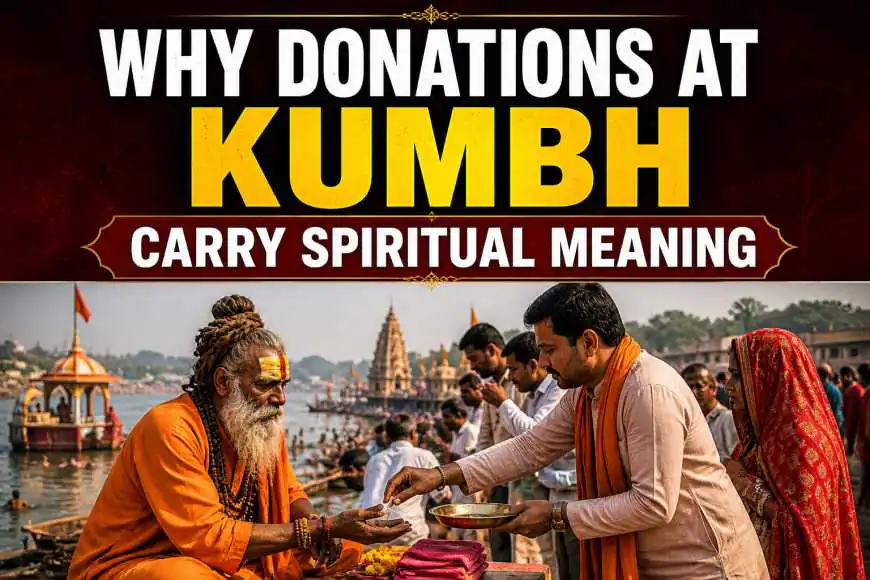
The Sacred Transaction That Has Nothing to Do With Money
Let me start by completely flipping your understanding of donations on its head. When you give money to a homeless person on a city street, what are you doing? You are being kind. You are alleviating suffering. You are doing a good thing. Absolutely none of that is wrong. But at Kumbh, donations operate under a completely different logic. One that has almost nothing to do with the money itself.
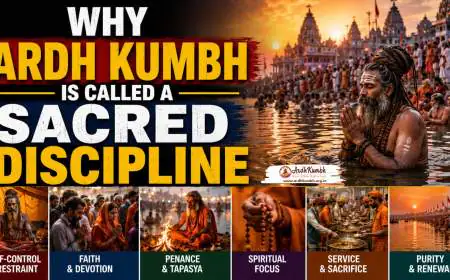
Imagine you are standing on the banks of the Ganga at Prayagraj during Kumbh. The air is thick with mantras, smoke from havans, and the smell of millions of bodies pressed together. A Sadhu with matted hair and ash-smeared skin walks up to you. He does not ask for money. He simply stands there, holding out a small brass bowl, looking at you with eyes that seem to see right through your skin into your soul.
What do you feel?
If you are like most pilgrims, you feel something shift inside you. A strange mixture of awe, humility, and urgency. You reach into your pocket not because you feel guilty, not because you want to look generous, but because something ancient and wordless tells you that giving to this man is giving to God.
Trending Guides Now
Har Ki Pauri Ganga Aarti Time Today in Haridwar
Read Guide →
Complete Guide to Ardh Kumbh Rituals
Read Guide →
Shahi Snan Explained: Why It Is the Most Sacred Bath
Read Guide →
Ardh Kumbh Mela Rituals Explained Shahi Snan & Akhara Traditions
Read Guide →
Best Routes to Reach Haridwar for Ardh Kumbh Mela
Read Guide →
Essential Rules Every Ardh Kumbh 2027 Pilgrim Must Follow
Read Guide →
Who Are Naga Sadhus and Why They Lead Kumbh
Read Guide →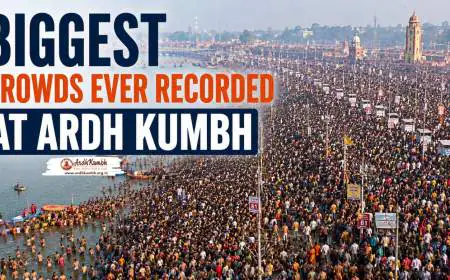
Biggest Crowds Ever Recorded at Ardh Kumbh
Read Guide →That feeling is the entire spiritual engine of Kumbh donations.
The spiritual meaning here is not about the rupee you drop into the bowl. That rupee will probably be used to buy firewood for the Sadhu's night fire, or flour for his next meal, or bidi because even holy men have small pleasures. The meaning lives in the act of opening your hand. In the willingness to let go. In the recognition, even for one second, that what you have is not really yours.
This is what the scriptures call daan - not charity, but sacred giving. And Kumbh Mela is the single most powerful place on earth to practice it.
Why Kumbh Amplifies the Spiritual Power of Giving
Here is something that might sound strange to modern ears. Hindu tradition teaches that the spiritual merit of any action depends on where and when you do it. Bathing in your bathtub at home is fine. Bathing in the Ganga during an ordinary Tuesday is better. Bathing in the Ganga at Kumbh during a specific planetary alignment is infinitely better - like comparing a candle to the sun.
The exact same logic applies to donations.
A donation made at Kumbh is considered geometrically more powerful than the same donation made anywhere else. Why? Because Kumbh is understood as a moment when the spiritual atmosphere is charged beyond normal limits. When millions of saints, sadhus, and pilgrims gather in one place, the collective spiritual energy - what some call shakti - reaches levels that cannot be found anywhere else on earth.
When you give in that atmosphere, your giving gets amplified. Not metaphorically. According to the tradition, literally. The punya (spiritual merit) you earn from a single rupee given at Kumbh equals the merit of a thousand rupees given during ordinary times.
Let me pause here because this is important. I am not telling you this so you can calculate how to maximize your spiritual ROI. That would completely miss the point. I am telling you this so you understand why millions of poor Indians - people who count every rupee - still give generously at Kumbh. They are not being irrational. They are not being exploited. They are making a spiritual calculation that makes perfect sense within their worldview. A small gift at Kumbh carries infinite weight. So they give, even when they have little. And in that giving, they feel rich.
The Seva Secret - How Giving Destroys the Ego
Let me take you deeper into the psychology of Kumbh donations because this is where the real transformation happens. Most of us walk around with a hard little knot of ego in our chests. That knot whispers things like "This is mine," "I earned this," "Why should I share?" That knot creates separation between you and everyone else. That knot is, according to every spiritual tradition on earth, the root of all suffering.
Donations at Kumbh are designed to strangle that knot.
Think about what happens when you give to a Sadhu at Kumbh. You do not get a receipt. You do not get a tax deduction. You do not get your name on a plaque. You do not get a handshake and a thank you note. The Sadhu might not even say anything. He might just nod, turn around, and walk away. Your gift disappears into the crowd like a drop of water falling into the Ganga.
And that is exactly the point.
Spiritual giving at Kumbh is anonymous, unacknowledged, and unrecorded. Nobody is keeping score except the universe itself. This forces you to confront a uncomfortable question: Are you giving because you want to feel good about yourself? Or are you giving because giving is simply what a spiritual person does?
When you remove every possible external reward for giving - recognition, gratitude, social status, tax benefits - what remains is pure giving. Giving for its own sake. Giving because holding onto things hurts. Giving because letting go heals.
This is called seva - selfless service. And Kumbh is a seva factory running at full capacity for weeks on end. Millions of people practicing letting go simultaneously. That collective practice does not just benefit the individual givers. It changes the atmosphere of the entire gathering. It makes Kumbh feel different from any other place on earth. That feeling you cannot quite name when you watch Kumbh footage? That is the feeling of millions of egos loosening their grip all at once.
Feeding Sadhus - The Highest Form of Hospitality
Let me tell you about one specific type of donation at Kumbh that carries especially deep spiritual meaning: feeding Sadhus.
Throughout Kumbh, you will see massive community kitchens called bhandaras where food is cooked and served continuously. Sometimes a wealthy merchant sponsors an entire day of feeding. Sometimes a poor farmer contributes a sack of rice. Sometimes a group of women from a village churns butter all night to send with their men heading to Kumbh.
Why is feeding Sadhus considered so special?
Because Sadhus have renounced the very act of cooking for themselves. By choice, they have become dependent on the generosity of others for their physical survival. When you feed a Sadhu, you are not just giving food. You are completing a sacred cycle. The Sadhu gives you spiritual blessings and teachings. You give the Sadhu physical nourishment. Neither can survive without the other. It is a relationship of mutual dependency that mirrors the relationship between the individual soul and the divine.
The scriptures say that feeding a Sadhu at Kumbh feeds all the saints who ever lived or ever will live. Again, do not take this literally if that does not work for you. But understand the spiritual logic: the Sadhu represents the entire lineage of renunciants stretching back thousands of years. When you give to one Sadhu, you are giving to the tradition itself. You are saying "yes" to the value of renunciation, to the pursuit of truth over comfort, to the idea that some things matter more than money.
That "yes" changes you. It shifts your values toward the spiritual and away from the material. And that shift, repeated millions of times at Kumbh, is how an entire culture stays oriented toward meaning rather than mammon.
The Invisible Economy That Nobody Talks About
Let me get practical for a moment because this matters. Kumbh Mela is not just a spiritual event. It is also a massive economic event. Millions of people need to eat, sleep, travel, and bathe. The logistics are staggering. And here is the beautiful truth that most news reports ignore: donations at Kumbh power an invisible economy of care that no government and no corporation could ever replicate.
When you give a blanket to a Sadhu shivering in the pre-dawn cold, that blanket keeps him alive. When you give food to a bhandara, that food feeds a pilgrim who spent their last rupee on a train ticket. When you give medicine to the free clinic run by a spiritual organization, that medicine heals someone who cannot afford a doctor.
These donations are not abstract. They are life support for a temporary city of 50 million people. And the people who give them know this. The spiritual meaning and the practical meaning are not separate. They are the same thing. Giving at Kumbh is spiritual precisely because it is practical. It keeps people alive. It reduces suffering. It creates community in a place where you are surrounded by strangers.
This is the genius of the Kumbh donation system. It does not ask you to choose between spiritual growth and practical help. It gives you both at the same time. You feed a hungry person and you feed your soul. You clothe a cold Sadhu and you clothe your ego in humility. You give money and you receive something that money cannot buy.
What the Ganga Teaches About Letting Go
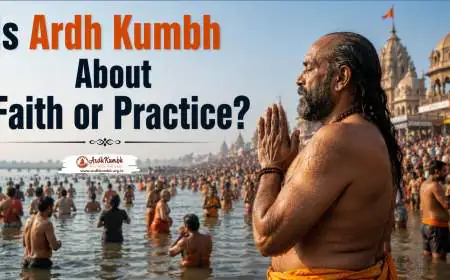
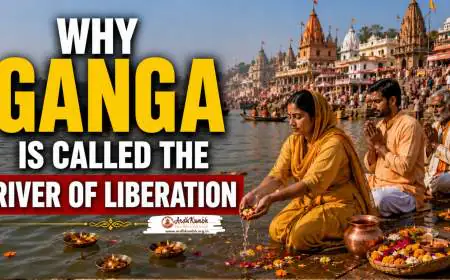
Stand on the banks of the Ganga at Kumbh for long enough, and you will start to notice something. The river receives everything. Flowers. Ash. Milk. Prayers written on paper. Ashes of the dead. Sewage from cities upstream. Industrial waste. And still, the Ganga keeps flowing. Still, pilgrims call her Ma Ganga - Mother Ganga. Still, they bathe in her waters seeking purification.
The Ganga is the ultimate teacher of donation. She teaches that receiving and purifying are the same act. She teaches that nothing given with love can defile. She teaches that letting go is not loss but transformation.
When you make a donation at Kumbh, you are imitating the Ganga. You are practicing receiving the world without judgment. You are practicing letting go of your attachment to your possessions. You are practicing trust that what you give will be transformed into something valuable - not necessarily for you, but for the whole.
This is why Kumbh donations feel different from ordinary charity. Ordinary charity often comes from a place of "I have extra, so you can have some." Kumbh donations, at their best, come from a place of "I have nothing, and neither do you, so let us share what little we have and call it sacred."
That shift from abundance to sacred poverty is the entire spiritual journey compressed into a single act of giving. And Kumbh offers that act millions of times, to millions of people, over and over again, until something in the collective consciousness begins to loosen and flow like the river itself.
The Blessing That Comes Back Sevenfold
Let me tell you a secret that every Kumbh pilgrim knows but rarely says out loud. Donations at Kumbh come back. Not in money. Not in the way a stock market investment pays dividends. They come back as unexpected help when you need it most. They come back as peace in moments when you used to feel anxiety. They come back as connections with people who appear exactly when you need guidance.
This is not magic. This is the law of karma understood experientially. When you spend days giving to strangers - your food, your money, your time, your attention - you rewire your own brain. You train yourself to see opportunities for giving everywhere. And when you see those opportunities, you take them. And when you take them, the people you help remember. Not in a transactional way. But kindness echoes. What you put out into the world comes back to you, not because the universe is a vending machine, but because generous people attract generous people.
The spiritual meaning of Kumbh donations is not that God is keeping score and will reward you later. The meaning is that giving changes the giver. It opens a door inside you that was stuck shut. It lets light into rooms of your soul that you forgot existed. And once that door is open, you cannot close it again. You become a different person. A person who gives more easily, loves more freely, and clings less tightly to things that were never yours anyway.
That changed person does not need to ask why donations at Kumbh carry spiritual meaning. That person feels it in their bones. That person is the meaning.
When You Give Nothing - The Lesson of the Empty Hands
I want to tell you about something that most articles on Kumbh donations completely ignore. What about the pilgrim who has nothing to give? The person who spent their last rupee on the train ticket. The person who is sleeping on the ground and eating at bhandaras because they have no food of their own. The person whose hands are completely, utterly empty.
Does Kumbh have a spiritual meaning for that person too?
Yes. And it might be the deepest meaning of all.
The scriptures say that even the poor person who simply wishes they could give, who feels the desire to donate in their heart but cannot because they have nothing - that wish itself carries spiritual merit. The intention matters more than the action. The longing to give is already a form of giving.
At Kumbh, the person with empty hands is not shamed. That person is fed, clothed, and blessed by others who have more. That person learns what it feels like to receive without humiliation. And that lesson - that receiving and giving are two sides of the same sacred coin - stays with them long after Kumbh ends. They become a person who gives when they finally have something. And they become a person who receives without closing their heart.
This is the quiet, overlooked spiritual meaning of Kumbh donations. The meaning that says nobody is left out. Whether you give much, give little, or give nothing at all - if you come to Kumbh with an open heart, you will leave with something you did not have before. And that something will look like generosity when you look in the mirror.
The Eternal Return to Sacred Giving
Let me leave you with this final thought. Kumbh Mela happens every three years in rotation across four cities. But the spiritual meaning of donations at Kumbh does not have to stay at Kumbh. You can carry it home with you. You can practice sacred giving on a Tuesday morning in your own kitchen, in your own neighborhood, with your own two hands.
The lesson of Kumbh is simple: Giving is not about the gift. It is about the giver. When you give with an open hand and an open heart, when you give without counting the cost or expecting a return, when you give because letting go feels like love - you are not just donating. You are participating in something ancient and endless. Something that started before the first Kumbh and will continue long after the last one.
That something is the spirit itself. And the spirit does not need your money. It needs your willingness to let go. Kumbh just gives you a place to practice. A place where millions of others are practicing the same thing at the same time. A place where the Ganga whispers the same truth over and over: What you give, you keep. What you hold, you lose.
That is why donations at Kumbh carry spiritual meaning. Not because of the rupee. Because of the opening. Because of the door that cracks open inside you when you finally, finally, finally let something go.
Now close this article, go find something small that you love, and give it away to someone who needs it more. That is Kumbh. That is the whole teaching. That is everything.
Frequently Asked Questions