

















































Why Community Rules Matter at Kumbh
Discover why community rules at Kumbh Mela create order, safety, and spiritual harmony among 50 million pilgrims. Unwritten laws that work.
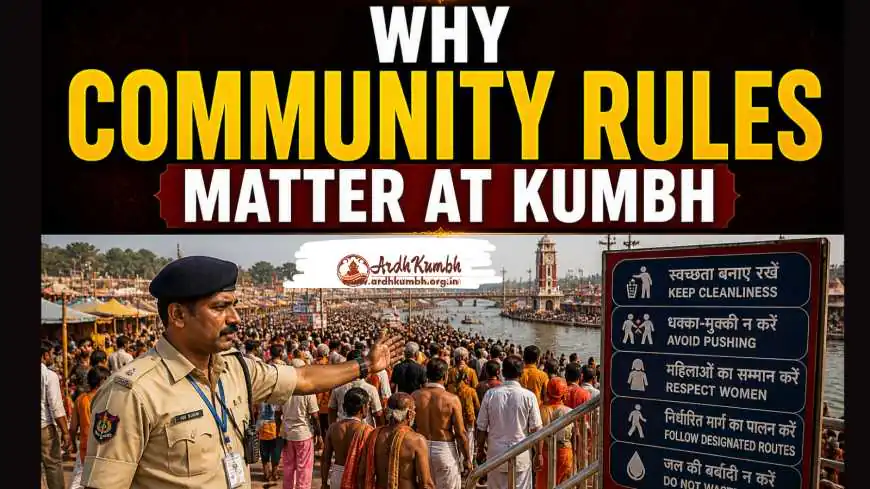
The Invisible Contract That Everyone Signs
Let me start with a simple truth that sounds almost too obvious to say out loud. Community rules only work when the community agrees to them. You cannot impose rules on fifty million people. You can only invite them to cooperate. And at Kumbh, almost everyone says yes to the invitation.
What does this invisible contract look like? It looks like a million small courtesies that no one had to ask for. You will see a young man giving his place in line to an elderly woman without being told. You will see a group of strangers forming a human chain to help a lost child find her parents. You will see people stepping aside to let a sadhu pass, not because he has any official authority, but because the community has agreed that sadhus go first.
These are not laws. They are norms. And norms are enforced not by police, but by social pressure. If you break a community rule at Kumbh - if you push ahead in line, if you litter, if you harass someone - the people around you will not call the police. They will stare at you. They will murmur. They will make you feel, in no uncertain terms, that you have violated something sacred. And for most people, that social disapproval is far more powerful than any legal penalty.
This is the genius of community rules. They turn every pilgrim into a guardian of the rules. You do not need a large police force when every person around you is watching and judging. The invisible contract says: "I will follow the rules, and I expect you to follow them too. And if you do not, I will let you know that you have broken faith with the community."
Trending Guides Now
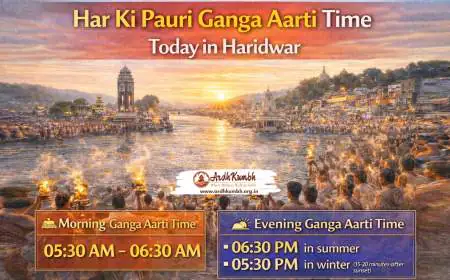
Har Ki Pauri Ganga Aarti Time Today in Haridwar
Read Guide →
Ardh Kumbh Mela Rituals Explained Shahi Snan & Akhara Traditions
Read Guide →
Why Order and Cleanliness Are Strictly Enforced
Read Guide →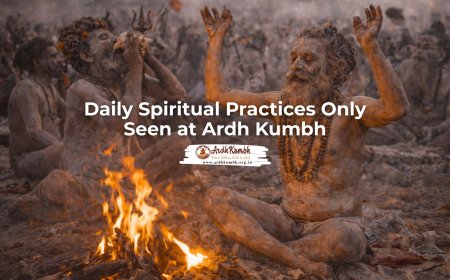
Daily Spiritual Practices Only Seen at Ardh Kumbh
Read Guide →
Best Routes to Reach Haridwar for Ardh Kumbh Mela
Read Guide →
Essential Rules Every Ardh Kumbh 2027 Pilgrim Must Follow
Read Guide →
Who Are Naga Sadhus and Why They Lead Kumbh
Read Guide →
Biggest Crowds Ever Recorded at Ardh Kumbh
Read Guide →At Kumbh, that contract is renewed every single day, between every single person. It is fragile. It can break. But it rarely does. Because everyone understands, deep down, that without these unwritten rules, the Kumbh would be impossible. And they want Kumbh to be possible. So they follow the rules. Not because they are good. Because they are practical.
The First Rule - The Queue Is Sacred
Let me tell you about the most important community rule at Kumbh. The queue. You will wait in lines that stretch for kilometers. You will wait for hours. You will wait in the sun, in the cold, in the dust, in the rain. And you will not cut the line. This is not because cutting is illegal. It is because cutting is spiritually wrong at Kumbh.
Why? Because the queue is not just a line of people. It is a community that has agreed to wait together. When you cut, you are not just saving yourself a few minutes. You are violating that agreement. You are saying that your time is more valuable than everyone else's time. You are saying that the rules do not apply to you. And the community will not tolerate that.
Watch what happens when someone tries to cut the queue at Kumbh. The people around them will not stay silent. They will speak. "Bhai, line mein laga. Jaana hai toh peeche jaake lag." (Brother, get in line. If you have to go, go to the back.) The tone is not angry. It is firm. It is certain. It is the tone of a community that knows its rules and expects them to be followed.
Nine times out of ten, the cutter will surrender. They will go to the back, their face red, their ego bruised. Not because they are afraid of arrest. Because they have been shamed by their peers. And for most human beings, shame is a far more powerful motivator than fear.
This is why community rules work at Kumbh when government regulations often fail. Shame is instant. Shame is personal. Shame comes from the people standing right next to you, not from a distant authority figure. The sacred queue is not sacred because of religion. It is sacred because the community has decided that waiting together is part of the pilgrimage. And that decision has more force than any law.
The Second Rule - What Happens at the Ghat Stays at the Ghat
Let me tell you about another community rule that outsiders often find confusing. Privacy at the ghat. At Kumbh, millions of people bathe in the Ganga every day. They take off their clothes. They enter the water. They perform rituals that are deeply personal. And somehow, despite the crowds, despite the lack of changing rooms or private stalls, there is an unspoken rule about not looking.
You will see this if you pay attention. When someone is changing clothes at the ghat, the people around them will turn their backs. They will look away. Not because they are prudish. Because there is a community rule that says: "The ghat is a place of vulnerability. You do not violate that vulnerability with your eyes."
This rule extends to photography. At Kumbh, you will see thousands of cameras. But you will rarely see someone photographing a person who is bathing or changing. The community polices this. If someone raises a camera where it should not be raised, a stranger will put a hand on the lens. Not aggressively. Just... firmly. And the photographer will lower the camera. Because they know they have violated a rule.
This is fascinating because there is no sign that says "No Photography at the Ghat." There is no law that says you cannot take photos of people bathing. But the community has decided that this is not acceptable. And because the community has decided, the rule has power.
What about the person who ignores the rule? Who keeps taking photos after being warned? The community has an answer for that too. The photographer will find themselves suddenly isolated. People will move away from them. No one will talk to them. They will become invisible. And in a gathering of fifty million people, invisibility is a form of exile. Most people cannot bear it. They put the camera away.
Community rules work because belonging matters more than anything else. Break the rules, and you risk losing your belonging. For most pilgrims, that risk is not worth taking.
The Third Rule - The Sadhu Goes First
Let me explain a community rule that might seem strange to someone from an egalitarian culture. At Kumbh, sadhus go first. They get priority in the queue. They get the best spots on the ghat. They get served first at the bhandaras. This is not because sadhus are considered better than other people. It is because the community has agreed that renunciation deserves honor.
Why does this matter for community rules? Because it shows that Kumbh is not a democracy. It is a hierarchy of spiritual respect. And everyone accepts this hierarchy. The millionaire businessman does not argue when a sadhu steps ahead of him. The politician does not demand special treatment. The celebrity does not expect to be recognized. At Kumbh, spiritual capital outweighs every other form of capital.
This rule is not enforced by any authority. It is enforced by willing deference. The businessman steps aside because he believes that the sadhu has earned the right to go first. The politician waits because he knows that at Kumbh, his power means nothing. The sadhu does not demand priority. He simply walks. And the community parts for him like water parting for a stone.
This rule matters because it creates order without resentment. If everyone was treated exactly the same at Kumbh, there would be chaos. People would fight for position. But because everyone accepts that sadhus have a higher spiritual status, the hierarchy provides a peaceful way to allocate scarce resources like space and time.
The lesson here is important. Not all community rules are about equality. Some are about accepting difference. About knowing your place and respecting the place of others. About understanding that deference is not weakness. It is order. And at Kumbh, order is survival.
The Fourth Rule - Share What You Have
Let me tell you about a community rule that makes Kumbh feel completely different from any other mass gathering on earth. Sharing. At a music festival or a sports event, people mostly keep to themselves. They have their stuff. They do not share. At Kumbh, the opposite happens. People share constantly. Food. Water. Blankets. Space. Information. Help.
You will see a family sharing their chai with strangers. You will see a sadhu sharing his blanket with a shivering pilgrim. You will see someone offering their phone to a person who needs to make a call. You will see people sharing the load of an injured person, carrying them to a medical camp.
This sharing is not organized. There is no "sharing coordinator." It happens because the community has an unwritten rule that says: "At Kumbh, we are all pilgrims. Pilgrims help pilgrims."
Why does this rule matter for social stability? Because sharing reduces scarcity. When people share, there is less hoarding. Less hoarding means more resources available to more people. More resources mean less desperation. Less desperation means less conflict. It is that simple.
The community enforces this rule through gratitude and reciprocity. If you share, people will thank you. They will remember you. They will share with you when you need it. If you hoard, people will notice. They will avoid you. They will not help you when you fall. The social cost of hoarding is higher than the material benefit. So people share.
This is not altruism. It is enlightened self-interest. And it works beautifully. At Kumbh, almost everyone has enough because almost everyone shares what they have. The community rule of sharing transforms potential scarcity into actual abundance. That is not a miracle. That is human cooperation at its finest.
The Fifth Rule - The Naked Sadhu Is Not a Spectacle
Let me address something that makes many first-time visitors uncomfortable. At Kumbh, you will see naked sadhus. The Naga sadhus do not wear clothes. They cover their bodies in ash. They walk openly. They bathe openly. They sit openly. And here is the community rule that governs how everyone else behaves around them: Do not stare. Do not point. Do not treat them as a spectacle.
This rule is surprisingly well-observed. You will see foreign tourists struggling with this. They want to take photos. They want to stare. They want to understand. And the community will gently but firmly correct them. A hand on the camera. A quiet "Please do not." A step in front of the lens.
Why does this rule matter? Because the Naga sadhus are not performing. They are not there for your entertainment. They are there to bathe and pray and perform their rituals. The fact that their rituals involve being naked is their business, not yours. The community rule protects their dignity and their privacy.
This rule also protects the spiritual atmosphere of Kumbh. If everyone was staring and photographing the Naga sadhus, the Kumbh would feel like a zoo rather than a pilgrimage. The community has decided that Kumbh will remain a pilgrimage. So they enforce the rule against spectacle.
This is a powerful example of community rules protecting vulnerable members. The Naga sadhus are few. They are unusual. They could easily become targets of curiosity or mockery. But the community surrounds them with a shield of respect. That shield is not made of steel. It is made of social agreement. But it works. It works because millions of people have agreed that staring is not acceptable. And they enforce that agreement every time someone forgets.
When Rules Break - What Happens to Rule Breakers
Let me be honest about what happens when community rules are broken. Because they do get broken. Not often, but sometimes. A fight breaks out over a spot in the queue. Someone steals a wallet. Someone harasses a woman. Someone gets drunk and becomes aggressive.
What happens then? The community responds. Not with police sirens and handcuffs. With isolation. The people around the rule-breaker will move away. They will stop talking. They will stop helping. The rule-breaker will suddenly find themselves alone in a crowd of fifty million people. And that alone feeling is terrifying.
Most rule-breakers will de-escalate when they realize they have lost the community's support. They will apologize. They will leave the area. They will change their behavior. The social pressure is that powerful.
But what about serious rule-breakers? People who commit crimes? Here, the community hands them over to the official authorities. The police are present at Kumbh. They are visible. They are respected. But they are the last resort, not the first. The community handles most problems. Only the worst problems go to the police.
This is efficient. It is also humane. The community gives rule-breakers a chance to correct themselves before facing official punishment. Most rule-breakers take that chance. They apologize. They change. They are reintegrated. The community does not hold grudges. It wants harmony, not revenge.
This is a lesson that modern societies have mostly forgotten. Official punishment is expensive, slow, and often counterproductive. Community accountability is cheap, fast, and often transformative. Kumbh shows that community rules enforced by social pressure can create order without the need for massive policing. It is not perfect. But it works better than most people expect.
What the World Can Learn From Kumbh
Let me step back now and ask a bigger question. What can the rest of the world learn from community rules at Kumbh? Because the challenges that Kumbh solves are not unique to India. Every city faces problems of crowd management, resource allocation, conflict resolution, and social order. And most cities solve these problems with laws, police, cameras, and walls. Kumbh solves them with norms, shame, cooperation, and trust.
Which approach is better? It depends. For a city of millions, you probably need both. But Kumbh shows that community rules can do more than most people think. They can create order without oppression. They can create safety without surveillance. They can create fairness without bureaucracy.
The secret is belonging. People follow community rules because they want to belong. They want to be part of the community. They want the approval of their peers. The moment you remove belonging - the moment you replace community with anonymity - the rules lose their power.
Modern cities struggle with anonymity. No one knows their neighbors. No one feels accountable to the people around them. That is why cities need so many laws and police. Kumbh is different. At Kumbh, you are never anonymous. You are always surrounded by community. Even if you came alone, you are adopted by the crowd. You become part of the we.
This is the deepest lesson of community rules at Kumbh. Rules work when relationships exist. Invest in relationships, and the rules will take care of themselves. Neglect relationships, and no rule will save you. Kumbh has spent thousands of years building relationships between strangers. That is why its rules have teeth. That is why they matter.
The Fragile Gift That We Must Protect
Let me end this with a note of concern. Community rules are fragile. They can be destroyed in a single generation. If people stop trusting each other, the rules stop working. If anonymity replaces belonging, the rules stop working. If technology allows people to break rules without being seen, the rules stop working.
Kumbh is not immune to these forces. Every year, the Mela becomes more modern. More phones. More cameras. More security. More official rules. These are not bad things. But they can crowd out the unofficial rules that have kept Kumbh peaceful for so long.
The community rules at Kumbh are a gift from the ancestors. They are not written down. They are not taught in schools. They are passed from pilgrim to pilgrim, from generation to generation, through example and story and shame. This gift is fragile. It needs protecting.
How do you protect it? By following the rules yourself. By teaching them to newcomers. By correcting gently when you see someone breaking them. By refusing to treat Kumbh as a spectacle rather than a pilgrimage. By belonging to the community rather than standing outside it as a judge or tourist.
Community rules matter at Kumbh because Kumbh matters. And Kumbh matters because it is one of the last places on earth where millions of strangers cooperate peacefully without being forced to. That is a miracle. And miracles need guardians. Be a guardian. Follow the rules. Help others follow them. Keep the miracle alive.
Frequently Asked Questions