






























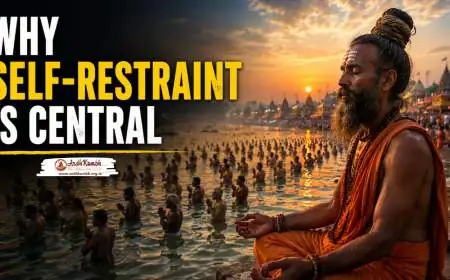








































Why Voluntary Hardship Is Embraced at Kumbh
Cold water. Hard ground. No sleep. Why do millions choose suffering at Kumbh? The surprising psychological and spiritual logic behind embracing hardship.

1. Hardship Kills the Ego (And Your Ego Needs Killing)
Your ego is that voice in your head that says, "I deserve comfort. I deserve the best seat. I deserve to not wait in line." The ego is a comfort junkie. It believes that luxury is a right and discomfort is a punishment.
When you voluntarily choose hardship, you slap your ego in the face. You say, "You are not in charge. I can be happy without a soft pillow." The cold water at the Kumbh is not just water. It is ego medicine. The hard ground is not just ground. It is a humility mattress.
Why this works: Every time you survive voluntary discomfort, your ego shrinks a little. A smaller ego means less anxiety, less anger, and more peace. The Kumbh is an ego-shrinking factory. That is why people go back.
2. Your Brain Is Wired for "Post-Hardship Pleasure"
Here is some neuroscience for you. Your brain has a reward system. When you go from pain to comfort, your brain releases dopamine (the feel-good chemical). But here is the catch: the contrast matters. If you are always comfortable, you stop noticing comfort. You take it for granted.
When you voluntarily endure hardship at the Kumbh—the cold, the hunger, the exhaustion—and then you finally get warm tea or a dry blanket, the pleasure is intense. It is earned. Your brain explodes with gratitude.
Why this works: Voluntary hardship resets your pleasure thermostat. You come home from the Kumbh and your normal bed feels like a five-star hotel. Your normal meal feels like a feast. The hardship made you appreciate what you already had.
3. It Builds "Mental Calluses" for Real Suffering
Life is going to hit you. Someone will die. You will lose a job. You will get sick. Involuntary suffering is guaranteed. The question is: how will you handle it?
When you voluntarily practice hardship at the Kumbh, you are building mental calluses. You are teaching your mind, "I can handle discomfort. I can handle cold. I can handle hunger. I can handle tiredness." When real suffering comes, you have proof that you are stronger than you think.
Why this works: Voluntary hardship is like a vaccine for the soul. A small, controlled dose of discomfort now prevents a meltdown later. The Kumbh is your spiritual gym. The pain is the weight. You are lifting to get stronger.
4. Discomfort Creates Presence (You Cannot Zone Out)
When you are sitting in an air-conditioned room on a soft couch, your mind wanders. You think about work. You think about dinner. You are zoned out. Comfort makes you disconnected.
When you are cold, hungry, and tired at the Kumbh, you cannot zone out. The cold forces you into the present moment. You feel your skin. You feel your breath. You feel alive. Discomfort is a necktie that pulls your attention into the now.
Why this works: Presence is the foundation of meditation, gratitude, and spiritual experience. The Kumbh uses discomfort to force you into presence whether you like it or not. You do not need to "learn to meditate." The cold water is your teacher.
Trending Guides Now
Har Ki Pauri Ganga Aarti Time Today in Haridwar
Read Guide →
Complete Guide to Ardh Kumbh Rituals
Read Guide →
Why Order and Cleanliness Are Strictly Enforced
Read Guide →
Why Early Mornings Are Sacred
Read Guide →
Ardh Kumbh 2027 Dates (Official) - Haridwar Snan Schedule
Read Guide →
Dharamshala Stay During Ardh Kumbh: Free & Budget Guide
Read Guide →
Official Progress Report of Haridwar Ardh Kumbh 2027 Infrastructure Projects
Read Guide →
Where to Find 24-Hour Pharmacies in Haridwar During Ardh Kumbh 2027 Emergencies
Read Guide →5. Shared Hardship Creates Unbreakable Bonds
There is a reason army buddies are closer than office colleagues. Shared hardship creates trust. When you suffer together, your brain releases oxytocin (the bonding chemical).
At the Kumbh, you shiver with strangers. You share a blanket with someone you met two hours ago. You wait in line for water with a family from a different state. By the end of the day, you are brothers. Not because you talked. Because you suffered together.
Why this works: Voluntary hardship at the Kumbh builds a tribe. In modern life, we are isolated. The Kumbh gives you belonging—not through pleasant conversation, but through shared cold. That belonging is worth the price of admission.
6. It Proves Your Faith Is Real (To Yourself)
It is easy to believe in God when everything is going well. "Thank you, God, for this promotion." But do you still believe when you are cold, tired, and hungry? The Kumbh asks that question.
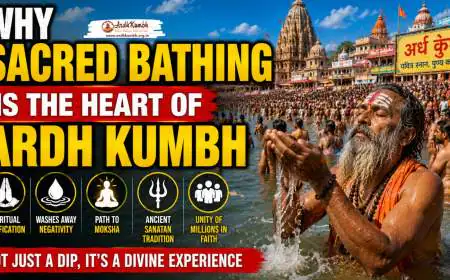
When you take the holy dip at 4 AM in freezing water, you are not doing it because it is fun. You are doing it because your faith is stronger than your comfort. Every shiver is a declaration: "My belief is real. It is not dependent on my circumstances."
Why this works: Voluntary hardship is a test you give yourself. Passing the test (by not giving up, by still chanting, by still bathing) builds self-trust. You walk away knowing: "I am not a fair-weather believer. I am the real thing."
7. You Learn That "Discomfort" Is Mostly in Your Head
Here is a liberating truth. Most of the discomfort you feel in life is not physical. It is anticipatory anxiety. "What if the flight is delayed? What if the hotel is bad? What if the food is cold?" Your mind makes suffering worse than the reality.
At the Kumbh, you cannot avoid real discomfort. You are cold. You are tired. And you survive. You realize: "Oh. This is not that bad. I was afraid of nothing."
What you learn: The anticipation of pain is worse than the pain itself. The Kumbh teaches you to stop catastrophizing. You become braver in your daily life. A deadline at work? That is nothing compared to sleeping on a railway platform in December.
8. Hardship Quiets the "More" Monster
Modern life is run by the "More" Monster. More money. More likes. More square feet. More vacations. The monster is never satisfied. It whispers: "You are not enough. You do not have enough."
Voluntary hardship starves the "More" Monster. When you sleep on the ground and eat simple food at the Kumbh, you realize: "I need very little to be happy." A blanket. A meal. A friend. That is it.
Why this works: Hardship resets your needs. You come home and suddenly you do not need the upgraded phone. You do not need the expensive dinner. The "More" Monster is quieter. That is freedom. And freedom is better than luxury.
9. It Is a Moving Meditation (No Sitting Required)
Many people say, "I cannot meditate. I cannot sit still." Good news. Hardship is meditation for people who cannot sit still.
When you are walking miles on tired feet, your mind stops chattering. You focus on the next step. When you are cold, you focus on your breath. When you are hungry, you focus on the langar line. Discomfort forces single-pointed focus. That is meditation.
Why this works: The Kumbh is a moving monastery. You do not need to sit on a cushion. Your hardship is your mantra. Your walking is your prayer. Every shiver is a bell bringing you back to the present.
10. You Earn Your "Spiritual High"
There is a reason drug addicts pay for suffering (withdrawal, risk) to get a high. The brain values what it works for. Free pleasure (scrolling Instagram) is shallow. Earned pleasure (surviving the cold) is deep.
At the Kumbh, the peace you feel after the dip is earned. The joy of the bhajan after a day of walking is earned. The gratitude for a warm chai is earned.
Why this works: Voluntary hardship gives you permission to feel good. You are not guilty about resting because you worked for it. The spiritual high is legitimate because you paid for it with discomfort.
11. It Breaks the "Comfort Addiction" Society Gave You
Look around. Advertising tells you: "Buy this to avoid discomfort." Air conditioners to avoid heat. Heaters to avoid cold. Painkillers to avoid any ache. Delivery apps to avoid cooking. We have become addicted to comfort.
The Kumbh is a rehab for comfort addiction. For a few days, you cannot avoid discomfort. You must feel the cold. You must feel the hunger. You must feel the tiredness. And you survive.
What you learn: You do not need to medicate every unpleasant sensation. Discomfort is not danger. It is just data. You break the addiction and realize you were stronger than you knew.
12. The Strange Joy of "Enough" (Not "More")
Here is the final paradox. After all the cold, hunger, and tiredness, Kumbh pilgrims often report a feeling of deep joy. Not the loud joy of a party. The quiet joy of sitting by a fire after being cold.
That joy comes from enoughness. "I have enough warmth. I have enough food. I have enough rest. I do not need more."
Why this matters: Modern life chases more endlessly. The Kumbh teaches you that enough is the real destination. And voluntary hardship is the shortcut to enough. You do not need to accumulate. You just need to appreciate.
13. So Why Do They Smile?
Walk through the Kumbh grounds. Look at the faces of the people sleeping on the ground, shivering in the cold, waiting in long lines. They are not miserable. They are smiling.
Why? Because they have discovered a secret that comfortable people never learn. Happiness does not come from avoiding hardship. Happiness comes from choosing hardship for a reason that matters.
The cold is the price. The dip is the reason. The hunger is the price. The blessing is the reason. The tiredness is the price. The transformation is the reason.
When you have a reason that is bigger than your discomfort, the discomfort stops being suffering. It becomes meaning. And meaningful hardship is not painful. It is sacred.
That is why they smile. That is why they come back. And that is why, every six years, millions of sane, intelligent, modern people choose to be cold, hungry, and tired—and call it the best decision of their lives.
Maybe they know something we do not. Maybe it is time we listened.
Frequently Asked Questions