







































































Can You Wear Shorts While Visiting Haridwar Temples and Ghats During Ardh Kumbh 2027?
Planning Haridwar Ardh Kumbh 2027? Discover if shorts are allowed at temples and ghats, the official dress code, Akhara Parishad rules and practical alternatives.
Can You Wear Shorts While Visiting Haridwar Temples and Ghats During Ardh Kumbh 2027?
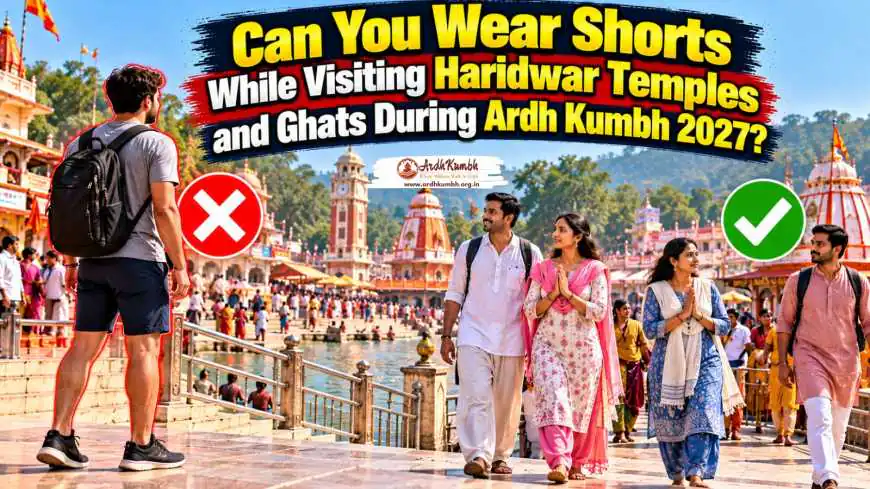
Quick Answer ⚡: No, wearing shorts is not advisable at Haridwar temples and ghats during Ardh Kumbh 2027, and in many cases it is not allowed at all. The Akhil Bharatiya Akhara Parishad (ABAP) has imposed a dress code banning short or western clothes in Haridwar temples, with posters explicitly listing shorts, half pants, bermudas, mini skirts, night suits, and ripped jeans as prohibited attire. At Har Ki Pauri and other ghats, modest dress covering shoulders and knees is expected, and visitors are advised against shorts or sleeveless tops. The ABAP has appealed for 80% of the body to be covered when visiting temples, and violators may be stopped from entering or asked to have darshan from outside.
At a Glance 🔎
| Location | Shorts Allowed? | Expected Dress |
|---|---|---|
| Haridwar Temples (General) | ❌ No | Modest, traditional clothing covering 80% of body |
| Daksh Mahadev Temple (Kankhal) | ❌ Strictly No | Traditional attire; posters at entrance |
| Mansa Devi Temple | ❌ No | Modest clothing; verbal instructions to staff |
| Chandi Devi Temple | ❌ No | Modest clothing |
| Har Ki Pauri Ghat | ⚠️ Strongly Discouraged | Clothes covering knees and shoulders |
| Other Ghats | ⚠️ Discouraged | Modest clothing; no revealing outfits |
| During Snan (Bathing) | ✅ Allowed for Bathing Only | Men may wear shorts/dhoti for the dip itself |
| Akhara Camps | ❌ No | Modest, traditional clothing |
The Official Dress Code: What the Akhara Parishad Says 📜
The Akhil Bharatiya Akhara Parishad (ABAP) — the apex body of Hindu akharas — has imposed a strict dress code for temples in Haridwar, including those that fall within the Kumbh Mela area.
The ABAP Directive
The ABAP has appealed that devotees must wear dignified dresses that cover 80% of their bodies when visiting temples. Mahant Ravindra Puri, president of the ABAP, stated: "As per Indian culture, 80 percent of the body should be covered. That is why we have appealed to young men and women coming to temples that they should come with 80 percent of the body covered or they won't be allowed to enter" .
What the Posters Say
Posters have been installed at temple entrances across Haridwar and Rishikesh with explicit warnings:
Trending Guides Now
Things You Should Never Do at Ardh Kumbh
Read Guide →
Can Families Attend Ardh Kumbh Comfortably Together?
Read Guide →
Can Elderly Pilgrims Participate Safely in Kumbh?
Read Guide →
Is Ardh Kumbh Smaller or Spiritually Equal to Kumbh?
Read Guide →
Ardh Kumbh 2027 Dates (Official) - Haridwar Snan Schedule
Read Guide →
Dharamshala Stay During Ardh Kumbh: Free & Budget Guide
Read Guide →
Official Progress Report of Haridwar Ardh Kumbh 2027 Infrastructure Projects
Read Guide →
Where to Find 24-Hour Pharmacies in Haridwar During Ardh Kumbh 2027 Emergencies
Read Guide →| Prohibited Attire | Source |
|---|---|
| Shorts | |
| Half pants | |
| Bermudas | |
| Mini skirts | |
| Night suits | |
| Ripped jeans |
The posters state that any person wearing these items should have darshan from outside the temple and cooperate with the management.
Expert Tip 💡: The ABAP has stated that the dress code will be applied with force if needed. If a person refuses to follow the rules even after implementation, they will be stopped from entering by force. This is not a suggestion — it is an enforced rule.
Which Temples Enforce the Dress Code? 🛕
The dress code is being enforced across major temples in Haridwar, with some locations being particularly strict.
Daksh Mahadev Temple (Daksh Prajapati Temple), Kankhal
The Daksh Mahadev Temple in Kankhal is one of the strictest enforcers of the dress code. The temple is managed by the Mahanirvani Akhara, and its secretary, Shri Mahant Swami Ravindra Puri Maharaj, has been a vocal proponent of the dress code.
-
Posters are installed at the temple entrance
-
Women and girls cannot enter wearing short clothes
-
The temple is associated with the Daksha Yagna legend and is considered highly sacred
Mansa Devi Temple
The Mansa Devi Temple administration has issued verbal directions to Home Guards staff deployed at the temple to not allow devotees wearing shorts and other "indecent clothes" to enter the shrine.
-
The temple administration has distanced itself from some statements, but the practice of restricting shorts remains
-
Devotees have mixed reactions — some support the move, others feel clothing is less important than belief
Chandi Devi Temple
The Chandi Devi Temple is also expected to enforce the ABAP dress code, though specific directives may vary. As a major temple in the Kumbh area, visitors should assume that modest dress covering knees and shoulders is mandatory.
Har Ki Pauri and Other Ghats
Har Ki Pauri is a public ghat, not a walled temple, but modest dress is strongly advised. The Shri Ganga Sabha, which manages the ghat, has been assertive about preserving the sanctity of the site, and the ABAP dress code extends to the ghats within the Kumbh limits.
Local Insight 📍: The Daksh Mahadev Temple is the most rigorous enforcer of the dress code. If you plan to visit this temple, dress conservatively without exception. The Mansa Devi and Chandi Devi temples are also strict, especially during the Kumbh Mela period.
What About Shorts at Ghats During Snan? 🌊
There is a critical distinction between wearing shorts as casual attire and wearing shorts for the purpose of bathing.
Bathing at the Ghats
For the actual act of bathing (snan) at the ghats:
-
Men may wear shorts or a dhoti for the dip itself
-
Women typically stay fully clothed during bathing
-
The focus is on modesty and practicality — quick-drying clothes are recommended
Casual Wear at Ghats
For walking around the ghats, attending aarti, or visiting temples nearby:
-
Shorts are strongly discouraged
-
Modest clothing covering knees and shoulders is expected
-
Avoid sleeveless tops, revealing outfits, and short clothing
Expert Tip 💡: The safest approach is to wear modest clothing when moving around the ghats and carry a change of clothes for the snan. Men can wear loose cotton pants or a dhoti for walking around and change into shorts only for the dip.
Why the Dress Code Exists: Cultural and Religious Context 🙏
Understanding why the dress code exists helps visitors respect it genuinely rather than simply complying out of fear of enforcement.
The ABAP's Reasoning
Mahant Ravindra Puri has stated that exposing parts of the body is not considered good in Indian culture, and that temples are places for self-enrichment and spiritual upliftment, not entertainment. He has pointed to the existing dress codes in South Indian temples as precedent, saying that Haridwar is taking this tradition forward.
The "80% Coverage" Principle
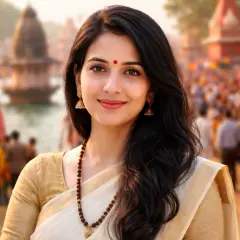
The ABAP's 80% body coverage rule is rooted in the idea that modest dress reflects respect for the divine. When performing religious rituals like worship, hawan, yagya, or anointment, clothing should be of Indian tradition.
The Sentiment Behind the Rule
The Shri Ganga Sabha and temple managements have expressed concern that women and youth often unknowingly wear clothes that go against religious rules, which later brings criticism and disrespect to the community. The dress code is framed as a protective measure to preserve the dignity of the temples and the devotees.
Expert Advice ✨: Whether or not you personally agree with the dress code, respecting local customs is part of being a good traveler. The dress code is not about controlling individual choices — it is about honouring a sacred space. Wearing modest clothing is a simple way to show respect for the millions of pilgrims for whom Haridwar is the holiest of cities.
Practical Alternatives to Shorts ✅
If you are used to wearing shorts, especially in April when Haridwar gets hot, here are comfortable, practical alternatives that comply with the dress code.
For Men
| Alternative | Why It Works |
|---|---|
| Loose cotton pants | Breathable, comfortable, modest |
| Dhoti | Traditional, airy, culturally appropriate |
| Kurta-pyjama | Comfortable, covers knees and shoulders |
| Lightweight trousers | Practical for travel and temple visits |
| Lungi | Traditional, airy, modest |
For Women
| Alternative | Why It Works |
|---|---|
| Salwar kameez | Comfortable, covers knees and shoulders |
| Saree | Traditional, dignified, airy |
| Kurti with leggings | Practical, modest, easy to move in |
| Long skirts or dresses | Covers knees, comfortable in heat |
| Dupatta or shawl | Useful for covering shoulders in temples |
What to Avoid in Temples
-
Shorts — Explicitly banned
-
Sleeveless tops — Discouraged
-
Ripped jeans — Explicitly banned
-
Mini skirts — Explicitly banned
-
Revealing outfits — Generally prohibited
-
Night suits — Explicitly banned
Pro Tip 🧭: Carry a lightweight shawl or dupatta that you can drape over your shoulders when entering temples. This simple item instantly transforms a borderline outfit into an acceptable one and is useful in both winter and summer.
Kumbh 2027 Specific Considerations 🏕️
The Ardh Kumbh 2027 brings additional considerations for dress code compliance.
Increased Enforcement
During the Kumbh Mela, authorities are expected to enforce dress codes more strictly due to the massive influx of pilgrims and the need to preserve religious sanctity. The ABAP has stated that the dress code will be applied with force if needed.
Akhara Camps
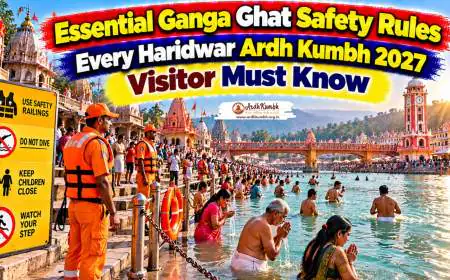
If you plan to visit Akhara camps during the Kumbh, modest dress is mandatory. The Naga Sadhus and Akhara members expect visitors to dress respectfully. Shorts are not appropriate in these settings.
Non-Hindu Visitors
The dress code applies to all visitors, regardless of religious background. Non-Hindu visitors should dress modestly and respect the sanctity of the site. Note that non-Hindu entry to Har Ki Pauri is restricted under existing bylaws, and the situation may evolve closer to the Kumbh.
Expert Advice ✨: During Amrit Snan days, when the Akhara processions are in progress and the Naga Sadhus are bathing, modest dress is absolutely essential. This is not the time to test the boundaries of the dress code.
What Happens If You Wear Shorts? ⚠️
Understanding the consequences of violating the dress code helps visitors make informed choices.
At Temples
| Consequence | Details |
|---|---|
| Stopped at the entrance | Security or temple staff may prevent entry |
| Asked to have darshan from outside | You can see the temple from the entrance but not enter |
| Forced removal | In extreme cases, the ABAP has stated that force may be used |
| Verbal warning | Usually the first step — staff may ask you to cover up or leave |
At Ghats
| Consequence | Details |
|---|---|
| Verbal warning | Police or volunteers may ask you to cover up |
| Social disapproval | Locals and pilgrims may express displeasure |
| No legal penalty | There is no formal fine for wearing shorts at ghats, but enforcement may vary |
Local Insight 📍: In practice, temple staff are usually polite but firm. They will ask you to step aside and may offer a shawl or cloth to cover up, or simply refuse entry. The ABAP's threat of force is a last resort for persistent violators.
Ujjain Comparison: What Pilgrims from Madhya Pradesh Should Know 🔄
Pilgrims familiar with Ujjain Simhastha Kumbh Mela will find Haridwar's dress code both similar and distinct.
Similarities
-
Both cities have traditional dress expectations at temples and ghats
-
Modest clothing covering knees and shoulders is the norm in both locations
-
Shorts are discouraged at temples in both cities
-
Akhara camps in both cities expect respectful attire
Key Differences
| Aspect | Haridwar | Ujjain |
|---|---|---|
| Formal Dress Code | Yes — ABAP-imposed, with posters | Less formalised |
| 80% Body Coverage Rule | Explicitly stated | Not formally articulated |
| Enforcement | Strict at major temples | Varies by temple |
| Shorts at Ghats | Strongly discouraged | Generally discouraged but less enforced |
| Akhara Parishad Involvement | Direct involvement in dress code | Similar involvement |
For pilgrims who have followed a Complete Ujjain Simhastha Kumbh Mela Dress Code Guide, the Haridwar experience will feel more formalised and strictly enforced. The key difference is the explicit 80% coverage rule and the posters at temple entrances listing prohibited items.
Local Insight 📍: Pilgrims accustomed to What To Wear In Ujjain Temples During Kumbh will find Haridwar's rules more explicit and rigorously enforced, particularly at Daksh Mahadev Temple and Mansa Devi Temple.
Final Dress Code Checklist for Haridwar Ardh Kumbh 2027 ✅
-
Leave shorts at home — They are explicitly banned in many temples
-
Pack loose cotton pants, dhoti, or kurta-pyjama for men
-
Pack salwar kameez, saree, or kurti-leggings for women
-
Carry a light shawl or dupatta for temple visits
-
Wear modest clothing at ghats — Cover knees and shoulders
-
Change into shorts only for the snan — Not for walking around
-
Respect the 80% body coverage rule at temples
-
Avoid ripped jeans, sleeveless tops, and revealing outfits
-
Check temple-specific rules — Some are stricter than others
-
Respect the sanctity of the site — Dress is a form of prayer
Expert Tip 💡: The Haridwar Ardh Kumbh 2027 is a once-in-six-years spiritual gathering, not a beach holiday. Dressing modestly is not a restriction — it is an act of respect for the millions of pilgrims for whom Haridwar is the holiest of cities. The ABAP's dress code is designed to preserve the sanctity of the temples and ghats, and complying with it is a simple way to honour the local culture. With the right clothing choices, you can be comfortable, respectful, and spiritually fulfilled throughout your pilgrimage.
Frequently Asked Questions