













































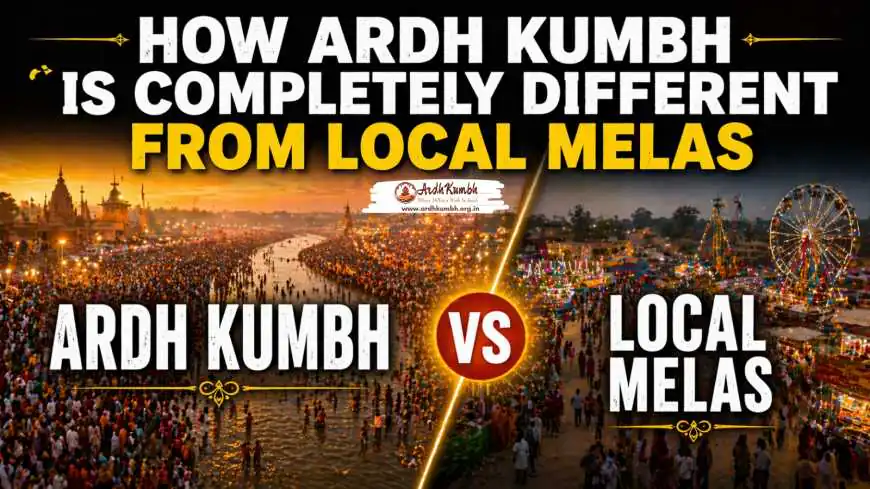
How Ardh Kumbh Is Completely Different From Local Melas
A village fair has rides and cotton candy. Ardh Kumbh has 10 million people and cosmic faith. Discover the shocking scale, purpose, and energy difference.
1. The Purpose: Entertainment vs. Liberation
Let us start with the most important difference. Why do people go?
A local mela exists for entertainment. You go to escape your daily routine. You eat junk food. You ride the Ferris wheel. You laugh at the clown. You go home with a stuffed toy you won at a shooting game. The purpose is temporary happiness.
The Ardh Kumbh exists for liberation (moksha). You go to wash away sins accumulated over lifetimes. You do not go for fun. You go for transformation. The holy dip is not a water slide. It is a ritual of death and rebirth. The purpose is not to make you smile for an hour. It is to change the trajectory of your soul.
Why this matters: You cannot confuse a carnival with a cathedral. One feeds your body. The other feeds your eternity. The Ardh Kumbh is the cathedral. The local mela is the carnival. Both are fine. But know the difference.
2. The Scale: A Ground vs. a Temporary City
A local mela fits in your maidan (open ground). You can walk from one end to the other in ten minutes. The Ardh Kumbh is a temporary city—one of the largest in the world. We are talking thousands of acres. We are talking tent cities that stretch as far as the eye can see. We are talking temporary bridges, hospitals, police stations, post offices, and even railway stations built specifically for the event.
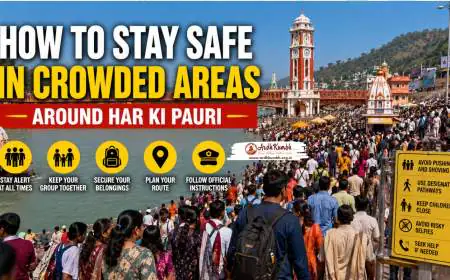
During the Ardh Kumbh, the population of the host city (Haridwar or Prayagraj) temporarily becomes larger than the population of Sri Lanka or Ireland. You do not "visit" the Kumbh. You enter a different country.
Why this matters: Scale changes experience. At a local mela, you are in control. At the Kumbh, the crowd controls the flow. You learn surrender. You cannot get that lesson from a merry-go-round.
3. The Duration: Long Weekend vs. Sacred Window
Your local mela lasts for three to seven days. Maybe two weeks if it is a big one. The Ardh Kumbh lasts for weeks (typically 45 to 60 days). The entire calendar is determined by astrological alignments—the positions of Jupiter, the Sun, and the Moon.
This is not a "convenient" date chosen by a committee. It is a cosmic appointment. The faith is that the river becomes nectar (amrit) only during these specific celestial windows. You do not show up on a random Tuesday because you have "leave from work." You show up on the auspicious day dictated by the stars.
Why this matters: Local melas are human-made. The Ardh Kumbh is cosmos-made. The difference in authority is everything. One is a holiday. The other is a commandment.
4. The Geography: Any Ground vs. Sacred River Confluence
A local mela can happen anywhere—a school field, a parking lot, a village square. The location is arbitrary. It is chosen for convenience, not for sanctity.
The Ardh Kumbh happens at specific sacred rivers—Haridwar (Ganga), Prayagraj (confluence of Ganga, Yamuna, and mythical Saraswati), Ujjain (Shipra), and Nashik (Godavari). You cannot move the Kumbh to a parking lot. The river is not a prop. The river is the main character.
The confluence (sangam) at Prayagraj is considered the most sacred spot in Hindu cosmology. Bathing there is believed to be exponentially more powerful than bathing anywhere else. A local mela does not have a sangam. It has a puddle.
Why this matters: Location is not just geography. It is theology. The Ardh Kumbh is tied to the land in a way that a local mela never is. You cannot replicate the energy of the sangam in a field.
Trending Guides Now

Can Families Attend Ardh Kumbh Comfortably Together?
Read Guide →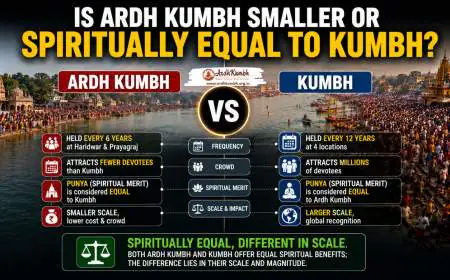
Is Ardh Kumbh Smaller or Spiritually Equal to Kumbh?
Read Guide →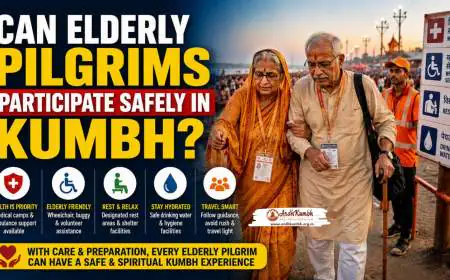
Can Elderly Pilgrims Participate Safely in Kumbh?
Read Guide →
Can Elderly Pilgrims Avoid Heavy Crowds at Kumbh?
Read Guide →
Dharamshala Stay During Ardh Kumbh: Free & Budget Guide
Read Guide →
Best Routes to Reach Haridwar for Ardh Kumbh Mela
Read Guide →
Haridwar Weather by Month: Best Time to Plan Your Visit
Read Guide →
Complete Haridwar Packing Checklist for Every Season
Read Guide →5. The Participants: Villagers vs. The Entire World
At a local mela, you will see people from your district. Maybe a few from the neighboring district. The crowd is local. The language is local. The food is local.
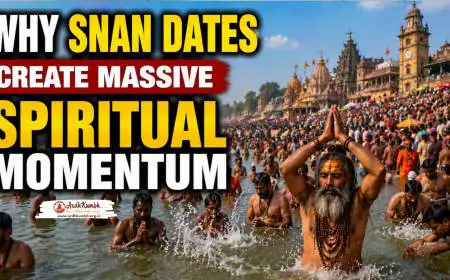
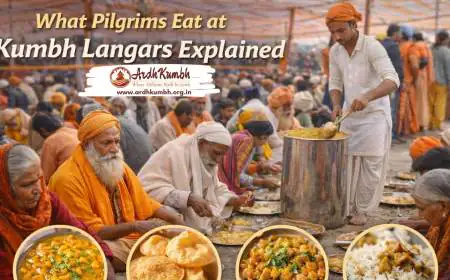
At the Ardh Kumbh, you will see everyone. Naga Sadhus covered in ash from the Himalayas. Foreign tourists from Japan, Brazil, and Germany. Millionaires in SUVs. Farmers walking barefoot for weeks. Politicians seeking votes. Hollywood celebrities seeking peace.
The Ardh Kumbh is a United Nations of faith. You will hear Hindi, Telugu, Tamil, Bengali, English, Russian, and Hebrew in the same line for chai. Your local mela cannot dream of this diversity.
Why this matters: Diversity expands your consciousness. When you see a sadhu from a cave standing next to a tech CEO from Silicon Valley, you realize that faith transcends borders, class, and language. That realization is the Kumbh working on you.
6. The Rituals: Cotton Candy vs. Shahi Snan
The most "ritualistic" thing at a local mela might be the opening ceremony—a local priest cutting a ribbon or lighting a lamp. That is it.
Now look at the Ardh Kumbh. You have the Shahi Snan (Royal Bath)—a precisely choreographed procession of Akharas, elephants, horses, swords, and tens of thousands of sadhus marching to the river at an auspicious hour dictated by ancient calendars. You have Vedic chanting 24 hours a day. You have havans (fire rituals) that burn for days. You have guru diksha (initiation ceremonies) where thousands take spiritual vows.
Why this matters: Rituals create meaning. The Kumbh is drowning in meaning. Every action—from the way you enter the water to the way you offer prasad—has a purpose and a story. A local mela has rides. The Kumbh has sacred geometry in motion.
7. The History: A Few Decades vs. Millennia
Your local mela might be 50 years old if it is an old tradition. Maybe 100 years if your town has deep roots. That is a blink in cosmic time.
The Ardh Kumbh (and the larger Kumbh Mela) is mentioned in the ancient texts—the Puranas, the Mahabharata. The story of the churning of the ocean (Samudra Manthan) and the drops of nectar that fell at the four Kumbh locations is thousands of years old. The Chinese traveler Hiuen Tsang wrote about the Kumbh Mela in the 7th century CE. It was already ancient then.
When you walk on the Kumbh grounds, you are walking on layers of history. Generations of your ancestors stood in the same line. Emperors and beggars have taken the same dip. That weight of history is palpable. You cannot feel that at a local mela built last year.
Why this matters: History gives depth. The Kumbh is not an event. It is a continuation. You are not "attending" it. You are joining a conversation that started 3,000 years ago.
8. The Infrastructure: One Tent vs. A Government Operation
A local mela needs a generator, a few portable toilets, and some trash cans. The municipality handles it with a small team.
The Ardh Kumbh is a logistical miracle. The government spends billions of rupees. They build temporary roads, bridges over rivers, electricity grids, water treatment plants, sewage systems, and massive parking lots. They deploy tens of thousands of police and paramilitary personnel. They set up hospitals with hundreds of beds. They run special trains with hundreds of extra coaches.
The Ardh Kumbh is a temporary megacity that functions better than some permanent cities. The planning starts two years in advance. Your local mela is planned in two months.
Why this matters: The scale of infrastructure tells you the scale of faith. The government does not spend this kind of money on a village fair. They spend it because the Kumbh is a national priority—economically, culturally, and spiritually.
9. The Energy: Loud Speakers vs. A Million Hearts Beating Together
Walk into a local mela. What do you hear? Film songs from loudspeakers. The screams of kids on rides. The sizzle of frying pakoras. It is chaotic in a fun way.
Now walk into the Ardh Kumbh during the Shahi Snan. What do you hear? A deep hum. It is the sound of millions of people chanting—"Har Har Gange," "Jai Ganga Maiyya." It is not loud in a piercing way. It is deep. It vibrates in your chest. It is a collective heartbeat.
You cannot record this energy on your phone. You cannot describe it to someone who has not been there. It is a physical sensation. It is the feeling of being a single cell in a massive body that is alive and breathing and praying.
Why this matters: Energy is real. You can feel it. A local mela gives you excitement. The Kumbh gives you awe. Excitement fades. Awe changes you.
10. The Stakes: Missed Fun vs. Missed Salvation
If you miss your local mela, what happens? Nothing. You feel a little FOMO (fear of missing out). You see photos on WhatsApp. You say, "Maybe next year." Life goes on.
If a devotee misses the Ardh Kumbh—specifically the auspicious bathing dates—the stakes are cosmic. They believe that the opportunity to wash away lifetimes of sin comes only once every six years (for Ardh Kumbh) or twelve years (for Purna Kumbh). Missing it means carrying that karma for another cycle.
That is why you see 80-year-old grandparents walking for weeks on broken feet. That is why you see disabled pilgrims being carried on stretchers. They are not "dedicated fans." They are souls chasing liberation.
Why this matters: Stakes change behavior. The desperation and devotion you see at the Kumbh are absent from any local mela. You are watching people who believe their eternity depends on this moment. That is not a fair. That is a crisis and a celebration rolled into one.
11. The Aftermath: Photos vs. Transformation
After a local mela, you go home. You have photos of your kids on the bouncy castle. You have a tummy ache from too much jalebi. You sleep it off. By Monday, you have forgotten it.
After the Ardh Kumbh, you are different. You have walked until your feet bled. You have shivered in the cold at 4 AM. You have seen poverty and wealth bathing side by side. You have been lost and found. You have cried in a bhajan circle for no reason you can explain. You come home tired, smelly, and changed.
The transformation lingers for months. You value your time differently. You complain less about small inconveniences. You feel a pull to be kinder.
Why this matters: Local melas are events you attend. The Ardh Kumbh is an experience that attends you. It stays in your bones. That is the ultimate difference.
12. The One Thing Both Share (And Why It Doesn't Matter)
Okay, I will be fair. Both the Ardh Kumbh and a local mela share one thing: crowds. Both have lots of people. Both can be noisy. Both have stalls selling food and trinkets.
But that is like saying a puddle and the Pacific Ocean both have water. Technically true. Practically meaningless. The crowd at a local mela is a crowd. The crowd at the Kumbh is a pilgrimage.
The intention changes everything. The scale changes everything. The history changes everything. The stakes change everything.
So the next time someone says, "Oh, the Kumbh is just a big mela," smile politely. And then quietly know that they have never been. Because if they had, they would never say that again.
Frequently Asked Questions