
















































How Kumbh Sustained India's Spiritual Leadership
Discover how Kumbh Mela has sustained India's spiritual leadership for millennia. The hidden infrastructure of gurus, lineages, and global influence.
The Gathering of Gurus - Where Spiritual Authority Is Renewed
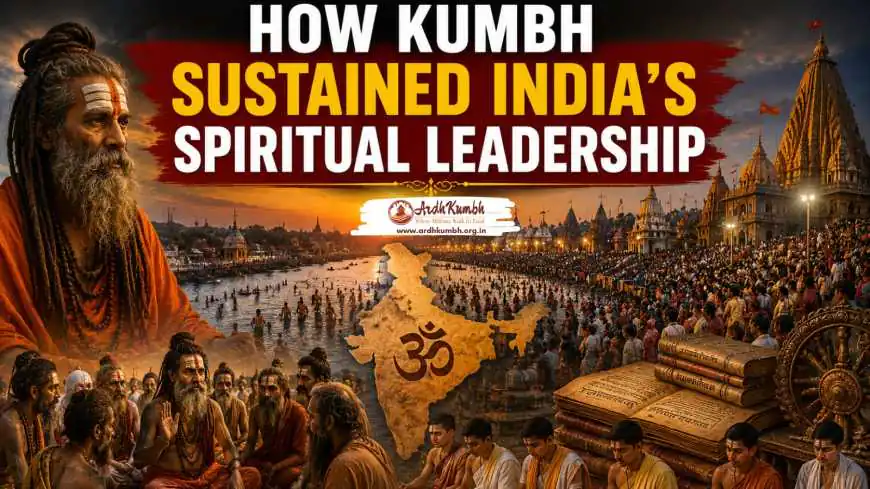
Let me start with the most obvious way that Kumbh sustains India's spiritual leadership. It is where the gurus gather. Not all of them. But the most important ones. The heads of akharas. The lineage holders. The nationally recognized saints. They come to Kumbh not just to bathe, but to meet. To confer. To plan. To resolve. To bless.
When a guru sits at Kumbh and thousands of disciples come to receive blessings, that guru's authority is reinforced. Not just in the eyes of the disciples. In the eyes of the guru's peers. Other gurus see the crowd. They see the devotion. They see the organization. They know that this guru is a force to be reckoned with. That recognition is spiritual capital. And spiritual capital is the currency of India's spiritual leadership.
But Kumbh also renews authority in another way. It is where new gurus are recognized. When an old guru dies, the successor is often formally acknowledged at Kumbh. The transfer of authority happens in front of thousands of witnesses. The new guru receives blessings from other gurus. The lineage continues. India's spiritual leadership does not have a gap. The succession is public. Transparent. Legitimate.
Without Kumbh, this succession would be private. Contested. Uncertain. There would be schisms. Factions. Claims and counter-claims. The spiritual authority of India would fragment. Disciples would not know who to follow. The world would see confusion, not leadership. Kumbh prevents that. It is the stage where spiritual authority is performed, recognized, and transferred. That performance - repeated every six or twelve years - is the backbone of India's spiritual leadership.
Trending Guides Now
Significance of Bathing in the Ganges During Kumbh Mela Explained
Read Guide →
What Is the Story Behind the Ardh Kumbh Mela?
Read Guide →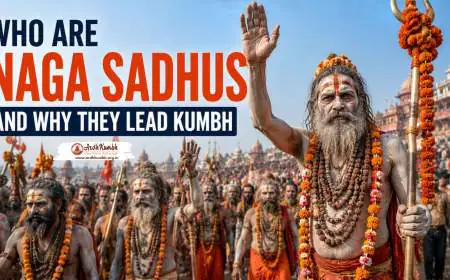
Who Are Naga Sadhus and Why They Lead Kumbh
Read Guide →
Biggest Crowds Ever Recorded at Ardh Kumbh
Read Guide →
Best Routes to Reach Haridwar for Ardh Kumbh Mela
Read Guide →
Essential Rules Every Ardh Kumbh 2027 Pilgrim Must Follow
Read Guide →
Ardh Kumbh 2027 Dates: Who Decides Them and How
Read Guide →
Where Ardh Kumbh Is Written in Ancient Scriptures
Read Guide →The Transmission of Teachings - How Wisdom Spreads Across India
Let me talk about the second way that Kumbh sustains India's spiritual leadership. Transmission. Not the transmission of guru to disciple in a private ashram. The transmission of teachings across regions, lineages, and generations. Kumbh is where a sadhu from Tamil Nadu learns about a new meditation technique from a sadhu from Himachal Pradesh. Where a guru from West Bengal shares a interpretation of a scripture with a guru from Gujarat. Where a householder from Maharashtra receives a mantra from a sadhu from Rajasthan.
This cross-pollination of teachings is essential for India's spiritual leadership. Because spiritual leadership is not just about preserving the old. It is about adapting to the new. Generating fresh insights. Responding to contemporary needs. Kumbh is the marketplace where spiritual ideas are traded. The best ideas spread. The weak ideas die. The tradition evolves without losing its core.
Without Kumbh, spiritual teachings would become provincial. A guru in Kerala would know only what other gurus in Kerala know. A guru in Punjab would know only what other gurus in Punjab know. There would be no national conversation. No cross-fertilization. India's spiritual leadership would be a collection of local traditions, not a national and global force.
Kumbh creates the national conversation. It brings together teachers from every region and every lineage. It forces them to articulate their teachings to outsiders. It challenges them to defend their interpretations. It exposes them to different perspectives. This dynamic exchange keeps India's spiritual tradition alive, relevant, and leading. Not stagnant. Not isolated. Kumbh is the engine of spiritual evolution in India. And evolution is the secret of sustained leadership.
The Soft Power Infrastructure - How India Projects Spiritual Influence
Let me talk about how Kumbh contributes to India's soft power - its ability to influence the world through attraction, not coercion. India's spiritual soft power is enormous. Yoga. Meditation. Ayurveda. Vegetarianism. Non-violence. These ideas have spread across the world. Millions of foreigners practice yoga every morning. Millions meditate. Millions avoid meat. All because India taught them.
But soft power needs infrastructure. It needs places where teachings are transmitted. It needs people who can teach. It needs networks that can scale. Kumbh is that infrastructure. At Kumbh, foreign seekers come from around the world to learn from Indian gurus. They sit at the feet of sadhus. They receive mantras. They take initiation. They return to their home countries as ambassadors of India's spiritual tradition.
These foreign disciples are soft power in action. They do not work for the Indian government. They are not paid. But they spread India's spiritual influence more effectively than any diplomat. Because they are believers. They are practitioners. They are living examples. And they were formed at Kumbh.
Kumbh also showcases India's spiritual leadership to the world's media. When Kumbh happens, journalists from around the world come to cover it. They write articles. They make documentaries. They post photos. The world sees India as a spiritual powerhouse. Not a poor country with problems. A civilization with depth. A nation that teaches the world about meaning, purpose, and peace.
This media coverage is free advertising for India's spiritual brand. It reaches millions of people who would never visit India. It plants seeds. Years later, some of those people will come to India to study yoga or meditation. They will buy Indian products. They will defend India against critics. They will become friends of India. Because of Kumbh.
Without Kumbh, India's spiritual soft power would still exist, but it would be weaker. There would be no central event to attract global attention. No gathering to showcase the diversity and depth of India's spiritual traditions. No infrastructure for foreign seekers to connect with authentic gurus. Kumbh is the soft power superweapon that India has wielded for thousands of years. Quietly. Effectively. Sustainably.
The Dispute Resolution Mechanism - How Unity Is Preserved
Let me talk about a less visible but vital way that Kumbh sustains India's spiritual leadership. Dispute resolution. Spiritual communities have conflicts. Gurus disagree. Lineages compete. Interpretations clash. If these conflicts are not resolved, the tradition fragments. Leadership is weakened. India's spiritual authority is diminished.
Kumbh is where disputes get resolved. Not through courts or police. Through dialogue. Mediation by respected elders. Public debate. Kumbh provides a neutral ground where disputing parties can meet without losing face. They can talk. They can negotiate. They can compromise. They can agree to disagree without splitting the tradition.
When a resolution is reached at Kumbh, it has authority. Because it was witnessed by thousands of pilgrims and recognized by other gurus. The resolution is not just a private agreement. It is a public act. It becomes part of the tradition's memory. Future generations will know that the dispute was resolved at Kumbh. And the resolution will hold.
Without Kumbh, disputes would fester. Parties would retreat to their corners. Schisms would multiply. India's spiritual leadership would be a battlefield of competing factions. The world would see division, not unity. Kumbh prevents that. It is the supreme court of India's spiritual tradition. Not a court with judges and laws. A court of community, dialogue, and shared purpose. It has kept India's spiritual tradition unified for thousands of years. That unity is the foundation of leadership.
The Recognition of New Leaders - How Succession Is Managed
Let me talk about another leadership function of Kumbh. Succession. Gurus die. Lineages need new leaders. How are those leaders chosen? How are they recognized by the wider community? How do they gain authority beyond their own followers?
Kumbh is the answer. When a guru dies, the successor is often presented at Kumbh. The successor sits on the guru's seat. Receives blessings from other gurus. Teaches disciples. Performs rituals. The community watches. If the successor is accepted, the blessings flow. If the successor is rejected, the blessings are withheld. The community decides, not through voting, but through presence and participation.
This public recognition is essential for spiritual leadership. Because spiritual authority cannot be inherited like a throne. It must be earned and recognized. Kumbh provides the stage where earning and recognition happen transparently. Everyone can see. Everyone can judge. Everyone can accept or reject.
Without Kumbh, succession would be opaque. A guru could claim to be the successor without community recognition. Factions would form. Disciples would be confused. India's spiritual leadership would be unclear and contested. Kumbh brings clarity. It is the public square where spiritual leadership is tested and confirmed. That confirmation is what allows India to project spiritual leadership to the world. The world knows that the guru sitting on that seat at Kumbh has been recognized by the community. Not just self-proclaimed. That recognition is credibility. And credibility is leadership.
The Global Outreach - How Kumbh Connects India to the World
Let me talk about the final way that Kumbh sustains India's spiritual leadership. Global outreach. In the past, Kumbh was mostly for Indians. Now, it is for the world. Foreign seekers come by the thousands. Western gurus come to learn. Spiritual tourists come to observe. Journalists come to report. Scholars come to study.
This global presence transforms Kumbh from a national event into an international one. India's spiritual leadership is not just claimed at Kumbh. It is demonstrated to the world. The world sees India hosting the largest gathering of spiritual seekers on earth. The world sees India's gurus teaching foreigners. The world sees India's traditions being practiced by people from every continent.
This visibility is leadership. Because leadership requires followers. Kumbh shows the world that India has followers - millions of them. Not forced followers. Voluntary followers. People who have chosen India's spiritual path because they found it meaningful. That voluntary following is the essence of soft power. And Kumbh is where it is on full display.
Kumbh also facilitates global outreach by connecting foreign seekers to Indian gurus. A seeker from Brazil can come to Kumbh, meet a guru from Rishikesh, receive initiation, and return to Brazil as a teacher. That Brazilian teacher will then spread India's spiritual teachings to Brazilians. In their language. In their cultural context. That is scaling. That is leadership that multiplies.
Without Kumbh, this global outreach would be slower and more difficult. Foreign seekers would have to travel to individual ashrams without a central gathering. They might miss the best gurus. They might not be recognized by the community. Kumbh solves these problems. It is the one-stop shop for global spiritual seekers who want to connect with India's spiritual leadership. And that connectivity is what keeps India at the center of the world's spiritual map.
The Living Legacy - Why Kumbh Will Keep Leading
Let me end this with a reflection on the future. Will Kumbh continue to sustain India's spiritual leadership in the coming centuries? I believe yes. Because the needs that Kumbh meets are not going away. The need for connection between gurus. The need for transmission of teachings. The need for soft power projection. The need for dispute resolution. The need for succession management. The need for global outreach. These needs will still exist in 2125. And Kumbh will still be the infrastructure that meets them.
Of course, Kumbh will change. It will use more technology. It will have more foreigners. It will be more organized. But the core will remain. Gurus will gather. Disciples will come. Teachings will be transmitted. Blessings will flow. India will lead.
That leadership is not accidental. It is engineered. By Kumbh. Over thousands of years. Through the genius of a tradition that understood that spiritual leadership requires infrastructure. Not just inspiration. Not just individual genius. Infrastructure. Kumbh is that infrastructure. It is the hidden machinery behind India's spiritual leadership. And as long as Kumbh continues, India will continue to lead the world in spiritual matters. Not because Indians are better than other people. Because Indians built Kumbh. And Kumbh does the work.
Frequently Asked Questions