


































Cultural Impact of Ardh Kumbh on Indian Society
How Ardh Kumbh Mela shapes Indian culture, art, traditions, and social fabric. Deep dive into the festival that keeps India's soul alive.
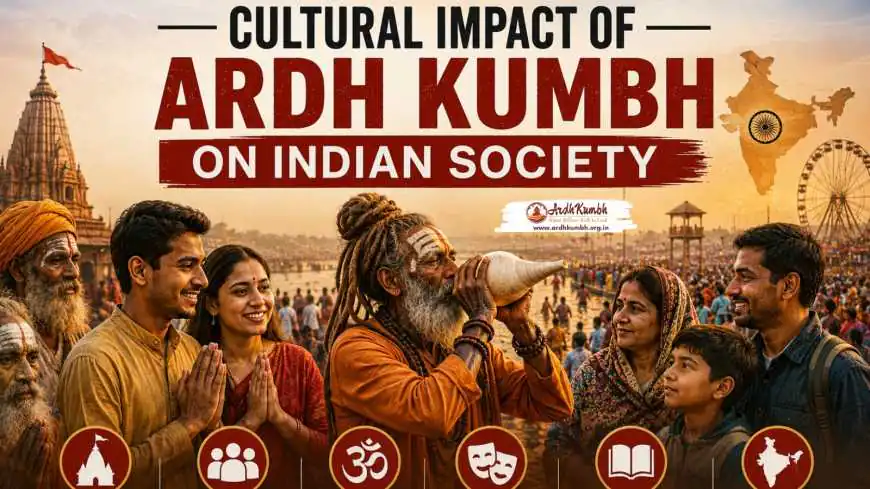
The Great Cultural Equalizer That No Law Could Create
Let me tell you something that will surprise you. Indian society outside the Mela grounds is deeply hierarchical. The caste system, class divisions, regional prejudices — they are real and they hurt. But step inside the Ardh Kumbh, and something magical happens. A Brahmin priest shares his prasad with a Dalit farmer. A Marwari businessman sleeps on the same floor as a laborer from Bihar. A woman from a conservative family walks freely among millions without fear. How is this possible? Because the Ardh Kumbh creates a cultural container where the usual rules of Indian society are suspended. For those few weeks, the only identity that matters is that of a pilgrim. This temporary cultural reset has a lasting impact. People who experience this equality at the Kumbh often carry that feeling back home. They start questioning the unnecessary hierarchies of daily life. They become less tolerant of caste discrimination. They become more open to inter-caste friendships and marriages. Over centuries, the Ardh Kumbh has slowly, quietly, softened the rigid edges of Indian social structure. No law, no court judgment, no government scheme has achieved what this pilgrimage achieves every six years.
Preserving Folk Arts That Have No Other Home
Here is a heartbreaking truth. Most traditional Indian folk art forms are dying. Young people do not want to learn them. There is no audience. No income. No respect. But during the Ardh Kumbh, these folk arts suddenly find a stage again. Walk through any sector of the Mela grounds, and you will hear bhajans sung in dialects you have never heard before. You will see puppeteers from Rajasthan performing stories from the Ramayana. You will witness folk dancers from Bengal, drummers from Punjab, storytellers from Uttar Pradesh narrating ancient tales with nothing but their voice and a simple prop. These artists do not perform at five-star hotels. They do not get invited to international cultural festivals. But at the Ardh Kumbh, they find millions of eager ears and eyes. More importantly, they find young apprentices who get inspired. A teenager watching a folk singer from his own village perform in front of thousands might decide to learn that art instead of abandoning it for a city job. The Ardh Kumbh is not just preserving cultural heritage. It is keeping it alive, breathing, and relevant.
The Great Transmission of Oral Traditions
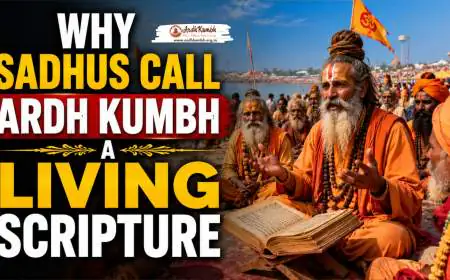
Indian society has always relied on oral traditions more than written texts. But in the age of smartphones and Instagram, who still sits down to listen to a grandfather tell a story? The Ardh Kumbh is where oral culture still thrives. Sadhus and saints from different akhara and sampradaya give discourses that last for hours. They do not read from books. They recite from memory — ancient mantras, stories of gods, philosophical debates, parables, genealogies of gurus, histories of pilgrimage sites. Sitting around them are thousands of listeners — young and old, literate and illiterate, rich and poor. These oral transmissions are not just entertainment. They are how Hindu culture has survived for thousands of years without a single central authority. A young person listening to a saint discuss the Bhagavad Gita might never open the book itself. But the values, the stories, the moral frameworks enter their consciousness anyway. The Ardh Kumbh ensures that even in 2025, oral culture remains a living, breathing part of Indian society.
Language Unification Without Any Textbook
India has 22 official languages and hundreds of dialects. This diversity is beautiful, but it also creates real communication barriers. The Ardh Kumbh offers a fascinating solution — it creates a temporary linguistic melting pot. The default language of the Mela is a beautiful, broken, functional Hindi that everyone somehow understands. A Tamil pilgrim who has never spoken Hindi in his life learns enough to ask for directions, buy food, and share his story. A Bengali shopkeeper picks up phrases from Punjabi customers. A Gujarati family learns to understand Marathi accents. This is not forced language learning. It is organic, need-based, joyful linguistic exchange. Over generations, this has had a real impact on Indian society. The Hindi belt has expanded. More Indians today can understand basic Hindi compared to fifty years ago. But unlike government-driven language policies that create resentment, the Ardh Kumbh makes language learning feel natural and even fun. A young person from Kerala who spends time at the Kumbh returns home with not just spiritual experiences but also a new linguistic skill that connects them to the rest of the country.
Trending Guides Now
What Is the Story Behind the Ardh Kumbh Mela?
Read Guide →
History of Ardh Kumbh Mela From Samudra Manthan to Modern Times
Read Guide →
How Ardh Kumbh Preserved India’s Oral Traditions
Read Guide →
Why Ardh Kumbh Occurs Every Six Years Explained
Read Guide →
Best Routes to Reach Haridwar for Ardh Kumbh Mela
Read Guide →
Essential Rules Every Ardh Kumbh 2027 Pilgrim Must Follow
Read Guide →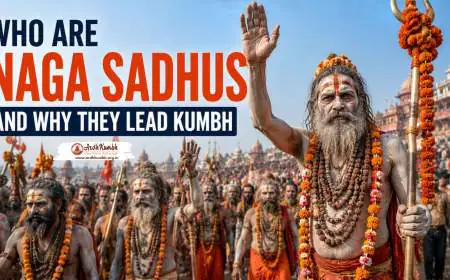
Who Are Naga Sadhus and Why They Lead Kumbh
Read Guide →
Biggest Crowds Ever Recorded at Ardh Kumbh
Read Guide →Culinary Traditions That Travel Across Borders
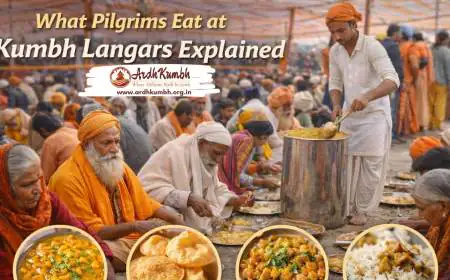
Indian food is incredibly regional. A person from Odisha might find Gujarati food completely unfamiliar. But the Ardh Kumbh creates a national food exchange like no other. The Mela kitchens serve khichdi that becomes a great equalizer — rich and poor eat the same meal. But beyond that, you find food stalls representing every corner of India. A Maharashtrian tries dal baati churma from Rajasthan for the first time. A Punjabi discovers the joy of appam from Kerala. A Bengali develops a taste for dhokla. These are not just meals. They are cultural experiences served on a plate. Over time, these culinary exchanges at the Kumbh have changed Indian eating habits permanently. Dishes that were once regional have become national comfort foods. Chai stalls at the Kumbh use a specific spice blend that pilgrims love and then replicate back home. Street food vendors learn new recipes from cooks of other states. The Ardh Kumbh is, without exaggeration, a living culinary university that has shaped what India eats today.
Handicraft Economy That Sustains Thousands of Families
Ask any handicraft artisan in a remote Indian village about their biggest challenge. They will not say lack of skill or creativity. They will say lack of customers. Big cities are far away. Online sales require technology and shipping knowledge. Middlemen exploit them. But during the Ardh Kumbh, millions of potential customers come directly to them — or rather, to temporary markets set up near the Mela grounds. Potters from Khurja set up kilns. Weavers from Varanasi bring their finest silk. Wood carvers from Saharanpur display intricate boxes and toys. Brassware artists from Moradabad shine their best pieces. For many of these artisans, the Ardh Kumbh is the single biggest source of annual income. More importantly, it connects them directly to customers who appreciate their art, tell their friends, and become repeat buyers. This economic impact ripples outward. An artisan who earns well at the Kumbh can send their children to school, invest in better tools, and most importantly — keep their traditional craft alive instead of abandoning it for factory work. The Ardh Kumbh is not just preserving handicraft traditions. It is keeping entire artisan communities economically viable.
Family and Community Bonding Across Generations
In modern Indian society, families are scattering. Children move to different cities for work. Elderly parents live alone. Cousins grow up as strangers. The Ardh Kumbh creates a powerful reason for families to come together. A family from Mumbai, another branch from Delhi, relatives from Kolkata — they all plan their pilgrimage together. They book tents together. They wake up before dawn together for the snan. They share meals, stories, laughter, and sometimes tears. For three generations to sit together and perform the same rituals, chant the same mantras, float the same diya in the Ganga — that is cultural bonding at its deepest level. These shared experiences become family legends. "Remember the Ardh Kumbh of 2026 when father slipped on the wet steps?" These stories get told and retold at weddings and funerals for decades. They become the glue that holds Indian families together across distances and differences. The Ardh Kumbh is not just a pilgrimage. It is the largest recurring family reunion in human history.
The Invisible Curriculum of Values and Ethics
How do values like hospitality, generosity, patience, and compassion get passed down in Indian society? Not through formal schooling. Through lived experiences. And there is no better living classroom than the Ardh Kumbh. A child who sees their mother share their limited food with a hungry stranger learns generosity without any lecture. A teenager who watches a sadhu help an elderly pilgrim cross a muddy path learns service by example. A young adult who loses their family in the crowd and is helped by complete strangers learns trust in humanity. These are not theoretical lessons. They are embodied values experienced in real time. The Ardh Kumbh functions as an invisible curriculum that has shaped Indian character for centuries. The famous Indian hospitality — the instinct to offer water and food to any guest — has been reinforced at countless Kumbh Melas where strangers became temporary family. The patience to stand in long queues, the ability to sleep anywhere, the skill of adjusting with anyone — these cultural traits that define Indian society today have been practiced and perfected at gatherings like the Ardh Kumbh.
Religious Pluralism in Action
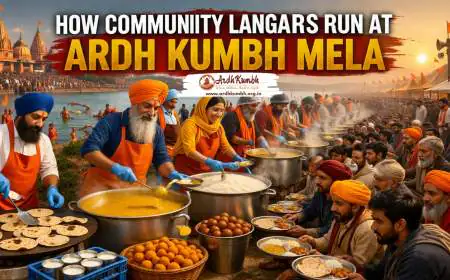
Here is something that will challenge your assumptions. Yes, the Ardh Kumbh is a Hindu festival. But walk through the Mela grounds, and you will see Sikhs serving free langar, Muslims running food stalls, Jains distributing water, Buddhists meditating in quiet corners, and Christians volunteering at medical camps. This is not accidental. This is the cultural impact of centuries of Indian pluralism. The Ardh Kumbh has always been open to everyone. Unlike many religious gatherings around the world that create exclusion, the Kumbh creates inclusion. A Muslim leather worker from Kanpur finds thousands of customers at the Mela. A Sikh granthi (priest) comes to listen to a Hindu saint's discourse because he respects spiritual wisdom regardless of religion. A Christian doctor sets up a free clinic because service is her faith in action. This lived pluralism has a real impact on Indian society. People who experience the Kumbh return home less suspicious of other religions. They have seen with their own eyes that coexistence is not just possible but beautiful. In a world where religious polarization is increasing, the Ardh Kumbh stands as a stubborn, ancient, living proof that India's pluralistic culture is not dead.
The Changing Role of Women in Pilgrimage Culture
Indian society has traditionally restricted women's mobility. But the Ardh Kumbh has quietly become a space of female empowerment. Today, you see thousands of women pilgrims traveling alone or in all-women groups. You see women saints leading their own disciples, something unimaginable a few decades ago. You see female volunteers managing crowds, organizing kitchens, leading prayers. The Kumbh Mela administration now creates dedicated women-only bathing areas, women-only security teams, and women-friendly facilities. This institutional recognition has a cultural ripple effect. A woman who travels alone to the Ardh Kumbh and feels safe, respected, and empowered returns home with a new sense of agency. She becomes less willing to accept restrictions on her mobility. She becomes an example for other women in her community. The Ardh Kumbh is not a feminist protest. But it is one of the largest spaces for female public participation in traditional Indian society, and that participation changes how Indian culture views women.
Environmental Consciousness Through Tradition
Here is a beautiful irony. The Ardh Kumbh, which brings millions of people to the riverbanks, has also become a powerful teacher of environmental consciousness. The Ganga is not just a river. In Indian culture, she is a mother, a goddess, a life-giver. This cultural reverence translates into real behavior. Pilgrims who might litter anywhere else become careful about keeping the ghats clean. Volunteers run massive clean-up drives before, during, and after the Mela. The government has invested heavily in sewage treatment plants, water quality monitoring, and waste management systems specifically for the Kumbh. But more importantly, millions of pilgrims leave the Ardh Kumbh with a deeper emotional connection to the Ganga. They become advocates for river conservation in their own hometowns. They donate to clean Ganga projects. They teach their children to respect water bodies. The cultural impact of the Ardh Kumbh on Indian environmental consciousness is immeasurable.
The Sacred and the Modern: How Tradition Adapts
Every critic of Indian traditional culture says the same thing — ancient practices cannot survive in the modern world. The Ardh Kumbh proves them wrong every six years. How does it adapt? QR codes on donation boxes. Live streaming of aarti for devotees who cannot travel. Mobile apps for finding your tent in the massive crowd. Drone cameras for security and crowd management. Social media campaigns reaching millions of young Indians. The Ardh Kumbh has absorbed modern technology without losing its soul. This ability to adapt while preserving core values is the secret of Indian culture's survival. A young person who experiences the Kumbh through a YouTube live stream might still feel connected enough to attend in person next time. A family that uses an app to navigate the Mela still performs the same rituals their ancestors did. The Ardh Kumbh teaches Indian society an invaluable lesson — tradition and modernity are not enemies. They can dance together. And that lesson has shaped everything from Indian cinema to Indian business to Indian family life in profound ways.
A Festival That Never Ends
Here is the most beautiful thing about the cultural impact of the Ardh Kumbh on Indian society. The Mela ends. The tents are folded. The millions return home. But the cultural transformations continue. The artisan who found customers at the Kumbh keeps his craft alive for another year. The grandmother who brought her grandchildren to the snan now tells them stories from the pilgrimage every Sunday. The young woman who traveled alone for the first time now mentors other girls in her village to be fearless. The Muslim shopkeeper who served Hindu pilgrims with love now has customers who seek him out year after year. The sadhu who gave a discourse on the riverbank now has disciples spread across several states who meet regularly to discuss his teachings. The Ardh Kumbh does not end when the last pilgrim leaves. It simply becomes invisible. It enters the cultural bloodstream of India. And six years later, it surfaces again — stronger, richer, and more necessary than ever. That is not just a festival. That is Indian society remembering itself, remaking itself, and carrying itself forward into the future.
Frequently Asked Questions