




















































How Ardh Kumbh Preserved Ethical Values
Discover how Ardh Kumbh Mela silently preserved ethical values like honesty, charity, patience, and unity for centuries. A heartfelt human guide to living right.
When There Are No Cameras Watching
Here is something that will shock you if you have never been to the Kumbh. There are lost and found centers everywhere. And I mean everywhere. At the end of each day, these centers are overflowing with wallets, mobile phones, jewelry, bags, and even passports. Now, ask yourself honestly: in a normal city, if someone drops a wallet with cash on a crowded street, what are the chances it comes back? Very low, right? But at the Ardh Kumbh, the return rate is astonishingly high. Why? Because when you are standing in front of the Ganges, having just taken that sacred dip, something shifts in your brain. You have just asked the river to wash away your sins. How can you then pick up someone else's wallet and walk away? That would be a joke. The environment of the Kumbh actively pressures you toward honesty. Not because a policeman is watching. Because you are watching yourself. And for those few days, you want to be the person your grandmother believed you could be. That is how the Kumbh preserves honesty — not by teaching it, but by creating a space where dishonesty feels physically disgusting.
Charity – The Bhandara Spirit
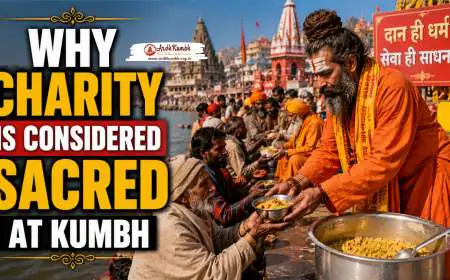
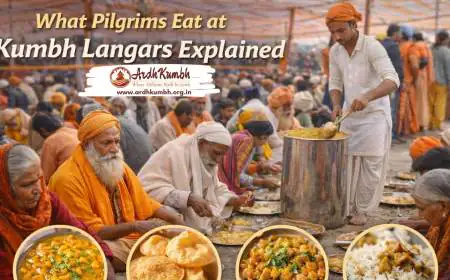
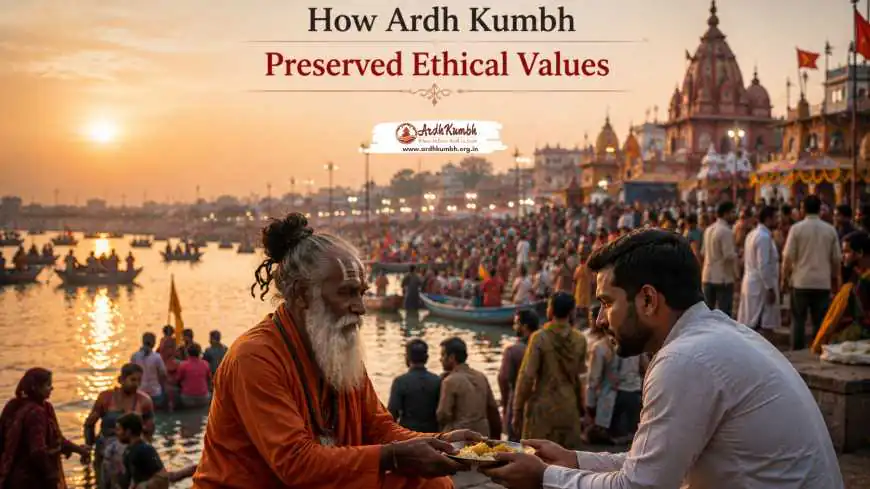
You cannot walk fifty feet at the Ardh Kumbh without someone offering you food. I am not talking about paid restaurants. I am talking about Bhandaras — free community kitchens run by ashrams, wealthy families, sadhus, and even poor villagers who have saved all year just to cook one meal for strangers. This is charity without any of the modern nonsense. No Instagram photos. No tax benefits. No "like and subscribe." Just a hot plate of khichdi and a smile. The value being preserved here is Seva (selfless service). And here is the clever part: when you eat at a Bhandara, you feel an overwhelming urge to give back. So you roll up your sleeves and wash dishes. Or you chop vegetables. Or you serve water. The Kumbh turns you from a taker into a giver without you even noticing. By the time you leave, charity has stopped being a word in a religious book and has become a habit in your hands. That is preservation. That is how a six-year-old tradition keeps the idea of giving alive across generations.
Patience – The Ultimate Test
Let me be brutally honest with you. The Ardh Kumbh will test your patience like nothing else in your life. You will stand in a line for the Shahi Snan that does not move for three hours. You will wait for a toilet that never comes. You will stand in the cold, wet, tired, hungry, and surrounded by a million people who are all feeling the same way. And here is the ethical miracle: nobody riots. Nobody burns the place down. Yes, there is pushing. Yes, there is shouting. But by and large, 50 million people practice a level of patience that would make a Zen monk proud. Why? Because everyone knows why they are there. Everyone understands that the holy dip is worth the wait. This shared understanding creates a collective patience that is rare in the modern world. The Kumbh forces you to slow down. You cannot rush the river. You cannot rush the stars. You cannot rush God. So you wait. And in that waiting, you learn that patience is not passive suffering. It is an active, conscious choice to trust the process. That lesson stays with you when you go back to your traffic jams and grocery lines.
Equality – Where the King and the Beggar Sit Together
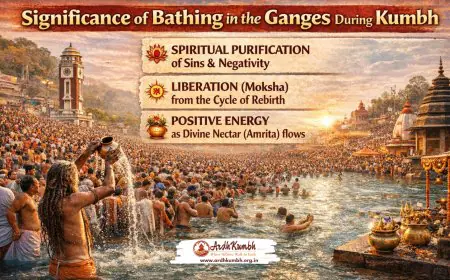
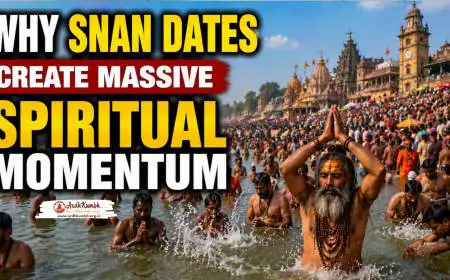
Watch the Shahi Snan closely. You will see a millionaire businessman standing neck-deep in the same dirty water as a homeless beggar. You will see a celebrity wrapped in a wet towel, shivering exactly like the village farmer next to him. For those few minutes in the Ganges, there is no caste, no class, no status. The water does not care about your bank balance. The mantras do not ask for your resume. This is equality in its rawest, most uncomfortable form. The Ardh Kumbh preserves the ethical value of equality by physically stripping away everything that separates us. No fancy clothes. No luxury cars. No designer bags. Just wet skin and cold bones and a shared prayer. When you experience that, even for five minutes, you cannot go back to your life and treat the tea seller or the sweeper or the security guard as invisible. Something cracks inside you. And that crack is exactly where ethical living enters.
Trending Guides Now

History of Ardh Kumbh Mela From Samudra Manthan to Modern Times
Read Guide →
How Saints and Sadhus Define the Ardh Kumbh Tradition
Read Guide →
Why Saints Are Called Living Archives of Kumbh
Read Guide →
Kumbh vs Ardh Kumbh: The Difference Explained
Read Guide →
Best Routes to Reach Haridwar for Ardh Kumbh Mela
Read Guide →
Ardh Kumbh 2027 Dates (Official) - Haridwar Snan Schedule
Read Guide →
How Kumbh Keeps India’s Civilizational Memory Alive
Read Guide →
February Weather Reality at Ardh Kumbh
Read Guide →Non-Violence (Ahimsa) – The Crowd That Never Fights
Let us address the elephant in the room. How does 50 million people — hungry, tired, cold, frustrated — not turn into a war zone? The answer is Ahimsa (non-violence). The Kumbh Mela is perhaps the largest non-violent gathering of humans on planet Earth. Yes, there are rare stampedes (and they are heartbreaking). But considering the scale, the absence of regular, daily violence is astounding. This is not an accident. The Kumbh has built-in peace mechanisms. The akharas (sects of sadhus) have their own internal rules about resolving disputes. The police are present, but the real peacekeepers are the sadhus themselves, who walk through the crowds chanting "Shanti" (peace) and calming tempers. Moreover, the shared spiritual goal acts as a giant circuit breaker for aggression. When you believe that fighting before your holy dip will ruin the entire purpose of your journey, you find a way to swallow your anger. That is not weakness. That is ethical strength. And the Kumbh has been preserving this non-violent muscle for thousands of years.
Truthfulness – The Vow of the Pilgrim
There is an unwritten rule at the Ardh Kumbh, passed down through centuries. When a pilgrim asks you for directions, you stop. When a pilgrim asks you for help, you give it. When a pilgrim asks you a question, you tell the truth. You cannot lie at the Kumbh. It feels cursed. I have seen shopkeepers refusing to overcharge pilgrims because "yeh Kumbh hai, dhokha nahi chalega" (this is Kumbh, cheating will not work). I have seen auto-rickshaw drivers charging exactly the meter rate, something they would never dream of doing in the city. The atmosphere of truthfulness is so strong that even professional liars feel ashamed to lie. How does the Kumbh preserve this? Through collective accountability. Everyone is watching everyone. And more importantly, everyone remembers that they are standing on holy land. The Ganges is not just a river here; it is a witness. And no one wants to lie in front of a witness that has been flowing for millions of years. That pressure creates a bubble of truth that lasts exactly as long as the Mela. But for those who experience it, the bubble follows them home.
Forgiveness – Letting Go at the Ghats
Here is the most beautiful ethical value that the Ardh Kumbh preserves: forgiveness. Watch the face of an old woman as she comes out of the water. She is not just wet. She is lighter. She has left something in that river. A grudge against her son. A jealousy toward her neighbor. A regret from twenty years ago. The Kumbh gives you permission to forgive — yourself and others. This is not abstract philosophy. This is practical ethics. Holding onto anger is heavy. Carrying revenge is exhausting. The Ganges offers you a refund. You can trade your bitterness for a few seconds of cold water. And millions of people take that trade every single day of the Mela. The Ardh Kumbh preserves forgiveness by making it physical. You do not just think about forgiving. You walk into the water. You dip your head. You come out. That physical act seals the emotional deal. And you walk away a little less angry. A little more human.
Discipline – The Unspoken Code
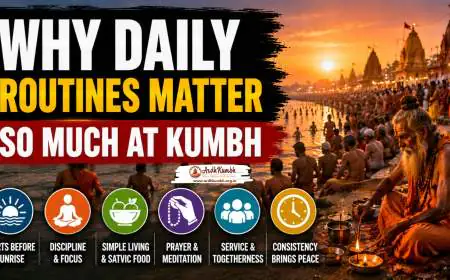
Nobody gives you a rulebook when you enter the Kumbh Mela. And yet, somehow, everyone follows a strange, unspoken code of discipline. You take off your shoes before entering a temple tent. You do not push the elderly. You do not cut the line for the Shahi Snan (at least not without getting a loud scolding). You eat only with your right hand at the Bhandara. You do not point your feet toward the sadhus. This discipline is not enforced by law. It is enforced by tradition and social pressure. But here is the fascinating part: most pilgrims want to follow these rules. They feel proud to know the code. They feel like they belong to something ancient and important. The Ardh Kumbh preserves discipline by making it a badge of honor, not a punishment. When you follow the rules, you are not being controlled. You are being initiated into a 2,000-year-old club. That is a powerful feeling. And it is why grandmothers who cannot read or write will navigate the Kumbh with more grace than a first-time tourist with a PhD.
Humility – The Great Equalizer
Finally, let me talk about humility. You cannot be arrogant at the Ardh Kumbh. The Mela will humble you within hours. You will lose your luggage. You will step in mud. You will be pushed by a crowd. You will realize that your expensive phone is useless without a signal. Your designer clothes will be ruined. Your corporate title means nothing to the Naga Sadhu who has not bathed in six months. The Kumbh is a humility machine. It reminds you that you are just one human among 50 million. That your control is an illusion. That your plans are a joke. And that is exactly the point. The Ardh Kumbh preserves humility because without it, the Mela is unbearable. With it, the Mela becomes a pilgrimage. You learn to laugh at yourself. You learn to ask for help. You learn to sit on the ground. And once you have sat on the ground at the Kumbh, standing on a pedestal back home feels wrong. That is the ethical upgrade that lasts a lifetime.
What the Ardh Kumbh Taught Me About Being Human
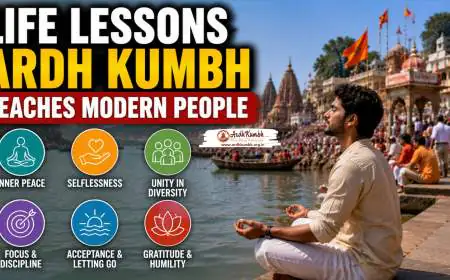
I have written a lot of words. But let me end with this one honest thought. We spend so much time asking "what is the meaning of life?" and "how to be a good person?" We read books. We watch videos. We attend seminars. And then the Ardh Kumbh comes along and says: just go stand in the cold water with a stranger and share your last biscuit. That is it. That is the entire ethical syllabus. Honesty, charity, patience, equality, non-violence, truthfulness, forgiveness, discipline, humility — these are not fancy words. They are the taste of chai shared on a broken step at Har Ki Pauri. They are the feeling of a sadhu blessing you without asking your name. They are the sight of a million lamps floating downstream, each one carrying someone's small prayer. The Ardh Kumbh has preserved these ethical values not by locking them in a museum, but by living them out loud every six years. And that is why, when you leave, you do not leave with a certificate. You leave with a changed heartbeat. And that, my friend, is how ethics should always be preserved. Not in books. In bones.
Frequently Asked Questions