























































How Kumbh Transmits Values Across Generations – Without a Single Lecture
How Kumbh transmits values across generations without classrooms or sermons. Grandparents walk, children follow. Patience, equality, faith – passed silently. Real story inside.

The Silent Classroom – Where Kumbh Becomes the Teacher
Think of the most valuable values you carry: patience, sacrifice, equality, faith, resilience, cleanliness, generosity, fearlessness. Now ask yourself – who taught you these? Not by words, but by living them in front of you?
At Kumbh, that teaching happens on a massive scale because multiple generations suffer and celebrate the same experience together. A 70-year-old grandmother walking 8 kilometers without complaint – that is not a lesson in endurance. It is endurance in human form. A father carrying his toddler on his shoulders through a crushing crowd – that is not a lecture on responsibility. It is responsibility with sweat on its forehead. A teenager watching his blind grandfather take the holy dip with complete trust – that boy will never mock faith again.
Kumbh does not separate generations. It smashes them together. And in that beautiful collision, values jump from old bones to young blood.
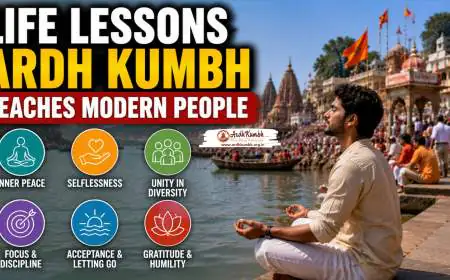
The Six Core Values That Kumbh Transmits Without a Single Word
1. Patience – The Queue That Never Ends
A child at Kumbh learns patience not because someone tells him to “wait” but because there is literally no other option. You wait for the dip. You wait for prasad. You wait for the toilet. You wait for the train back home.
Trending Guides Now
What Is the Story Behind the Ardh Kumbh Mela?
Read Guide →
History of Ardh Kumbh Mela From Samudra Manthan to Modern Times
Read Guide →
How Ardh Kumbh Preserved India’s Oral Traditions
Read Guide →
Why Ardh Kumbh Occurs Every Six Years Explained
Read Guide →
Best Routes to Reach Haridwar for Ardh Kumbh Mela
Read Guide →
Ardh Kumbh 2027 Dates (Official) - Haridwar Snan Schedule
Read Guide →
How Kumbh Keeps India’s Civilizational Memory Alive
Read Guide →
February Weather Reality at Ardh Kumbh
Read Guide →An eight-year-old standing in a two-hour queue with his mother – she does not scroll her phone. She does not complain. She simply stands and breathes. He watches her face. He sees no anger. He learns that waiting is not punishment. It is just part of being human. Twenty years later, when he stands in a bank queue, he will not explode. The Kumbh queue will still be inside him.
2. Equality – The River That Refuses to Judge
At Kumbh, a millionaire and a rickshaw puller stand naked in the same water. A school teacher and a sweeper sit on the same cold stone to dry. A politician’s daughter and a farmer’s daughter tie their wet hair side by side.
Children see this. They see that the Ganga does not ask for your caste certificate or your bank balance. She takes everyone the same way. That image stays. Years later, when that child becomes an adult, they will struggle to feel superior to anyone. Because once you have shivered next to a stranger in the same holy river – equality is no longer a word. It is a memory of cold water and shared breath.
3. Sacrifice – The Small Deaths of Comfort
A teenager at home refuses to share their room. At Kumbh, the same teenager sleeps in a tent with twenty strangers. No air conditioning. No TV. No privacy. And they survive.
They watch their parents give the last dry towel to an elderly stranger. They watch their grandmother give her only blanket to a shivering child. They watch food being served first to sadhus and widows, then to the family.
No one says “sacrifice is noble.” But the teenager feels it. And next winter at home, when their younger sibling is cold – they will give their own blanket without being asked. That is transmission.
4. Faith – Trusting What Cannot Be Seen
A child asks “Baba, why are we walking so far just to put our head under water?” The grandfather does not explain mythology. He simply says “Because it makes the heart clean.” The child does not fully understand. But he sees the tears in his grandfather’s eyes as he comes out of the Sangam. He sees peace on that wrinkled face. He decides: whatever this is, it matters.
That is how faith passes. Not through arguments. Through witnessing the effect of faith on someone you love. Kumbh is full of such witnesses.
5. Resilience – The Body That Keeps Moving
An 80-year-old woman with a bent spine walks five kilometers to the ghat. She has no shoes. She has a plastic bag with two rotis. She does not complain. She does not ask for help. She simply moves.
A ten-year-old walking behind her notices. He does not say anything. But deep inside, a template is being built: this is what a human can endure. Years later, when life breaks his heart or his finances – he will remember that old woman. And he will keep walking.
Resilience is not taught in a classroom. It is caught like a fever at Kumbh.
6. Generosity – Giving Before Taking
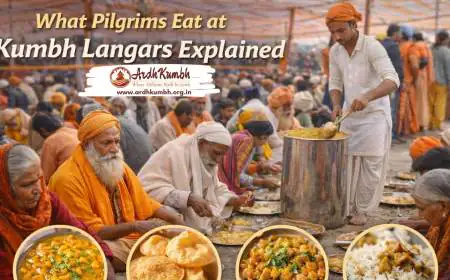
At Kumbh, langars (community kitchens) feed anyone who sits. No questions. No payment. A child watches her father serve dal to a stranger with the same care as he serves his own mother. She watches volunteers washing dishes at 2 AM. She watches money being slipped into the hands of naked sadhus without counting.
She learns that giving is not a tax deduction. It is a reflex. And when she grows up, she will not hesitate to share her lunch with a classmate who forgot theirs. Because Kumbh already trained her hand.
The Grandparent-Grandchild Magic – Why Kumbh Works Better Than Any Family Therapy
There is something specific about the grandparent-grandchild bond at Kumbh. Parents are often too busy managing logistics – tickets, tents, food, safety. But grandparents have time. They walk slowly. They tell stories while waiting in queues. They point at sadhus and whisper histories.
A grandfather holding his grandson’s hand while walking to the Sangam in the dark – that boy will remember the warmth of that hand longer than any moral science lesson. A grandmother dipping her granddaughter’s head into the cold water while chanting a small mantra – that girl will carry that sound in her bones for decades.
Kumbh gives grandparents a stage where they are not “old and slow.” They are leaders. They are guides. And children, for once, are willing followers. That natural hierarchy – respect flowing upward, care flowing downward – is the oldest value transmission machine humanity has ever designed. And Kumbh runs it perfectly every twelve years.
What Teenagers Learn at Kumbh (Without Their Parents Knowing)
Parents worry that teenagers will hate Kumbh. Too slow. Too dusty. No WiFi. And yes, many teenagers complain for the first two days. But then something shifts.
A 16-year-old sees a sadhvi meditating perfectly still while chaos swirls around her. He starts asking questions – not to his parents, but to strangers at the chai stall. A 15-year-old helps a lost child find her mother. For the first time, she feels useful in a way that has nothing to do with grades or Instagram likes.
Kumbh treats teenagers as adults in training. No one babysits them. They have to navigate crowds, manage their own belongings, decide when to bathe, share space with strangers. That responsibility is addictive. By day five, many teenagers stop asking “when are we leaving?” and start asking “can we come again next Kumbh?”
Values like independence, compassion, and self-reliance do not come from lectures. They come from being trusted in a slightly unsafe environment. Kumbh is that environment.
Horizontal Line Break
The Unspoken Rule – What You Don’t Say Matters More Than What You Do Say
Here is the deepest truth about how Kumbh transmits values across generations: most of the transmission happens when no one is trying to teach.
The father who quietly helps an elderly stranger carry their bag – his daughter watches. The mother who does not scream when she loses her sandals in the mud – her son watches. The grandmother who shares her last piece of jaggery with a crying child from another family – everyone watches.
Kumbh is a 24-hour live demonstration of how humans should behave. There are no cameras (except the ones in children’s eyes). There is no curriculum. There is only action – millions of small, kind, patient, generous actions performed by exhausted pilgrims who think no one is noticing.
But the children notice. They always notice.
How to Maximize Value Transmission If You Are Taking Your Family to Kumbh
If you want Kumbh to leave a permanent mark on your children and grandchildren, do these things:
-
Do not separate generations in different tents. Sleep together. Struggle together.
-
Give the oldest family member the front position in every queue. Let children see respect in action.
-
Ask grandparents to tell one story every evening – about their first Kumbh, about their own grandparents, about a miracle they witnessed.
-
Give children small responsibilities – carrying water bottles, remembering the tent number, helping a younger sibling.
-
Do not over-explain. Do not turn every moment into a lesson. Let silence do the teaching.
-
Take a photo of the oldest and youngest family member together at the Sangam. Frame it at home. That photo will become a value anchor.
-
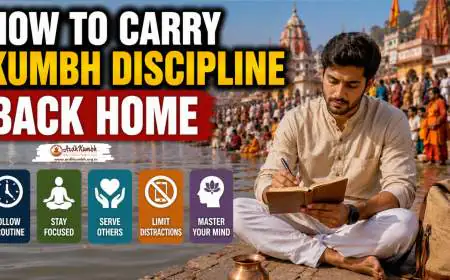
After returning home, create one Kumbh tradition – a monthly simple meal sitting on the floor, or a yearly early morning walk to a nearby river.
Values are not remembered. They are repeated. The more you recreate small pieces of the Kumbh experience at home, the longer the transmission lasts.
The One Value That Kumbh Transmits Best – And Why It Matters Today
Of all the values that pass from generation to generation at Kumbh, the most urgent one in 2026 is this: the ability to be uncomfortable together.
Modern families are comfortable but separate. Each person in their own room. Their own screen. Their own food order. Their own schedule. Kumbh is the opposite. It is uncomfortable but together. You cannot escape each other. You have to negotiate, adjust, forgive, help, wait, share.
That skill – being uncomfortable together without breaking – is what makes families resilient. It is what saves marriages. It is what keeps children close to parents after they grow up. And it is dying in the modern world.
Kumbh resurrects it. Every twelve years. For millions of families. Without a single workshop or webinar. Just cold water, dusty feet, and grandchildren holding wrinkled hands in the dark.
Frequently Asked Questions