






























































How Ardh Kumbh Preserved India’s Oral Traditions
Explore how Ardh Kumbh preserved India’s oral traditions through saints, storytelling, chants, and cultural transmission across generations.
The Living Voice of Tradition That Never Faded
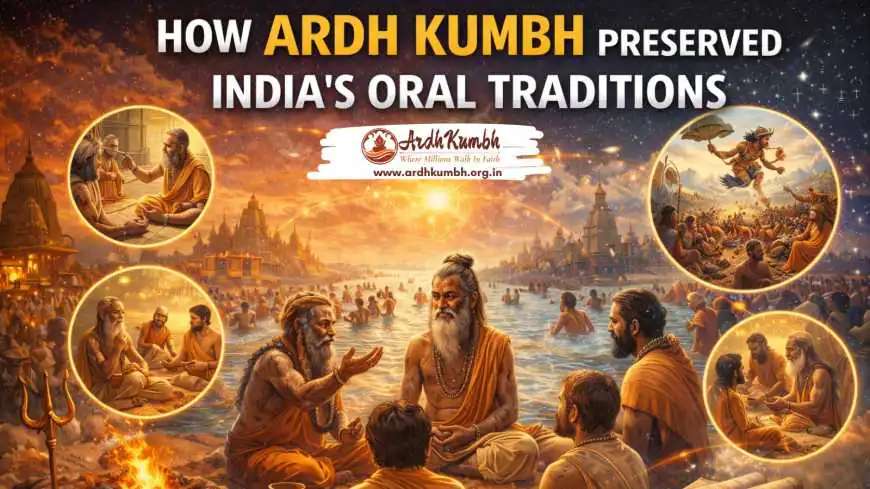
Long before books were printed and knowledge was digitized, India’s wisdom traveled through voices, memory, and presence. Ardh Kumbh became one of the most powerful spaces where this oral tradition not only survived but flourished across centuries. In the midst of massive gatherings, beyond rituals and sacred bathing, a quieter yet profound exchange unfolded. Knowledge was spoken, heard, remembered, and passed forward.
Attending Ardh Kumbh meant stepping into a flowing river of words, chants, stories, and teachings. It was not a classroom, yet it educated generations. It was not a library, yet it preserved vast knowledge. This is how Ardh Kumbh became a living archive of India’s oral traditions.
Want to experience Ardh Kumbh in person?
Get official dates, snan guidelines, Akharas, and travel planning tips in our dedicated event guide.
→ Ardh Kumbh Mela 2027 Complete Guide
Understanding Oral Traditions in the Indian Context
Oral traditions in India are deeply rooted in Sanatan Dharma. Knowledge was not always written. It was:
Trending Guides Now
What Is the Story Behind the Ardh Kumbh Mela?
Read Guide →
The Untold Stories of Har Ki Pauri
Read Guide →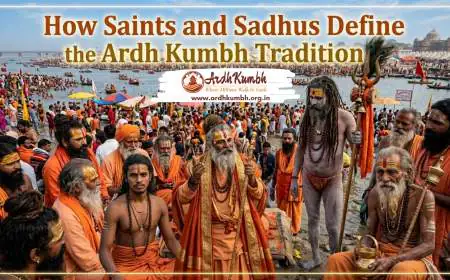
How Saints and Sadhus Define the Ardh Kumbh Tradition
Read Guide →
Ancient Scriptures That Clearly Explain Ardh Kumbh
Read Guide →
Best Routes to Reach Haridwar for Ardh Kumbh Mela
Read Guide →
Ardh Kumbh 2027 Dates (Official) - Haridwar Snan Schedule
Read Guide →
How Ardh Kumbh Stayed Relevant Over Centuries
Read Guide →
Why Early Mornings Are Sacred
Read Guide →- Recited
- Memorized
- Sung
- Narrated
The guru-shishya parampara relied entirely on spoken transmission. This method ensured that knowledge was not just learned, but experienced.
At Ardh Kumbh, this tradition found a natural platform where thousands of teachers and seekers gathered in one place.
Why Ardh Kumbh Became a Hub of Knowledge Exchange
The scale and diversity of Ardh Kumbh made it unique.
- Saints from different regions arrived
- Philosophies from various traditions converged
- Languages and dialects blended
This created an environment where knowledge could travel freely across boundaries. A teaching spoken in one corner could influence listeners from distant regions, who would then carry it back to their communities.
The Role of Sadhus in Preserving Oral Traditions
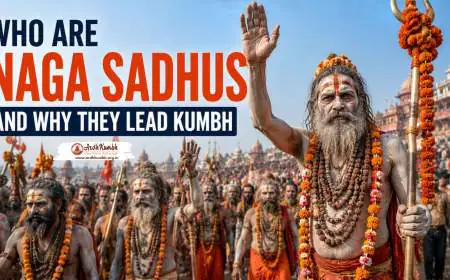
Sadhus are among the most important custodians of India’s oral heritage.
At Ardh Kumbh, they:
- Delivered discourses on scriptures
- Shared philosophical insights
- Narrated stories from epics and Puranas
These teachings were rarely written down at the time. Instead, they were absorbed by listeners and passed on through memory.
This continuous cycle ensured that knowledge remained alive, not static.
Also Read | Ardh Kumbh 2027 Official Dates (Haridwar)
Storytelling as a Medium of Spiritual Transmission
Storytelling has always been a powerful tool in Indian tradition.
During Ardh Kumbh, stories were used to:
- Explain complex philosophies
- Inspire devotion
- Teach moral values
Narratives from Ramayana, Mahabharata, and other texts were shared in simple language, making them accessible to everyone.
This transformed knowledge into something relatable and memorable.
Vedic Chanting and the Science of Sound
One of the most striking aspects of Ardh Kumbh is the presence of Vedic chanting.
These chants are not just words. They follow precise patterns of sound and rhythm.
- Pronunciation is exact
- Intonation is maintained
- Repetition ensures memory
Through continuous chanting, ancient texts were preserved with remarkable accuracy, even without written records.
The Guru-Shishya Parampara in Action
Ardh Kumbh provided a rare opportunity for direct interaction between gurus and seekers.
In this environment:
- Knowledge was shared face-to-face
- Doubts were clarified instantly
- Learning became experiential
This personal transmission strengthened the oral tradition, ensuring that teachings were not distorted over time.
Akharas as Centers of Oral Knowledge
Akharas are not just spiritual organizations. They are centers of learning.
During Ardh Kumbh, Akharas:
- Hosted discussions and debates
- Trained disciples
- Preserved specific traditions and teachings
Each Akhara contributed to the larger ecosystem of knowledge, creating a network of oral transmission.
The Role of Pilgrims in Spreading Knowledge
Pilgrims were not passive listeners. They were active carriers of knowledge.
After attending Ardh Kumbh, they:
- Shared stories and teachings in their villages
- Passed on rituals and practices
- Kept traditions alive in local communities
This decentralized spread ensured that oral traditions reached every corner of the country.
Language Diversity and Cultural Integration
India’s diversity could have been a barrier, but Ardh Kumbh turned it into a strength.
- Teachings were translated into local languages
- Stories adapted to regional contexts
- Knowledge became inclusive
This adaptability allowed oral traditions to survive across different cultures and generations.
Why Oral Traditions Were Preferred Over Written Texts
In ancient times, oral transmission had several advantages:
- It ensured active engagement
- It preserved pronunciation and rhythm
- It allowed flexibility in teaching
At Ardh Kumbh, these advantages were amplified due to the interactive environment.
Preservation Through Repetition and Practice
Repetition is the backbone of oral tradition.
During Ardh Kumbh, teachings were:
- Repeated in discourses
- Reinforced through chants
- Practiced through rituals
This constant repetition strengthened memory and ensured accuracy.
The Emotional Power of Spoken Knowledge
Oral traditions carry an emotional depth that written texts often lack.
Hearing a story or chant:
- Creates a deeper connection
- Enhances understanding
- Leaves a lasting impact
At Ardh Kumbh, this emotional transmission made knowledge more powerful and enduring.
Challenges and Continuity in the Modern Era
With the rise of written and digital media, oral traditions face challenges.
However, Ardh Kumbh continues to preserve them by:
- Encouraging live discourses
- Maintaining traditional chanting practices
- Supporting guru-shishya relationships
This ensures that oral traditions remain relevant even today.
To truly experience the spiritual power of Ardh Kumbh, every devotee should explore Shahi Snan rituals and Akhara traditions, which explain the sacred bathing process, monastic discipline, and ancient customs that shape this holy gathering. This guide helps pilgrims connect deeply with the true essence of the Mela.
Ardh Kumbh as a Cultural Memory System
Ardh Kumbh functions like a living memory system for Indian civilization.
It:
- Stores knowledge through people
- Updates it through interaction
- Distributes it through participation
This dynamic system has allowed oral traditions to survive for thousands of years.
Where Words Become Legacy
There is something extraordinary about a tradition that survives without ink, paper, or screens. At Ardh Kumbh, words do not fade after being spoken. They settle into memory, travel across distances, and echo through generations.
A chant heard once becomes a lifelong practice.
A story shared in a gathering becomes a family tradition.
A teaching received in silence becomes a guiding principle.
This is how Ardh Kumbh does more than preserve oral traditions. It turns voices into legacy, and memory into a timeless bridge between the past and the future.
Related Ardh Kumbh Guides :
- When Is the Next Ardh Kumbh Mela in Haridwar?
- Har Ki Pauri Ganga Aarti Time in Haridwar: Complete Schedule
- Why Har Ki Pauri Becomes the Heart of Ardh Kumbh
- Ardh Kumbh vs Maha Kumbh: The Real Difference Explained
- Is Attending Ardh Kumbh Mandatory for Devotees?
- Why Ardh Kumbh Holds the Same Spiritual Weight as Kumbh
- How Ardh Kumbh Evolved Over Centuries of Faith ?
- Ancient Scriptures That Clearly Explain Ardh Kumbh
- Strict Rules Pilgrims Follow at Ardh Kumbh
- Is Ardh Kumbh Really Different From Kumbh Mela?
Frequently Asked Questions