


























































How Knowledge Was Passed Through Kumbh Gatherings
Discover how knowledge was passed through Kumbh gatherings via oral traditions, gurus, storytelling, and spiritual exchanges across generations.
The Ancient Network Where Knowledge Never Stopped Flowing
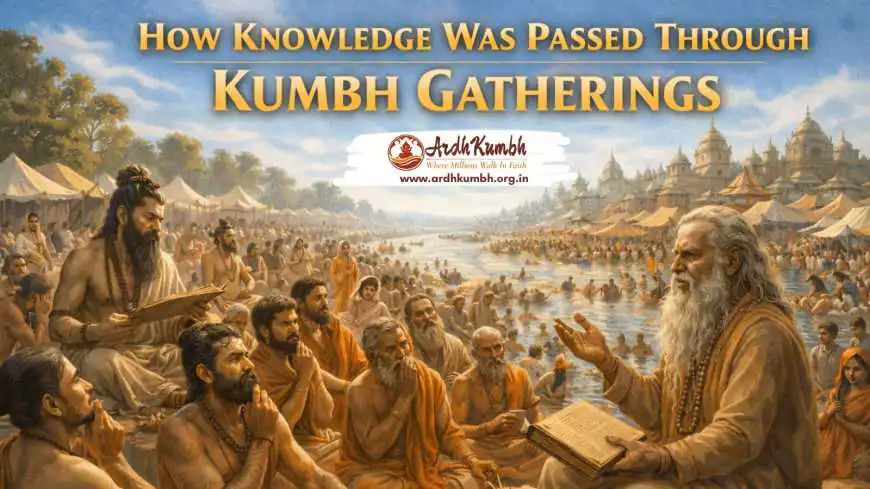
Long before universities formalized learning and long before books became the primary carriers of knowledge, India developed a living, breathing system of knowledge transmission. At the heart of this system stood the great Kumbh gatherings, where wisdom did not sit still. It moved, adapted, and expanded through voices, memory, and human connection.
At Kumbh, knowledge was not treated as information to be stored. It was treated as a living force to be experienced. Saints spoke, seekers listened, questions were raised, answers were debated, and insights were absorbed. This continuous exchange ensured that even the most profound teachings of Sanatan Dharma traveled across generations without losing their essence.
These gatherings were not just religious events. They were one of the world’s oldest and most effective knowledge distribution systems, operating without formal institutions yet shaping an entire civilization.
Want to experience Ardh Kumbh in person?
Get official dates, snan guidelines, Akharas, and travel planning tips in our dedicated event guide.
→ Ardh Kumbh Mela 2027 Complete Guide
Trending Guides Now
Who Are Naga Sadhus and Why They Lead Kumbh
Read Guide →
Significance of Bathing in the Ganges During Kumbh Mela Explained
Read Guide →
What Is the Story Behind the Ardh Kumbh Mela?
Read Guide →
The Untold Stories of Har Ki Pauri
Read Guide →
Best Routes to Reach Haridwar for Ardh Kumbh Mela
Read Guide →
Ardh Kumbh 2027 Dates (Official) - Haridwar Snan Schedule
Read Guide →
How Ardh Kumbh Stayed Relevant Over Centuries
Read Guide →
Why Early Mornings Are Sacred
Read Guide →Understanding the Foundation of Knowledge in Sanatan Dharma
In Sanatan Dharma, knowledge is not merely intellectual. It is experiential, transformative, and deeply personal.
- It is meant to be lived, not just learned
- It evolves through understanding, not memorization
- It connects the individual with universal truth
This approach required a system where knowledge could be shared dynamically. Written texts alone were not sufficient. Direct interaction was essential.
Kumbh gatherings became the perfect platform for this dynamic transmission.
Why Kumbh Became India’s Largest Knowledge Exchange Platform
The uniqueness of Kumbh gatherings lies in their scale and diversity.
- Thousands of saints from different traditions gathered
- Pilgrims from across the country participated
- Philosophies from multiple schools interacted
This created an unparalleled environment where knowledge could travel freely.
Unlike localized teaching systems, Kumbh allowed ideas to move across regions. A teaching shared in one part of the gathering could influence people who would carry it to distant villages, towns, and kingdoms.
Also Read | Ardh Kumbh 2027 Official Dates (Haridwar)
Oral Tradition as the Core Medium of Knowledge Transfer
The backbone of knowledge transmission at Kumbh was the oral tradition.
- Teachings were spoken, not written
- Listeners memorized and repeated them
- Knowledge was preserved through continuity
This system required discipline and attention. It ensured that learning was active rather than passive.
Oral tradition also allowed flexibility. Teachings could be adapted based on the audience, making them accessible to people from different backgrounds.
The Role of Sadhus as Living Libraries
Sadhus at Kumbh were not just spiritual practitioners. They were repositories of vast knowledge.
They carried:
- Scriptural understanding
- Philosophical insights
- Practical wisdom from lived experience
When they spoke, they were not quoting texts. They were sharing knowledge that had been internalized and realized.
This made their teachings powerful, authentic, and deeply impactful.
Guru Shishya Parampara in Its Purest Form
The guru-shishya parampara found its most vibrant expression at Kumbh gatherings.
- Disciples traveled long distances to meet their gurus
- Teachings were transmitted directly
- Questions were addressed in real time
This personal interaction ensured clarity and depth.
Unlike written knowledge, which can be misinterpreted, direct teaching allowed immediate correction and deeper understanding.
Storytelling as a Universal Teaching Tool
Storytelling played a crucial role in knowledge transmission.
At Kumbh, stories were used to:
- Simplify complex philosophies
- Engage listeners emotionally
- Make teachings memorable
Narratives from epics and traditions became vehicles for deeper truths.
A single story could carry layers of meaning, allowing individuals to understand it according to their level of awareness.
Vedic Chanting and Precision in Oral Knowledge
One of the most remarkable aspects of knowledge preservation at Kumbh is Vedic chanting.
- Exact pronunciation maintained accuracy
- Rhythm ensured memorization
- Repetition reinforced retention
This method allowed knowledge to remain unchanged for centuries.
Even without written records, complex texts were preserved with extraordinary precision.
Debates and Intellectual Exchange at Kumbh
Kumbh gatherings were not limited to teaching. They were also spaces for intellectual exploration.
Scholars and saints engaged in:
- Philosophical debates
- Interpretation of scriptures
- Discussions on practices
These debates were not about winning. They were about refining understanding.
This continuous exchange ensured that knowledge remained dynamic and relevant.
Akharas as Organized Knowledge Institutions
Akharas functioned as structured centers of learning within Kumbh gatherings.
They:
- Maintained specific traditions
- Trained disciples systematically
- Preserved unique philosophies
Each Akhara contributed to the broader ecosystem of knowledge.
Together, they created a network that ensured diversity and continuity.
Pilgrims as Carriers of Knowledge Across India
Pilgrims played a critical role in spreading knowledge.
After attending Kumbh, they:
- Shared teachings in their communities
- Passed on rituals and practices
- Preserved traditions locally
This decentralized system ensured that knowledge reached every corner of the country.
Language Diversity and Knowledge Adaptation
India’s diversity could have been a barrier, but Kumbh gatherings turned it into strength.
- Teachings were translated into local languages
- Stories adapted to cultural contexts
- Knowledge became inclusive
This adaptability ensured that knowledge was not restricted to a specific group.
Learning Through Observation and Participation
At Kumbh, learning was not confined to listening.
People learned by:
- Observing rituals
- Participating in practices
- Engaging with communities
This experiential learning made knowledge more practical and meaningful.
The Role of Repetition in Knowledge Retention
Repetition ensured that knowledge was not lost.
Teachings were:
- Repeated in discourses
- Reinforced through chants
- Practiced regularly
This created strong memory patterns, preserving knowledge accurately.
Emotional Connection and Its Impact on Learning
Knowledge shared at Kumbh carried emotional depth.
- Devotion enhanced understanding
- Stories created connection
- Presence of spiritual leaders inspired learning
This emotional engagement made knowledge more memorable and impactful.
Continuity of Knowledge Across Generations
The system at Kumbh ensured continuity.
- Gurus trained disciples
- Disciples became teachers
- Teachings evolved while remaining rooted
This cycle allowed knowledge to flow seamlessly across generations.
Kumbh as a Living University Without Walls
Unlike formal institutions, Kumbh gatherings had no fixed structure.
- No classrooms
- No syllabus
- No exams
Yet, they educated millions.
Learning was driven by curiosity, discipline, and participation.
To truly experience the spiritual power of Ardh Kumbh, every devotee should explore Shahi Snan rituals and Akhara traditions, which explain the sacred bathing process, monastic discipline, and ancient customs that shape this holy gathering. This guide helps pilgrims connect deeply with the true essence of the Mela.
Relevance of Kumbh Knowledge Systems in Modern Times
Even today, the principles of knowledge transmission at Kumbh remain relevant.
- Direct interaction enhances clarity
- Experience deepens understanding
- Community strengthens learning
These methods continue to influence modern education and spiritual practices.
Where Knowledge Became Experience
There is something extraordinary about a system where knowledge is not stored but lived.
At Kumbh gatherings:
A question becomes a journey.
A story becomes a realization.
A teaching becomes a way of life.
Knowledge does not end with understanding. It begins there.
And that is why Kumbh was never just a gathering. It was a living, evolving network where wisdom flowed like a river, touching countless lives and shaping a civilization that continues to carry its depth even today.
Related Ardh Kumbh Guides :
- When Is the Next Ardh Kumbh Mela in Haridwar?
- Har Ki Pauri Ganga Aarti Time in Haridwar: Complete Schedule
- Why Har Ki Pauri Becomes the Heart of Ardh Kumbh
- Ardh Kumbh vs Maha Kumbh: The Real Difference Explained
- Is Attending Ardh Kumbh Mandatory for Devotees?
- Why Ardh Kumbh Holds the Same Spiritual Weight as Kumbh
- How Ardh Kumbh Evolved Over Centuries of Faith ?
- Ancient Scriptures That Clearly Explain Ardh Kumbh
- Strict Rules Pilgrims Follow at Ardh Kumbh
- Is Ardh Kumbh Really Different From Kumbh Mela?
Frequently Asked Questions