


















































How Kings and Rulers Protected Ardh Kumbh
Discover how kings and rulers safeguarded Ardh Kumbh through security, patronage, and dharma, preserving one of India’s greatest spiritual gatherings.
The Guardians of Faith: How Kings and Rulers Protected Ardh Kumbh
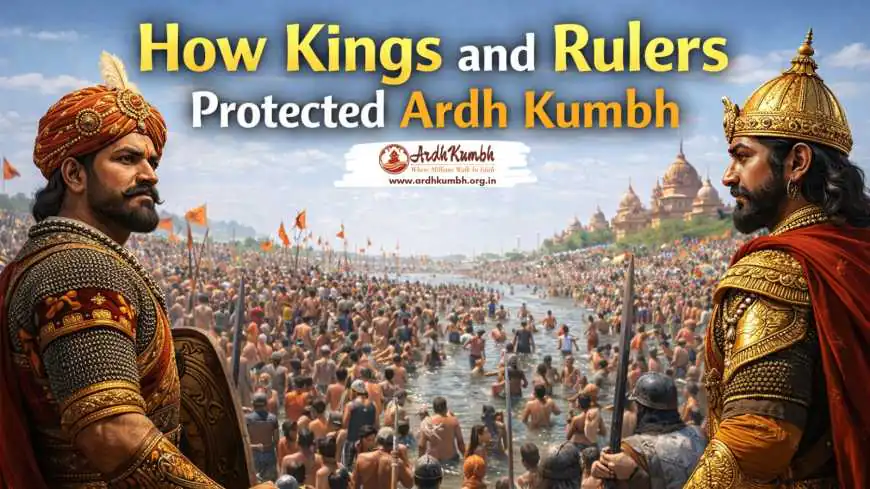
Long before modern administration, surveillance systems, and organized governance, Ardh Kumbh stood as one of the largest human gatherings on Earth. Its survival across centuries was not accidental. It was protected, nurtured, and regulated by kings and rulers who understood that safeguarding such a sacred congregation was not merely a political duty but a responsibility toward Sanatan Dharma itself.
For these rulers, Ardh Kumbh was more than a gathering. It was a living expression of faith, a convergence of spiritual energy, and a symbol of civilizational continuity. Their role was not just to rule land, but to protect the pathways of devotion that flowed through it.
Want to experience Ardh Kumbh in person?
Get official dates, snan guidelines, Akharas, and travel planning tips in our dedicated event guide.
→ Ardh Kumbh Mela 2027 Complete Guide
Why Ardh Kumbh Needed Royal Protection
The scale of Ardh Kumbh has always been immense. Even in ancient times, lakhs of pilgrims traveled across forests, rivers, and kingdoms to reach sacred sites.
Trending Guides Now
What Is the Story Behind the Ardh Kumbh Mela?
Read Guide →
The Untold Stories of Har Ki Pauri
Read Guide →
How Akharas Were Formed and Why They Matter
Read Guide →
How Saints and Sadhus Define the Ardh Kumbh Tradition
Read Guide →
Best Routes to Reach Haridwar for Ardh Kumbh Mela
Read Guide →
Ardh Kumbh 2027 Dates (Official) - Haridwar Snan Schedule
Read Guide →
How Ardh Kumbh Stayed Relevant Over Centuries
Read Guide →
Why Early Mornings Are Sacred
Read Guide →This created several challenges:
- Security threats from bandits and invaders
- Conflicts between sects and groups
- Logistical issues like food, water, and shelter
- Maintenance of order during massive gatherings
Without structured protection, such a gathering could easily descend into chaos. Kings recognized that protecting Ardh Kumbh meant preserving social harmony, religious freedom, and spiritual continuity.
The Concept of Dharma and Royal Responsibility
In ancient India, kings were not just administrators. They were seen as upholders of Dharma.
Protecting religious gatherings like Ardh Kumbh was considered:
- A sacred duty
- A moral obligation
- A path to earn spiritual merit
Rulers believed that by ensuring the safety of pilgrims and saints, they were aligning themselves with cosmic order. Governance was not separate from spirituality. It was an extension of it.
Military Protection and Safe Pilgrimage Routes
One of the most critical roles played by kings was ensuring safe travel routes for pilgrims.
They deployed:
- Soldier guards along major pilgrimage paths
- Checkpoints to prevent theft and violence
- Escorts for vulnerable groups
Highways leading to Ardh Kumbh locations were monitored and protected. This allowed pilgrims to travel long distances without fear.
Some rulers even built rest stops and shelters along routes, creating an early version of pilgrimage infrastructure.
Also Read | Ardh Kumbh 2027 Official Dates (Haridwar)
Managing Akharas and Preventing Conflicts
The presence of multiple Akharas added spiritual richness but also required careful management.
Each Akhara had its own traditions, hierarchy, and identity. During events like Shahi Snan, disputes could arise over precedence and timing.
Kings stepped in to:
- Establish clear protocols for processions
- Assign bathing schedules
- Mediate disputes between groups
This ensured that spiritual discipline remained intact and conflicts did not disrupt the sanctity of the gathering.
Royal Patronage: Funding Faith at Scale
Ardh Kumbh required enormous resources. Kings provided direct financial and logistical support.
Their contributions included:
- Funding for pier (ghats) construction and maintenance
- Arrangement of food distribution (Anna Daan)
- Building temporary shelters for pilgrims
- Supporting temples and spiritual institutions
This patronage was not charity. It was seen as an investment in dharma and cultural continuity.
Infrastructure Development by Rulers
Kings transformed pilgrimage sites into organized spaces capable of handling massive crowds.
They developed:
- Roads connecting major cities to Kumbh locations
- Water systems for drinking and bathing
- Sanitation arrangements
- Designated zones for different groups
These efforts laid the foundation for what we now recognize as modern Kumbh planning.
The Role of Different Dynasties in Protecting Ardh Kumbh
Across centuries, various dynasties contributed to the protection of Ardh Kumbh.
Ancient Hindu Kingdoms
Early rulers established the tradition of royal support. They integrated pilgrimage protection into governance.
Medieval Period and Regional Powers
Regional kings continued the legacy, ensuring that even during politically fragmented times, Ardh Kumbh remained uninterrupted.
Mughal Era
Despite being a different ruling structure, several Mughal emperors allowed and even supported Kumbh gatherings.
They:
- Provided administrative stability
- Ensured law and order
- Allowed religious freedom
This period demonstrated that Ardh Kumbh’s importance transcended political boundaries.
Maratha Influence
The Marathas played a significant role in strengthening Hindu institutions.
They actively:
- Supported Akharas
- Protected pilgrimage routes
- Reinforced temple systems
Their governance aligned closely with Sanatan values, further strengthening the Kumbh tradition.
Law, Order, and Crowd Control in Ancient Times
Managing crowds without modern technology required intelligence and experience.
Kings used:
- soldeir patrols for monitoring
- announcements (public announcements) for coordination
- Designated officer to oversee different zones
These systems ensured that even massive gatherings functioned smoothly.
Protection of Spiritual Leaders and Knowledge Systems
Sadhus and spiritual leaders were central to Ardh Kumbh. Kings ensured their safety and respect.
They:
- Provided secure spaces for camps
- Protected them from external threats
- Encouraged knowledge exchange and debates
This created an environment where spiritual wisdom could flourish without fear.
To truly experience the spiritual power of Ardh Kumbh, every devotee should explore Shahi Snan rituals and Akhara traditions, which explain the sacred bathing process, monastic discipline, and ancient customs that shape this holy gathering. This guide helps pilgrims connect deeply with the true essence of the Mela.
Economic Support and Trade During Ardh Kumbh
Ardh Kumbh was not just spiritual. It also stimulated economic activity.
Kings facilitated:
- Trade markets around pilgrimage sites
- Safe commercial exchanges
- Support for local artisans and vendors
This integration of economy and spirituality made Kumbh a self-sustaining ecosystem.
The Evolution from Royal Protection to Modern Governance
While kings once held the responsibility, today governments carry forward this legacy.
Modern systems include:
- Police and security forces
- Crowd management technology
- Infrastructure planning
- Disaster response mechanisms
However, the foundation remains the same: protecting faith while ensuring order.
Why Royal Protection Still Matters in Understanding Ardh Kumbh
Understanding the role of kings helps us see Ardh Kumbh not just as a religious event, but as a civilizational achievement.
It shows how:
- Spirituality and governance worked together
- Faith was protected at a national level
- Cultural continuity was preserved across centuries
Without royal support, Ardh Kumbh might not have survived in its current form.
The Silent Legacy That Still Shapes the Present
Even today, the systems used in Ardh Kumbh carry echoes of royal governance.
- Structured bathing schedules
- Organized Akhara processions
- Infrastructure planning
- Security arrangements
These are not modern inventions. They are evolved forms of ancient practices established by kings.
Where Power Bowed to Faith
There was a time when kings ruled kingdoms, but at Ardh Kumbh, even they became servants of something greater.
They did not control the event. They protected it.
They did not dominate faith. They preserved it.
In doing so, they ensured that Ardh Kumbh remained not just an event of the present, but a timeless flow of devotion, discipline, and unity that continues to move through centuries like a sacred river that refuses to fade.
Related Ardh Kumbh Guides :
- When Is the Next Ardh Kumbh Mela in Haridwar?
- Har Ki Pauri Ganga Aarti Time in Haridwar: Complete Schedule
- Why Har Ki Pauri Becomes the Heart of Ardh Kumbh
- Ardh Kumbh vs Maha Kumbh: The Real Difference Explained
- Is Attending Ardh Kumbh Mandatory for Devotees?
- Why Ardh Kumbh Holds the Same Spiritual Weight as Kumbh
- How Ardh Kumbh Evolved Over Centuries of Faith ?
- Ancient Scriptures That Clearly Explain Ardh Kumbh
- Strict Rules Pilgrims Follow at Ardh Kumbh
- Is Ardh Kumbh Really Different From Kumbh Mela?
Frequently Asked Questions