




















































Why Ardh Kumbh Matters to India's Identity
Discover why Ardh Kumbh is not just a pilgrimage but a cornerstone of India's cultural and spiritual identity. Unity in diversity manifested.

The Mirror of Unity - How Kumbh Shows India to Itself
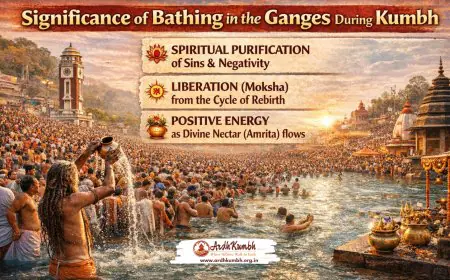
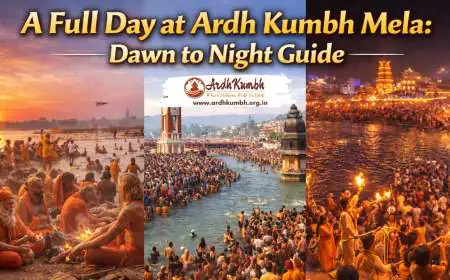
Let me start with the most obvious way that Ardh Kumbh matters to India's identity. It is a mirror. At Kumbh, you see India in all its glory and all its messiness. You see rich and poor standing in the same line. You see north Indians and south Indians and east Indians and west Indians sleeping in the same tent. You see vegetarians and non-vegetarians eating the same simple prasad. You see urban professionals and rural farmers and tribal communities all taking the same dip in the same water.
This is India. Not the India of news headlines about political scandals and religious conflicts. The real India. The India that somehow, against all odds, continues to see itself as one nation even when everything seems to be pulling it apart.
Ardh Kumbh reflects this unity back at India. When a pilgrim from Tamil Nadu shares a blanket with a pilgrim from Punjab, they are not thinking about linguistic divisions or regional rivalries. They are thinking about staying warm. When a businessman from Mumbai offers his water bottle to a farmer from Bihar, they are not thinking about caste or class. They are thinking about thirst.
These small acts of human connection are the glue of Indian identity. And Kumbh multiplies them by the millions. For a few weeks every six years, India sees itself clearly. Not as a collection of warring states or competing religions. As one family of pilgrims. One nation of believers (and non-believers, observers, skeptics, and seekers). One civilization that has refused to die.
Trending Guides Now
What Is the Story Behind the Ardh Kumbh Mela?
Read Guide →
History of Ardh Kumbh Mela From Samudra Manthan to Modern Times
Read Guide →
How Ardh Kumbh Preserved India’s Oral Traditions
Read Guide →
Why Ardh Kumbh Occurs Every Six Years Explained
Read Guide →
Best Routes to Reach Haridwar for Ardh Kumbh Mela
Read Guide →
Essential Rules Every Ardh Kumbh 2027 Pilgrim Must Follow
Read Guide →
Who Are Naga Sadhus and Why They Lead Kumbh
Read Guide →
Biggest Crowds Ever Recorded at Ardh Kumbh
Read Guide →This is why Ardh Kumbh matters to India's identity. Because identity is not just about who you are when you are alone. It is about who you are when you are with others. And at Kumbh, India discovers that it is a community, not just a country. That discovery is renewed every six years. Without it, India might forget what it looks like. Ardh Kumbh reminds it.
The Thread of Continuity - Connecting Past, Present, and Future
Let me talk about another way that Ardh Kumbh shapes India's identity. Continuity. India is an ancient civilization. Not ancient in the way that Greece is ancient (brilliant but dead). Ancient in the way that a banyan tree is ancient - still growing, still alive, still producing new shoots from roots that are thousands of years old.
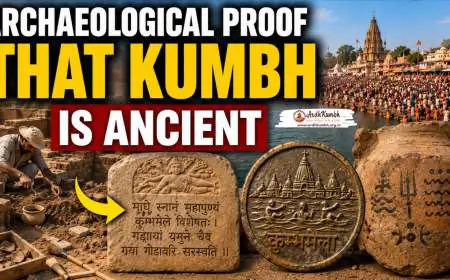
Ardh Kumbh is one of those roots. The Kumbh tradition is mentioned in ancient texts. It was observed by rulers who lived thousands of years ago. It continued through invasions, famines, plagues, colonialism, and modernization. It never stopped. For thousands of years, every six years, pilgrims have gathered at the confluence. Not every six years without fail - there were gaps, disruptions, years when the Mela was smaller or more dangerous. But the thread was never completely broken.
This continuity is a core part of India's identity. Indians know, deep in their collective bones, that they belong to something that predates every empire and every nation-state on earth. They are not just citizens of a country formed in 1947. They are heirs to a civilization that has been practicing spiritual discipline for longer than most other cultures have existed.
Ardh Kumbh makes this continuity tangible. When you stand in the Ganga at Kumbh, you are standing in the same water that your ancestors stood in. When you chant a mantra, you are chanting sounds that have been transmitted from guru to disciple for centuries. When you see a sadhu who has been coming to Kumbh for fifty years, you are seeing a living link to the past.
This feeling of continuity is essential to India's identity. It gives Indians a grounding that many modern people lack. They know where they come from. They know who they are. They know that they are part of a story that did not begin with them and will not end with them. Ardh Kumbh is a chapter in that story. A chapter that gets rewritten every six years, but always with the same characters - the pilgrims, the sadhus, the river, the faith.
The Social Laboratory - How Kumbh Experiments with Harmony
Let me describe a way that Ardh Kumbh matters to India's identity that is rarely discussed. Social experimentation. India is a democracy. A messy, noisy, chaotic democracy that somehow works. But democracy is not just about voting and parliaments. It is about learning to live with people who are different from you. It is about compromise, tolerance, and mutual respect.
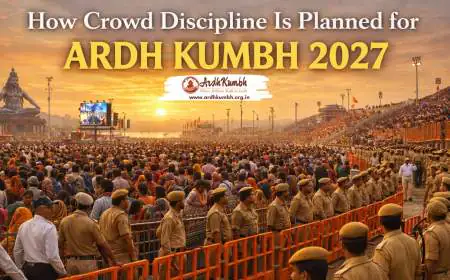
Ardh Kumbh is a laboratory for these democratic virtues. At Kumbh, you are forced to cooperate with strangers. The queue cannot function without cooperation. The tent cannot function without cooperation. The bhandara cannot function without cooperation. Every aspect of Kumbh requires millions of people to coordinate their actions without a central command.
This coordination is not easy. Conflicts happen. People lose their temper. People cut in line. People hoard resources. But these conflicts are usually resolved peacefully, through negotiation, mediation, or simple social pressure. The Kumbh does not collapse into violence. It self-regulates. People learn to forgive small slights. They learn to share. They learn to wait. They learn to help.
These are democratic skills. And Indians practice them at Kumbh on a massive scale. When they return home, they take these skills with them. They are better at negotiating with neighbors. Better at compromising with colleagues. Better at tolerating the frustrations of democratic life.
This is why Ardh Kumbh is not separate from India's political identity. It is part of it. The Kumbh teaches Indians how to be democratic citizens. Not through lectures or textbooks. Through lived experience. Through millions of small choices to cooperate rather than fight. Through the daily practice of living together.
And here is the beautiful irony. Kumbh has been teaching these skills for thousands of years - long before the word "democracy" was invented. India did not learn democracy from Greece or Rome. India learned democracy from its pilgrimages. From the Kumbh. From the neighborhood temple festival. From the village fair. Ardh Kumbh is a democracy school disguised as a religious gathering. And India is the graduate.
The Economic Spine - How Pilgrimage Supports a Nation
Let me talk about something practical that is often overlooked. The economic impact of Ardh Kumbh on India's identity. Identity is not just about culture and spirituality. It is also about livelihoods. Millions of Indians depend on pilgrimage for their income. The temple priests. The transporter who drives buses to Haridwar. The shopkeeper who sells prasad. The hotel owner who rents rooms. The street vendor who sells chai. The sadhu who receives donations.
Ardh Kumbh injects billions of rupees into the economy every cycle. This money flows to small towns and rural areas that are often starved of economic opportunity. It supports families. It sends children to school. It pays for weddings and funerals. It keeps local economies alive.
When Indians benefit economically from Kumbh, they develop a stake in the pilgrimage. They become custodians of the tradition. Not because they are devout. Because Kumbh puts food on their table. This economic stake is a powerful form of identity. It links material survival to spiritual tradition. It makes Kumbh relevant to people who might otherwise dismiss it as superstition.
This is not a cynical calculation. It is reality. India is a poor country. Millions of Indians live on the edge of hunger. Ardh Kumbh helps feed them. Not through charity. Through commerce. Through the circulation of money that the pilgrims bring. This circulation is part of India's identity - the identity of a nation that has always understood that spirituality and materiality are not opposites. They are partners. The temple feeds the village. The village supports the temple. This cycle has been turning for thousands of years. Ardh Kumbh is one of its most visible manifestations.
The Spiritual GPS - How Kumbh Orients India's Moral Compass
Let me talk about the deepest way that Ardh Kumbh matters to India's identity. As a moral compass. Every nation needs values. Freedom. Equality. Justice. Compassion. But values are abstract. They need to be embodied. They need to be practiced. They need to be visible.
Ardh Kumbh embodies Indian values in a way that no speech or document can. At Kumbh, you see compassion in action - strangers helping strangers. You see equality in action - rich and poor standing in the same line. You see sacrifice in action - pilgrims enduring discomfort for spiritual goals. You see humility in action - powerful people bowing to sadhus who own nothing.
These visible practices remind Indians of what they value. They orient the national moral compass. When an Indian is tempted to be selfish, greedy, or cruel, the memory of Kumbh can pull them back. "That is not who we are. We are the people who share their blankets. We are the people who help strangers. We are the people who wait in line. We are the people who bow to renunciation."
This moral orientation is essential for India's identity. Without it, India would be just another country competing for resources and power. With it, India is something more. A civilization that has always believed that spirituality is not private. It is public. It is collective. It is national.
Ardh Kumbh is the GPS that keeps India oriented toward its highest values. Every six years, it recalibrates the national conscience. It reminds Indians of who they are at their best. And it calls them back to that best self when they have wandered.
The Tourist Magnet - How Kumbh Shows India to the World
Let me talk about how Ardh Kumbh matters to India's identity on the global stage. India has many exports. IT services. Pharmaceuticals. Bollywood movies. Cricket players. But Ardh Kumbh is an export of a different kind. It is an invitation. "Come see who we really are."
Millions of foreign tourists have attended Kumbh Mela over the years. They come as skeptics. They leave as believers - not necessarily in Hinduism, but in India. In its vibrancy. In its diversity. In its spiritual depth. In its ability to host the largest gathering on earth without descending into chaos.
These visitors become ambassadors for India. They go home and tell their friends, "You will not believe what I saw." They write books. They make documentaries. They post photos. They spread the word that India is not just a country of poverty and corruption. It is a country of faith and resilience. Of beauty and chaos. Of ancient and modern living side by side.
This global perception matters for India's identity. Indians want to be seen as more than their problems. They want to be seen as heirs to a great civilization. Ardh Kumbh gives them that visibility. It is India's invitation to the world. And the world keeps accepting.
India's identity is not just for Indians. It is for everyone. Ardh Kumbh is the showcase. The window. The door. Every six years, India opens that door and says, "Come in. See for yourself. This is who we are." And the world comes. And the world sees. And the world remembers.
Why Ardh Kumbh Will Keep Mattering
Let me end this with a reflection on the future. Will Ardh Kumbh always matter to India's identity? Some people think pilgrimage is dying. That modern Indians are too busy, too urban, too skeptical for Kumbh. That social media and streaming services and career pressure will eventually kill the tradition.
I do not believe that. Because human beings need what Kumbh offers. They need connection to something larger than themselves. They need community. They need shared experience. They need ritual. They need discomfort that leads to growth. They need to be reminded that they are not alone.
These needs are not going away. If anything, they are getting stronger. The more digital our lives become, the more we crave physical togetherness. The more isolated we become, the more we crave community. The more uncertain the world becomes, the more we crave continuity.
Ardh Kumbh offers all of this. That is why it has survived for thousands of years. That is why it will survive for thousands more. Not because Indians are traditional. Because Indians are human. And Kumbh meets human needs that no app and no algorithm can meet.
So yes, Ardh Kumbh matters to India's identity. And it will keep mattering. As long as the Ganga flows. As long as Jupiter moves. As long as parents want to give their children what their parents gave them. As long as strangers want to feel like family. As long as humans want to touch water that has been touched by millions before them.
That is India. That is Ardh Kumbh. That is identity that no one can take away.
Frequently Asked Questions