














































Why Ardh Kumbh Represents Spiritual Continuity
Discover how Ardh Kumbh weaves past, present, and future into an unbroken thread of spiritual continuity. Ancient rituals alive today.
The Unbroken Thread That No Empire Could Cut
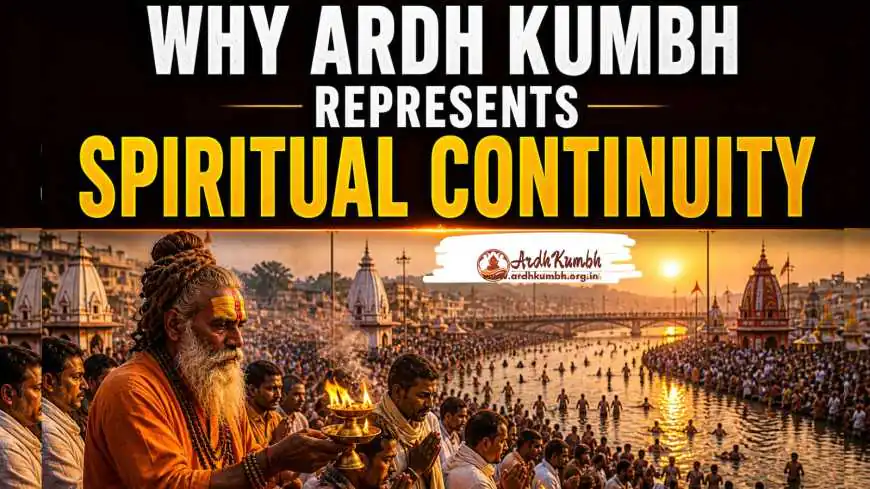
Let me take you back in time for a moment. Not to a specific date. Dates are not the point. Take you back to the feeling of a time when emperors rose and fell, when invasions swept across the northern plains, when dynasties crumbled into dust, when languages died and were forgotten. Through all of that chaos, through all of that destruction, something kept happening every twelve years at the confluence of sacred rivers. People kept showing up.
The Mauryans came. The Guptas came. The Mughals came, some to observe, some to destroy, some to tax. The British came, with their census-takers and their confusion about what exactly they were witnessing. The independent Indian government came, with its modern bureaucracy and its secular anxiety about managing millions of bodies. And through every single regime change, every single political upheaval, every single attempt to suppress or control or understand or dismiss - the pilgrims kept coming.
This is what spiritual continuity looks like when it is real. It does not depend on the state. It does not depend on patronage. It does not depend on legal protection. It depends on something far more durable. It depends on grandparents telling grandchildren about the holy dip. On mothers bringing daughters to the same ghat where they were brought as girls. On villages pooling resources to send their young people, year after year, generation after generation, so that the memory stays alive.
Ardh Kumbh is the thread that connects every Hindu who ever lived to every Hindu who ever will live. Cut the thread anywhere, and the whole thing unravels. But here is the miracle. No one has been able to cut it. Not invaders with swords. Not missionaries with promises. Not modernity with its distractions. Not skepticism with its questions. The thread holds. The continuity continues. And every Kumbh is proof that it has never been broken.
Trending Guides Now
What Is the Story Behind the Ardh Kumbh Mela?
Read Guide →
History of Ardh Kumbh Mela From Samudra Manthan to Modern Times
Read Guide →
How Ardh Kumbh Preserved India’s Oral Traditions
Read Guide →
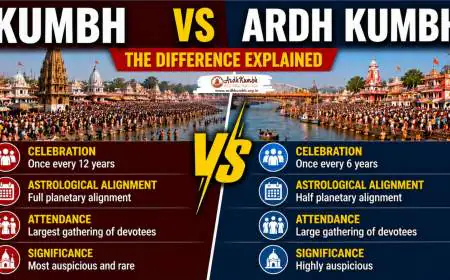
Why Ardh Kumbh Occurs Every Six Years Explained
Read Guide →
Best Routes to Reach Haridwar for Ardh Kumbh Mela
Read Guide →
Essential Rules Every Ardh Kumbh 2027 Pilgrim Must Follow
Read Guide →
Who Are Naga Sadhus and Why They Lead Kumbh
Read Guide →
Biggest Crowds Ever Recorded at Ardh Kumbh
Read Guide →Living Lineage - The Guru-Shishya Parampara in Action
Let me explain one of the most beautiful mechanisms of spiritual continuity that Ardh Kumbh represents. It is called the guru-shishya parampara - the teacher-student lineage. Unlike religions that have holy books as their anchor, Hinduism has always been anchored in living people. Knowledge is not found in a book. Knowledge is found in a person who learned it from another person who learned it from another person going back thousands of years.
At Ardh Kumbh, this living lineage becomes visible in a way that happens nowhere else. You will see a young sadhu walking behind his guru, imitating his walk, his way of holding his kamandal, the tilt of his head. You will see a grandmother teaching her granddaughter which mantra to chant before entering the water. You will see groups of disciples sitting at the feet of their master, listening to the same teachings that their guru's guru taught fifty years ago.
This is not nostalgia. This is continuity as a living practice. The knowledge is not frozen in time. It evolves. Each guru adds something of their own experience, their own realization, their own flavor. But the core remains. The sampradaya (tradition) continues. The lineage remains unbroken.
Ardh Kumbh is the family reunion of every spiritual lineage in Hinduism. The Naga sadhus come. The Udasin sadhus come. The Dashanami lineages come. The Vaishnava and Shaiva and Shakta traditions all come. They camp in their designated areas. They perform their specific rituals. They maintain their distinct identities. But they come to the same water. They acknowledge the same spiritual source. They participate in the same continuity.
When you stand at Ardh Kumbh and watch a 100-year-old sadhu bless a 10-year-old boy who has just been initiated, you are watching spiritual continuity happen in real time. The old passes something to the young. Not in words. Not in documents. In a touch. In a look. In a blessing. That something has been passed down, hand to hand, heart to heart, for longer than any written history can track. That is continuity. That is Ardh Kumbh.
The Water That Remembers
Let me get a little poetic here because some truths need poetry. The Ganga at Ardh Kumbh is not just water. It is memory. Every dip that a pilgrim takes connects them to every other dip ever taken. The same water that touched the head of a king three thousand years ago touches the head of a farmer today. The same water that received the ashes of a grandmother fifty years ago receives the prayers of her grandson today.
Hinduism has a concept called satsang - the company of truth. But there is also a concept of tirtha - a crossing place where the boundary between the mundane and the sacred becomes thin. Ardh Kumbh is the tirtha of all tirthas. It is where the spiritual continuity becomes almost physical. You can feel it in the water. You can feel it in the air. You can feel it in the way a million strangers somehow cooperate without being told.
The water does not ask about your caste. It does not check your credentials. It does not verify your beliefs. It just receives you. The same way it received your ancestors. The same way it will receive your descendants. This water is the medium of continuity. It is the physical substance that carries the spiritual memory from one generation to the next.
When a scientist tests the Ganga and finds bacteria, they are not wrong. But they are also not seeing the whole picture. The Ganga is also memory. Ardh Kumbh is when that memory becomes so dense, so concentrated, so powerful that you can feel it in your bones even if you do not believe a single thing about gods or goddesses. That feeling - that strange sense of having been here before, of belonging to something larger than yourself - that is spiritual continuity making itself known to you.
The Calendar That Outlasted Empires
Let me tell you about something practical that represents spiritual continuity in a way that most people miss entirely. The Kumbh calendar. Ardh Kumbh does not happen on a random date chosen by a committee. It happens according to a celestial calculation that has remained unchanged for thousands of years. The Sun enters certain signs. The Jupiter moves into certain positions. The calendar is not political. It is not social. It is cosmic.
This matters because spiritual continuity requires fixity in some things. If the date of Kumbh could be changed by a king or a government or a religious authority, the continuity would be broken. But no one can change the movement of Jupiter. No one can tell the Sun to stay in one place. The calendar is written into the universe itself.
When a pilgrim travels to Ardh Kumbh today, they travel on the same celestial schedule that their ancestors followed. The stars that guided their great-grandparents guide them. The planets that aligned for a saint a thousand years ago align for them. This is continuity written in light. It does not depend on human memory. It depends on gravity and orbits and the mathematics of the cosmos.
There is something deeply reassuring about this. In a world where everything changes - technology, politics, fashion, language - Ardh Kumbh happens when Jupiter says it happens. And Jupiter has been saying the same thing for a very, very long time. That unchanging rhythm is a form of continuity that no revolution can disrupt. The sky remembers. And as long as the sky remembers, Ardh Kumbh will happen.
The Stories That Never Get Written Down
Let me share a secret about spiritual continuity that academics sometimes forget. Most of Hinduism has never been written down. The Vedas are written, yes. The Upanishads are written. The Puranas are written. But the living practice - the things that grandmothers tell grandchildren in the kitchen, the things that fathers whisper to sons at the riverbank, the things that sadhus murmur to themselves as they walk - most of that has never touched paper.
Ardh Kumbh is where those unwritten stories get told. A villager from a remote corner of India tells a fellow pilgrim about the time his grandfather saw a miracle at the previous Kumbh. A sadhu tells a disciple about a teaching that his guru told him, which his guru's guru told him, which has never been recorded anywhere. A mother tells her daughter about the dip that healed her grandmother's illness, a story that exists only in the memory of their family.
These oral traditions are the connective tissue of spiritual continuity. They cannot be burned. They cannot be banned. They cannot be rewritten by a conquering power. They live in human hearts and human mouths. And they are passed down not through schools or churches, but through pilgrimages like Ardh Kumbh.
Every time a story is told at Kumbh, the continuity gets stronger. Every time a teaching is shared, the lineage extends itself. Ardh Kumbh is the gathering where these unwritten scriptures get recited. Not from a pulpit. From a heart to a heart. That is continuity that no technology can replace and no force can destroy.
The Generational Handshake
Here is something I want you to notice next time you see footage of Ardh Kumbh or, even better, next time you go yourself. Look at the families. They do not come as individuals. They come as generations. A great-grandfather who can barely walk. His grandson who is supporting him by the elbow. A baby who is being carried and who will have no conscious memory of this dip but whose cells will somehow remember.
Ardh Kumbh is a generational handshake. The old hand reaches back to the ancestors. The young hand reaches forward to the descendants. In the middle, the living clasp each other and say, "We are still here. The tradition is still here. The dip still matters."
This is not abstract. This is spiritual continuity happening in bodies. The old person will die. The baby will grow up. And one day, that baby, now old themselves, will bring their own grandchild to Kumbh. And they will remember, perhaps not in words, perhaps only in a feeling, that they were brought here once by hands that are now gone. That feeling is continuity. That feeling is why Ardh Kumbh exists.
Every generation thinks they are the ones keeping the tradition alive. But the truth is the opposite. The tradition keeps them alive. It gives them a reason to gather. A reason to travel. A reason to endure discomfort. A reason to believe that their life is connected to something larger than their own small concerns. Ardh Kumbh is that reason made visible. It is the handshake across time. It is the promise that the dip will happen again, and again, and again, as long as there are hands to hold and water to touch.
What Ardh Kumbh Says to a Skeptical World
Let me end this with an honest observation. The modern world does not believe in spiritual continuity. It believes in innovation. In disruption. In new things replacing old things. Every industry, every technology, every social structure is supposed to evolve, improve, or die. Continuity sounds suspiciously like stagnation to modern ears.
Ardh Kumbh quietly disagrees. It is not a museum. It is not a relic. It is a living, breathing, changing thing that has somehow also remained recognizably the same for thousands of years. The mantras may have slightly different pronunciations. The sadhus may have different opinions. The crowds may be larger. The logistics may be more modern. But the essence remains. The dip remains. The gathering remains. The continuity remains.
What does this teach us? It teaches us that not everything that is old needs to be discarded. Not every tradition is oppression. Not every ritual is empty. Some things survive because they serve a deep human need. The need for connection. The need for belonging. The need to know that we are not the first generation to feel lost, and we will not be the last generation to find our way back to the water.
Ardh Kumbh represents spiritual continuity in a world that has mostly forgotten what continuity feels like. It is a message from the ancestors to the descendants, carried by the living who are brave enough to show up. The message says: "We are still here. The water is still here. The dip still works. Come. Take your place in the line. Your turn will come. And when it does, you will understand what we have been trying to tell you all along."
That is continuity. That is Ardh Kumbh. That is the unbroken thread that no empire could cut, no army could burn, no skeptic could dismiss. It is still here. And as long as Jupiter moves and the Ganga flows, it will remain.
Frequently Asked Questions