



















Why Community Service Is Central to Kumbh
Discover how seva (selfless service) defines the Kumbh Mela experience. From langar to lost pilgrims, learn why giving is the heart of this sacred gathering.
Seva: The Forgotten Pillar of Spirituality
Here is a hard truth that most spiritual seekers do not want to hear. Meditation is easy. Pilgrimage is exciting. Rituals feel comforting. But seva — selfless service — is difficult. It requires you to get your hands dirty. It asks you to put someone else's comfort above your own. It demands that you serve without expecting gratitude, recognition, or even a thank you. And that is exactly why community service sits at the very center of the Kumbh Mela. The ancient rishis who designed this gathering knew something profound. Human ego dissolves not in the river but in the act of serving. When you are washing a stranger's feet, handing out food until your own arms ache, or searching for a lost child in a crowd of millions — your ego has no space to survive. The Kumbh is designed as a service laboratory. Every sadhu, every volunteer, every langar organizer is not just helping others. They are purifying themselves. This is the secret that keeps millions coming back. Not just for the snan, but for the chance to serve.
The Langar Revolution: Feeding Millions Without Question
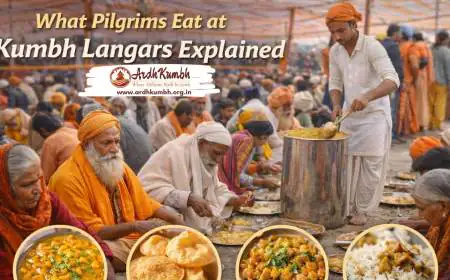
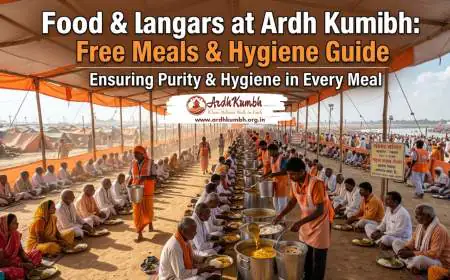
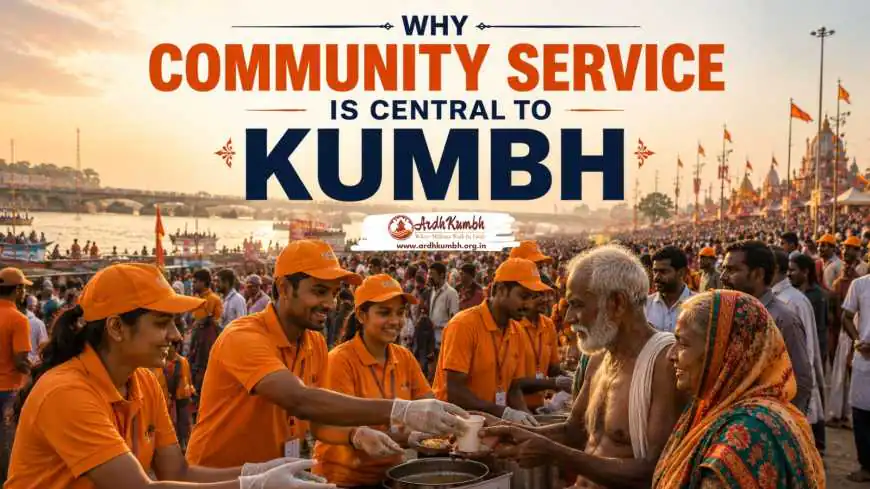
Let me describe something that will restore your faith in humanity. At any given moment during the Kumbh Mela, thousands of people are eating a free hot meal. Not because they paid for it. Not because they belong to a certain caste or religion. Simply because they are hungry. This is the langar system — community kitchens run by Sikhs, Hindus, Jains, and various spiritual organizations. The largest ones serve over fifty thousand meals a day. Think about that number. Fifty thousand. Every single day. Who cooks? Volunteers — housewives, college students, retired grandparents, even children. Who pays? Donations from ordinary people who believe that feeding the hungry is the highest form of worship. What do they serve? Simple, nutritious, hot meals — dal, roti, rice, vegetables, and kheer on special days. And here is the most beautiful part. Nobody checks your credentials. You do not need an ID card. You do not need to prove you are poor. You just sit down, and someone places a plate in front of you. This unconditional feeding is community service at its purest. It teaches every volunteer and every recipient the same lesson — hunger has no religion, and food is a basic human right.
The Lost and Found Army
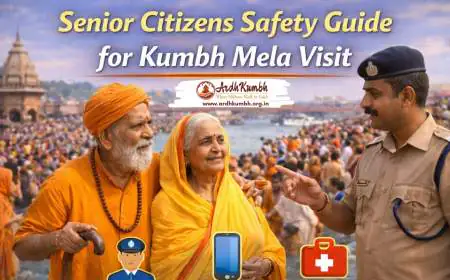
Imagine this. You are in a crowd of ten million people. Your elderly mother, who has trouble walking, suddenly disappears. Your phone has no signal. You cannot even describe where you last saw her because every direction looks the same. This happens hundreds of times every single day at the Kumbh. And this is where the lost and found army of community service volunteers becomes the unsung hero. Every major akhara, every spiritual organization, and the Mela administration runs dedicated lost and found centers. But the real work happens on the ground. Ordinary pilgrims turn into volunteers the moment they see someone in distress. A young man from Delhi spots a crying child and spends two hours walking through the crowd until he finds the parents. A group of women from Nashik adopts a disoriented elderly woman, feeds her, calms her, and stays with her until her family is located. These acts of community service are not organized. They are instinctive. The Kumbh atmosphere awakens something in people — the realization that helping a stranger is not an obligation. It is a privilege.
Trending Guides Now
Har Ki Pauri Ganga Aarti Time Today in Haridwar
Read Guide →
Ardh Kumbh Mela Rituals Explained Shahi Snan & Akhara Traditions
Read Guide →
Why Order and Cleanliness Are Strictly Enforced
Read Guide →
Daily Spiritual Practices Only Seen at Ardh Kumbh
Read Guide →
Best Routes to Reach Haridwar for Ardh Kumbh Mela
Read Guide →
Essential Rules Every Ardh Kumbh 2027 Pilgrim Must Follow
Read Guide →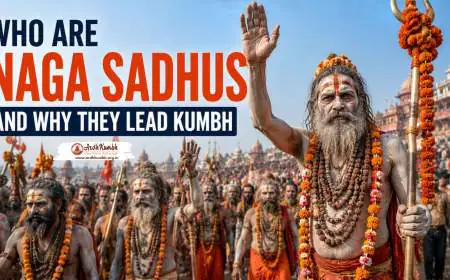
Who Are Naga Sadhus and Why They Lead Kumbh
Read Guide →
Biggest Crowds Ever Recorded at Ardh Kumbh
Read Guide →Medical Camps: Healing Bodies and Hearts
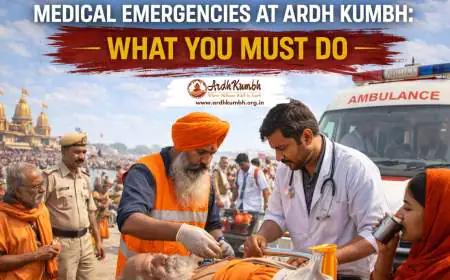
The physical toll of the Kumbh is real. Millions of people walking barefoot on rough ground. Elderly pilgrims with pre-existing conditions. Cold water dips that can shock the system. Exhaustion from lack of sleep. Dehydration from long queues. And yet, the death rate at the Kumbh is remarkably low. Why? Because of an invisible network of medical community service that springs up everywhere. Free medical camps run by doctors, nurses, and paramedics — many of whom take time off from their paying jobs just to volunteer. They treat blistered feet, respiratory infections, heart conditions, injuries from slips, and so much more. They do not ask for money. They do not ask for insurance cards. They just ask, "Where does it hurt?" Some of these doctors have been volunteering at the Kumbh for decades. A cardiologist from Mumbai told me once, "At my hospital, I treat rich people who complain about everything. Here, I treat pilgrims who thank me for just looking at them. Which place do you think heals my heart more?" This is the hidden economy of the Kumbh — community service that flows both ways. The pilgrim receives healing. The volunteer receives meaning.
The Cleaning Army Nobody Wants to Talk About
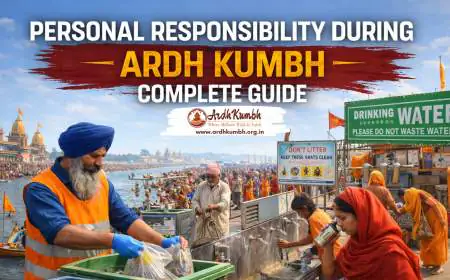
Let me be brutally honest. When millions of people gather, they create waste. Food wrappers. Plastic bottles. Used clothing. So much more. It is not pretty. And most pilgrims never think about what happens to their trash after they throw it. But there is an army of community service workers — many of them volunteers, many of them underpaid sanitation staff — who work while everyone sleeps. They sweep the grounds at 2 AM. They empty overflowing bins before dawn. They clean the toilets that thousands use every hour. This is the dirtiest, most invisible, most essential service at the Kumbh. And here is what will surprise you. Many of these cleaners are not doing it just for money. They are devotees who believe that keeping the Mela grounds clean is a form of worship. They are serving Ganga Maiya by keeping her banks free of filth. They are serving the pilgrims by giving them a dignified experience. The next time you walk through a clean pathway at the Kumbh, pause and thank this cleaning army. Their community service is the difference between a sacred gathering and a public health disaster.
Water Distribution: Small Acts, Massive Impact
Stand in any long queue at the Kumbh during peak afternoon heat. The sun is brutal. You have been waiting for two hours. Your throat is dry. You forgot to bring water. And then, out of nowhere, a young volunteer appears with a large matka (clay pot) and a stack of kulhads (clay cups). They pour cool water into the cup and hand it to you with a smile. No charge. No expectation. Just water. This small act of community service happens thousands of times every day at the Kumbh. Different organizations set up water distribution points — some use modern coolers, some use traditional matkas. But the spirit is the same. Thirst is universal. Quenching thirst is sacred. For the volunteer carrying heavy pots back and forth for twelve hours, this is exhausting work. But watch their faces. They are not tired. They are joyful. Because they have discovered something that no meditation retreat can teach. Serving water to a thirsty person is the fastest route to inner peace.
Crowd Management as Compassion
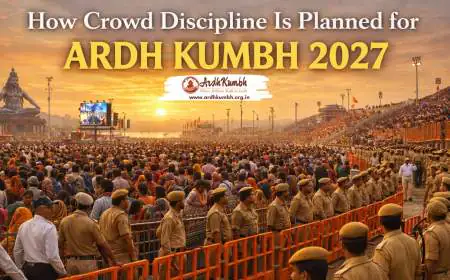
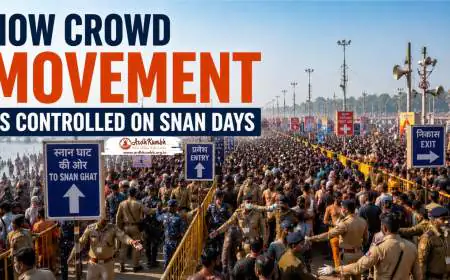
Most people think of crowd management as a police function. Batons. Barricades. Commands. And yes, the police do an incredible job at the Kumbh. But the real crowd management happens through community service. Volunteers from different organizations stand at key junctions, not with weapons, but with kind words. "This way, bhaiya." "Slowly, slowly, no rush." "The queue for snan is two hours from here, you might want to rest first." These volunteers prevent chaos not through force but through compassion. They understand that a scared pilgrim is a dangerous pilgrim. A calm pilgrim is a safe pilgrim. So they smile. They offer water. They crack small jokes to ease tension. They help elderly pilgrims find shorter routes. They warn families about slippery steps. This is community service disguised as crowd management. And it works. The Kumbh remains one of the safest large gatherings in the world not because of high walls and armed guards, but because thousands of ordinary people decided to become guardians of each other.
The Youth Volunteer Movement
Here is something that will give you hope for the future. Walk through any Kumbh Mela, and you will see thousands of young people — college students, recent graduates, teenagers — working as volunteers. They are not getting paid. They are not earning college credit (usually). They are not building their resumes (though they should). They are simply serving because something inside them said, "I want to be part of this." A nineteen-year-old girl from Pune managing a lost and found center. A twenty-two-year-old boy from Lucknow carrying water pots for eight hours straight. A group of engineering students from Bangalore developing a mobile app to help pilgrims find their tents, then standing at help desks to assist those who cannot use the app. This youth volunteer movement is the quiet revolution happening at the Kumbh. These young people will go back to their colleges and jobs transformed. They have tasted the joy of selfless service. Many of them will start community service initiatives in their own cities. Some will choose careers in social work, disaster response, or public service. The Kumbh is not just serving pilgrims. It is growing the next generation of servant leaders.
Service Beyond the Snan: When Ritual Takes Backseat
This might offend some traditionalists, but here is the truth. The holy dip lasts thirty seconds. Community service lasts all day. And many pilgrims at the Kumbh have quietly realized something revolutionary — serving others is more transformative than any ritual. You will meet people who came for the snan but ended up spending their entire week working in a langar. You will meet sadhus who skip their own bath to help a lost child find their parents. You will meet families who decided that instead of standing in a four-hour queue for the shahi snan, they would spend that time serving food to the elderly who cannot walk to the river. These people have discovered the hidden teaching of the Kumbh. Rituals are important. They connect you to tradition. But service is what connects you to the divine that lives inside every human being. The Kumbh does not judge you by how many times you dipped. It judges you — if it judges at all — by how many hands you held, how many hungry mouths you fed, how many tears you wiped.
Disaster Response: When Service Saves Lives
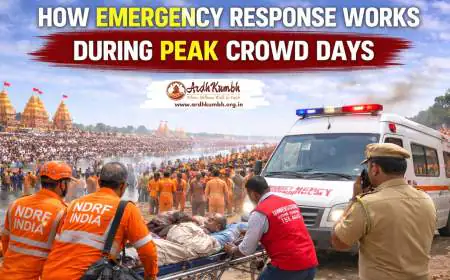
Let me be completely honest. Despite the best planning, things go wrong at the Kumbh. A stampede happened in 1954. Fires have broken out in crowded tent cities. Boats have capsized during snan. And in those terrible moments, community service transforms into disaster response without any training or hesitation. Ordinary pilgrims become rescuers. They pull people from crowds. They carry the injured to medical tents. They form human chains to prevent further chaos. They donate their own clothing to those who lost everything. The Kumbh has a tragic history in some years, but it also has a glorious history of humanity rising in the face of disaster. These disaster response moments are not planned. There are no drills. But when the moment comes, the culture of service that permeates the Kumbh kicks in automatically. People do not think, "Is this my responsibility?" They think, "Someone needs help, and I am here." That instinct — cultivated over centuries of Kumbh tradition — saves lives when seconds matter.
The Ripple Effect: How Kumbh Service Changes Volunteers Forever
Here is the most important thing you will read in this article. The community service performed at the Kumbh does not end when the Mela closes. It changes the people who serve. A volunteer who spends two weeks working in a langar returns home with a new understanding of food waste. They stop throwing away leftovers carelessly. A doctor who treated blistered feet for free starts offering free clinics in their own neighborhood once a month. A college student who helped lost pilgrims develops patience and communication skills that land them their first job. A housewife who served water for the first time in her life discovers a confidence she never knew she had. The Kumbh is not just a pilgrimage destination. It is a transformation machine. And the fuel for that machine is community service. Every person who serves leaves with something more valuable than any souvenir — a changed heart. And those changed hearts go back to their cities, their villages, their families, and they change their little corners of the world. That is the real impact of the Kumbh. Not the millions who came. But the millions who left determined to serve.
The Eternal Lesson: You Are Not Here for Yourself
If you take away one thing from understanding why community service is central to the Kumbh, let it be this. You are not here for yourself. This gathering exists because millions of people before you decided to serve. The sadhus who created the akhara system were not thinking about their own comfort. The langar volunteers are not feeding others to feel superior. The doctors in free medical camps are not looking for recognition. They are all operating from a simple understanding — my well-being is connected to your well-being. If you are hungry, my spiritual practice is incomplete. If you are lost, my meditation is meaningless. If you are suffering, my holy dip is just getting wet. This is the deepest teaching of the Kumbh Mela. Community service is not an activity you do at the Mela. It is the Mela. The river is just the river. The crowds are just crowds. But the service — the invisible, endless, exhausting, joyful, transformative service — that is where the sacred actually lives. And that is why, centuries from now, long after we are gone, the Kumbh will still be standing. Because service never goes out of fashion. It is the only thing that has ever mattered.
Frequently Asked Questions