
















How Ardh Kumbh Helped Preserve Dharma
Invaders burned temples. Colonizers banned traditions. Yet Dharma survived. Here is the untold story of how the Kumbh Mela kept the flame alive for centuries.

1. The Kumbh as a "Backup Server" for Scriptures
Here is a shocking fact. Many ancient Hindu scriptures were not written down for centuries. They were memorized and recited orally. The Kumbh was the annual (or six-yearly) backup.
Saints and scholars from across India would gather at the Kumbh. They would recite the Vedas, the Upanishads, the Puranas to each other. If one teacher forgot a verse, another teacher from a different village would remember it. They would correct each other. They would standardize the texts.
When invaders burned libraries (like Nalanda and Vikramshila), the oral traditions preserved in the Kumbh survived. You cannot burn a mantra that lives in thousands of throats.
How this preserved dharma: The Kumbh was a distributed backup system. No single disaster could destroy the scriptures because they were stored in the living memory of pilgrims who met at the Kumbh every few years. That is genius level preservation.
2. The Akharas: The Hidden Army That Protected Dharma
We think of sadhus as peaceful meditators. But for centuries, the Naga Sadhus of the Akharas were also warriors. They carried weapons. They fought battles. They protected Hindu pilgrims and Hindu holy sites from attacks.
The Kumbh was their muster point. Every six years (or twelve for the Purna Kumbh), the Akharas would gather. They would train. They would plan. They would show the rulers (Mughal, British, local kings) that Hindus had a fighting force that could protect their faith.
This visible display of strength deterred many attacks. The Kumbh was a message: "We are many. We are organized. Do not mess with our dharma."
How this preserved dharma: Dharma survived not just by philosophy, but by sword when necessary. The Kumbh kept the warrior monks connected, trained, and visible. That visibility was protection.
3. The Kumbh Preserved Regional Traditions from Going Extinct
India is not one culture. It is thousands of cultures. Different dialects, different rituals, different deities. Before railways and internet, these regional traditions could have drifted apart or died out.
The Kumbh brought them together. A Tamil priest met a Kashmiri pandit. A Bengali devotee watched a Maharashtrian ritual. They shared. They learned. They borrowed.
This cross-pollination kept regional traditions alive. A small village ritual that might have disappeared because the village was converted or destroyed was remembered by a pilgrim from another region who had seen it at the Kumbh years ago.
How this preserved dharma: The Kumbh was a living museum and seed bank for diverse Hindu practices. If one region lost a tradition, another region had a backup. Diversity = resilience.
4. The Kumbh Maintained the Calendar When Kingdoms Fell
Hindu rituals depend on complex calendars (lunar, solar, nakshatras). When kingdoms fell, the royal astronomers who maintained these calendars could be killed or scattered.
But the Kumbh had its own calendar—astrological dates calculated centuries in advance. The saints who calculated these dates were trained at the Kumbh. They passed their knowledge to disciples at the Kumbh.
Even when no king sponsored astronomy, the Kumbh kept the calendar alive. The dip happened on the right day because the saints remembered the calculation.
How this preserved dharma: Dharma without a calendar is like a train without a timetable. The Kumbh preserved the timetable of Hinduism through centuries of political chaos. That is invisible but essential work.
Trending Guides Now

Who Are Naga Sadhus and Why They Lead Kumbh
Read Guide →
Significance of Bathing in the Ganges During Kumbh Mela Explained
Read Guide →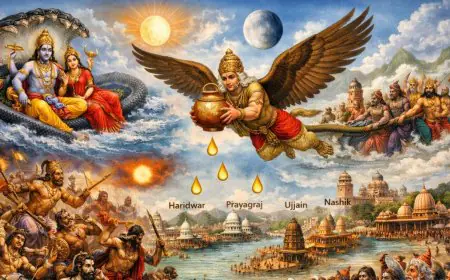
What Is the Story Behind the Ardh Kumbh Mela?
Read Guide →
The Untold Stories of Har Ki Pauri
Read Guide →
Ardh Kumbh 2027 Dates (Official) - Haridwar Snan Schedule
Read Guide →
Dharamshala Stay During Ardh Kumbh: Free & Budget Guide
Read Guide →
Official Progress Report of Haridwar Ardh Kumbh 2027 Infrastructure Projects
Read Guide →
Where to Find 24-Hour Pharmacies in Haridwar During Ardh Kumbh 2027 Emergencies
Read Guide →5. The Kumbh as a Safe House for Persecuted Saints
During periods of persecution (Mughal iconoclasm, Portuguese Inquisition in Goa, British anti-sannyasi laws), saints and scholars were hunted.
Where could they hide? The Kumbh. The massive crowd made it impossible for authorities to find specific individuals. A saint could disappear into the Mela, change his appearance, and emerge with a new identity after the Kumbh ended.
The Akharas had networks to smuggle persecuted saints from one region to another using the Kumbh as a hub. They would arrive as pilgrims. They would leave as traders or farmers.
How this preserved dharma: The Kumbh saved lives of knowledge keepers. Those saved saints went on to teach the next generation. Without the Kumbh, many lineages of gurus would have been extinguished.
6. The Kumbh Kept Sanskrit Alive as a Living Language
Sanskrit is the language of Hindu scriptures. But spoken Sanskrit was declining for centuries. Invaders did not speak it. Colonizers did not teach it. Common people preferred regional languages.
The Kumbh kept Sanskrit on life support. Discourses (katha, pravachan) were given in Sanskrit (with translations into Hindi, Tamil, Telugu, etc.). Scholars debated in Sanskrit. Mantras were chanted in Sanskrit.
A young pilgrim who heard Sanskrit at the Kumbh might be inspired to learn it. A village priest who had forgotten a Sanskrit verse would be reminded by a scholar at the Kumbh.
How this preserved dharma: Dharma without Sanskrit is like Christianity without Latin or Greek—possible, but weaker. The Kumbh kept Sanskrit breathing, even if just gasping, for centuries. That gasp kept the roots alive.
7. The Kumbh Preserved the Guru-Shishya Parampara (Lineage)
Hinduism is transmitted through guru-shishya parampara (teacher-disciple lineage). If a guru died without a disciple, a lineage of knowledge could die.
The Kumbh was the matchmaking ground for gurus and disciples. A seeker from a remote village could find a guru from a different region at the Kumbh. A guru looking for a worthy successor could test dozens of candidates at the Kumbh.
These new guru-shishya bonds created new lineages that continued the tradition for generations. The Kumbh was the dating app for spiritual inheritance.
How this preserved dharma: Without new disciples, dharma dies in one generation. The Kumbh ensured that gurus always found students. That continuity is the heartbeat of Hinduism.
8. The Kumbh Standardized Rituals Across the Subcontinent
Before mass media, every village did rituals slightly differently. Over time, these differences could have become separate religions (as happened with Christianity splintering into denominations).
The Kumbh standardized the core rituals. When millions of pilgrims saw the same aarti, the same snan (dip), the same puja at the same time, they internalized a common practice.
They went home and corrected their local priests. "At the Kumbh, they did it this way. We should do it this way too." Over centuries, this standardization kept Hinduism unified despite its diversity.
How this preserved dharma: Unity = survival. A fragmented Hinduism would have been easier to conquer and convert. The Kumbh kept the fragments glued together.
9. The Kumbh as a Refugee Camp During Famines and Invasions
When famine struck a region, or when invaders burned a city, where did survivors go? Often, they walked to the Kumbh. Even if the Kumbh was not scheduled for that year, the holy city (Haridwar, Prayagraj) had permanent temples and charitable institutions.
The Akharas and temples would feed and shelter refugees—regardless of whether they came for religion or survival. These refugees would then settle in new regions after the crisis, taking their dharma with them.
How this preserved dharma: The Kumbh infrastructure (temporary and permanent) acted as a lifeboat. People who would have died or converted for food survived and remained Hindu. That demographic survival is preservation at the most basic level.
10. The Kumbh Preserved the Idea of "Sacred Geography"
Hinduism is tied to land—the Ganga, the Yamuna, the Sangam, the Himalayas. When invaders destroyed temples, they tried to sever that connection.
But the Kumbh kept the memory of sacred geography alive. Pilgrims walked the ancient routes to the holy cities. They blessed the rivers even when temples were gone. They remembered the names of the ghats even when signs were erased.
You cannot destroy a holy place if millions of people visit it every few years and teach their children its name and story. The land becomes holy because of the memory, not because of the building.
How this preserved dharma: The Kumbh made Hinduism portable but rooted. Even when temples fell, the Kumbh kept the map of sacred India alive in millions of hearts.
11. The Kumbh Resisted Conversion Through Social Proof
Why did Hindus not convert en masse to Islam or Christianity during centuries of political and economic pressure? Many reasons. One is social proof.
At the Kumbh, a poor farmer saw millions of other poor farmers bathing in the Ganga. He thought, "If all these people believe, maybe there is something true here." The sheer scale of the Kumbh was evidence that Dharma was not a dying cult. It was a living civilization.
Social proof is a powerful psychological force. The Kumbh weaponized it for survival. "Look how many of us there are. We cannot all be fools."
How this preserved dharma: Dharma survived not just because of logic or philosophy, but because of crowds. The crowd was the argument. The Kumbh was the megaphone.
12. The Kumbh Adapted to Modernity Without Breaking
Here is the final lesson. Dharma survived because it adapted. The Kumbh of 2025 is not the Kumbh of 1625. It has electricity, social media, medical camps, police with walkie-talkies.
But the core remains. The dip. The chant. The community. The Kumbh proved that preservation does not mean freezing in time. It means holding the essence while changing the form.
How this preserved dharma: Dharma that cannot adapt dies. The Kumbh adapted—to Mughals, to British, to democracy, to internet—without losing its soul. That flexibility is the secret of its survival. And that secret is available to you too.
13. The Kumbh Is Not a Museum. It Is a Lifeboat.
You might read this article and think, "That is history. Interesting. But what does it have to do with me?"
Everything. Because preservation is not over. Dharma is still threatened—not by invaders with swords, but by indifference, materialism, and forgetfulness. You do not need to burn a temple to destroy a religion. You just need to distract the young until they forget to visit.
The Kumbh is still preserving Dharma. Every parent who brings their child to the Kumbh is planting a seed. Every young person who chants "Har Har Gange" is watering that seed. Every grandparent who tells the story of the churning of the ocean is harvesting that seed.
You are not a passenger on the lifeboat. You are the crew. The Kumbh has kept Dharma alive for thousands of years. It needs you to keep it alive for thousands more.
Will you answer the call? The Ganga is waiting. The dip is ready. The next Ardh Kumbh is coming. Do not be late. Dharma is counting on you.
Frequently Asked Questions