





























































How Ardh Kumbh Survived Political Upheavals
Empires fell. Wars raged. Governments changed. Yet the Kumbh never stopped. Discover the incredible resilience of faith through centuries of political chaos.
1. The Mughal Era: When Emperors Watched and Wondered
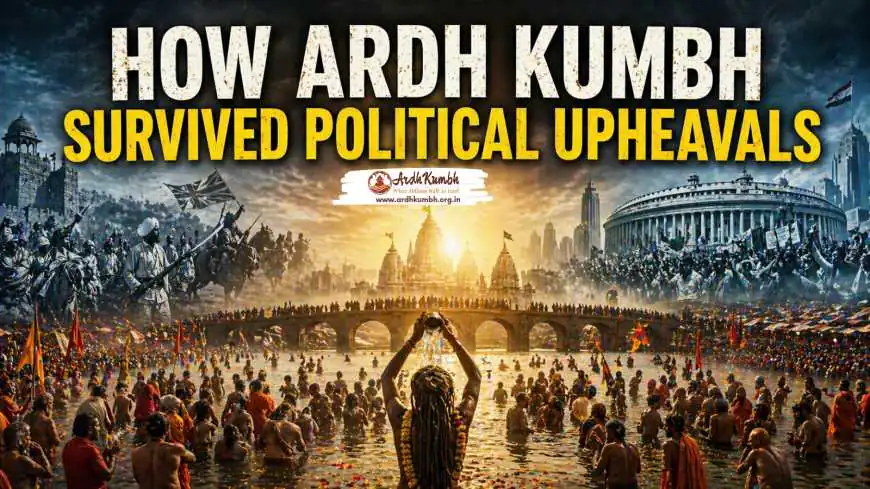
During the Mughal Empire, Hindu pilgrimages were not always welcome. Some emperors were tolerant (Akbar). Others were destructive (Aurangzeb). Temples were razed. Taxes were imposed on pilgrims. You would think the Kumbh would have died.
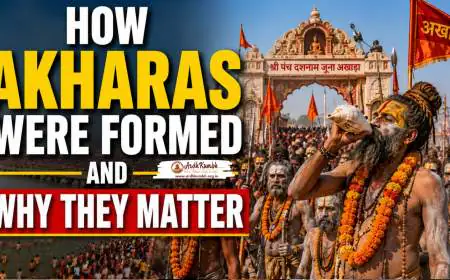
It did not. Why? Because the Akharas (monastic armies) were also military forces. The Naga Sadhus were warriors. They protected the Kumbh with swords and spears. When Mughal officials tried to stop the processions, the sadhus fought back. Not always successfully. But enough to keep the tradition alive.
Also, many Mughal rulers were curious about the Kumbh. They came as observers. They saw the crowd and thought, "This is too big to stop. Let them bathe." Political oppression could not erase millions of devotees showing up on a specific date dictated by stars, not by kings.
The lesson: The Kumbh survived because it was bigger than any emperor. You cannot cancel a river. You cannot arrest a constellation.
2. The British Raj: Suspicion, Surveillance, and Surrender
The British did not understand the Kumbh. They saw millions of Indians gathering in one place and thought, "Rebellion." They saw Naga Sadhus with weapons and thought, "Insurgents." They tried to control it. They tried to regulate it. They tried to tax it.
But they could not stop it. The Kumbh of 1858 happened just one year after the Sepoy Mutiny (First War of Independence). The British were nervous. They sent spies to the Mela dressed as pilgrims. They counted heads. They mapped routes.
And then something interesting happened. The British realized that the Kumbh was not a threat. It was a logistical miracle. They started building infrastructure for it—roads, bridges, railway lines. They realized that a peaceful Kumbh was good for business (pilgrims spent money) and good for stability (pilgrims were happy).
By the late 19th century, the British had gone from opponents to managers of the Kumbh. They did not love it. But they tolerated it. And tolerance was enough for survival.
The lesson: Political powers eventually realize that fighting the Kumbh is expensive. Managing it is cheaper. So they adapt. The Kumbh outlasts their ideology.
3. The 1947 Partition: Blood and Faith
1947. India was independent. But independence came with blood. The Partition killed hundreds of thousands. Millions were displaced. Trains carried corpses across the new border. Hindu and Muslim riots burned cities.
The Kumbh of 1948 (Ardh Kumbh in Haridwar) was scheduled just months after the violence. Many said, "Cancel it. Too dangerous. People are still bleeding."
The saints said, "No. The stars do not care about politics. The dip must happen."
And it did. Millions came. Not as many as before. But enough. The Kumbh became a healing ground. Hindus who had lost homes in Pakistan came to the Ganga to wash their grief. Sikhs who had lost family came to pray. The Kumbh did not solve Partition. But it gave people a reason to keep living.
The lesson: Political upheaval can kill bodies. It cannot kill faith that has been flowing for thousands of years. The Kumbh became a lifeline when everything else was broken.
4. The Emergency (1975-77): When Democracy Was Suspended
Indira Gandhi declared a state of emergency in 1975. Civil liberties were suspended. Political opponents were jailed. Press was censored. India became a dictatorship for 21 months.
The Kumbh of 1976 (Ardh Kumbh in Haridwar) happened in the middle of this repression. The government was nervous. Large gatherings could become protests. The police were everywhere.
But the Kumbh remained peaceful. Why? Because the pilgrims came for faith, not for politics. The saints told their followers, "Do not mix religion with politics here. This is sacred ground."
The Emergency government allowed the Kumbh to happen because they did not want to anger millions of voters. They managed it. They watched it. But they did not stop it.
The lesson: Even authoritarian governments know that messing with the Kumbh is political suicide. The Kumbh survives because it is electorally too big to fail.
Trending Guides Now

Who Are Naga Sadhus and Why They Lead Kumbh
Read Guide →
Biggest Crowds Ever Recorded at Ardh Kumbh
Read Guide →
Why Haridwar Is Spiritually Central to Ardh Kumbh
Read Guide →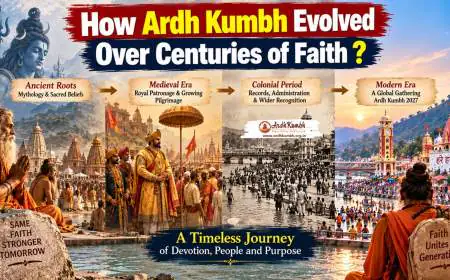
How Ardh Kumbh Evolved Over Centuries of Faith ?
Read Guide →
Ardh Kumbh 2027 Dates (Official) - Haridwar Snan Schedule
Read Guide →
Dharamshala Stay During Ardh Kumbh: Free & Budget Guide
Read Guide →
Official Progress Report of Haridwar Ardh Kumbh 2027 Infrastructure Projects
Read Guide →
Where to Find 24-Hour Pharmacies in Haridwar During Ardh Kumbh 2027 Emergencies
Read Guide →5. The Babri Masjid Riots (1992) and the Kumbh of 1994
December 6, 1992. The Babri Masjid was demolished by Karsevaks. Hindu-Muslim riots erupted across India. Thousands died. Mumbai burned. The country was on the edge of civil war.
The Ardh Kumbh of 1994 in Prayagraj was just 14 months later. The government was terrified. What if violence spilled into the Mela? What if Muslim militants attacked the gathering? What if Hindu extremists used the Kumbh to mobilize?
The saints and Akharas issued a united statement: "The Kumbh is for peace. Do not bring politics here." They banned political banners inside the Mela grounds. They cooperated with the police.
The Kumbh happened. Peacefully. Millions bathed. No major violence. The Kumbh became a sanctuary from the chaos outside.
The lesson: The Kumbh has its own police—the faith of the pilgrims. When political fires burn outside, the Kumbh becomes a firebreak. People come to cool down, not to heat up.
6. The COVID-19 Pandemic: The Closest Call
Let us talk about the closest the Kumbh ever came to cancellation. 2021. The Kumbh Mela (Purna Kumbh, not Ardh) happened during the second wave of COVID-19. India was bleeding. Oxygen was scarce. Crematoriums were overflowing.
The government allowed the Kumbh but with restrictions. Testing. Masks. Social distancing (impossible in a crowd of millions). The saints were divided. Some said, "Cancel. People will die." Others said, "Faith is stronger than virus."
The Kumbh happened. And yes, there was a surge in cases. Yes, many pilgrims got sick. Yes, the Kumbh was criticized globally.
But here is the miracle. The Kumbh did not cancel future editions. It survived the pandemic. The 2025 Ardh Kumbh (or 2026, depending on the cycle) will happen. The 2021 controversy will be a footnote.
The lesson: Even a pandemic—a biological upheaval, not just a political one—could not kill the Kumbh. It wounded it. But the Kumbh is resilient like a banyan tree. Cut a branch, and it grows back.
7. How the Akharas Act as Political Shock Absorbers
You might wonder: How does the Kumbh survive when governments change ideologies? Congress to BJP to coalition to regional parties.
The answer is the Akharas. The Akharas are independent of the government. They have their own funding (from devotees), their own land, their own leadership. They do not wait for government permission to hold the Kumbh. The Kumbh is theirs.
The government is a guest at the Kumbh. The government provides security, infrastructure, and sanitation. But the Akharas provide the soul. As long as the Akharas want the Kumbh to happen, it will happen. Politicians come and go. Mahants (Akhara chiefs) have lineages that span centuries.
The lesson: The Kumbh survives because it is privately owned by faith, not publicly owned by politics. The government is a service provider, not the decision maker.
8. The Role of "Neutral Ground" in Civil Wars
India has had civil unrest—Sikh militancy in the 1980s, Kashmir insurgency, Naxalite movements. In each case, the Kumbh was seen as neutral ground. Militants did not attack the Kumbh because their own families were there. Police did not crack down because they did not want to provoke millions.
The Kumbh becomes a temporary truce. Everyone—the state, the rebels, the ordinary people—has an interest in keeping the Kumbh safe. It is too big to fail. Too sacred to desecrate.
The lesson: Political upheavals have red lines. The Kumbh is one of them. Even enemies agree: "Not at the Kumbh." That agreement is unwritten but ironclad.
9. The Independence Struggle: Kumbh as a Silent Protest
During the freedom struggle, the British banned political gatherings. But they could not ban the Kumbh. So freedom fighters used the Kumbh as a cover.
Under the camouflage of pilgrims, revolutionaries met at the Kumbh. They exchanged messages. They planned protests. They distributed leaflets. The British knew it was happening. But they could not arrest everyone at the Kumbh.
The Kumbh became a silent partner in the independence movement. It did not declare itself political. It simply provided the space. And that space was invaluable.
The lesson: The Kumbh survives by staying above politics while accommodating it underneath. It is a neutral container that political forces can use but not control.
10. The Partition of Akharas: When the Kumbh Survived a Split
In 1904, the Akharas had a massive internal dispute. They split into two factions over bathing rights and succession. For a while, it looked like the Kumbh might fracture permanently. Two parallel Kumbhs? Chaos.
But the saints negotiated. They compromised. They agreed on a bathing order that gave each faction a turn. The Kumbh continued. The split was healed over decades.
The lesson: The greatest threats to the Kumbh have often come from inside (internal disputes), not from outside (political upheavals). And yet, even internal wounds heal because the stakes of losing the Kumbh are too high for everyone.
11. The Kumbh During WARS: World Wars and Indo-Pak Wars
World War I (1914-18) . World War II (1939-45) . Indo-Pak wars (1965, 1971) . Each time, India was at war. Resources were scarce. Men were fighting. Trains were taken over by the military.
And yet, the Kumbh happened. Fewer people came (because of travel restrictions and fear). But enough came. The dip happened. The prayers for peace happened.
During WWII, the British wanted to cancel the Kumbh to save fuel and transport for the war effort. The Indian princes and Akharas protested. A compromise was reached: a smaller Kumbh, fewer days, but the auspicious bathing dates were preserved.
The lesson: Even global wars could not cancel the Kumbh. They could only shrink it. The core—the dip on the auspicious day—remained untouchable.
12. The 2024 General Elections: Kumbh and Politics Coexist
In 2024, India held general elections. The campaign was intense. Politicians were everywhere. Some wanted to use the Kumbh for rallies. The Election Commission had to ensure free and fair polls.
The Kumbh (Ardh Kumbh in 2025 or 2026) will happen as scheduled. Politicians will come—not to campaign (that is banned near the Mela), but to bathe and be seen bathing. The Kumbh will absorb them without being captured by them.
The lesson: In democratic upheavals (elections), the Kumbh remains neutral. It does not endorse parties. It does not reject them. It simply hosts them as pilgrims, not as politicians. That neutrality is its superpower.
13. Why the Kumbh Will Survive the Next Political Storm
Let me end with a prediction. 100 years from now, India will have different borders, different governments, different ideologies. The climate will have changed. The rivers might have shifted. The population will be different.
But the Ardh Kumbh will still happen. Why? Because political upheavals are temporary. The Kumbh is permanent—not because of infrastructure or laws, but because of millions of individual hearts that say, "I need to bathe in that river on that day."
No politician can arrest a heart. No government can legislate against a constellation. No war can bomb a tradition that lives in memory and hope.
The Kumbh has survived invaders, colonizers, dictators, riots, pandemics, and wars. It will survive you. It will survive me. It will survive the next political storm because faith is the only force that politicians have never been able to defeat—no matter how hard they tried.
So the next time you hear that the country is in crisis, remember the Kumbh. It is still there. Still flowing. Still waiting for you to come home.
Frequently Asked Questions