






























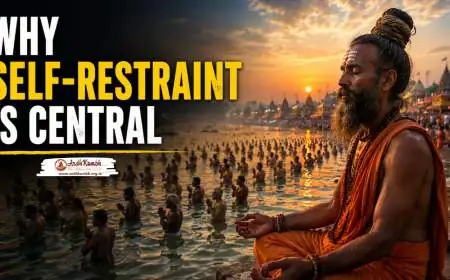










































Kalpavas Explained: The Discipline That Changes Pilgrims
Discover what Kalpavas means, why pilgrims live on riverbanks for a full month, and how this ancient discipline transforms body, mind, and soul.

Quick Answer: Kalpavas Explained: The Discipline That Changes Pilgrims
Kalpavas is a traditional period of disciplined spiritual living associated with pilgrimage, especially at major sacred gatherings. A person who observes Kalpavas, known as a Kalpavasi, traditionally follows a structured routine focused on simplicity, prayer, spiritual reflection, self-discipline, and sacred bathing. 🙏 The practice may involve staying near a sacred river, observing dietary restrictions, participating in religious activities, listening to spiritual teachings, and reducing everyday comforts and distractions.
The transformative aspect of Kalpavas discipline comes from sustained practice rather than a single ritual. Living simply and maintaining a regular spiritual routine can encourage devotees to focus on devotion, self-control, service, and reflection. The exact rules and duration can vary according to religious tradition, location, and the individual’s observance. 🚩 For pilgrims interested in Kalpavas, understanding its traditional commitments is important before beginning, particularly regarding accommodation, food, daily routines, bathing practices, and personal discipline. Kalpavas is therefore understood as a period of spiritual discipline and pilgrimage, where repeated devotional practices are intended to deepen the pilgrim’s religious experience.
The Meaning Behind the Word That Most Get Wrong
The word Kalpavas comes from two Sanskrit roots — "Kalpa" meaning "a sacred period" (specifically one of Brahma's days, lasting 4.32 billion human years), and "Vas" meaning "to dwell". So literally, a Kalpavasi is someone who dwells as if time itself has expanded into a cosmic cycle.
But the ancient lawgivers were not being poetic. They were being practical. By living on the riverbank for one month — from Paush Purnima (full moon in December-January) to Maha Shivaratri (February-March) — the pilgrim learns to experience time differently. Without clocks, without screens, without appointments, the mind stops chopping the day into anxious pieces. The sun becomes the clock. The moon becomes the calendar. The river becomes the mirror of the inner self.
Trending Guides Now

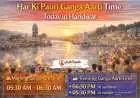
Har Ki Pauri Ganga Aarti Time Today in Haridwar
Read Guide →
Complete Guide to Ardh Kumbh Rituals
Read Guide →
Why Order and Cleanliness Are Strictly Enforced
Read Guide →
Why Early Mornings Are Sacred
Read Guide →
Ardh Kumbh 2027 Dates (Official) - Haridwar Snan Schedule
Read Guide →
Dharamshala Stay During Ardh Kumbh: Free & Budget Guide
Read Guide →
Official Progress Report of Haridwar Ardh Kumbh 2027 Infrastructure Projects
Read Guide →
Where to Find 24-Hour Pharmacies in Haridwar During Ardh Kumbh 2027 Emergencies
Read Guide →The scriptures say that one month of Kalpavas equals one year of ordinary spiritual practice. Why? Because normal life scatters attention into hundreds of directions. Kalpavas compresses all that scattered energy into a single point — the river, the breath, the mantra, the dip. This concentration is what changes the pilgrim.
The 31 Days That Break Every Modern Habit
Kalpavas begins on Paush Purnima — the full moon in late December or early January. The pilgrims arrive at the Kumbh site (Prayagraj, Haridwar, Ujjain, or Nashik) days in advance, claiming their spot on the sandbanks or designated Kalpavas grounds. They build temporary huts from bamboo, straw, and plastic sheets — structures that will shelter them for one month and then be dismantled completely.
On the first day, the Kalpavasi takes a formal vow in front of a priest or saint. The vow includes:
-
Three baths daily in the holy river (before sunrise, midday, and sunset)
-
One meal per day (no breakfast, no dinner, no snacking)
-
Complete celibacy (no sexual contact, no sensual thoughts)
-
No lying (absolute truthfulness in every word)
-
No anger (not even irritation, not even frustration)
-
Sleep on the ground (no mattress, no pillow, no blanket warmer than one thin layer)
-
No cutting of hair or nails for the entire month
-
Daily mantra chanting (a minimum of 108 rounds of a chosen mantra)
-
No stepping outside the Kalpavas boundary except for bathing and temple visits
For a modern person accustomed to central heating, social media, processed food, and constant entertainment, these rules sound impossible. That is precisely the point. Kalpavas is designed to break the addictions that keep the human soul asleep.
The Three Baths That Do More Than Clean the Skin
The three baths of Kalpavas are not about hygiene. They are energetic resets.
First Bath — Brahma Muhurta (4:00 AM - 5:30 AM): The Kalpavasi wakes before 4:00 AM, walks to the river in complete darkness, and submerges the entire body three times while chanting the Gayatri Mantra. This bath activates the pineal gland, synchronizes the brain waves with the Earth's magnetic field, and erases the stress hormones accumulated from the previous day.
Second Bath — Midday (11:00 AM - 12:00 PM): The sun is at its peak. The Kalpavasi returns to the river, but this time the bath is shallow — only up to the navel. The purpose is digestion. The cool water draws blood away from the stomach for a few minutes, then releases it, creating a pump that massages the abdominal organs and stimulates the digestive fire.
Third Bath — Sunset (5:30 PM - 6:30 PM): The day is ending. The Kalpavasi takes a full bath again, but this time facing west toward the setting sun. This bath releases the mental impressions (samskaras) accumulated during the day. The water washes away not dirt but thoughts — the irritations, the judgments, the anxieties. After this bath, the Kalpavasi does not speak until the next morning — a 12-hour vow of silence called Mauna.
The combination of these three baths at specific times creates a biological rhythm that modern sleep science is only now discovering. The body learns to peak and release its hormones in a 12-hour cycle that matches the Earth's rotation perfectly.
The One Meal That Teaches True Hunger
Perhaps the hardest rule of Kalpavas for the modern pilgrim is the single meal. No breakfast. No lunch (though the single meal is typically taken at midday). No dinner. No tea in the morning. No coffee in the afternoon. No snacks at night. Just one meal — vegetarian, freshly cooked, offered first to the deity, and eaten in silence.
For the first five days, the body screams. Headaches erupt. Irritability spikes. Sleep becomes fragmented. This is withdrawal — not from drugs, but from the constant eating that modern life has normalized. The human digestive system was never designed to process food from waking to sleeping. It needs long gaps — 12 hours or more — to repair and cleanse.
By day ten, the body adapts. The hunger pangs transform into a gentle reminder rather than a scream. By day twenty, the Kalpavasi discovers a startling truth — most of what they called hunger was actually habit, boredom, or emotional avoidance. The real hunger — the body's genuine need for fuel — is tiny and quiet.
The single meal also frees the mind. Without the constant decision of "what to eat next," the mental bandwidth expands. Kalpavasis report clearer thinking, sharper memory, and unusual creativity during the fasting hours. This is not superstition. This is physiology — the brain performs better when not constantly digesting.
Sleeping on Ground: The Forgotten Teacher
The Kalpavasi sleeps on a thin mat or directly on the earth inside the bamboo hut. No mattress. No pillow (or a rolled cloth at most). No electric blanket. The January-February nights at Prayagraj or Haridwar drop to 3-6 degrees Celsius (37-43°F). The cold is real. The ground is hard.
Why this cruelty? Because comfort dulls awareness. A soft bed with a warm blanket invites the mind to sink into unconsciousness. The hard ground and cold temperature force the body to remain partially alert even during sleep. The dreams become more vivid. The sleep becomes lighter but more restorative — because the brain never fully disconnects from the body.
There is also a subtle physics at play. Sleeping directly on the earth allows the body's bio-electrical field to ground into the planet's natural charge. This grounding has been scientifically shown to reduce inflammation, normalize cortisol, and improve heart rate variability. The Kalpavasis have been doing this for thousands of years without any laboratory to tell them why — they simply felt the difference.
The 108 Mantras: Why Repetition Becomes Transformation
Every Kalpavasi must chant a minimum of 108 rounds of a mantra each day. One round is 108 repetitions — either counted on a mala (prayer beads) or tracked by breath. That means 11,664 repetitions of the mantra every single day for 31 days — a total of 361,584 repetitions by the end of Kalpavas.
The mind initially resists this repetition. By the tenth repetition, the mind gets bored. By the fiftieth, it wanders. By the hundredth, it protests. But then something shifts. Between the 5,000th and 10,000th repetition, the mind stops fighting. The words become automatic. The chatter falls silent. And in that silence, the Kalpavasi experiences the mantra not as sound but as energy — vibrating through the skull, the spine, the organs.
This is neuroplasticity in action. The repetition physically rewires the neural pathways, strengthening the circuits associated with focus, calm, and devotion, while weakening the circuits associated with anxiety, distraction, and fear. The 361,584 repetitions are not mindless. They are brain surgery performed by the pilgrim on herself.
The Celibacy Vow That Most Misunderstand
When outsiders hear that Kalpavas requires complete celibacy for 31 days, they assume it is a moral rule about sex. That is incorrect. The celibacy (brahmacharya) in Kalpavas is energetic, not moral.
The human body produces sexual energy continuously — whether celibate or not. In normal life, this energy flows downward and outward through sexual expression. During Kalpavas, the pilgrim is asked to redirect this energy upward — toward the brain, the heart, the spiritual centers. This redirection is not achieved through suppression (which is harmful) but through transmutation — using chanting, bathing, and meditation to convert the raw energy into a finer vibration.
The result is noticeable. By the second week of Kalpavas, the pilgrim experiences unusual vitality. The body feels lighter. The mind feels sharper. The emotions feel steady. This is not repression — this is alchemy. The same energy that could have been lost in orgasm is instead available for healing, insight, and transformation.
What Happens to the Pilgrim's Brain After 31 Days
Neuroscience has not studied Kalpavas directly — the sampling challenges are obvious. But research on meditation retreats, fasting, and cold water immersion allows us to infer what happens inside the Kalpavasi's skull after 31 days:
-
Prefrontal cortex thickening: The area responsible for self-control, decision-making, and long-term planning becomes denser and more active.
-
Amygdala shrinkage: The fear center of the brain reduces in volume, leading to lower anxiety and reduced reactivity.
-
Default mode network quieting: The network responsible for mind-wandering, rumination, and self-referential thoughts (the "me" voice) becomes less active, producing less mental chatter.
-
Increased gray matter in the insula: The area responsible for interoception (sensing the body's internal state) becomes larger, allowing the pilgrim to feel the heartbeat, digestion, and breath without effort.
-
Dopamine receptor upregulation: The brain becomes more sensitive to natural rewards (sunlight, connection, silence) and less dependent on artificial stimulation (screens, sugar, news).
By the end of Kalpavas, the pilgrim's brain is physically different from when they arrived. This is not metaphor. This is neuroplasticity proven.
The Social Disappearance That Creates Inner Presence
One of the most surprising aspects of Kalpavas is the social isolation. The Kalpavasi does not interact except for essential communication. No gossip. No news. No phone calls (phones are strictly forbidden in Kalpavas camps). No social media. No discussing the weather, politics, or family problems.
In normal life, the mind is constantly occupied with other people — what they think, what they said, what they might say next. This social chatter consumes 80 percent of mental bandwidth. During Kalpavas, that bandwidth is suddenly available — and the mind does not know what to do with it.
For the first week, the mind turns inward with violence. All the unresolved emotions, unprocessed memories, and unexamined beliefs rise to the surface. The Kalpavasi may experience unexpected tears, sudden anger, waves of grief, or paralyzing boredom. This is not breakdown — this is breakthrough. The river of suppressed material is finally flowing.
By the third week, the storm passes. The mind becomes quiet — not because it has been forced into silence, but because it has emptied itself of the stored noise. The Kalpavasi experiences hours of spontaneous stillness — no thoughts, no urges, no narratives. Just awareness. Just presence. This is what the scriptures call "sakshi bhav" — the witness state.
The River as Mirror: What the Water Reflects
The holy river — whether Ganga, Yamuna, or Godavari — is not just water to the Kalpavasi. It is a living mirror. Every morning, standing waist-deep in the cold current, the Kalpavasi looks into the water and sees not the physical reflection (which is impossible in the dark) but the inner reflection.
The river never stops flowing. It accepts everything — dead leaves, ashes, flowers, pollution, devotion, indifference. It does not judge. It does not hold grudges. It does not plan for tomorrow. It simply flows.
By the fourth week of Kalpavas, the pilgrim's mind begins to resemble the river. Thoughts come and go without attachment. Emotions rise and fall without resistance. The past does not linger. The future does not anxiously arrive early. There is only this moment — and this moment — and this moment.
This is not depersonalization. This is liberation from the false self — the collection of stories and identities that the pilgrim has been carrying for decades. The river does not care if you are rich or poor, educated or illiterate, young or old. It accepts you completely. And after 31 days, the Kalpavasi learns to accept themselves completely as well.
What Pilgrims Take Home That No One Can Take Away
When Kalpavas ends on Maha Shivaratri (February-March), the pilgrims dismantle their bamboo huts, pack their few belongings, and return to their ordinary lives — in villages, cities, offices, factories, and homes. The neighbors will not see any physical change. The colleagues will not notice any new clothes or possessions.
But the Kalpavasi carries invisible gifts:
-
The ability to wake at 4:00 AM without an alarm clock
-
The capacity to fast without irritability
-
The skill of silence — knowing when not to speak
-
The taste of stillness — preferring presence over entertainment
-
The memory of the river — a visual anchor that calms the mind during stress
-
The mantra — 361,584 repetitions embedded into the neural pathways, available at any moment by simply breathing
-
The humility of the ground — having slept on earth, the luxury of a bed is no longer taken for granted
-
The witness — the part of them that learned to watch without reacting
These gifts do not expire. They do not rust. They do not get lost in transit. They become permanent software in the operating system of the pilgrim's being. This is why those who have done Kalpavas once almost always return — to the same river, the same month, the same discipline. Not because they have to. Because they remember who they became in those 31 days — and they want to meet that person again.
Frequently Asked Questions