






























































Is Advance Planning Necessary for Ardh Kumbh 2027?
Is advance planning really necessary for Ardh Kumbh 2027? A honest, human guide to booking, dates, crowds, and surviving the Mela without losing your mind.

Is Advance Planning Necessary for Ardh Kumbh 2027?
Let me tell you a story. I have a friend — let us call him Ravi — who is the kind of person who "goes with the flow." He does not book hotels. He does not make itineraries. He just packs a bag and figures it out. I love Ravi. But I also watched Ravi cry at the Haridwar railway station during the last Kumbh because every train was full, every hotel was full, and he had not slept in two days. He thought he could just "show up." He was wrong. And I do not want that to be you. The Ardh Kumbh 2027 is expected to attract between 17 to 21 crore pilgrims over four months . That is more than the population of most countries. The Mela area covers 670 hectares of temporary city . The government has created 82 new administrative posts just to manage this event . This is not a small village fair. This is the largest peaceful gathering of humans on planet Earth. And if you think you can "wing it," you are not being spiritual. You are being naive. Advance planning is not a betrayal of the pilgrim spirit. It is respect for the scale of what you are walking into.
The Hard Numbers – Why 2027 Is Different
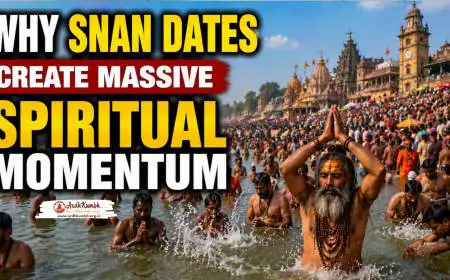
Let me give you the facts that matter. The Ardh Kumbh Mela 2027 will run from January 14 to April 20, 2027 . That is 107 days of non-stop spiritual activity . During these four months, there will be 10 major bathing festivals, including four Amrit Snans (royal sacred baths) — which is happening for the first time ever in Haridwar . The dates you absolutely need to know are: January 14 (Makar Sankranti) for the first bath, February 6 (Mauni Amavasya) which is considered the most important bathing day, March 6 (Mahashivratri - First Amrit Snan), March 8 (Somvati Amavasya - Second Amrit Snan), April 14 (Mesh Sankranti/Vaisakhi - Third Amrit Snan), and April 20 (Chaitra Purnima - Fourth Amrit Snan) . On these Amrit Snan days, the crowd will be unimaginable. The government expects peak day crowds to exceed 5 to 7 crore people on the ghats alone. That is not a typo. Seventy million people trying to dip in the same river on the same day. If you arrive without a plan on these dates, you will not find a place to stay within 20 kilometers of the river. You will not find a train ticket out. You will be sleeping on a platform, hungry, exhausted, and wondering why nobody warned you. I am warning you now.
Accommodation – The Battle You Cannot Win at the Last Minute
Let me be brutally honest about accommodation. The city of Haridwar is not large. On a normal day, it has enough hotels for maybe 50,000 tourists. During the Ardh Kumbh, 5 million people will be looking for a bed on peak days. Do the math. The gap between supply and demand is a canyon. Yes, the government sets up temporary tent cities and dharamshalas. Yes, there are ashrams that offer free or cheap stays. But here is the reality: the good tents — the ones with actual beds, warm blankets, and attached bathrooms — get booked six to eight months in advance . The ashrams give priority to regular devotees who have been donating for years. The free dharamshalas are first-come, first-served, and people start lining up at 4 AM. If you arrive without a booking, your options are: (a) pay 10 times the normal rate to a local tout for a dirty room, (b) sleep in a community tent with 500 strangers and no privacy, or (c) sleep on the street. I am not exaggerating to scare you. I have seen it happen. Advance planning for Ardh Kumbh 2027 means booking your tent, your hotel, or your ashram stay at least three to four months before the Mela starts. Do not wait for the dates to get closer. The early bird does not just get the worm. The early bird gets a warm bed and a hot shower.
Transportation – Getting There Is Half the Battle
You have booked your stay. Good. Now how are you getting to Haridwar? The Haridwar railway station is the main entry point for millions of pilgrims. During the Ardh Kumbh, Indian Railways runs special Kumbh Mela trains and increases frequency on major routes . But here is the catch: train tickets for the peak bathing dates sell out within hours of opening, which is usually 120 days in advance . Yes, you read that correctly. Four months before the Mela, the trains are already full. The same goes for buses from Delhi, Dehradun, and other nearby cities. And if you are thinking of driving your own car — forget it. On Shahi Snan days, private vehicles are stopped 4 to 5 kilometers away from the ghats, and you will have to walk the rest of the way . There is no parking. There is no "drop and go." You will walk, or you will not go at all. Advance planning means booking your train tickets the moment the booking window opens. It means arranging shared cabs or private buses with other pilgrims. It means having a backup plan if your first choice is sold out. Do not leave your transportation to luck. Luck does not live at the Haridwar railway station during Kumbh.
Trending Guides Now

Ardh Kumbh vs Maha Kumbh: The Real Difference Explained
Read Guide →
Can Women Take Shahi Snan at Ardh Kumbh?
Read Guide →
Are Women Allowed in All Ritual Areas at Kumbh?
Read Guide →
Can Ardh Kumbh Be Experienced Online or Virtually?
Read Guide →
Best Routes to Reach Haridwar for Ardh Kumbh Mela
Read Guide →
Ardh Kumbh 2027 Dates (Official) - Haridwar Snan Schedule
Read Guide →
How Kumbh Keeps India’s Civilizational Memory Alive
Read Guide →
February Weather Reality at Ardh Kumbh
Read Guide →The "Four-Kilometer Walk" – What Nobody Tells You
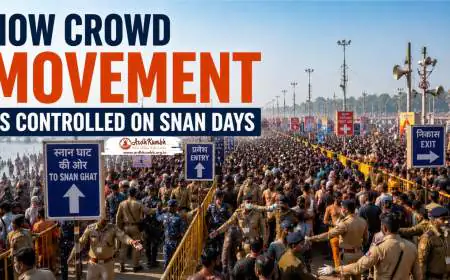
Here is something that every seasoned Kumbh pilgrim knows, but almost no guidebook tells you. On Amrit Snan days, you will not be dropped off at the ghat. You will be dropped off at a designated parking zone that is, on average, 4 to 5 kilometers from the river . Then you will walk. You will walk with millions of other people. You will walk on dusty roads. You will walk through security checkpoints. You will walk for one to two hours just to reach the water. Then you will take your dip. Then you will walk back another two hours to find your vehicle or your tent. In total, you might walk 10 to 15 kilometers on a single bathing day. This is not a complaint. This is just the reality. And the only way to prepare for it is to plan your physical preparation in advance. Start walking daily, months before the Kumbh. Build your stamina. Buy good walking shoes and break them in. Advance planning is not just about booking tickets. It is about training your body so that you are not the person crying on the side of the road because your feet have blisters and you cannot take another step.
Health and Safety – Packing the Right Things
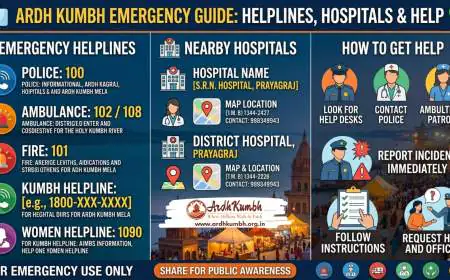
Let me tell you about the medical realities of the Kumbh. You will be in close contact with millions of people. The winter in Haridwar (January and February) can be freezing, with temperatures dropping to 2 to 4 degrees Celsius at night. The Ganges water is cold enough to shock your system. Then, by April, the temperature rises, and you have heat and dust to deal with. Your body will be stressed. Now imagine getting sick in this environment. The government sets up temporary hospitals and medical camps . But on peak days, even getting to a doctor can take hours because of the crowds. The smart pilgrim packs a medical kit in advance: painkillers, ORS packets for dehydration, antihistamines for allergies, bandages for blisters, and any prescription medicines you need for at least a week extra. Do not assume you will find a pharmacy open at 2 AM. Do not assume you will find your specific medicine. Advance planning means preparing for the worst-case health scenario so that your pilgrimage is not ruined by a preventable fever.
What the Government Is Doing – And Why You Still Need to Plan
The Uttarakhand government is not sitting idle. They know the scale of the Ardh Kumbh 2027. They have announced major infrastructure development — new ghats, wider approach roads, expanded parking areas, improved sanitation systems, and advanced surveillance for security . The Mela area this time has been expanded across four districts: Haridwar, Dehradun, Tehri, and Pauri, covering a total notified zone of 1,454 hectares . This is the largest Kumbh footprint ever. The government is also monitoring expenditures to keep projects transparent and scam-free . So yes, the authorities are doing their part. But here is the thing. No amount of government planning can create enough beds for 20 crore people. No amount of infrastructure can eliminate the need for personal planning. The government builds the stage. You have to show up prepared. Do not rely on "they will manage it." They will manage the crowds. They will not manage your individual comfort. That is your job.
The Last-Minute Pilgrim – Does It Ever Work?
I can hear some of you thinking: "But I have heard stories of people who just showed up and everything worked out." Yes. Those stories exist. And here is the truth about them. The people who "just show up" and succeed are usually: (a) traveling alone with no family, (b) willing to sleep on the floor of a train station, (c) extremely experienced in chaotic Indian travel, (d) arriving on non-peak days far from the Amrit Snan dates, or (e) incredibly lucky. If you are traveling with children, elderly parents, or anyone with health issues, the "just show up" approach is not brave. It is reckless. If you are traveling from a different country and do not speak Hindi, the "just show up" approach is not spiritual. It is foolish. If you have a budget and you do not want to spend it on overpriced last-minute touts, the "just show up" approach is not economical. It is expensive. The last-minute pilgrim exists. But for every one last-minute pilgrim who has a great story, there are a hundred who had a miserable time and will never tell you about it because they are embarrassed. Do not be the hundred.
The Spiritual Argument for Planning – Yes, It Exists
Now let me address the spiritual objection to planning. Some people say: "If I plan everything, where is the surrender? Where is the faith? The Ganges will take care of me." I understand this sentiment. I really do. The idea of trusting the divine is beautiful. But here is a different way to think about it. Advance planning is not a lack of faith. It is faith in action. You believe the Kumbh is important. You believe the dip will transform you. So you honor that belief by preparing for it. You do not show up to a job interview without a resume and say "the universe will provide." You do not get married without inviting guests and say "God will bring them." Preparation is respect. It is saying: "This journey matters enough for me to sacrifice my time, my money, and my convenience to do it right." The Naga Sadhus prepare for six years. They do not just wander into the Kumbh. They plan. They train. They save. If the most renounced beings on earth believe in preparation, surely a householder can book a train ticket six months early. Advance planning is not anti-spiritual. It is deeply spiritual. It is the tapasya of the ordinary person.
The Final Word – Book Early or Regret Later
Let me leave you with this. The Ardh Kumbh Mela 2027 is not just another festival. It is a once-in-six-years opportunity to stand in the Ganges during a rare astrological alignment. It is a chance to see the Naga Sadhus, to eat at the Bhandaras, to feel the aarti at Har Ki Pauri, to be part of something larger than yourself. But it is also a logistical challenge of epic proportions. The accommodation will sell out. The train tickets will sell out. The good tents will be gone. The ashram rooms will be given to regulars. Do not let your lack of planning turn your pilgrimage into a survival story. Start now. Book your stay by mid-2026 at the latest. Book your trains the day the window opens. Start walking to build your stamina. Pack your medical kit in advance. Make your forgiveness calls before you go. The Ganges will be there. The sadhus will be there. The crowd will definitely be there. The only question is: will you be there with a warm bed and a peaceful mind, or will you be there with blistered feet and no place to sleep? The choice is yours. But the time to choose is now. Not in January 2027. Now.
Frequently Asked Questions