






















































Is Ardh Kumbh Shorter Than Other Kumbh Events?
Is Ardh Kumbh really shorter than other Kumbh events? A honest, human comparison of durations, frequencies, and what makes each Kumbh unique.

Is Ardh Kumbh Shorter Than Other Kumbh Events?
Let me give you the simple table first, and then I will explain why the answer is not as straightforward as you might think. There are four types of Kumbh Melas, and they differ in frequency, duration, locations, and spiritual significance .
The Kumbh Mela happens every 3 years rotating between four cities — Haridwar, Ujjain, Nashik, and Prayagraj. The Ardh Kumbh Mela happens every 6 years and is held only in Haridwar and Prayagraj . The Purna Kumbh Mela happens every 12 years and is held only in Prayagraj . And the Maha Kumbh Mela happens every 144 years — once in a lifetime for most people — also in Prayagraj .
So when someone asks "Is Ardh Kumbh shorter?", they could be asking about the frequency (how many years between events), the calendar duration (how many days or months the Mela lasts), or the bathing schedule (how many major snan days). All three answers are different. Let me walk you through each one.
Frequency – Every 6 Years Is Not "Shorter"
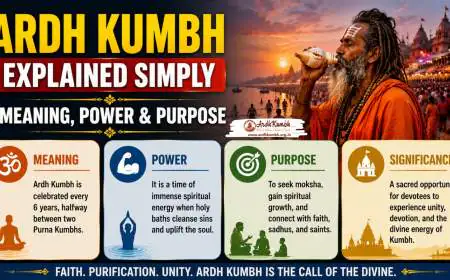
Let us start with frequency. The word "Ardh" means half . So the Ardh Kumbh happens halfway between two Purna Kumbh events. The Purna Kumbh happens every 12 years. The Ardh Kumbh happens every 6 years . So in terms of waiting time, the Ardh Kumbh is actually more frequent — you wait half the time. That means you do not have to wait 12 years for a Kumbh experience. Every 6 years, Haridwar or Prayagraj hosts the Ardh Kumbh .
Trending Guides Now

Can Families Attend Ardh Kumbh Comfortably Together?
Read Guide →
Can Elderly Pilgrims Avoid Heavy Crowds at Kumbh?
Read Guide →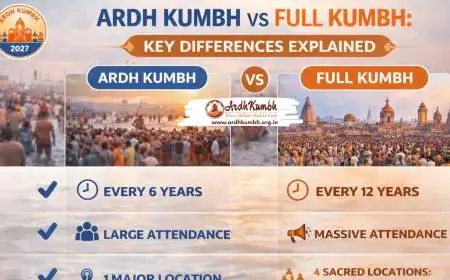
Ardh Kumbh vs Full Kumbh: Key Differences Explained
Read Guide →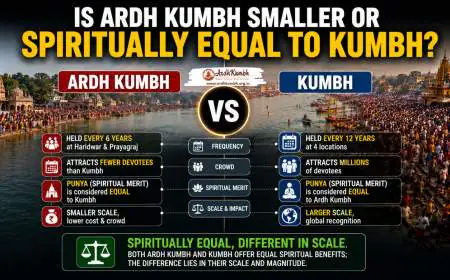
Is Ardh Kumbh Smaller or Spiritually Equal to Kumbh?
Read Guide →
Best Routes to Reach Haridwar for Ardh Kumbh Mela
Read Guide →
Ardh Kumbh 2027 Dates (Official) - Haridwar Snan Schedule
Read Guide →
How Kumbh Keeps India’s Civilizational Memory Alive
Read Guide →
February Weather Reality at Ardh Kumbh
Read Guide →But here is the catch. The Maha Kumbh happens once every 144 years — that is 12 cycles of the Purna Kumbh . If you compare the Ardh Kumbh to the Maha Kumbh, yes, the Ardh Kumbh happens much more often. But that does not make it "shorter" in the way most people mean. It makes it more accessible. And that is actually good news for ordinary pilgrims who cannot wait 144 years for a sacred dip.
Calendar Duration – Four Months vs. 45 Days
This is where the answer gets interesting. The Ardh Kumbh Mela 2027 in Haridwar will last for four months — from January 14 to April 20, 2027 . That is 107 days of continuous Mela activities. Yes, you read that correctly. More than 100 days.
Now compare that to the Maha Kumbh 2025 in Prayagraj, which lasted 44 to 45 days — from January 13 to February 26, 2025 . So the Ardh Kumbh is actually longer in calendar duration than the Maha Kumbh. Almost three times longer. That surprises a lot of people. They assume "Maha" means "great" and therefore longer. But no. "Maha" refers to the astrological rarity (once in 144 years) . It does not refer to the length of the Mela.
The Purna Kumbh in Prayagraj (every 12 years) typically lasts around 45 to 48 days, similar to the Maha Kumbh . The regular Kumbh Mela at the four rotating locations also lasts around 30 to 45 days, depending on the location and the astrological calculations.
So in terms of calendar duration, the Ardh Kumbh is actually one of the longest Kumbh events. Four months of non-stop spiritual activity. That is not shorter. That is longer.
Bathing Festivals – 10 Snans vs. Fewer
Let me talk about the bathing festivals because this is what most pilgrims care about. The Ardh Kumbh 2027 in Haridwar will feature 10 major bathing festivals (shahi snans) over the four-month period . The dates are:
January 14 — Makar Sankranti (first bath)
February 6 — Mauni Amavasya
February 11 — Basant Panchami
February 20 — Magh Purnima
March 6 — Mahashivratri
March 8 — Phalguna Amavasya
April 7 — Nav Samvatsar (Hindu New Year)
April 14 — Mesh Sankranti
April 15 — (ninth bath)
April 20 — Chaitra Purnima (final bath) .
Out of these 10 bathing festivals, three are designated as 'Amrit Snans' (royal sacred baths) — on March 6 (Mahashivratri), March 8 (Phalguna Amavasya), and April 14 (Mesh Sankranti) . However, some sources report that the 2027 Ardh Kumbh will feature four Amrit Snans for the first time ever, including April 20 as the fourth .
Compare this to the Maha Kumbh 2025 in Prayagraj, which had approximately 6 major bathing dates over its 45-day duration. Or the regular Kumbh Mela at other locations, which typically has 4 to 6 major bathing dates.
So again, the Ardh Kumbh is not "shorter" in terms of bathing opportunities. It offers more bathing festivals — 10 in total — spread over a longer period. That means more flexibility for pilgrims who cannot make it on the peak Amrit Snan days.
Why the Confusion? The "Ardh" Misunderstanding
Let me explain why people get confused. The word "Ardh" means half . So many people assume that the Ardh Kumbh is "half" in every way — half the duration, half the importance, half the crowd. That is not accurate. The "half" refers to the frequency — it happens every 6 years, which is half of 12 years (the gap between Purna Kumbh events) . That is it. Nothing else is halved.
The Ardh Kumbh in Haridwar lasts four months. That is longer than the Purna Kumbh in Prayagraj (which lasts about 45 days). The Ardh Kumbh has 10 bathing festivals. That is more than most other Kumbh events. The Ardh Kumbh attracts crores of pilgrims — not "half" the crowd of a Purna Kumbh. In fact, Haridwar's Ardh Kumbh crowds can rival or exceed Prayagraj's Purna Kumbh crowds because Haridwar is more accessible from Delhi and other major cities.
So please, do not let the word "Ardh" fool you. There is nothing "half" about the experience. The cold is full. The crowd is full. The faith is full. The spiritual impact is full. Only the waiting period between events is half.
The 2027 Ardh Kumbh – A Special Case
Let me tell you why the 2027 Ardh Kumbh in Haridwar is particularly noteworthy. For the first time ever, the Haridwar Ardh Kumbh will feature four Amrit Snans instead of the usual three . The dates for these royal baths are March 6 (Mahashivratri), March 8 (Somvati/Phalguna Amavasya), April 14 (Mesh Sankranti/Vaisakhi), and April 20 (Chaitra Purnima) .
This is a historic change. The administration has also expanded the Mela area to 1,454 hectares across four districts — Haridwar, Dehradun, Tehri, and Pauri — making this the largest Kumbh footprint ever . So the 2027 Ardh Kumbh is not "shorter" or "smaller." It is actually expanding in scope and significance.
How the Different Kumbhs Compare – A Quick Summary
Let me give you a simple comparison so you never get confused again.
The Kumbh Mela happens every 3 years, rotates between 4 cities (Haridwar, Ujjain, Nashik, Prayagraj), lasts about 30-45 days, and has 4-6 major bathing dates. The Ardh Kumbh Mela happens every 6 years, is held in 2 cities (Haridwar and Prayagraj), lasts about 4 months, and has 10 major bathing dates. The Purna Kumbh Mela happens every 12 years, is held only in Prayagraj, lasts about 45 days, and has 6 major bathing dates. The Maha Kumbh Mela happens every 144 years, is held only in Prayagraj, lasts about 45 days, and has 6 major bathing dates but with extraordinary spiritual significance .
So if you are looking for the longest duration and the most bathing opportunities, the Ardh Kumbh is actually your best bet. It gives you a four-month window to plan your visit, with 10 different bathing dates to choose from. That is not shorter. That is more flexible.
What About the Crowd? Does "Ardh" Mean Half the Crowd?
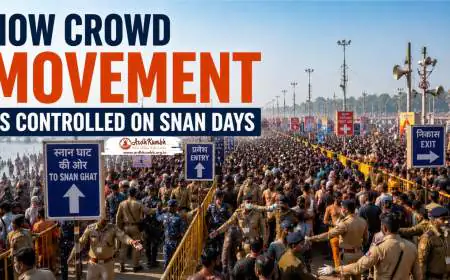
Another common assumption is that the Ardh Kumbh attracts only "half" the crowd of a Purna Kumbh. This is false. The crowd at the Haridwar Ardh Kumbh is massive — often exceeding 5 to 7 crore people on peak Amrit Snan days . Haridwar's geography — with the Ganges flowing through a narrower valley — actually makes the crowds feel more intense than the wider ghats of Prayagraj.
The 2027 Ardh Kumbh is expected to be particularly crowded because of the four Amrit Snans and the improved infrastructure that makes Haridwar more accessible . Do not go expecting a "quiet, half-sized" Kumbh. You will be disappointed. Go expecting the full force of millions of devotees, and you will be prepared.
Which Kumbh Should You Attend?
Let me answer the question that is probably on your mind. If the Ardh Kumbh is longer and has more bathing dates, should you attend that instead of waiting for the Purna Kumbh or Maha Kumbh? Here is my honest answer.
Attend the Ardh Kumbh if you want a longer window of time to plan your visit, if Haridwar is more accessible for you than Prayagraj, if you want to experience the unique energy of the Ganges at Har Ki Pauri, and if you do not want to wait 12 or 144 years for a Kumbh experience. Attend the Purna Kumbh in Prayagraj if you want the traditional 12-year cycle experience, the Sangam (confluence of three rivers), and the largest crowds. Attend the Maha Kumbh if you are lucky enough to be alive during one — the next Maha Kumbh in Prayagraj is in 2025 (just passed), so the next one will be in 2169. Yes, you read that correctly. 2169. Most of us will not be here.
So for practical purposes, the Ardh Kumbh is the most accessible and most flexible Kumbh event for the average pilgrim. It is not "shorter." It is not "half." It is a full, powerful, life-changing spiritual experience that happens twice as often as the Purna Kumbh. That is a gift. Do not waste it.
What the Elders Say – Quality Over Quantity
I asked an elder sadhu at the last Kumbh about the difference between Ardh and Purna. He laughed and said something I will never forget. "The river does not know if it is Ardh or Purna. The water is the same. The stars are the same. The only difference is in your faith. If you come with full faith, every Kumbh is a Maha Kumbh. If you come with half faith, even the Maha Kumbh will feel like half."
That stuck with me. The duration, the frequency, the number of bathing dates — these are all external. The real Kumbh happens inside you. Whether you attend an Ardh Kumbh that lasts four months or a Purna Kumbh that lasts 45 days, your preparation, your surrender, and your intention determine the depth of your experience. Do not get lost in comparisons. Just go. The river is waiting.
Frequently Asked Questions