























































Ancient Texts on Ardh Kumbh Cycles Explained
Explore ancient texts that mention Ardh Kumbh cycles, their origins, and spiritual meaning. Deep guide to scriptures behind Kumbh traditions.
Ancient Texts That Mention Half-Kumbh Cycles
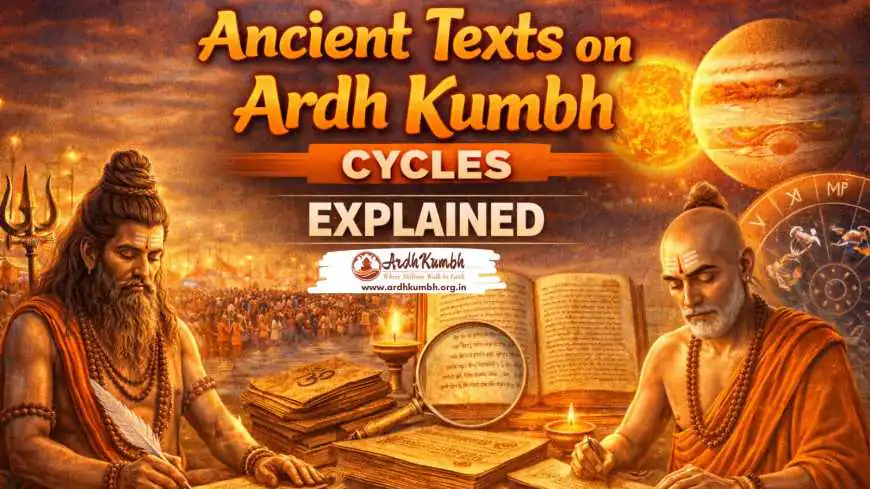
The concept of the Ardh Kumbh cycle is not merely a ritualistic tradition but a deeply rooted spiritual system derived from ancient Hindu scriptures. References to cyclical gatherings, sacred bathing periods, and celestial alignments appear across multiple texts, including the Puranas, epics, and astrological treatises. While the term “Ardh Kumbh” may not always be explicitly stated in early literature, the foundational principles governing the half-Kumbh cycles, their timing, and spiritual significance are clearly embedded in these texts. Understanding these references reveals how mythology, astronomy, and ritual practice evolved into the structured Kumbh tradition observed today.
Want to experience Ardh Kumbh in person?
Get official dates, snan guidelines, Akharas, and travel planning tips in our dedicated event guide.
→ Ardh Kumbh Mela 2027 Complete Guide
Scriptural Foundations of Kumbh Cycles
The ancient texts on Ardh Kumbh cycles originate primarily from the Puranic literature, which documents cosmology, rituals, and sacred geography.
These texts establish three core elements:
Trending Guides Now

Who Are Naga Sadhus and Why They Lead Kumbh
Read Guide →
Biggest Crowds Ever Recorded at Ardh Kumbh
Read Guide →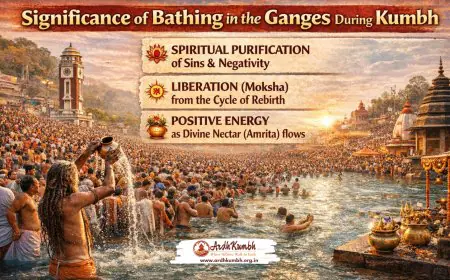
Significance of Bathing in the Ganges During Kumbh Mela Explained
Read Guide →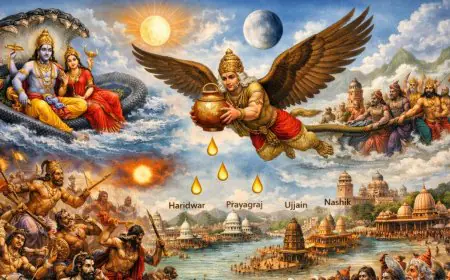
What Is the Story Behind the Ardh Kumbh Mela?
Read Guide →
Best Routes to Reach Haridwar for Ardh Kumbh Mela
Read Guide →
Ardh Kumbh 2027 Dates (Official) - Haridwar Snan Schedule
Read Guide →
How Kumbh Keeps India’s Civilizational Memory Alive
Read Guide →
Final Day Rituals: What Happens at the End
Read Guide →- Sacred rivers as spiritual ऊर्जा centers
- Planetary alignments determining auspicious timings
- Ritual bathing as a path to liberation
Although the Ardh Kumbh is a later formalization, its conceptual roots are firmly grounded in these early writings.
Samudra Manthan: The Mythological Origin
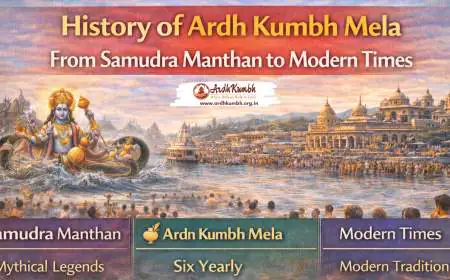
The most important narrative linked to the Kumbh cycle origin is the story of Samudra Manthan (churning of the ocean).
Core Elements of the Myth
- Gods and demons churned the ocean to obtain Amrit (nectar of immortality)
- Drops of Amrit fell at four locations
- These locations later became Kumbh Mela sites
This story, described in multiple ancient Hindu texts, provides the symbolic basis for the Kumbh Mela cycles, including the concept of periodic sacred gatherings.
References in the Puranas
The Puranas are the primary sources that indirectly describe the Ardh Kumbh cycles.
Brahma Purana
The Brahma Purana highlights the sanctity of bathing in sacred rivers during specific planetary alignments.
- Emphasizes timing based on celestial events
- Mentions purification through ritual bathing
- Forms the base logic for Kumbh timing cycles
Also Read | Ardh Kumbh 2027 Official Dates (Haridwar)
Skanda Purana
The Skanda Purana, one of the largest texts, contains detailed descriptions of pilgrimage sites and rituals.
- Mentions the importance of Haridwar and Prayagraj
- Describes sacred bathing periods
- Highlights the spiritual benefits of स्नान during auspicious times
This text strongly supports the idea of recurring sacred bathing cycles.
Padma Purana
The Padma Purana elaborates on the spiritual merit of bathing in holy rivers.
- Focuses on the role of faith and devotion
- Explains the karmic cleansing process
- Connects water rituals with liberation
These elements align directly with the principles of Ardh Kumbh traditions.
Astrological Texts and Kumbh Cycles
Beyond mythology, ancient texts on Ardh Kumbh cycles are deeply connected to astrology.
Role of Planetary Alignments
The timing of Kumbh events is based on:
- Position of Jupiter (Brihaspati)
- Movement of the Sun
- Lunar cycles
Astrological treatises explain how these alignments create spiritually charged periods, forming the basis of both Kumbh and Ardh Kumbh cycles.
Evolution of the Half-Kumbh Concept
The Ardh Kumbh cycle likely evolved as a practical and spiritual extension of the full Kumbh system.
Why Half-Kumbh Emerged
- Increasing number of pilgrims
- Need for more frequent spiritual gatherings
- Reinforcement of ritual continuity
Ancient texts provide the framework, while tradition adapted it into a six-year cycle.
Sacred Geography in Ancient Texts
The ancient texts mentioning Kumbh cycles consistently highlight specific locations:
- Sacred rivers like Ganga
- Confluence points (Sangam)
- Pilgrimage cities with spiritual significance
These locations are described as energy centers where cosmic forces interact with earthly elements.
Ritual Significance in Scriptures
The Puranic references emphasize the transformative power of rituals performed during specific times.
Key Ritual Elements
- Snan (holy bathing)
- Daan (charity)
- Japa (chanting)
- Tapasya (austerity)
These practices form the backbone of Ardh Kumbh rituals, as described in ancient texts.
Spiritual Philosophy Behind Kumbh Cycles
The ancient texts on Ardh Kumbh cycles are not just instructional—they are philosophical.
They convey that:
- Time is cyclical, not linear
- Certain moments carry higher spiritual potential
- Human actions during these moments have amplified effects
This philosophy explains why the Ardh Kumbh holds such importance despite being a “half” cycle.
To truly experience the spiritual power of Ardh Kumbh, every devotee should explore Shahi Snan rituals and Akhara traditions, which explain the sacred bathing process, monastic discipline, and ancient customs that shape this holy gathering. This guide helps pilgrims connect deeply with the true essence of the Mela.
Differences Between Scriptural Concepts and Modern Practice
While ancient texts provide the foundation, modern Ardh Kumbh Mela practices have evolved.
Scriptural Perspective
- Focus on spiritual discipline
- Emphasis on timing and rituals
- Minimal logistical considerations
Modern Perspective
- Large-scale event management
- Infrastructure and crowd control
- Integration of technology
Despite these differences, the core spiritual principles remain unchanged.
Symbolism of the Kumbh in Scriptures
The word “Kumbh” itself carries symbolic meaning in ancient Hindu texts.
- Represents a vessel of divine nectar
- Symbolizes the human body as a container of consciousness
- Reflects the idea of spiritual awakening
This symbolism is central to understanding the deeper meaning of Ardh Kumbh cycles.
Why Ancient Texts Still Matter Today
The relevance of ancient texts mentioning Ardh Kumbh cycles lies in their timeless wisdom.
They provide:
- Authentic spiritual guidance
- A framework for rituals
- A connection to tradition and heritage
Modern pilgrims continue to follow these principles, making the Kumbh a living tradition.
Interpreting the Half-Kumbh Through a Modern Lens
The Ardh Kumbh cycle can be seen as a bridge between ancient knowledge and contemporary practice.
- Maintains continuity of spiritual traditions
- Makes the experience accessible to more people
- Preserves the essence of sacred timing
This interpretation highlights the adaptability of ancient wisdom.
The Timeless Continuity of Sacred Cycles
The ancient texts on Ardh Kumbh cycles reveal a profound understanding of time, spirituality, and human consciousness. What began as mythological narratives and astrological observations evolved into one of the world’s largest spiritual gatherings. Each cycle, whether full or half, reflects a deeper rhythm of the universe—one that continues to guide millions toward purification, reflection, and spiritual growth.
Related Ardh Kumbh Guides :
- When Is the Next Ardh Kumbh Mela in Haridwar?
- Har Ki Pauri Ganga Aarti Time in Haridwar: Complete Schedule
- Why Har Ki Pauri Becomes the Heart of Ardh Kumbh
- Ardh Kumbh vs Maha Kumbh: The Real Difference Explained
- Is Attending Ardh Kumbh Mandatory for Devotees?
- Why Ardh Kumbh Holds the Same Spiritual Weight as Kumbh
- How Ardh Kumbh Evolved Over Centuries of Faith ?
- Ancient Scriptures That Clearly Explain Ardh Kumbh
- Strict Rules Pilgrims Follow at Ardh Kumbh
- Is Ardh Kumbh Really Different From Kumbh Mela?
Frequently Asked Questions