














































































History and Spiritual Importance of Chandi Devi Temple Haridwar During Ardh Kumbh 2027
Explore the history and spiritual importance of Chandi Devi Temple Haridwar during Ardh Kumbh 2027. Learn the legend, darshan timings, ropeway fares and wish-fulfilling rituals.

History and Spiritual Importance of Chandi Devi Temple Haridwar During Ardh Kumbh 2027
Quick Answer ⚡
The Chandi Devi Temple Haridwar stands on Neel Parvat in the Shivalik Hills and is one of the three Siddh Peeths of Haridwar, alongside Mansa Devi and Maya Devi. The temple structure was built in 1929 by King Suchat Singh of Kashmir, but the main idol of Chandi Devi is believed to have been installed in the 8th century by Adi Shankaracharya. According to the Skanda Purana, this is the site where Goddess Chandi — emerging from the essence of Goddess Parvati — slew the demon generals Chand Munda and then the demon kings Shumbh and Nishumbh, earning the place its name. As a Siddh Peeth, it is believed to fulfil the wishes of devotees, and the red chunri tied here is a living symbol of that faith. During Ardh Kumbh 2027 (14 January – 20 April 2027), the temple is a must-visit for pilgrims, reachable by a 3-minute ropeway (roughly ₹220–₹350 return) or a 3 km trek from Chandighat (60–90 minutes). Entry is free, darshan is roughly 6:00 AM – 8:00 PM with a midday closure around 12–2 PM, and the temple is 4 km from Har Ki Pauri.
At a Glance 🔎
| Detail | Information |
|---|---|
| Location | Neel Parvat, Shivalik Hills, Haridwar |
| Distance from Har Ki Pauri | Approximately 4 km |
| Built by | King Suchat Singh of Kashmir |
| Construction Year | 1929 |
| Main Idol Installed By | Adi Shankaracharya, 8th century |
| Religious Status | Siddh Peeth; one of Panch Tirth of Haridwar |
| Deity | Chandi Devi (Shakti) |
| Legend | Slaying of Chand Munda, Shumbh, and Nishumbh |
| Temple Entry | Free |
| Darshan Timings | Roughly 6:00 AM – 8:00 PM; midday closure around 12–2 PM |
| Ropeway | Udan Khatola; roughly 7:00 AM – 6:00 PM; ₹220–₹350 return |
| Trek from Chandighat | 3 km, 60–90 minutes, moderate difficulty |
| Mansa + Chandi Combo | ₹460 adult, ₹235 child (includes bus transfer) |
| Wheelchair Access | Available at ropeway; priority boarding |
| Best Time | Morning, before noon; October–March for pleasant weather |
| Ardh Kumbh 2027 Dates | 14 January – 20 April 2027 |
| Shahi Snan Dates | 6 March, 8 March, 14 April 2027 |
The Historical Layers of Chandi Devi Temple
The Chandi Devi Temple history is not a single story but a layering of eras. What you see today is a 20th-century structure built over a site revered for over a millennium.
Adi Shankaracharya and the 8th-Century Idol
The main idol of Chandi Devi is believed to have been installed in the 8th century by Adi Shankaracharya, the great philosopher-saint who consolidated the Shanmata tradition and established monastic centres across India. Tradition holds that Shankaracharya sought to harness the celestial energies of the Himalayas by consecrating the idol on Neel Parvat.
Trending Guides Now
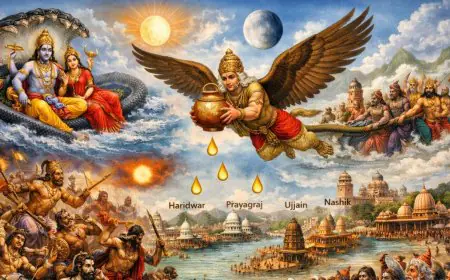
What Is the Story Behind the Ardh Kumbh Mela?
Read Guide →
History of Ardh Kumbh Mela From Samudra Manthan to Modern Times
Read Guide →
Historical Records of Ardh Kumbh Gatherings
Read Guide →
How Ardh Kumbh Quietly Strengthened Faith Networks
Read Guide →
Ardh Kumbh 2027 Dates (Official) - Haridwar Snan Schedule
Read Guide →
Dharamshala Stay During Ardh Kumbh: Free & Budget Guide
Read Guide →
What Are the Busiest Months to Visit Haridwar Around Ardh Kumbh 2027?
Read Guide →
Essential Safety Tips for Women Using Public Transport in Haridwar During Ardh Kumbh 2027
Read Guide →Expert Tip 💡: This is a crucial distinction for understanding the temple. The sanctity of the site is ancient — rooted in the 8th century and the Skanda Purana. The building you stand in is modern, built in 1929. Both facts are true, and both matter.
King Suchat Singh and the 1929 Temple
The present temple structure was built in 1929 by King Suchat Singh, the ruler of Kashmir. The construction was a royal act of devotion, transforming a hilltop shrine into a formal temple that could receive pilgrims at scale. The temple has since become one of Haridwar's most revered shrines and a defining landmark of the city's spiritual skyline.
The Skanda Purana and the Battle on Neel Parvat
The Skanda Purana provides the theological charter for the temple. It describes how the demon kings Shumbh and Nishumbh seized control of the heavens and terrorised the gods. To confront them, Goddess Chandika — an emanation of Goddess Parvati — emerged. When Shumbh demanded her hand in marriage, she fiercely refused, and an epic battle followed.
Chandika first vanquished Chand Munda, the army chief, and then defeated Shumbh and Nishumbh themselves. Tradition holds that this divine confrontation took place on Neel Parvat, and the temple stands there as a testament to the triumph of good over evil.
Local Insight 📍: The name Chandi is intimately tied to the place. The Chandighat at the foot of the hill, where the trek begins, is also named after the goddess. The landscape itself carries the memory of the legend.
Spiritual Importance: The Siddh Peeth That Fulfils Wishes
The spiritual importance of Chandi Devi Temple rests on its identity as a Siddh Peeth — a place of worship where desires get fulfilled. Haridwar has three Siddh Peeths: Mansa Devi, Chandi Devi, and Maya Devi. Together, they form a triad of Shakti that blesses the holy city.
The Wish-Fulfilling Power
The Ministry of Tourism explicitly calls the temple a Siddha Peetha, and Uttarakhand Tourism counts it among the Siddhapeeth. Pilgrims believe that Goddess Chandi fulfils the wishes of those who come to her with an unfulfilled desire. This is not a generic blessing — it is a specific, personal, and practical faith.
The Red Chunri Ritual
The defining devotional practice at Chandi Devi is the tying of a red chunri (sacred red cloth) at the temple. Devotees tie the chunri with a specific wish and believe that the wish is never left unfulfilled. This ritual is the living heart of the temple's spiritual economy.
| Ritual | What Devotees Do | Belief |
|---|---|---|
| Red Chunri Tying | Tie a red cloth at the shrine with a specific wish | The wish is fulfilled by Goddess Chandi |
| Mauli (Sacred Thread) | Tie a thread at the temple | Protection and wish fulfilment |
| Darshan | Seek direct vision of the deity | Blessings and peace of mind |
| Navratri Vrat | Observe fasting during Navratri | Spiritual merit and divine grace |
Expert Tip 💡: The red chunri is not a superstition — it is a covenant. The devotee makes a promise to the goddess and leaves a visible symbol of that promise. The return to the temple — to give thanks or untie the chunri — is the completion of the ritual.
The Panch Tirth and Neel Parvat Teerth
Chandi Devi Temple is also known as Neel Parvat Teerth and is one of the Panch Tirth — the five sacred pilgrimages of Haridwar. The five Tirths are Har Ki Pauri, Kankhal, Mansa Devi, Chandi Devi, and Maya Devi. A pilgrimage to Haridwar is considered incomplete without darshan at these five sites.
Expert Advice ✨: For Ardh Kumbh 2027 pilgrims, the Panch Tirth circuit is a structured way to experience Haridwar's spiritual geography. Do Chandi Devi on the same day as Mansa Devi using the combo ropeway ticket, and complete the flat circuit (Maya Devi, Har Ki Pauri) on foot.
The Temple During Ardh Kumbh 2027: What to Expect
The Ardh Kumbh 2027 runs from 14 January to 20 April 2027. The Chandi Devi Temple is a hill shrine for darshan — it is not a Kumbh bathing ghat. Pilgrims do not bathe at the temple; they bathe at Har Ki Pauri or other designated ghats, and then visit the temple for darshan.
The Temple's Role During the Mela
Chandi Devi is a major pilgrimage site during the Ardh Kumbh Mela, and the temple sees massive participation during the Mela period. It is a spiritual complement to the Ganga snan — the bath purifies the body, and the darshan purifies the mind.
Infrastructure Upgrades for Kumbh 2027
The temple administration has demanded immediate infrastructure upgrades ahead of the 2027 Ardh Kumbh, warning of massive footfall. The Chief Trustee, Mahant Bhawani Nandan Giri, has emphasised that upgrading basic facilities must be a top priority for public safety.
| Demand | Why It Matters |
|---|---|
| Rain shelters along the temple complex and approach routes | Protection from monsoon and winter rain |
| Sturdy stainless steel railings | Crowd safety on the steep steps |
| Widened exit lane | Faster, safer evacuation |
| Upgraded public restrooms | Hygiene and dignity for pilgrims |
| New Bhandara Bhawan | Community meals at scale |
| Smoother crowd management | Prevention of stampedes |
Source: Infrastructure demands as reported by the temple administration.
Government Projects for Chandi Devi Access
The Uttarakhand government has approved ₹3.53 crore for Pilgrim Friendly Facilities and Access Development at Chandi Devi Mandir (Phase 1). A pedestrian path connecting Chandi Devi with Mansa Devi, Har Ki Pauri, and other major religious sites is being developed with modern footpaths. In February 2026, the Chief Minister laid the foundation stone for 34 Kumbh works, including pilgrim facilities on the Chandi Devi and Mansa Devi temple routes.
Local Insight 📍: The pedestrian path project is a game-changer for Ardh Kumbh 2027. It will allow pilgrims to walk between the hill temples and the ghats on dedicated, safe footpaths, reducing dependence on vehicles during the crowded Snan days.
Chaitra Navratri 2027: A Double Festival
Chaitra Navratri 2027 falls inside the Ardh Kumbh, beginning on Nav Samvatsar (7 April 2027) and ending on Ram Navami (15 April 2027). Both are listed Snan days. The temple will be at its busiest, and the ropeway queues will be long.
Expert Advice ✨: If you are visiting during Chaitra Navratri, go at opening time (7:00 AM). The first darshan is peaceful and powerful. By 10:00 AM, the queues become long, and the midday closure (around 12–2 PM) can catch you out.
Practical Visitor Guide: Timings, Ropeway, and Trek
How to Reach Chandi Devi Temple
| Mode | Details |
|---|---|
| Ropeway (Udan Khatola) | Lower station on Nazibabad Road; roughly 7:00 AM – 6:00 PM; ride ~5 minutes |
| Trek from Chandighat | 3 km; 60–90 minutes; moderate difficulty; steeper than Mansa Devi |
| From Har Ki Pauri | 4 km by road to the ropeway base |
| From Haridwar Junction | Approximately 5–6 km to the ropeway base |
| Wheelchair Access | Available at the ropeway; priority boarding |
Timings and Fares
| Detail | Information |
|---|---|
| Temple Entry | Free |
| Darshan Hours | Roughly 6:00 AM – 12:00 PM and 3:00 PM – 6:00 PM (approximate; midday closure) |
| Ropeway Fare (Return) | ₹220–₹350 per adult (sources vary) |
| Child Fare | Approximately ₹165–₹225 |
| Mansa + Chandi Combo | ₹460 adult / ₹235 child (includes bus transfer) |
| Combo Add-on | ₹95 bus add-on for the Chandi Devi side |
Expert Tip 💡: Buy the combo ticket at the Mansa Devi counter — it covers both ropeways and the bus between them. The combined-ticket queue is often shorter than the single-ticket queue at Chandi Devi.
Ropeway vs Trek: An Honest Comparison
| Factor | Ropeway | Trek |
|---|---|---|
| Cost | ₹220–₹350 return | Free |
| Time Up | ~5 minutes | 60–90 minutes |
| Difficulty | None | Moderate; steeper than Mansa Devi |
| Shade | N/A | Patchy; unpleasant after 10 AM in summer |
| Best For | Families, seniors, tight schedules | Fit walkers on a cool morning |
Pro Tip 🧭: The Chandi Devi climb is a real climb — steeper and longer than the Mansa Devi walk. If you are not a regular walker, take the ropeway up and walk down if you want the view without the exertion.
What to Carry and Wear
-
Comfortable walking shoes if you plan to trek.
-
Modest clothing covering shoulders and knees.
-
A light shawl for the hilltop breeze.
-
Water bottle and ORS in summer.
-
Leave footwear at the designated stand near the temple entrance (shoes off at the shrine).
Local Insight 📍: Monkeys are present on the temple route. Do not carry food in the open or tease them. Keep your bags zipped and your glasses secure.
Frequently Asked Questions