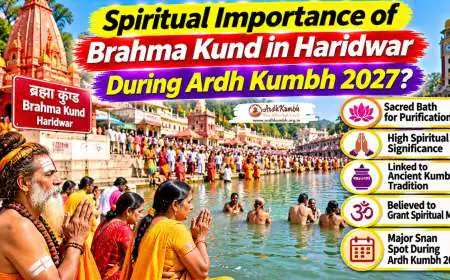













































































What Is the Spiritual Importance of Brahma Kund in Haridwar During Ardh Kumbh 2027?
Discover why Brahma Kund at Har Ki Pauri is the spiritual heart of Ardh Kumbh 2027 — amrit mythology, Shahi Snan rituals, moksha beliefs and snan dates.

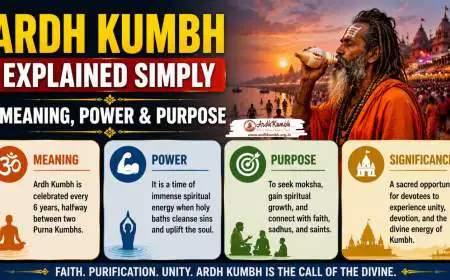
Quick Answer ⚡ Brahma Kund at Har Ki Pauri is the spiritual epicentre of Haridwar and the ritual heart of Ardh Kumbh 2027. It is the exact spot where a drop of amrit (the nectar of immortality) is believed to have fallen during the Samudra Manthan, making it one of the four sacred Kumbh sites in India alongside Prayagraj, Nashik and Ujjain. The Skanda Purana identifies Brahma Kund as the only legitimate base for Hindu religious rites in Haridwar, and priests insist that all rituals — from snan to asthi visarjan — must be performed within its ghat area and not elsewhere. During Ardh Kumbh 2027, Brahma Kund will host the first Amrit Snan of each Shahi Snan day, beginning before dawn with Naga Sadhus and Akhara processions. The general public is permitted to bathe only after the Akhara processions conclude, typically by mid-morning. The 2027 Ardh Kumbh is historic: for the first time, four Amrit Snans will be held — on 6 March, 8 March, 14 April and 20 April 2027 (provisional).
At a Glance 🔎
| Factor | Brahma Kund's Role |
|---|---|
| Mythological anchor | Amrit drop from Samudra Manthan fell here |
| Location | Within Har Ki Pauri, the most sacred ghat in Haridwar |
| Scriptural authority | Skanda Purana identifies it as the only legitimate ritual base |
| Divine presence | Brahma, Vishnu and Mahesh are believed to have graced the spot |
| 2027 Shahi Snan | First Amrit Snan of each royal bathing day begins here |
| 2027 Amrit Snan dates | 6 March, 8 March, 14 April, 20 April (provisional) |
| Public bathing | After Akhara processions, typically by mid-morning |
The Mythological Foundation: Where the Amrit Fell
The spiritual importance of Brahma Kund begins with the Samudra Manthan, the churning of the cosmic ocean by gods and demons for the nectar of immortality.
The Garuda and the Four Drops
According to the Puranic tradition, Garuda, the celestial bird and mount of Lord Vishnu, carried the pitcher of amrit after the churning. During the chase, a few drops of nectar fell from the urn. Brahma Kund at Har Ki Pauri is identified as the exact spot where one of those drops landed.
This makes Haridwar one of the four sacred Kumbh sites, alongside Prayagraj, Nashik and Ujjain.
Trending Guides Now
Is Ardh Kumbh About Renunciation or Inner Awareness?
Read Guide →
Why Ardh Kumbh Becomes a Turning Point in Life
Read Guide →
Why Ardh Kumbh Feels Like a Spiritual Reset
Read Guide →
Can Ardh Kumbh Be Understood Without Rituals?
Read Guide →
Ardh Kumbh 2027 Dates (Official) - Haridwar Snan Schedule
Read Guide →
Dharamshala Stay During Ardh Kumbh: Free & Budget Guide
Read Guide →
The Story Behind King Bhagirath and Haridwar's Sacred Connection During Ardh Kumbh 2027
Read Guide →
What Are the Busiest Months to Visit Haridwar Around Ardh Kumbh 2027?
Read Guide →The Holy Trinity's Presence
Tradition holds that the holy trinity — Brahma, Vishnu and Mahesh — have graced Brahma Kund with their divine presence. Lord Vishnu is believed to have visited the spot in Vedic times, and his footprints are said to have formed beneath the waters of the Ganga. The imprint of Lord Hari's footprint hallows the riverbank temple here.
Expert Tip 💡 The Brahma Kund is not merely a mythological site. It is a living ritual centre where the myth is re-enacted every day through snan, sankalp and aarti.
Scriptural Authority: The Skanda Purana and the Priests' Claim
The spiritual importance of Brahma Kund is not only devotional; it is scripturally anchored.
The Skanda Purana's Mandate
The Skanda Purana explicitly underlines the base of Brahma Kund at Har Ki Pauri. Priests of the Shri Ganga Sabha — the body that manages the Har Ki Pauri area — cite this to argue that all Hindu religious rites must be performed on the different ghats of the Brahma Kund area and not somewhere else.
The Priesthood's Insistence
Virendra Kirtipal, a senior priest and member of the Shri Ganga Sabha, has stated: "Skand Purana underlines the base of Braham Kund at Har-ki-Pauri only. The nectar of immortality or amrit dropped at this spot only. Therefore, it is mandatory that all Hindu religious rites are done on different ghats of Braham Kund area and not somewhere else".
This is not a minor theological dispute. When a proposed ghat was planned opposite Har Ki Pauri ahead of the 2015 Ardh Kumbh, the Tirth Panda Samaj vehemently opposed the move, claiming it was "an effort to create a parallel Har-ki-Pauri".
Local Insight 📍 In Haridwar, the pandas (hereditary priests) of Brahma Kund do not see the site as one option among many. They see it as the only legitimate ritual base for Hindu rites in the city. This is why asthi visarjan, pind daan and sankalp are concentrated here.
Brahma Kund During Ardh Kumbh 2027: The First Amrit Snan
During Ardh Kumbh 2027, Brahma Kund becomes the stage for the most sacred ritual of the Mela: the Amrit Snan.
The Akhara Procession and the Royal Bath
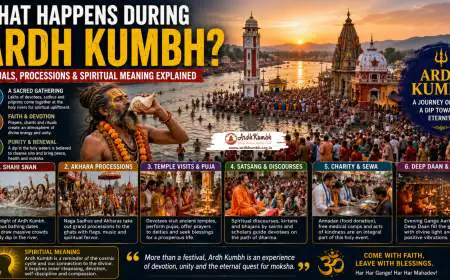
On each Shahi Snan day, the day begins before dawn. Naga Sadhus and Akhara processions move toward Har Ki Pauri in a centuries-old order of precedence. The Mahanirvani Akhara leads the Amrit Snan in Haridwar, followed by the other Akharas in a strictly defined sequence.
The first Amrit Snan takes place at Brahma Kund. The timeline follows a ritual pattern:
| Time | Event |
|---|---|
| 4:30 AM – 5:00 AM | First Amrit Snan at Brahmakund |
| 5:00 AM – 5:30 AM | Second Akhara procession arrives; bathing begins |
| Mid-morning | Akhara processions conclude; general public permitted to bathe |
The 2027 Amrit Snan Calendar
The 2027 Ardh Kumbh is historic: for the first time, four Amrit Snans will be held, a decision announced by the Chief Minister after a meeting with representatives of all 13 Akharas.
| Date (2027) | Occasion | Snan Type |
|---|---|---|
| 6 March | Mahashivratri | First Amrit Snan |
| 8 March | Somvati Amavasya | Second Amrit Snan |
| 14 April | Mesha Sankranti / Baisakhi | Third Amrit Snan |
| 20 April | Chaitra Purnima | Fourth Amrit Snan |
Note 📌 Dates are provisional and subject to official confirmation. The Mela runs 97 days from 14 January to 20 April 2027, with 10 official snan dates.
The Main Bathing Ghat
The Brahmakund at Har Ki Pauri is the main bathing ghat for the Shahi Snan. This is not symbolic. It is the operational centre of the royal bath, and the Akhara processions converge here in strict order.
Expert Advice ✨ If you wish to witness the Amrit Snan, arrive at Har Ki Pauri the night before or in the very early hours. The general public is permitted to bathe only after the Akhara processions conclude, typically by mid-morning. Do not attempt to enter the water during the royal bath.
Snan, Sankalp and Moksha: The Ritual Technology of Brahma Kund
The spiritual importance of Brahma Kund is not limited to mythology. It is ritually operational.
The Six-Step Snan Vidhi
The traditional snan at Brahma Kund follows a sacred sequence:
-
Brahma Muhurta — rise before dawn.
-
Sankalp — hold water in the right palm and state your name, purpose and intention.
-
Trisnan Dips — immerse three times with a mantra, each dip symbolising body, mind and soul.
-
Surya Arghya — offer water to the Sun.
-
Daan — give according to capacity.
-
Pradakshina — circumambulate the ghat or temple.
The Role of the Pandit
A pandit (priest) can help with sankalp and rituals if you wish. The pandits of Brahma Kund are the hereditary custodians of the ritual procedure, and their involvement ensures that the snan is performed according to scripture.
Moksha and Karma
A dip in the Ganga at Brahma Kund is believed to wash away sins and grant moksha (liberation). The Skanda Purana and local tradition hold that immersion here grants moksha. This is the theological core of the Kumbh: the bath is not merely purification; it is liberation.
Pro Tip 🧭 Take your sankalp seriously. State your name, the purpose of your snan, and the welfare you seek for family and ancestors. A sankalp taken at Brahma Kund during the Ardh Kumbh carries particular weight in tradition.
Asthi Visarjan and Pind Daan: The Ancestral Dimension
Brahma Kund is not only for the living. It is the primary site for ancestral rites in Haridwar.
The Primary Site for Asthi Visarjan
Har Ki Pauri itself is the primary site for asthi visarjan (immersion of ashes) in Haridwar. The Brahma Kund at this location is considered the exact spot where Lord Brahma performed a yajna, and immersion here grants moksha.
Pind Daan
The ghats of Brahma Kund are also the preferred site for pind daan — the ritual offering to ancestors. This is a specialised ritual that requires guidance from a pandit who knows the procedure.
Local Insight 📍 For Haridwar's pandas, the Brahma Kund is the only legitimate place for ancestral rites. They cite the Skanda Purana to insist that these rituals must be performed here and not at other ghats.
Practical Guide: Visiting Brahma Kund During Ardh Kumbh 2027
-
Arrive before sunrise for the most powerful snan. The Brahma Muhurta is the traditional window.
-
Hold the safety chains — the currents at Brahma Kund are deceptively fast.
-
Remove footwear before the ghat perimeter; use free municipal shoe counters.
-
Carry a small bag with snan clothes, a towel and a change of clothes.
-
Do not carry valuables to the ghat.
-
Follow police and Mela administration instructions — especially on Shahi Snan days.
-
Bathe only after the Akhara processions conclude on Amrit Snan days.
-
Keep the ghat clean — do not leave soap, plastic or puja waste in the river.
-
Use biodegradable diyas for deep daan.
-
Carry ₹500 in small notes for daan, parking and e-rickshaws.
Expert Tip 💡 The Brahma Kund is less crowded in the quiet hour before dawn. If you can arrive the night before and sleep nearby, you will avoid the morning rush and experience the ghat in its most potent state.
Frequently Asked Questions