















Cultural Influence of Ardh Kumbh Across India
How the Ardh Kumbh Mela shapes Indian art, literature, music, social traditions, and national identity. Discover its profound cultural impact across the subcontinent.
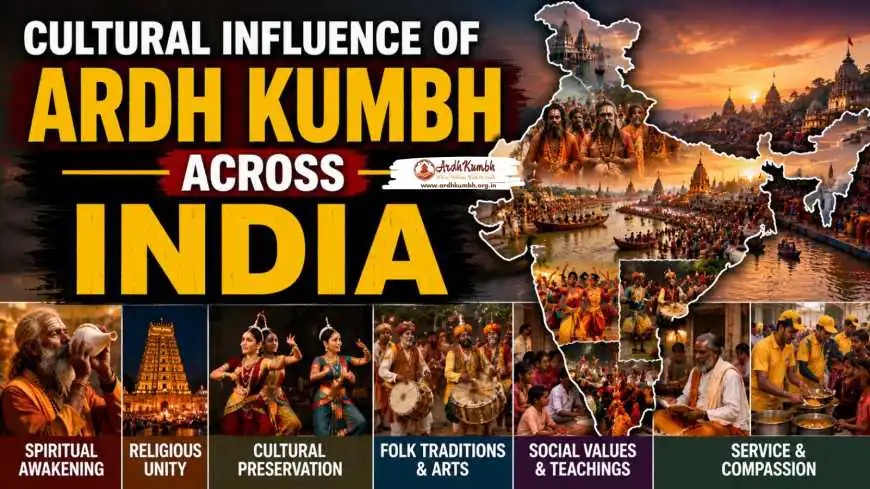
Quick Answer ⚡ The cultural influence of Ardh Kumbh across India operates on at least six interconnected planes: literature and oral traditions, music and devotional performance, visual art and iconography, cinema and popular culture, social reform and caste integration, and crafts, cuisine and economic networks. The Ardh Kumbh is not merely a religious gathering; it is a recurring civilisational workshop where Sanatan Dharma transmits knowledge, where regional artisans find a national market, where Bollywood finds its most reliable narrative device, and where millions momentarily experience a society less burdened by hierarchy. In Haridwar, this cultural influence is intensified by the city's position as the Ganga's gateway and the seat of the 13 Akharas.
At a Glance 🔎
| Cultural Domain | Ardh Kumbh's Influence |
|---|---|
| Literature | Puranic foundations; inspiration for Hindi and regional writers |
| Music | Living conservatory for Hindustani classical, bhajan and kirtan |
| Visual Art | Calendar art, Mithila and Pattachitra paintings, Naga Sadhu iconography |
| Cinema | The "lost-and-found" trope; recurring backdrop in Bollywood |
| Social Fabric | Temporary suspension of caste and class hierarchies; langar equality |
| Crafts & Cuisine | National marketplace for handlooms, pottery and regional food |
| Economy | Multi-lakh-crore revenue; livelihood for lakhs of artisans and vendors |
| Soft Power | Global branding of India as a civilisational state |
The Literary Foundation: From Puranas to Modern Prose
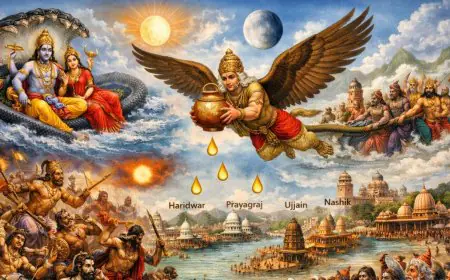
The cultural influence of Ardh Kumbh begins with the word itself. The Puranas — the Skanda Purana, Matsya Purana and Brahmanda Purana — preserve the Samudra Manthan narrative and the astrological logic that determines the Kumbh cycle. Prayag is described as the Tirtharaj, the king of pilgrimage sites, in the Skanda Purana.
The Oral Tradition
Scholarship is careful to note that the Kumbh as a festival is not explicitly mentioned in the Vedas, sutras or dharmashastras. The tradition has been transmitted primarily through oral traditions, historical travelogues and monastic teaching. This oral character is itself a cultural fact: it explains why the Ardh Kumbh functions less as a text-based event and more as a lived, participatory inheritance.
Modern Literary Engagement
The Kumbh appears in the works of Premchand, Mahadevi Varma and Harivansh Rai Bachchan, and contemporary authors continue to use the Mela as a setting for questions of faith, identity and transformation. The Ardh Kumbh, occurring every six years, keeps this literary tradition alive by providing a more frequent cultural touchstone than the twelve-year Purna Kumbh.
Trending Guides Now
What Is the Story Behind the Ardh Kumbh Mela?
Read Guide →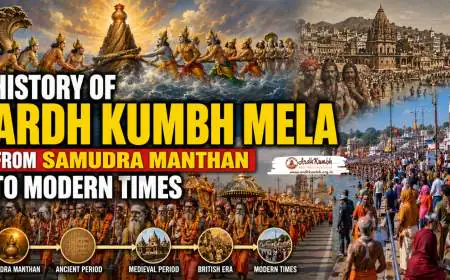
History of Ardh Kumbh Mela From Samudra Manthan to Modern Times
Read Guide →
Historical Records of Ardh Kumbh Gatherings
Read Guide →
How Ardh Kumbh Quietly Strengthened Faith Networks
Read Guide →
Ardh Kumbh 2027 Dates (Official) - Haridwar Snan Schedule
Read Guide →
Dharamshala Stay During Ardh Kumbh: Free & Budget Guide
Read Guide →
Official Progress Report of Haridwar Ardh Kumbh 2027 Infrastructure Projects
Read Guide →
Where to Find 24-Hour Pharmacies in Haridwar During Ardh Kumbh 2027 Emergencies
Read Guide →Expert Tip 💡 If you want to understand the Kumbh's cultural depth before visiting, read one Puranic passage alongside one modern short story set at the Mela. The contrast between cosmological scale and individual human drama is the essence of the tradition.
Music and Devotional Performance: The Soundtrack of the Mela
The Kumbh has been described as a living conservatory for Hindustani classical music and folk traditions. The soundscape includes Vedic chants, conch shells at dawn, drums accompanying Shahi Snan processions, and bhajans sung by Akhara groups.
The Bhajan and Kirtan Tradition
Bhajans popularised by saints such as Mirabai and Tulsidas find their largest audience at the Kumbh, where millions sing together. Kirtans and bhajans are not peripheral entertainment; they are the primary medium through which Bhakti theology is transmitted to non-literate audiences.
Classical and Folk Exchange
The Ardh Kumbh, with its slightly smaller but still massive crowds, allows for more intimate musical exchanges between gurus and disciples, and between folk artists and urban audiences. These networks have preserved regional music traditions that might otherwise have been lost to modernisation.
Local Insight 📍 In Haridwar, the most memorable music often happens away from the main stages — in a small Akhara camp at dusk, where a mahant leads a bhajan for a handful of listeners. That is the Kumbh's cultural influence at its most intimate.
Visual Art and Iconography: The Naga Sadhu as National Symbol
The visual influence of the Kumbh is everywhere in Indian popular culture. Calendar art depicting the Shahi Snan adorns millions of homes. Mithila paintings from Bihar and Pattachitra from Odisha frequently feature Kumbh scenes.
The Naga Sadhu Icon
The Naga Sadhu — ash-smeared, trident-carrying — has become an icon of Hinduism recognised worldwide, largely because of the Kumbh's visibility. This iconography carries cultural weight: it signals renunciation, martial history and the endurance of Sanatan Dharma in the popular imagination.
Historical and Contemporary Artists
The British painter Thomas Daniell sketched the Haridwar Kumbh in the late eighteenth century, and contemporary photographers have created major series documenting the Mela's human drama. The Ardh Kumbh, happening twice as often as the full Kumbh, provides a more frequent canvas for artists seeking to capture the tension between chaos and devotion.
Pro Tip 🧭 When photographing the Mela, the most culturally respectful images are often the quiet ones — a pilgrim's hands, a langar fire, a folded blanket. These images carry the Kumbh's meaning without reducing ascetics to spectacle.
Cinema and Popular Culture: Bollywood's Sacred Spectacle
No account of the cultural influence of Ardh Kumbh is complete without Bollywood. The Kumbh has been a recurring setting and narrative device in Hindi cinema for decades.
The Lost-and-Found Trope
The classic Bollywood device of siblings separated at the Kumbh appears in films from Taqdeer (1943) to Amar Akbar Anthony, where three brothers are lost at the fair and adopted into different religions before reuniting. This trope is not incidental: it uses the Mela's scale to dramatise the fragility of family and the possibility of reunion across religious difference.
The Mela as Visual Canvas
Films such as Haridwar (1936), Kumbh Mela (1954) and more recent productions have used the pilgrimage as a backdrop for stories of love, loss and redemption. The scale of the Kumbh — the millions, the tents, the processions — offers filmmakers a canvas unmatched anywhere else.
Television and Satellite Coverage
The Maha Kumbh of 2001 was one of the first events to receive extensive satellite coverage in India, bringing the Shahi Snan into living rooms across the country. This coverage transformed the Kumbh from a distant ritual into a national spectacle, and the more frequent Ardh Kumbh cycle allows media to maintain that cultural presence without the twelve-year wait.
Expert Advice ✨ The Kumbh in cinema is rarely documentary. It functions as a symbol — of fate, of lost identity, of national unity. Understanding that symbolic function is more useful than judging films for ethnographic accuracy.
Social Architecture: The Temporary Suspension of Hierarchy
The Kumbh is one of the few spaces in Indian public life where caste, class and regional hierarchies are, at least temporarily, suspended. A millionaire and a beggar stand in the same queue; a Brahmin and a Dalit eat the same langar meal; a Tamil and a Punjabi share a tent.
The Langar as Social Leveler
The massive langars that feed millions daily are the practical mechanism of this levelling. The langar is not charity from above; it is a shared meal that temporarily reorders social relations. This is the Kumbh's most tangible contribution to social harmony.
Ritual Inclusion and Its Limits
The tradition has also seen deliberate efforts at inclusion. During the Prayag Ardh Kumbh 2019, the Juna Akhara extended invitations to Dalit women, and Dalit and Mahadalit men were given titles of saints. At the same time, scholars and commentators caution that ritual inclusion does not automatically dissolve structural inequality. The Kumbh offers a model of equality, but it is a temporary and imperfect one.
Expert Tip 💡 Observe who serves and who is served at a langar. The cultural significance lies not only in the food but in the rotation of roles — the moment a high-status pilgrim washes plates alongside a labourer.
Crafts, Cuisine and the National Marketplace
The Kumbh functions as a national marketplace for handicrafts, handlooms and regional cuisine. Specially curated spaces such as Kala Gram and the One District One Product pavilion showcase indigenous crafts and provide livelihoods for thousands of artisans.
Kala Gram and Regional Representation
At recent Kumbh gatherings, the Ministry of Culture developed Kala Gram to display India's culture, craft and cuisine together. These spaces have featured Pattachitra from Bengal, bamboo crafts from Assam, Tanjore paintings from Tamil Nadu and tribal art from Madhya Pradesh, alongside 28 regional cuisines.
The Economic Ripple
The economic impact radiates outward — from the weavers of Varanasi who sell silk to pilgrims, to the potters of Khurja who supply the diyas that float on the Ganga. The Ardh Kumbh strengthens these networks, ensuring that cultural traditions are not just preserved but are economically viable.
| Craft/Food Category | Region Represented | Kumbh Role |
|---|---|---|
| Pattachitra painting | Odisha/Bengal | Display and sale at Kala Gram |
| Bamboo craft | Assam | Artisan livelihood |
| Tanjore painting | Tamil Nadu | Regional art showcase |
| Silk weaving | Varanasi | Pilgrim market |
| Pottery/diyas | Khurja | Ritual supply chain |
| Sattvic cuisine | Pan-India | Langar and food zones |
Economic Influence: Culture as Livelihood
The cultural influence of Ardh Kumbh is inseparable from its economic footprint. The 2019 Ardh Kumbh in Prayagraj generated close to ₹1.2 lakh crore in revenue, according to statements reported from the Uttar Pradesh government. The Ardh Kumbh is expected to generate over ₹1.2 lakh crore and employment for over 600,000 workers across sectors.
From Trading Post to Economic Engine
Historically, the Haridwar Kumbh was a major commercial event attended by merchants from as far away as Arabia; the Mela served as a trading post where goods and ideas were exchanged. Today, the Kumbh is a multi-billion-dollar economic engine. The 2027 Ardh Kumbh is expected to attract an estimated 17 crore devotees, fuelling hotels, restaurants, transport and handicraft vendors across Haridwar, Rishikesh and beyond.
Local Insight 📍 In Haridwar, the cultural and economic calendars converge. The same families who run bhojanalayas during the Mela often sustain sattvic kitchens year-round, and the Mela's income allows them to preserve culinary traditions that would otherwise struggle against commercial pressure.
Soft Power and National Identity: Kumbh as Cultural Diplomacy
In recent years, the Kumbh has taken on a new cultural role: that of national branding and soft power. The Government of India has invested heavily in infrastructure and global promotion, positioning the Kumbh as a civilisational showcase.
Vasudhaiva Kutumbakam
The stated vision is Vasudhaiva Kutumbakam — the world is one family — and the Kumbh is presented as a platform for that idea. The Ardh Kumbh, with its more frequent schedule, offers more regular opportunities for this cultural diplomacy than the twelve-year cycle.
The 2027 Upgrade
The 2027 Haridwar Ardh Kumbh is being planned with unprecedented grandeur, described by Chief Minister Pushkar Singh Dhami as equal to a Purna Kumbh. For the first time, an Ardh Kumbh will feature Amrit Snan processions by all 13 Akharas, with four royal baths and 10 bathing festivals across 97 days from 14 January to 20 April 2027. This upgrade is not merely logistical; it is a statement about the cultural priority of the Kumbh in contemporary India.
The Naming Debate: Culture as a Living Contested Space
The cultural influence of Ardh Kumbh is also visible in the debates it generates. A controversy has surrounded whether the 2027 Haridwar event should be called an "Ardh Kumbh" or simply a "Kumbh." Traditionalists argue that a Kumbh occurs only every twelve years, determined by specific astrological alignments, and that calling a six-year event a Kumbh violates sacred tradition.
Others, including the Uttarakhand government, argue that the scale and grandeur of the 2027 event justify the upgrade, with Jupiter in Aquarius from 2026 to 2028 cited as an astrological basis for Kumbh-level rituals. The fact that politicians, saints and scholars are arguing about the name proves that the Kumbh is not a relic but a living, contested and vibrant part of Indian culture.
Expert Advice ✨ Pay attention to these debates. The naming controversy reveals what a culture considers sacred: not just the ritual itself, but the authority to define it.
The Akhara Network: Monastic Culture as Living Institution
The Kumbh is the reunion of India's monastic orders — the 13 Akharas that form the organisational backbone of Sanatan Dharma. These are not static relics. They preserve philosophical texts, ritual practices, herbal medicine, martial arts and yogic techniques.
Knowledge Exchange
The Kumbh brings the Akharas together, allowing for the exchange of knowledge, the resolution of disputes and the transmission of traditions from guru to shishya. The Ardh Kumbh, occurring every six years, accelerates this cultural exchange and fosters a tighter network of Hindu monasticism.
The 2027 Precedent
The decision to grant the 2027 Ardh Kumbh full Shahi Snan status is a recognition of the Akhara network's cultural centrality. As Mahant Ravindra Puri, president of the Akhil Bharatiya Akhara Parishad, has stated, the government is leaving no stone unturned to establish Sanatan Dharma. Whether one views this as religious revival or political appropriation, its cultural significance is undeniable.
How the Ardh Kumbh's Cultural Influence Reaches Every Region
The cultural influence of Ardh Kumbh is not confined to the host city. It travels home with every pilgrim.
-
Bengal receives Pattachitra inspiration and Kirtan repertoire.
-
Tamil Nadu contributes Tanjore art and Bharatanatyam performance.
-
Punjab and Haryana send langar volunteers and agricultural produce.
-
Odisha showcases Pattachitra and temple craft.
-
Madhya Pradesh brings tribal art and Ujjain's Simhastha cultural memory.
-
Maharashtra carries Nashik's Kumbh traditions and Warkari devotional forms.
The Kumbh is thus a national cultural exchange that happens every six years in a different regional key.
Practical Takeaways for the Culturally Curious Pilgrim
If you are visiting the Ardh Kumbh with cultural interest rather than only ritual intent, the following approach will serve you well.
-
Attend one Kala Gram or craft pavilion and speak to at least two artisans.
-
Listen to one classical or folk performance without photographing it.
-
Eat at a langar and observe the social dynamics of serving and sharing.
-
Visit one Akhara camp with permission and sit quietly during satsang.
-
Buy one handmade object directly from an artisan rather than a mass-produced souvenir.
-
Read one Puranic passage about the Samudra Manthan before your snan.
-
Record one oral story from an elderly pilgrim, with consent.
Pro Tip 🧭 The most culturally rich moments at the Ardh Kumbh are often unplanned. Leave one afternoon entirely unscheduled and follow the sound of drums or the smell of a langar fire.
Frequently Asked Questions