




































































Role of Ancient Monasteries in Ardh Kumbh
Explore the role of ancient monasteries in Ardh Kumbh, preserving traditions, guiding pilgrims, and sustaining Sanatan Dharma’s spiritual legacy.
Role of Ancient Monasteries in Ardh Kumbh
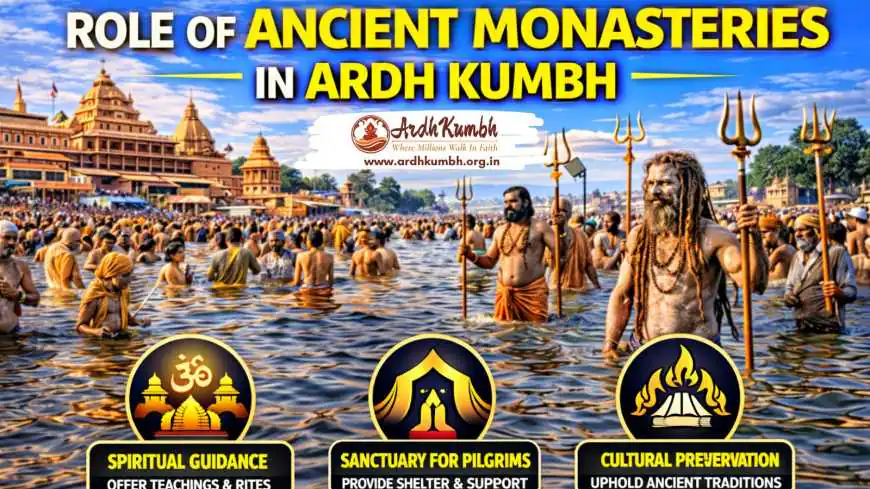
The Ardh Kumbh is not only a gathering of pilgrims but also a convergence of deeply rooted spiritual institutions that have sustained Sanatan Dharma for centuries. Among these, the ancient monasteries ardh kumbh often referred to as mathas and monastic centers play a foundational role. These institutions are not merely physical spaces but living centers of knowledge, discipline, and tradition. Their presence at the Kumbh ensures that the event remains anchored in authentic teachings, structured practices, and continuous spiritual lineage. Through their participation, the kumbh mela mathas role becomes evident as they guide seekers, preserve knowledge, and maintain the philosophical depth of the gathering.
Want to experience Ardh Kumbh in person?
Get official dates, snan guidelines, Akharas, and travel planning tips in our dedicated event guide.
→ Ardh Kumbh Mela 2027 Complete Guide
Understanding the Concept of Monasteries in Sanatan Dharma
In Sanatan Dharma, monasteries or mathas are centers of spiritual learning and practice.
The sanatan dharma monasteries importance lies in their role as:
Trending Guides Now
History of Ardh Kumbh Mela From Samudra Manthan to Modern Times
Read Guide →
How Saints and Sadhus Define the Ardh Kumbh Tradition
Read Guide →
Why Saints Are Called Living Archives of Kumbh
Read Guide →
How Ardh Kumbh Mela Preserved India’s Pilgrimage Routes
Read Guide →
Best Routes to Reach Haridwar for Ardh Kumbh Mela
Read Guide →
Ardh Kumbh 2027 Dates (Official) - Haridwar Snan Schedule
Read Guide →
How Ardh Kumbh Stayed Relevant Over Centuries
Read Guide →
Can Ardh Kumbh Reshape Daily Living
Read Guide →- Custodians of knowledge
- Training grounds for ascetics
- Centers of discipline and practice
These institutions are closely linked to the guru lineage monasteries kumbh, ensuring continuity of teachings across generations.
At the Ardh Kumbh, these monasteries extend their influence beyond their physical locations, becoming active participants in the spiritual ecosystem.
Historical Roots of Monastic Participation in Kumbh
The involvement of ancient mathas india kumbh dates back centuries.
Historically, monasteries:
- Sent representatives to the Kumbh
- Participated in philosophical discussions
- Contributed to ritual practices
This long-standing participation has made the kumbh mela religious institutions role an integral part of the event’s structure.
Their presence ensures continuity between past traditions and present practices.
Also Read | Ardh Kumbh 2027 Official Dates (Haridwar)
Connection Between Monasteries and Akharas
The relationship between akharas and monasteries kumbh is deeply interconnected.
While akharas represent organized ascetic orders, monasteries provide:
- Philosophical foundations
- Training and initiation
- Institutional structure
This synergy strengthens the hindu monastic traditions kumbh, creating a balanced system of practice and knowledge.
Together, they form the backbone of the Kumbh’s spiritual organization.
Preservation of Knowledge and Scriptures
One of the most critical roles of kumbh mela knowledge preservation monasteries is safeguarding spiritual knowledge.
Monasteries are responsible for:
- Maintaining scriptures
- Preserving oral traditions
- Ensuring accurate transmission of teachings
At the Ardh Kumbh, this preserved knowledge is shared through discourses and interactions.
This ensures that the event remains intellectually and spiritually rich.
Guidance and Teaching for Pilgrims
The monasteries spiritual guidance kumbh provide essential support to pilgrims.
They offer:
- Discourses on philosophy
- Practical spiritual advice
- Clarification of rituals
For many attendees, monasteries act as accessible sources of authentic knowledge.
Their guidance helps transform the kumbh mela spiritual institutions into centers of learning.
Maintaining Discipline and Structure
The ancient monasteries ardh kumbh play a crucial role in maintaining discipline.
They ensure:
- Organized participation of followers
- Adherence to traditional practices
- Respect for spiritual codes
This discipline is essential for managing the scale and complexity of the Ardh Kumbh.
Without such structure, the event could lose its coherence.
Training and Initiation of Disciples
Monasteries serve as training centers for future spiritual leaders.
The guru lineage monasteries kumbh system ensures that:
- New disciples are initiated
- Practices are taught systematically
- Lineages are preserved
At the Ardh Kumbh, initiation ceremonies often take place, strengthening the continuity of traditions.
Facilitating Philosophical Exchange
The kumbh mela mathas role extends to intellectual engagement.
Monasteries contribute to:
- Debates on philosophy
- Exchange of ideas
- Clarification of doctrines
This interaction enriches the hindu monastic traditions kumbh, promoting mutual understanding among different schools of thought.
Supporting Rituals and Ceremonies
The kumbh mela religious institutions role includes overseeing rituals.
Monasteries:
- Guide ceremonial practices
- Ensure authenticity
- Maintain traditional methods
Their involvement ensures that rituals are performed with accuracy and respect.
Providing Stability in a Temporary Environment
The Ardh Kumbh is a temporary city, but monasteries bring a sense of continuity.
Their presence:
- Connects the event to long-standing traditions
- Provides stability
- Reinforces authenticity
The kumbh mela heritage institutions act as anchors, grounding the event in its historical roots.
Encouraging Spiritual Discipline Among Participants
Through their teachings and example, monasteries encourage:
- Meditation
- Self-control
- Ethical living
The monasteries and sadhu traditions kumbh inspire participants to adopt disciplined practices.
This influence extends beyond the event, impacting daily life.
Strengthening the Collective Spiritual Identity
The ancient monasteries ardh kumbh contribute to a shared spiritual identity.
They bring together:
- Different traditions
- Diverse practices
- Various philosophical perspectives
This collective presence strengthens the unity of Sanatan Dharma.
Adapting Tradition to Modern Contexts
While rooted in tradition, monasteries also adapt to changing times.
The kumbh mela spiritual institutions address:
- Modern challenges
- Contemporary questions
- Practical spirituality
This adaptability ensures that teachings remain relevant.
To truly experience the spiritual power of Ardh Kumbh, every devotee should explore Shahi Snan rituals and Akhara traditions, which explain the sacred bathing process, monastic discipline, and ancient customs that shape this holy gathering. This guide helps pilgrims connect deeply with the true essence of the Mela.
A Living Continuum of Knowledge and Practice
The role of ancient monasteries ardh kumbh is not limited to preservation it is about continuity.
They ensure that:
- Knowledge flows across generations
- Practices remain alive
- Traditions evolve without losing essence
This continuum is essential for sustaining the depth of the Ardh Kumbh.
Where Tradition Finds Its Living Guardians
In the vast, ever-changing landscape of the Ardh Kumbh, where temporary structures rise and dissolve with time, the presence of ancient monasteries introduces something enduring. They are not bound by the temporary nature of the event; instead, they carry with them centuries of continuity, discipline, and knowledge.
The kumbh mela mathas role becomes visible not through grand displays, but through quiet influence guiding, teaching, preserving, and connecting. Each monastery represents a lineage, a philosophy, and a commitment to sustaining something far greater than itself.
As pilgrims move through the gathering, seeking meaning and connection, these institutions stand as steady points of reference. They remind participants that beyond the scale of the event lies a deeper structure one built on knowledge, discipline, and continuity.
In this way, the ancient monasteries ardh kumbh do more than participate they ensure that the essence of the Kumbh remains intact, carried forward not just in rituals, but in the living traditions that continue to shape it.
Related Ardh Kumbh Guides :
- When Is the Next Ardh Kumbh Mela in Haridwar?
- Har Ki Pauri Ganga Aarti Time in Haridwar: Complete Schedule
- Why Har Ki Pauri Becomes the Heart of Ardh Kumbh
- Ardh Kumbh vs Maha Kumbh: The Real Difference Explained
- Is Attending Ardh Kumbh Mandatory for Devotees?
- Why Ardh Kumbh Holds the Same Spiritual Weight as Kumbh
- How Ardh Kumbh Evolved Over Centuries of Faith ?
- Ancient Scriptures That Clearly Explain Ardh Kumbh
- Strict Rules Pilgrims Follow at Ardh Kumbh
- Is Ardh Kumbh Really Different From Kumbh Mela?
Frequently Asked Questions