































How Ardh Kumbh Strengthens Community Values
Discover how Ardh Kumbh Mela silently strengthens community values like sharing, caring, unity, and belonging. A heartfelt look at faith that builds bonds.
How Ardh Kumbh Strengthens Community Values
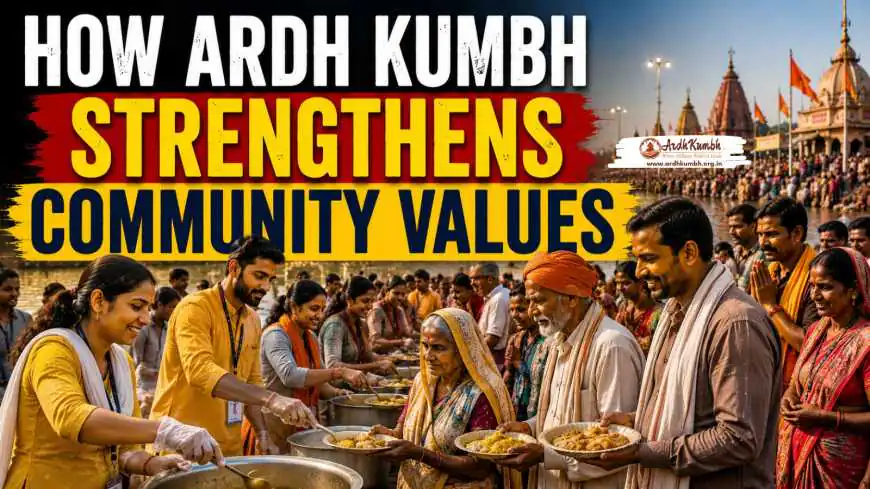
Let me start with a story that still gives me goosebumps. At the last Ardh Kumbh, I saw a family — father, mother, two young children — sitting by the side of the road. They had walked twenty kilometers that day. The children were crying. The mother was trying to feed them from a single packet of biscuits. The father looked lost. He had lost his wallet somewhere in the crowd. No money. No phone. No idea where their tent was. Within fifteen minutes, five separate strangers had stopped to help. One gave them a blanket. One gave them hot chai and khichdi from a nearby Bhandara. One loaned them 500 rupees (the father asked for his number to return it; the man said "Kumbh hai, bhool jao" — it's Kumbh, forget it). One walked them to the lost and found center. One helped them locate their tent using a borrowed phone. That family did not know a single one of those strangers before that day. And they will probably never see them again. But for one afternoon, they were a community. That is what the Kumbh does. It takes millions of individuals and turns them into a temporary family. And the values that make that possible — trust, generosity, compassion, cooperation — are not taught. They are caught. Like a virus, but a good one. Let me break down how.
Sharing – When Your Plate Becomes Everyone's Plate
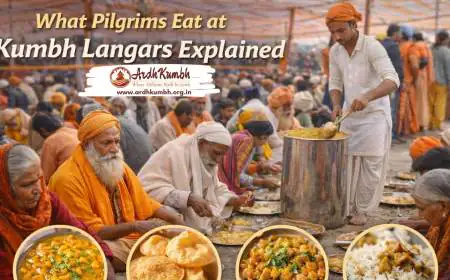
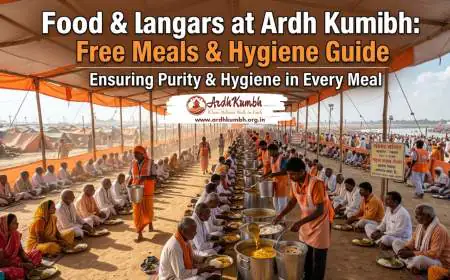
Let me talk about sharing, because the Kumbh redefines it. In normal life, sharing means giving a little bit of what you have extra. You share your extra food. You share your spare time. You share your old clothes. At the Kumbh, sharing means giving what you need for yourself. Because everyone is in the same boat. Everyone is cold. Everyone is tired. Everyone is hungry. And yet, watch the Bhandaras. Watch the pilgrims sharing their blankets at night. Watch someone offering their seat to an elderly person on a crowded bus. At the Kumbh, sharing stops being charity and starts being survival — but survival of the community, not just the individual. You share because you know that tomorrow, you might be the one in need. You share because you see your own face in the stranger's face. This is not utopian nonsense. This is practical wisdom that the Kumbh has preserved for centuries. When people have nothing, they share everything. And in that sharing, they remember what it feels like to be human together. That feeling does not leave you when you go home. It nags at you. It whispers: "you shared your blanket at the Kumbh. Why can't you share your time with your neighbor now?"
Caring – The Stranger Who Became a Caretaker
Here is something beautiful about the Kumbh. The concept of "stranger" almost disappears. Yes, you do not know the person next to you. But you care about them anyway. Why? Because you have a shared goal. You both want to reach the Ganges. You both want to take the sacred dip. You both want to survive the crowds. That shared goal creates a bond that cuts through the usual suspicion we have toward strangers. Watch the caring in action. A young man helping an elderly woman down the slippery steps to the river. A mother wiping the tears of a lost child who is not her own. A group of pilgrims forming a human chain to pass drinking water back to the people at the end of the line. This is not organized. No one is directing it. It is spontaneous caring — and it happens thousands of times every day at the Kumbh. The Mela teaches you that caring is not a burden. It is a muscle. The more you use it, the stronger it gets. And by the time you leave, you have used it so much that you cannot turn it off. You come home and find yourself caring about the vegetable seller's bad back. You find yourself asking the security guard if he has eaten. The Kumbh has rewired you. That is how it strengthens community values — one small act of caring at a time.
Unity – When Diversity Becomes Your Strength
Let me talk about unity at the Kumbh. And let me be honest. India has problems. Caste problems. Class problems. Regional problems. Religious problems. We all know this. But something strange happens at the Kumbh. A Brahmin priest and a Dalit laborer stand in the same water. A Gujarati businessman and a Bengali fish seller eat from the same Bhandara plate. A Punjabi farmer and a Tamil schoolteacher share the same tent floor. The Kumbh does not erase their differences. But it places those differences in a larger context. You are not first a Brahmin. You are first a pilgrim. You are not first a Gujarati. You are first a devotee of the Ganges. The unity at the Kumbh is not about pretending everyone is the same. It is about honoring what is deeper than the differences. And that experience — of being part of a united crowd despite every possible division — is transformative. You go home and you cannot take the us vs them mentality seriously anymore. You have seen the one inside the many. That is unity not as a political slogan, but as a lived reality. The Kumbh gives you that.
Trending Guides Now
Who Are Naga Sadhus and Why They Lead Kumbh
Read Guide →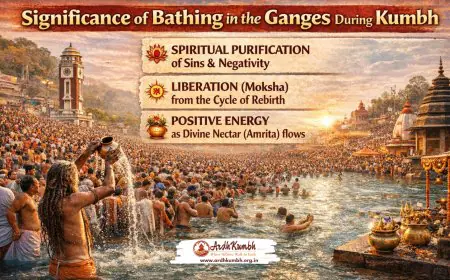
Significance of Bathing in the Ganges During Kumbh Mela Explained
Read Guide →
What Is the Story Behind the Ardh Kumbh Mela?
Read Guide →
The Untold Stories of Har Ki Pauri
Read Guide →
Best Routes to Reach Haridwar for Ardh Kumbh Mela
Read Guide →
Ardh Kumbh 2027 Dates (Official) - Haridwar Snan Schedule
Read Guide →
How Kumbh Keeps India’s Civilizational Memory Alive
Read Guide →
February Weather Reality at Ardh Kumbh
Read Guide →Belonging – The Antidote to Loneliness
Let me speak to the loneliness epidemic. We are more connected digitally than ever before, and more isolated actually than ever before. Depression rates are rising. Suicide rates are rising. The number of people who say they have "no one to talk to" is rising. The Kumbh is the antidote. Not because it gives you friends (though it might). But because it gives you belonging without requiring you to do anything except show up. When you stand on the banks of the Ganges and see millions of faces looking in the same direction, you cannot feel alone. It is impossible. You are part of something. You may not know anyone's name. You may not exchange a single word. But you belong. That feeling — of being held by a community that asks nothing of you except your presence — is healing. It is the opposite of the loneliness that crushes so many people. And the Kumbh offers it freely to everyone who comes. No membership card. No interview. No fee. Just show up. You belong. That is a community value that our world desperately needs. The Kumbh has been offering it for thousands of years.
Cooperation – How Millions Move as One
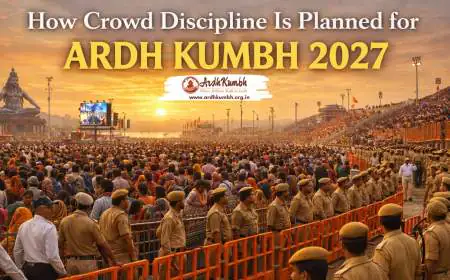
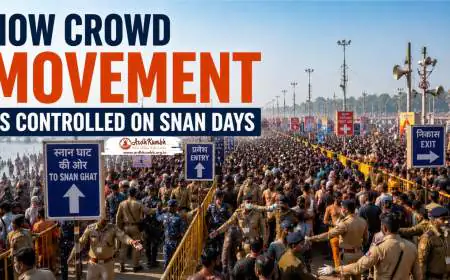
You cannot have a crowd of 50 million people without cooperation. It is literally impossible. And yet, the Kumbh happens. Every six years. Without major riots. Without complete chaos. How? Because pilgrims cooperate. They follow the directions of the police and volunteers. They wait in lines that are not roped off. They let ambulances pass. They share information about which ghat is less crowded. This cooperation is not forced. It is voluntary. It comes from a shared understanding that "if we all push, no one gets to the river. If we all wait, everyone gets a turn." That is cooperation at the scale of a small country. And it works. The Kumbh is proof that human beings, when given a shared purpose, can cooperate without coercion. That lesson is gold. Because if we can cooperate at the Kumbh, we can cooperate in our apartments, our offices, our cities. The same muscle that lets you wait in line for the Shahi Snan can let you wait patiently for your turn in a meeting. The same cooperation that lets millions walk in the same direction can let a family divide chores without fighting. The Kumbh trains your cooperation muscle. Use it at home.
Trust – The Currency of the Kumbh
Let me talk about trust. Because without trust, there is no community. And in the modern world, trust is in short supply. We do not trust strangers. We barely trust our neighbors. We do not trust the news. We do not trust the government. We do not even trust ourselves sometimes. The Kumbh is a trust factory. Watch how it works. You leave your shoes outside a temple. You trust they will be there when you return. (They usually are.) You hand your phone to a stranger to take your photo. You trust they will not run. (They usually do not.) You sleep in a tent with fifty people you have never met. You trust they will not steal from you. (They usually do not.) Why does trust work at the Kumbh when it fails in our daily lives? Because everyone is visible. Everyone is accountable. And everyone knows that breaking trust at a holy place brings bad karma. But there is another reason too. The Kumbh reminds you that most people are good. Not perfect. But good. That reminder is precious. When you leave the Kumbh, you take that reminder with you. You are more likely to trust the auto driver. More likely to trust the new colleague. More likely to trust the stranger who asks for directions. The Kumbh does not make you naive. It makes you hopeful. And hope is the foundation of community.
Forgiveness – Letting Go for the Sake of the Group
Let me talk about forgiveness as a community value. Because communities break when people hold grudges. Families split over small insults. Friend groups dissolve over misunderstandings. Neighborhoods become war zones over parking spots. The Kumbh teaches you to forgive — not because the other person deserves it, but because the group needs you to let go. Watch the pilgrims. Someone steps on your foot in the crowd. You turn, angry. You see their face. They are apologizing, hands folded, scared. And you feel your anger dissolve. Not because you are a saint. But because you realize: "this person is my brother. We are both here for the same reason. Why would I ruin my dip by staying angry?" That is forgiveness for the sake of the community. You let go of your small injury so that the larger peace can remain. That is a skill. And the more you practice it at the Kumbh, the better you get at it at home. You learn to swallow the sharp reply. You learn to take a breath before firing off that angry text. You learn that peace is more important than being right. That is community value number one. The Kumbh engraves it into your bones.
Humility – When Ego Steps Aside for the Collective
Let me be blunt. Your ego is the enemy of community. The moment you think "I am more important than them," the community starts to crack. The Kumbh is a humility machine. It will humble you within hours. You will lose your luggage. You will step in mud. You will be pushed by a crowd. You will realize that your expensive phone is useless without a signal. Your designer clothes will be ruined. Your corporate title means nothing to the Naga Sadhu who has not bathed in six months. The Kumbh reminds you that you are just one human among fifty million. That your control is an illusion. That your plans are a joke. And that is exactly the point. When your ego shrinks, your capacity for community grows. Because you stop thinking "what's in it for me?" and start thinking "what's good for all of us?" You start sharing. You start cooperating. You start forgiving. Humility is not weakness. It is the door to community. And the Kumbh kicks that door open whether you like it or not.
Gratitude – The Glue That Holds Community Together
Finally, let me talk about gratitude. At the Kumbh, you cannot survive without others. You need the person who tells you which way to go. You need the family that shares their chai. You need the volunteer who points you to the empty toilet. You need the sadhu who blesses you when you are scared. And when you receive that help, you feel grateful. Deeply, genuinely grateful. That gratitude is the glue of community. Because a grateful person gives back. A grateful person does not take for granted. A grateful person notices the small kindnesses that keep the group together. The Kumbh bathes you in opportunities for gratitude. Every meal you eat at a Bhandara is a gift. Every safe crossing through the crowd is a gift. Every dry night in your tent is a gift. By the time you leave, you are overflowing with thanks. And you take that thanks home. You thank your family more. You thank your colleagues more. You thank the universe more. That gratitude makes you a better community member. It makes you softer, kinder, more patient. That is how the Kumbh strengthens community values. Not by teaching. By overwhelming you with reasons to be grateful.
The Rope That Cannot Be Cut
Let me leave you with an image. A single thread is easy to break. But when you twist many threads together, they form a rope. That rope can hold a ship. That rope can pull a car. That rope is almost impossible to cut. The Ardh Kumbh takes millions of individual threads — each one fragile, each one small, each one alone — and twists them into a rope of shared faith, shared struggle, and shared joy. That rope is community. And once you have felt its strength, you cannot pretend that you are better off alone. You are not. None of us are. The Kumbh reminds you of that ancient, stubborn, beautiful truth. We need each other. Not just for survival. For sanity. For joy. For meaning. The Kumbh has been reminding us of this for thousands of years. And it will keep reminding us, every six years, as long as the Ganges flows and the stars align. The question is: will you listen? Will you let the community values of the Kumbh strengthen the communities you are part of every day? That is the real test. And that is the real gift.
Frequently Asked Questions