































































How Ardh Kumbh Connects One Kumbh Cycle to the Next
Discover how Ardh Kumbh serves as the vital bridge between Purna Kumbh cycles. Six-year intervals maintain spiritual continuity and tradition.

The Celestial Clock - How Jupiter Marks the Cycles
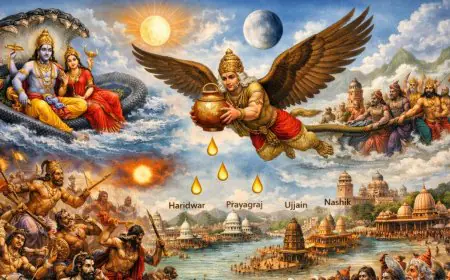
The connection between Kumbh cycles is not human-made. It is celestial. Jupiter takes approximately 12 years to complete one orbit around the Sun. This is the basis of the 12-year Purna Kumbh cycle. Ardh Kumbh occurs when Jupiter reaches the midpoint of that orbit - approximately six years after the previous Purna Kumbh.
The calculations are precise. Hindu astronomers determined these planetary positions centuries ago. The tradition did not "invent" Ardh Kumbh as a convenience. The Ardh Kumbh is written into the movement of planets. When Jupiter enters certain zodiac signs (Aquarius for Haridwar, Aries for Prayagraj), the Ardh Kumbh occurs.
This celestial clock ensures continuity. The planets do not stop. Jupiter does not take a break. Every six years, the planetary alignment triggers the Ardh Kumbh. The tradition follows the sky. The sky connects one cycle to the next. No human decision is required. No committee votes to continue Kumbh. Jupiter decides. Pilgrims follow.
The Alternating Locations - Haridwar and Prayagraj
Ardh Kumbh does not happen at the same place every six years. It alternates between Haridwar (on the Ganga) and Prayagraj (at the Sangam of Ganga, Yamuna, and mythical Saraswati). This alternation is documented in Kumbh tradition.
Trending Guides Now

Who Are Naga Sadhus and Why They Lead Kumbh
Read Guide →
Biggest Crowds Ever Recorded at Ardh Kumbh
Read Guide →
Why Haridwar Is Spiritually Central to Ardh Kumbh
Read Guide →
How Ardh Kumbh Evolved Over Centuries of Faith ?
Read Guide →
Best Routes to Reach Haridwar for Ardh Kumbh Mela
Read Guide →
Ardh Kumbh 2027 Dates (Official) - Haridwar Snan Schedule
Read Guide →
How Kumbh Keeps India’s Civilizational Memory Alive
Read Guide →
February Weather Reality at Ardh Kumbh
Read Guide →The pattern is as follows. Purna Kumbh at Prayagraj (year 0). Ardh Kumbh at Haridwar (year 6). Purna Kumbh at Haridwar (year 12). Ardh Kumbh at Prayagraj (year 18). Purna Kumbh at Prayagraj again (year 24). The cycle repeats.
This alternation connects the two holy cities. Haridwar and Prayagraj are not separate traditions. They are linked by the Ardh Kumbh schedule. A pilgrim who attends Ardh Kumbh at Haridwar in year 6 will find the next Ardh Kumbh at Prayagraj in year 18. The locations alternate. The tradition continues across both sites.
Without Ardh Kumbh, each Purna Kumbh would stand alone. Haridwar would have a Purna Kumbh every 12 years. Prayagraj would have a Purna Kumbh every 12 years. There would be no six-year gathering to connect them. Ardh Kumbh provides that connection.
The Akhara Participation - Same Orders, Same Camps
The akhara (monastic orders) participate in both Purna Kumbh and Ardh Kumbh. The same 13 major akharas set up camps at Haridwar and Prayagraj regardless of whether the Kumbh is Purna or Ardh. The Naga sadhus of the Juna Akhara attend Ardh Kumbh. The Dashanami Akhara attends. The Udasin Akhara attends.
This akhara participation is a continuity mechanism. The sadhus do not disappear for six years and reappear at the Purna Kumbh. They attend Ardh Kumbh regularly. Their camps are set up in the same locations cycle after cycle. Their internal meetings - discussing disputes, successions, and doctrines - happen at Ardh Kumbh as well as Purna Kumbh.
A new sadhu initiated at Ardh Kumbh will attend the next Purna Kumbh as a full member of the akhara. The Ardh Kumbh serves as the on-ramp. The Purna Kumbh serves as the peak. But the akhara does not skip the Ardh Kumbh. The tradition requires both.
The Pilgrim Memory - How Six Years Is Not Too Long
Six years between Ardh Kumbhs is a manageable interval for pilgrim memory. A pilgrim who attends Ardh Kumbh at age 30 will attend the next Ardh Kumbh at age 36. The memory of the first Kumbh is still fresh. The lessons learned - the patience, the humility, the discipline - can be renewed before they fade.
If the gap were 12 years (like Purna Kumbh), the pilgrim would attend at 30 and again at 42. The memory would be more distant. The habit would be harder to maintain. The six-year gap of Ardh Kumbh is short enough to keep pilgrims engaged and long enough to feel significant.
This interval is not accidental. Hindu tradition designed the Kumbh calendar with human psychology in mind. Six years allows a generation of children to grow from toddlers to school-age. A parent can bring a child to Ardh Kumbh at age 5, then again at age 11, then again at age 17. The child grows up with Kumbh as a regular feature of life.
The Infrastructure Continuity - Building for the Next Cycle
Ardh Kumbh requires infrastructure. Temporary cities are built at Haridwar and Prayagraj every six years. Roads, bridges, toilets, water supply, electrical lines, medical camps, and police stations are constructed for the Mela.
This infrastructure is not discarded after Ardh Kumbh. Much of it is reused for the next cycle. The experience gained by contractors, engineers, and administrators at Ardh Kumbh is applied to the next Purna Kumbh. The lessons from Ardh Kumbh inform the planning for Purna Kumbh.
Without Ardh Kumbh, the infrastructure skills would atrophy over 12 years. The next Purna Kumbh would require relearning everything. Ardh Kumbh keeps the knowledge and capacity alive.
Government documents from Kumbh planning show that Ardh Kumbh is treated as a rehearsal for Purna Kumbh. The scale is smaller (though still massive). The logistics are similar. The personnel trained at Ardh Kumbh become the leaders for Purna Kumbh.
The Generational Transmission - Teaching Children at Ardh Kumbh
Ardh Kumbh occurs frequently enough that parents can bring children at multiple ages. A child attending Ardh Kumbh at age 6 will attend again at 12 and 18. By adulthood, the Kumbh is deeply internalized.
This generational transmission is the primary mechanism for connecting cycles. The Purna Kumbh at year 0 teaches the parents. The Ardh Kumbh at year 6 teaches the children. The Purna Kumbh at year 12 teaches the parents again, but now the children are adolescents who understand the rituals. The Ardh Kumbh at year 18 teaches the young adults. The Purna Kumbh at year 24 teaches the next generation of parents.
The cycle continues. Ardh Kumbh is the bridge that carries the tradition from one generation to the next. Without the six-year interval, the gap between Purna Kumbhs (12 years) would be too long for children to maintain memory. They would forget the experience of the previous Kumbh before the next one arrived. Ardh Kumbh prevents this forgetting.
The Spiritual Momentum - Keeping the Energy Alive
Kumbh generates spiritual energy - not as a supernatural claim, but as an observable phenomenon. Millions of pilgrims praying, chanting, meditating, and bathing together create an atmosphere that is different from ordinary life. Pilgrims report feeling this difference.
Ardh Kumbh maintains this spiritual momentum between Purna Kumbhs. The energy does not have to be rebuilt from zero every 12 years. It is sustained by the six-year gathering.
A Purna Kumbh that follows an Ardh Kumbh by six years will have a baseline of pilgrims, sadhus, and traditions that were active just half a decade earlier. The camps are in the same places. The sadhus are the same people. The rituals are the same. The continuity is visible.
A Purna Kumbh that followed a 12-year gap with no Ardh Kumbh would feel discontinuous. Sadhus would be older or deceased. Camps would need to be reestablished. Networks would need to be reactivated. Ardh Kumbh prevents this rupture.
The Financial Cycle - Donations and Funding
Kumbh requires funding. State governments allocate budgets for infrastructure and security. Donors contribute to akhara camps, bhandaras, and medical facilities. This financial cycle follows the Kumbh calendar.
Ardh Kumbh provides a regular opportunity for donations. Wealthy donors who support Kumbh do not have to wait 12 years between Purna Kumbhs. They can donate every six years at Ardh Kumbh. The akhara budgets are maintained across the cycle.
Without Ardh Kumbh, financial support would decline during the six-year gap. Donors would forget or redirect their charity. Akhara would struggle to maintain camps and services. Ardh Kumbh keeps the money flowing and the tradition funded.
The Cycle Continues - Ardh Kumbh as the Bridge
The evidence is clear. Ardh Kumbh connects one Kumbh cycle to the next through celestial calculation, alternating locations, akhara participation, pilgrim memory, generational transmission, infrastructure continuity, spiritual momentum, and financial cycles.
Without Ardh Kumbh, the 12-year Purna Kumbh would stand alone. The tradition would be fragmented. Gurus would meet less frequently. Disciples would have fewer opportunities for initiation. Children would miss the formative experiences that Kumbh provides. Infrastructure would decay. Donations would dry up.
Ardh Kumbh prevents this. It is not a "lesser" Kumbh. It is a necessary Kumbh. It is the bridge that carries the tradition from one Purna Kumbh to the next. It is the six-year heartbeat that keeps India's spiritual tradition alive between the 12-year peaks.
The next Ardh Kumbh will occur. Jupiter will continue its orbit. Pilgrims will gather at Haridwar or Prayagraj. The cycle will continue. And when the Purna Kumbh arrives after another six years, the tradition will be ready - maintained, funded, taught, and waiting - because Ardh Kumbh did its work.
Frequently Asked Questions