Understanding the Spiritual Equality of Ardh Kumbh and Maha Kumbh
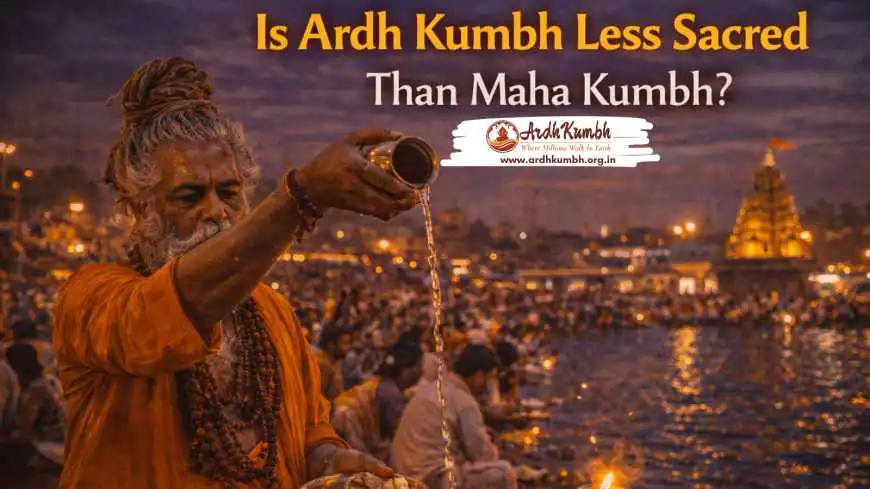
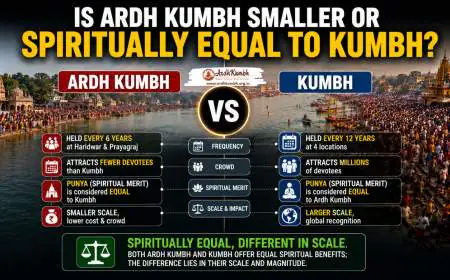
The question of whether Ardh Kumbh is less sacred than Maha Kumbh often arises from a surface-level comparison of scale, frequency, and visibility. However, when examined through the deeper lens of Hindu philosophy, ritual continuity, and spiritual intent, the distinction becomes far more nuanced. Both Ardh Kumbh and Maha Kumbh emerge from the same sacred foundation, draw from identical mythological roots, and offer access to the same divine energies. The perceived hierarchy between them is largely a product of cultural emphasis rather than intrinsic spiritual difference.
To understand this clearly, one must move beyond external metrics like crowd size or rarity and instead focus on the essence of what makes any Kumbh gathering sacred—faith, intention, and alignment with cosmic rhythms.
The Shared Mythological Origin of All Kumbh Gatherings
The sanctity of both Ardh Kumbh and Maha Kumbh originates from the same mythological event—the cosmic churning of the ocean, known as Samudra Manthan. This event symbolizes the eternal struggle between higher and lower forces within existence and the ultimate emergence of divine nectar, or Amrit, representing immortality and spiritual awakening.
According to tradition, drops of this nectar fell upon sacred locations on Earth, sanctifying them for eternity. These places became the focal points of Kumbh gatherings, where devotees gather to symbolically reconnect with that divine moment. Importantly, this origin does not distinguish between different types of Kumbh. The same story, the same sacred geography, and the same spiritual symbolism apply equally to both Ardh and Maha Kumbh.
This shared origin establishes a critical foundation: the source of sacredness is identical, regardless of whether the gathering is Ardh or Maha.
The Role of Time Cycles in Hindu Spiritual Thought
Hindu philosophy views time not as linear but as cyclical. Events repeat in patterns, and each cycle carries its own significance. Within this framework:
- Maha Kumbh represents a larger, more expansive cycle
- Ardh Kumbh represents an intermediate, yet still highly auspicious cycle
Both are aligned with celestial movements, particularly involving Jupiter, the Sun, and the Moon. While Maha Kumbh may occur during rarer configurations, Ardh Kumbh still takes place during powerful astrological alignments that are considered spiritually potent.
The key point is that every auspicious moment in a cyclical system holds divine value. Sacredness is not monopolized by rarity; it is distributed across time in recurring opportunities for spiritual engagement.
Ritual Continuity: No Difference in Practice
When examining the actual practices performed during Ardh Kumbh and Maha Kumbh, one finds no fundamental difference in their structure or intent. Both include:
- Sacred bathing rituals (Snan)
- Royal bathing processions (Shahi Snan)
- Spiritual discourses by saints
- Acts of charity and service
- Meditation, prayer, and reflection
Each of these practices carries the same symbolic meaning in both events. The act of taking a holy dip in sacred waters, for instance, is believed to purify the soul and wash away accumulated karmic burdens. This belief does not change based on whether the event is Ardh or Maha.
Therefore, from a ritualistic perspective, there is complete parity between the two.
The Influence of Scale on Perception
One of the primary reasons why Maha Kumbh is often perceived as more sacred is its scale. Larger gatherings naturally create a stronger visual and emotional impact. The presence of millions of devotees, extensive processions, and widespread media coverage contribute to an atmosphere of grandeur.
However, scale is an external factor. It enhances experience but does not alter essence. A smaller gathering with genuine devotion can hold as much spiritual power as a larger one. In fact, for many individuals, a less crowded environment like Ardh Kumbh can offer a more personal and immersive spiritual experience.
Thus, scale influences perception, not sacredness.
The Role of Devotion in Determining Sacredness
In Hindu spiritual thought, Bhakti (devotion) is considered one of the highest paths to the divine. The intensity of one’s faith, sincerity of intention, and depth of inner connection are what determine the spiritual value of any practice.
From this perspective:
- A deeply devoted pilgrim at Ardh Kumbh can attain profound spiritual merit
- A distracted participant at Maha Kumbh may gain less, despite being present at a grand event
This reinforces a crucial principle: sacredness is experienced internally, not measured externally.
Ardh Kumbh as a Bridge Between Cycles
Ardh Kumbh plays a vital role in maintaining continuity within the Kumbh tradition. Without it, there would be long intervals between major gatherings, potentially weakening the rhythm of collective spiritual practice.
By occurring every six years, Ardh Kumbh ensures that:
- Spiritual momentum is sustained
- Devotees have regular opportunities for renewal
- Traditions remain active and evolving
In this sense, Ardh Kumbh is not secondary—it is essential. It acts as a bridge that connects larger cycles, keeping the spiritual current alive.
The Presence of Saints and Spiritual Energy
Both Ardh and Maha Kumbh attract a vast number of saints, ascetics, and spiritual leaders. These individuals bring with them a concentrated spiritual presence that elevates the entire environment.
Their activities include:
- Delivering teachings and discourses
- Guiding pilgrims on spiritual practices
- Participating in sacred rituals
The presence of such figures ensures that the spiritual energy at Ardh Kumbh is equally authentic and powerful. The difference lies only in the number of participants, not in the quality of spiritual transmission.
Collective Consciousness and Spiritual Atmosphere
Kumbh gatherings are unique in that they generate a powerful field of collective consciousness. When millions of individuals focus on spiritual goals simultaneously, it creates an environment that amplifies individual experiences.
While Maha Kumbh may produce a more intense collective energy due to its size, Ardh Kumbh still fosters a deeply transformative atmosphere. The shared intention of purification, devotion, and connection to the divine remains the same.
For many pilgrims, the experience of Ardh Kumbh is equally profound, if not more accessible and intimate.
Accessibility and Inclusiveness
Another important aspect of Ardh Kumbh is its accessibility. Because it occurs more frequently and is often less crowded than Maha Kumbh, it allows a wider range of people to participate.
This inclusiveness ensures that:
- Spiritual opportunities are not limited to rare events
- More individuals can engage with sacred traditions
- The benefits of Kumbh are distributed across society
In this way, Ardh Kumbh democratizes spiritual access, making it a crucial component of the tradition.
The Misinterpretation of Hierarchy
The idea that one event is “greater” than another often arises from a human tendency to create hierarchies. However, in spiritual contexts, such hierarchies can be misleading.
Hindu philosophy frequently emphasizes:
- Unity over division
- Continuity over comparison
- Experience over categorization
Applying these principles, it becomes clear that comparing the sacredness of Ardh and Maha Kumbh is not entirely meaningful. Both serve the same purpose and operate within the same spiritual framework.
Personal Experience as the True Measure
Ultimately, the value of any spiritual event is determined by the individual’s experience. For one person, Ardh Kumbh may be life-changing, offering clarity, peace, and transformation. For another, Maha Kumbh may hold that significance.
Factors that shape this experience include:
- Personal readiness
- Depth of devotion
- Openness to spiritual insight
Thus, the true measure of sacredness lies within the individual, not the event.
The Integration of Tradition and Living Practice
Hinduism is a living tradition that evolves while remaining rooted in ancient principles. The coexistence of Ardh and Maha Kumbh reflects this dynamic nature.
Rather than viewing them as competing or hierarchical, they should be understood as complementary:
- Maha Kumbh represents the grand culmination of cycles
- Ardh Kumbh ensures continuity and accessibility
Together, they create a balanced system that sustains spiritual life across generations.
The Deeper Meaning of Sacred Gatherings
At its core, Kumbh is not about labels or classifications. It is about:
- Seeking purification
- Reconnecting with the divine
- Participating in a shared spiritual journey
Whether one attends Ardh or Maha Kumbh, the opportunity remains the same—to transcend limitations and move closer to spiritual truth.
A Perspective Rooted in Spiritual Wisdom
When viewed through the lens of wisdom rather than perception, the question of whether Ardh Kumbh is less sacred than Maha Kumbh dissolves entirely. Both are expressions of the same divine tradition, offering pathways to growth, reflection, and transformation.
The difference lies not in sacredness, but in context—timing, scale, and cultural emphasis. The essence remains unchanged.
In the end, the river does not differentiate between those who come during Ardh Kumbh or Maha Kumbh. The waters flow with the same purity, the same promise, and the same invitation—to cleanse, to renew, and to awaken.