











































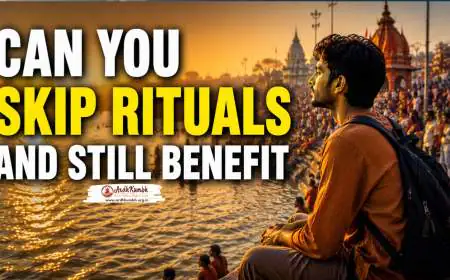

Can Pilgrims Visit Without Taking a Sacred Bath?
Yes, pilgrims can absolutely visit Ardh Kumbh without taking a holy dip. Discover the many other ways to receive blessings and experience the divine gathering.

The Honest Question Nobody Asks Out Loud
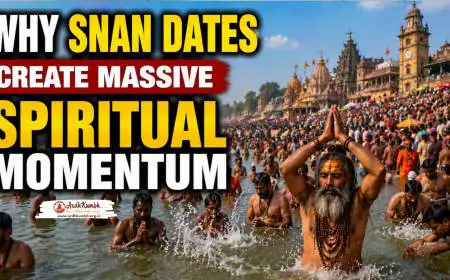
Let me tell you a secret that millions of pilgrims are too embarrassed to admit. They go to the Ardh Kumbh, walk all the way to the river bank, watch others dip and splash and chant – and then they just stand there. They do not take the holy bath. Why? Maybe they are old and the cold water will hurt their joints. Maybe they are sick and their doctor said no. Maybe they have skin problems and the river water will make it worse. Maybe they are menstruating and feel unclean. Maybe they just fear deep water. Maybe they forgot to bring a change of clothes. The reasons are as many as the pilgrims themselves. And here is the truth that no priest will tell you from a podium: Yes. You can absolutely visit the Ardh Kumbh without taking a single dip. Not only is it allowed, but it is also common. Millions of pilgrims every Kumbh cycle never touch the water. They come for the sight of the sadhus. They come for the sound of the bhajans. They come for the feeling of being surrounded by faith. And they leave just as blessed as the ones who dipped fifty times. In this article, I will tell you why the sacred bath is not the only door to the Ardh Kumbh, and how you can have a full, rich, transformative experience without ever wet your skin.
The Sacred Bath Is Important – But It Is Not the Only Thing
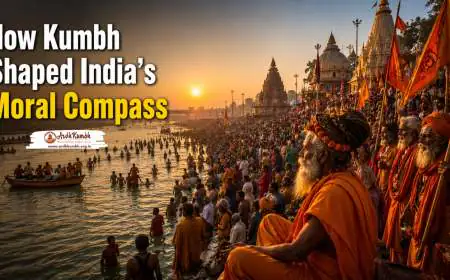
Let me be clear so nobody misunderstands me. The holy dip at the Ardh Kumbh is powerful. It is ancient. It is beautiful. When millions of devotees enter the river at the same auspicious moment, something real happens. The water carries centuries of prayers. The planets align. The energy shifts. I am not dismissing the bath. I am expanding the definition of what counts as a pilgrimage. Think of the Ardh Kumbh as a massive spiritual supermarket. The holy dip is one aisle – a very popular one. But there are other aisles. The darshan of sadhus is another aisle. Listening to spiritual discourses is another. Serving food to hungry pilgrims is another. Just sitting by the river and watching the sunrise is another. You can walk into the supermarket, skip the most crowded aisle, and still leave with a full cart. The Ardh Kumbh does not have a bouncer at the river checking if you dipped. The gods (if you believe in them) do not keep a scorecard of how many times you submerged. What matters is your heart. And your heart can be open whether your body is wet or dry.
Who Are the Pilgrims Who Cannot or Choose Not to Bathe?
Let me introduce you to the silent majority of the Ardh Kumbh. First, the elderly. A eighty-year-old grandmother with arthritis cannot wade into cold water at 4 AM. Her bones would scream. So she sits on the ghat, watches her grandchildren bathe, and tears up with joy. Is she less of a pilgrim? No. She is the heart of the pilgrimage. Second, the sick. People with heart conditions, asthma, epilepsy, or recent surgeries. Their doctors have forbidden cold water immersion. They come anyway – to breathe the air, to see the sadhus, to feel the crowd vibrate with devotion. Third, new mothers with infants. A baby cannot be dipped in cold river water. The mother may choose not to bathe because she is breastfeeding or recovering from childbirth. Fourth, people with skin conditions. Eczema, psoriasis, open wounds – river water (even holy river water) can infect or irritate. Fifth, menstruating women. Traditionally, many Hindu rituals restrict menstruating women from holy baths. Whether you follow that tradition or not, many women choose to abstain out of respect for custom. Sixth, foreign tourists who are uncomfortable with public bathing or unsure about the safety of the water. Seventh, skeptics who came out of curiosity but do not want to pretend to have faith they do not feel. Eighth, accidental pilgrims – those who came for work, family, or logistics and never planned to bathe in the first place. All of these people are valid pilgrims. All of them have every right to be at the Ardh Kumbh. And all of them can receive something real without dunking their heads under water.
What You Gain When You Skip the Bath – And It Might Surprise You
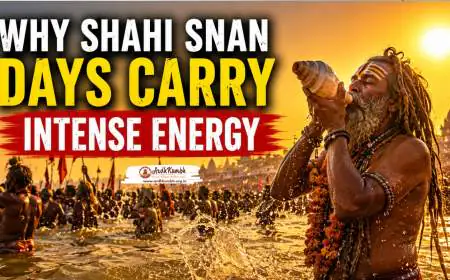
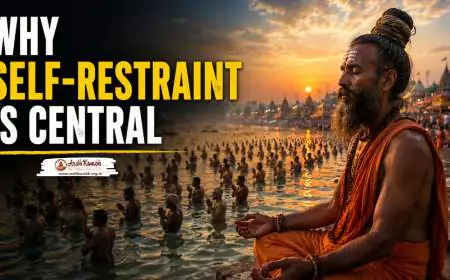
Here is something counterintuitive. When you are not focused on the logistics of bathing – finding a spot, removing your clothes, managing the cold, worrying about losing your slippers – you are free to do something else. Observe. Listen. Feel. The pilgrims who bathe are often distracted. They are in a hurry to get in and get out. They are worried about their belongings. They are cold and uncomfortable. The pilgrim who sits on the ghat and watches – that pilgrim can absorb the entire scene. The chants of thousands of voices rising together. The clanging of bells from temporary temples. The smell of incense, wet wool, sweat, and river mud. The sight of a Naga sadhu with ash smeared from head to toe walking past like time itself. The feeling of the cold wind on your face and the warm cup of chai in your hands. These are blessings too. They are blessings of presence, not action. In spiritual terms, there is a path called sakshi bhava – the witness attitude. You do not do anything. You simply watch. And in that watching, you realize that you are not the body that is bathing or not bathing. You are the awareness that notices everything. That realization can be deeper than any ritual bath. So do not feel like you are missing out if you skip the dip. You may be gaining something that the bathers are too busy to notice.
Trending Guides Now
Are Medical Facilities Adequate for Elderly Pilgrims?
Read Guide →
Can Families Attend Ardh Kumbh Comfortably Together?
Read Guide →
Can Elderly Pilgrims Participate Safely in Kumbh?
Read Guide →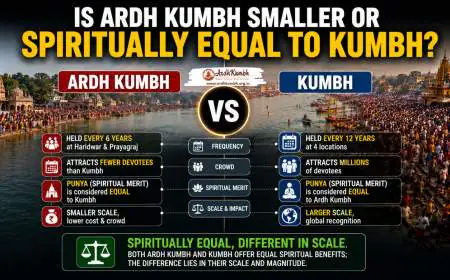
Is Ardh Kumbh Smaller or Spiritually Equal to Kumbh?
Read Guide →
Best Routes to Reach Haridwar for Ardh Kumbh Mela
Read Guide →
Ardh Kumbh 2027 Dates (Official) - Haridwar Snan Schedule
Read Guide →
Why Early Mornings Are Sacred
Read Guide →
How Ardh Kumbh Stayed Relevant Over Centuries
Read Guide →The Elderly Pilgrim – A Case Study in Non-Bathing Blessings
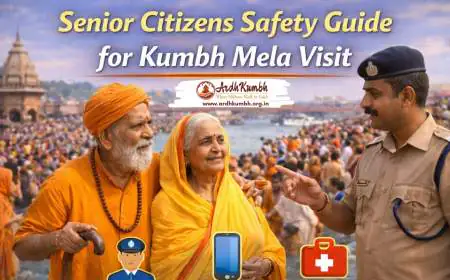
Let me tell you about Kanta Devi. She is seventy-seven years old. She has knee replacements in both legs. She came to the Ardh Kumbh at Haridwar with her son and daughter-in-law. Her family bathed at Har Ki Pauri. She sat on a plastic chair that a volunteer brought for her. She could not walk to the water. She could not bend to touch the river. But she watched. She watched the Naga sadhus march past with their trishuls. She watched young mothers dip their babies and laugh when the babies cried. She watched the Sun rise over the Ganga and turn the water into liquid gold. She told me later, “I did not bathe. But the Ganga bathed me. She entered through my eyes.” That is not poetry. That is real. For Kanta Devi, the Ardh Kumbh was complete without a single drop of water on her skin. And there are millions like her. Elderly pilgrims who come not to perform but to receive. They receive through sight (darshan), through sound (shravan), through smell (gandha), through touch (sparsha) – even if the touch is just the wind from the river. So if you are older or unwell, do not let anyone tell you that you have to risk your health for a dip. Your intention is your dip. Your presence is your bath.
The Sick Pilgrim – When Doctors Say No to the Holy Dip
Let me speak directly to anyone with a medical condition. Heart disease. High blood pressure. Diabetes. Asthma. Epilepsy. Recent surgery. Pregnancy complications. Cancer (especially if you are on chemotherapy or have a weakened immune system). Your doctor has probably told you to avoid cold water immersion, crowds, or dirty water. Listen to your doctor. The gods do not want you to die on the ghat. The gods want you to live and come back again. Ardh Kumbh happens every six years. You can come next time. Or you can come this time and just sit. There is no rule that says you must endanger yourself. I have seen pilgrims on wheelchairs, pilgrims with oxygen cylinders, pilgrims with walking sticks – all of them present, all of them receiving, none of them bathing. They sit under trees. They listen to bhajans on loudspeakers. They eat prasad offered by strangers. They smile at children. They cry when the aarti begins. Their illness does not exclude them. Their immobility does not invalidate them. The Ardh Kumbh is for the sick as much as for the healthy. The holy dip is optional. Your life is not. So be smart. Be safe. And come anyway. The river will see you. Even from a distance.
The Menstruating Pilgrim – Navigating Tradition and Reality
Let me address a sensitive topic. Menstruation. In traditional Hinduism, a menstruating woman is considered ritually impure (ashaucha). She is often excluded from temples, pujas, and holy baths. Many women follow this tradition willingly. They do not bathe in the Ganga during their periods because they believe it is disrespectful. Other women reject this tradition as patriarchal and unscientific. They bathe anyway. Where do you stand? That is your choice. But here is what nobody tells you. You can come to the Ardh Kumbh during your periods, not bathe, and still have a meaningful experience. You can walk through the tent city. You can listen to spiritual discourses. You can volunteer at a food kitchen. You can meditate on the ghat without entering the water. You can watch the aarti from a distance. You can donate to charity. You can help an elderly pilgrim find their way. None of these acts require ritual purity as defined by orthodox tradition. They require heart. And heart is never impure. So whether you choose to bathe or not bathe during your periods, know that the Ardh Kumbh has a place for you. The river does not reject you. The crowd does not judge you (most of them are too busy with their own journey). And you can receive the grace of the place without ever disobeying your tradition or compromising your beliefs.
What Else Can You Do at Ardh Kumbh Instead of Bathing?
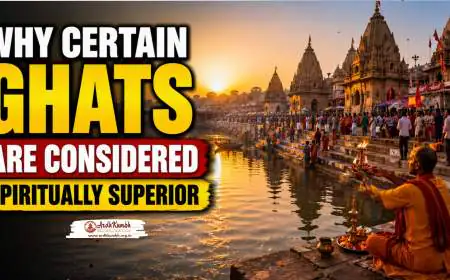
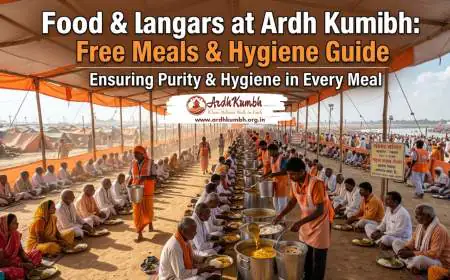
Let me give you a practical list of alternative activities at the Ardh Kumbh that require zero contact with water. First, attend the Ganga Aarti at Har Ki Pauri (Haridwar) or the Sangam Aarti (Prayagraj). The lights, the fire, the chants, the smoke – it is spectacular and deeply moving. Second, visit the akharas (monastic camps). Each akhara has a different flavor. The Naga sadhus camp is wild and intense. The Shri Panch Dashanam Juna Akhara camp is more organized. You can walk through, observe, and if you are lucky, talk to a sadhu who speaks your language. Third, listen to spiritual discourses (pravachan). Many saints and gurus set up stages and speak for hours. You can sit on the ground like everyone else and listen. Fourth, eat at a community kitchen (bhandara). Free food is served to all pilgrims regardless of caste or creed. The food is simple – khichdi, dal, roti, vegetables – but the experience of eating with strangers in a tent is humbling. Fifth, volunteer. Help clean the ghats. Help distribute water. Help direct lost pilgrims. Help an elderly person cross the street. Service (seva) is a powerful spiritual practice – often more powerful than rituals. Sixth, just walk. The Ardh Kumbh is a temporary city. Walk through its lanes. Look at the makeshift shops selling beads, rudraksha, holy ashes, clay pots, sweets, and toys. The chaos is its own meditation. Seventh, sit in silence. Find a quiet corner (they exist, trust me) away from the main ghats. Sit for one hour. Do nothing. Let the sounds and smells wash over you. That silence is gold.
The Philosophy of Darshan – Seeing Is Receiving
Let me introduce you to a beautiful concept in Hinduism: darshan. Darshan means to see and be seen by the divine. You do not need to touch, bathe, chant, or offer. You just need to look. When you look at the Ganga during Ardh Kumbh, the Ganga looks back at you. When you look at a Naga sadhu with reverence, he looks back at you. When you look at the millions of pilgrims moving like a living river, something in you recognizes that you are part of that river. That recognition is darshan. That recognition is blessing. No bath required. In fact, many scriptures say that darshan of a sacred place or a holy person is equal to years of meditation or rituals. Why? Because seeing with awareness is a form of union. The seer and the seen become one. So when you stand at the Sangam and simply gaze at the water – not thinking, not judging, not wanting – you are already in union with the sacred. That is the deepest bath there is. And it leaves your clothes dry.
How to Prepare for a Non-Bathing Pilgrimage
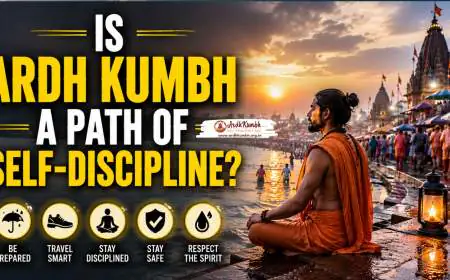
If you have decided to visit the Ardh Kumbh 2027 without taking the sacred bath, here is how to prepare so you get the maximum out of your trip. First, shift your mindset. You are not a second-class pilgrim. You are a different kind of pilgrim. Be proud of your choice. Second, bring comfortable seating. A small folding stool or a thick mat will allow you to sit for hours on the ghat without pain. Third, dress warmly. You will be stationary (not moving and generating body heat). Cold will be your enemy. Layers, woolen socks, gloves, hats – bring them all. Fourth, bring binoculars if you have them. You can watch the Naga sadhus process from a distance without getting jostled by the crowd. Fifth, plan your schedule around peak bathing times (early morning on Shahi Snan days). Those are the best times to watch the spectacle. The energy is highest. The crowd is most dramatic. Sixth, identify elevated spots. Stairs, platforms, temporary viewing stands – these allow you to see without being pushed. Seventh, bring snacks and water. You will be sitting for long periods. Dehydration and hunger will ruin your experience. Eighth, go with a friend. Non-bathing can feel lonely if everyone around you is dipping. A companion who also chooses not to bathe will validate your choice and share the experience.
What Pilgrims Who Bathe Think of Those Who Don’t – And Why It Doesn’t Matter
Let me be honest about human nature. Some pilgrims who take the holy dip will look down on those who do not. They will feel superior. “I did the real thing,” they will think. “They are just tourists.” This happens. I have seen it. But here is what I have also seen. The judgmental bather is often the one who bathed for show – for social media, for family approval, for bragging rights. Their heart was not in the water. Their ego was. The non-bather sitting quietly on the ghat, tears streaming down their face – that person’s heart is wide open. Which one is closer to god? I know the answer. But more importantly, you know the answer. Do not let anyone else’s judgment poison your pilgrimage. Their opinion is a pebble. Your experience is a mountain. The pebble cannot move the mountain. So ignore the judgment. Smile at it. Walk past it. And sit by the river again. The river does not judge you. The river just flows. And so should you.
The Deeper Truth – Bathing Is Internal, Not External
Let me end this article with the deepest truth I know about the Ardh Kumbh. The real bath has never been about water. It has always been about washing something inside. Washing away anger. Washing away greed. Washing away fear. Washing away the feeling that you are separate from everyone and everything else. You can do that washing without touching a single drop of river water. You can do it by sitting still. You can do it by crying without knowing why. You can do it by helping a stranger. You can do it by forgiving someone who hurt you. You can do it by letting go of a grudge you have carried for years. That internal bath is the true purpose of the pilgrimage. The external dip is just a symbol – a powerful one, but still a symbol. The symbol is not the reality. The reality is what happens in your heart when you allow yourself to be touched by something larger than your daily life. So whether you dip or don’t dip, bathe or don’t bathe, chant or don’t chant – if you leave the Ardh Kumbh with a lighter heart and a quieter mind, you have taken the real bath. And that bath is the only one that matters.
Frequently Asked Questions