




























































Is Ardh Kumbh 2027 Comfortable for Elderly Pilgrims?
Find out if Ardh Kumbh 2027 is comfortable for elderly pilgrims. Honest guide on facilities, challenges, tips, and how to make the pilgrimage safe and enjoyable for seniors.

The Honest Answer Your Grandparents Deserve
Let me be brutally honest with you. The Ardh Kumbh is not a luxury resort. It is loud, dusty, crowded, and physically demanding. But here is the truth that nobody tells you: millions of elderly pilgrims attend every Kumbh and Ardh Kumbh. Some are 80 years old. Some are 90. Some are even 100. They come because their faith is stronger than their arthritis. They come because they have been waiting for this six-year window their entire lives. And most of them manage – not easily, but successfully. So is the Ardh Kumbh 2027 comfortable for elderly pilgrims? The answer is both yes and no. No, it is not comfortable in the way a heated car or a soft bed is comfortable. Yes, it can be made comfortable with the right preparation, the right attitude, and the right support. In this article, I will give you the unfiltered truth – the challenges your grandparents will face, the facilities that exist (and the ones that do not), and the practical tips that can turn a difficult pilgrimage into a manageable and even beautiful one. If you are planning to bring an elderly parent or grandparent to the Ardh Kumbh 2027, read every word. Your loved one‘s safety and comfort depend on it.
The Honest Challenges – What Elderly Pilgrims Will Struggle With
Let me name the enemies of elderly comfort at the Ardh Kumbh so you can prepare for them. First, walking. The distances are enormous. From the parking area to your tent can be 2-3 kilometers. From your tent to the bathing ghat can be another 2-3 kilometers. That is 5-6 kilometers of walking every day – on uneven ground, through crowds, in dust and mud. For an elderly person with arthritis or low stamina, this is daunting. Second, cold. The Ardh Kumbh happens in January-February. Morning temperatures at Prayagraj and Haridwar can drop to 5-8 degrees Celsius (40-46°F). Cold is hard on old bodies – joints stiffen, blood pressure rises, breathing becomes difficult. Third, crowds. Millions of people pushing, shoving, and moving. Elderly pilgrims can feel claustrophobic, anxious, or simply terrified of being separated from their family. Fourth, uneven terrain. The ghats are stone steps – often slippery with water and mud. A fall for an elderly person can be devastating – broken hips, head injuries, hospitalization. Fifth, bathroom access. Portable toilets exist, but they are not elderly-friendly. Squatting is hard for old knees. Cleanliness is variable. Distance from tents to toilets can be far. Sixth, sleep. Tent beds are thin mattresses on cots or directly on the ground. Noise continues all night – chants, announcements, footsteps, vehicles. Elderly pilgrims who need quiet and comfort to sleep will struggle. I am not telling you this to scare you. I am telling you this so you can plan. Forewarned is forearmed.
The Good News – What Has Improved for Elderly Pilgrims
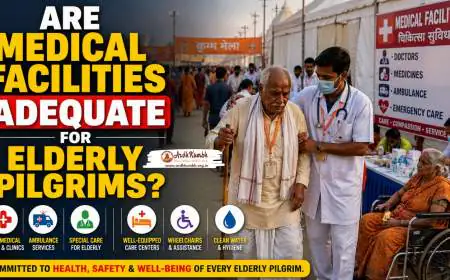
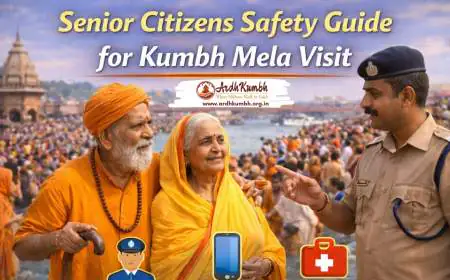
Now let me give you the hope. The Ardh Kumbh 2027 will be more elderly-friendly than any Kumbh in history. The government and organizers have learned from past mistakes. Here is what has improved. Wheelchair ramps are now standard at major ghats. Not everywhere, but at the main bathing points. Electric buggies (golf carts) are available to transport elderly pilgrims from parking areas to tent zones – for a fee, but they exist. Designated elderly queues at bathing ghats – separate from the general crowd – allow seniors to bathe without being crushed. Medical camps are set up specifically for elderly pilgrims, with doctors who understand geriatric issues – blood pressure, diabetes, heart conditions. Lost and found services now use facial recognition and GPS tracking – if an elderly family member gets separated, you can find them faster. Accessible toilets – a few, not many, but they exist – with handrails and seats instead of squat pans. Rest areas with benches and shade along the walking routes – so elderly pilgrims can rest every few hundred meters. Volunteers in bright vests who are trained to help seniors – carry their bags, guide them through crowds, fetch water. These improvements are not perfect. They are not enough. But they are real. And they will make the Ardh Kumbh 2027 significantly more comfortable for elderly pilgrims than the Kumbh of 2013 or 2001. So do not let fear stop you. Just plan well.
Before You Go – Medical and Physical Preparation
Let me talk about preparation – because comfort at the Ardh Kumbh starts months before you leave home. If you are bringing an elderly pilgrim, do these things before 2027. First, doctor visit. Get a full checkup – heart, lungs, joints, blood pressure, diabetes. Ask your doctor specifically: “Can my parent safely walk 2-3 kilometers a day in cold weather? Can they stand in cold water for 5 minutes? What medications should we carry extra of?” Second, build stamina. Start walking now. Daily walks of 30-40 minutes. Increase slowly. The fitter your elderly pilgrim is before the Kumbh, the easier the Kumbh will be. Third, joint preparation. If they have arthritis, start physiotherapy or gentle yoga now. Stronger muscles around joints mean less pain. Fourth, cold adaptation. In the weeks before the trip, have them spend time in cooler temperatures. Cold showers (briefly). Layered clothing at home. The body adapts – but it needs time. Fifth, mental preparation. Talk to your elderly pilgrim honestly about the challenges. Do not sugarcoat. “It will be crowded. It will be cold. You will walk a lot. But we will help you. We will rest often. We will leave early if you are exhausted.” Honesty prevents shock and resentment. Sixth, pack smart. Walking sticks (two are better than one). Knee braces if needed. Compression socks. Warm layers – woolen thermals, fleece jackets, waterproof windbreakers, woolen caps, gloves, thick socks. Medications – double the quantity you think you need, plus copies of prescriptions. First aid kit – bandages, antiseptic, pain relievers, antacids. Preparation is everything. Do not leave it to luck.
Trending Guides Now

Can Families Attend Ardh Kumbh Comfortably Together?
Read Guide →
Can Elderly Pilgrims Participate Safely in Kumbh?
Read Guide →
Is Ardh Kumbh Smaller or Spiritually Equal to Kumbh?
Read Guide →
Can Elderly Pilgrims Avoid Heavy Crowds at Kumbh?
Read Guide →
Best Routes to Reach Haridwar for Ardh Kumbh Mela
Read Guide →
Ardh Kumbh 2027 Dates (Official) - Haridwar Snan Schedule
Read Guide →
How Ardh Kumbh Stayed Relevant Over Centuries
Read Guide →
Why Early Mornings Are Sacred
Read Guide →Choosing the Right Accommodation – Tent vs. Guest House vs. Day Trip
Let me help you with one of the biggest decisions: where will your elderly pilgrim sleep? You have three options. Option one: tent city. The government and private operators set up thousands of tents near the ghats. Pros: Closest to the river (minimum walking). Immersive experience – you feel the Kumbh 24/7. Cons: Noisy (all night). Cold (tents are not well-insulated). Basic facilities (shared toilets, cold water for bathing). Option two: guest house or hotel. Prayagraj and Haridwar have hotels – from budget to luxury. Pros: Warm rooms. Attached bathrooms with hot water. Quiet (relatively). Proper beds. Cons: Far from the ghats (you will need to drive or take buses to the river, then walk). Expensive (prices surge during Kumbh). Booked months in advance. Option three: day trip. Stay in a nearby city (like Kanpur for Prayagraj or Rishikesh for Haridwar) and drive to the Kumbh for few hours each day. Pros: Maximum comfort at night. Control over schedule. Cons: Long drives (1-2 hours each way). Traffic can be terrible. You miss the early morning energy (which is the best part). My recommendation for elderly pilgrims? Tent but with upgrades. Private luxury tents (costlier but worth it) have heater, attached toilet, thicker mattress, and are farther from the noisiest areas. Book these 6-8 months in advance. Do not wait. They sell out.
Navigating the Ghats – How to Bathe Safely Without Risk
The holy dip is the heart of the Ardh Kumbh. But for an elderly pilgrim, a dip can be dangerous – cold water shock, slippery steps, strong currents, crowds pushing. Here is how to do it safely. Do not go on the main Shahi Snan days (the two royal bath dates). The crowds are insane. Even young people get injured. Choose a non-peak day – the day before or after the main bath. The spiritual benefit is still high, but the danger is much lower. Go early – 6 AM instead of 4 AM. The cold is less intense, and the crowds are thinner. Use the designated elderly queue. Look for the signs or ask a volunteer. These queues are gentler and slower. Do not go into deep water. Knee-deep or waist-deep is enough. Just splash the water on your head and shoulders. That counts. Hold the railing or chain that is usually installed at the ghats during Kumbh. Do not let go. Wear non-slip water shoes (available online). Bare feet on slippery stone is a broken hip waiting to happen. Have a younger family member in the water with you – holding your arm or waist. Never go alone. After the dip, dry immediately with a large towel and put on warm clothes. Cold + wet = hypothermia risk for elderly. Walk slowly back to your tent or rest area. Do not rush. Celebrate. You did it. You took the holy dip safely.
What If Bathing Is Not Possible – Comfortable Alternatives
Here is something liberating. Your elderly pilgrim does not have to bathe at all. Remember this. Millions of elderly pilgrims attend the Ardh Kumbh and never enter the water. They come for the darshan (seeing) – the sadhus, the aarti, the crowd, the energy. They come to sit by the river and feel the blessings. They come to meet family and share meals. The bath is optional. If your elderly pilgrim has heart problems, diabetes, severe arthritis, or mobility issues – skip the bath. There is no shame. There is no spiritual penalty. The gods understand. Instead, do this: Sit on a chair (bring a folding chair) at a safe distance from the water. Watch others bathe. Listen to the chants. Feel the wind from the river. Receive prasad from strangers. Cry if you feel like it. Laugh if you feel like it. That experience is real. That experience is enough. Many elderly pilgrims who skip the dip leave feeling more at peace than those who forced themselves into cold water and suffered for days afterward. So listen to your loved one‘s body. If the body says “no,” the spirit says “yes” to wisdom. Honor that.
Food, Water, Sleep, and Toilets – The Four Pillars of Elderly Comfort
Let me break down the four daily needs that make or break an elderly pilgrim‘s comfort. Food. Elderly stomachs are sensitive. Avoid street food – it is delicious but risky (diarrhea is dangerous for seniors – dehydration hits fast). Eat at bhandaras (community kitchens) – the food is simple (rice, dal, vegetables, roti), hygienic, and easy to digest. Bring snacks from home – nuts, dry fruits, crackers, energy bars. Water. Dehydration is a silent killer for elderly in cold weather (you do not feel thirsty). Force your loved one to drink warm water (carry a thermos) every hour. Bottled water only – no tap water, no filtered water from unknown sources. Sleep. Elderly pilgrims need 7-8 hours of sleep – but the Kumbh is loud. Bring earplugs (the foam kind). Bring an eye mask. Request a tent away from loudspeakers (tell the organizer you have an elderly pilgrim). Toilets. This is the hardest one. Elderly pilgrims often need to urinate frequently. Carry a portable urinal (available at medical supply stores) for nighttime. For daytime, locate the accessible toilets (with handrails and seats) as soon as you arrive. Mark them on a map. Do not wait until urgent. Go every 2 hours whether you feel it or not. Better safe than desperate. These four pillars – food, water, sleep, toilets – are boring but essential. Get them right, and your elderly pilgrim will be comfortable. Get them wrong, and the Kumbh will be misery.
Emergency Planning – What to Do If Things Go Wrong
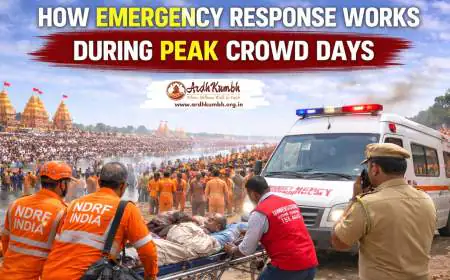
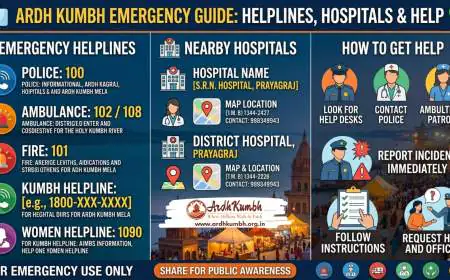
Let me talk about the unthinkable. What if your elderly pilgrim falls? What if they have a heart attack? What if they get lost? Plan for emergencies before they happen. Step one: Save emergency numbers. Kumbh Mela control room number. Nearest hospital number. Your tent operator number. Write them on a piece of paper and put it in your elderly pilgrim‘s pocket (in case their phone dies). Step two: Identify medical camps. When you arrive, walk to the nearest medical camp. Introduce yourself. Ask where the nearest ambulance is. Know the route. Step three: GPS tracker. Buy a small GPS tracker (like an AirTag or Tile) and put it in your elderly pilgrim‘s bag or pocket. If they get lost in the crowd, you can find them. Step four: Meeting point. Choose a landmark (a specific tree, a statue, a particular tent) and say, “If we get separated, come here and wait. Do not move.” Step five: Medical summary. Write a one-page document – your elderly pilgrim‘s name, age, blood type, allergies, medications, conditions, emergency contacts, insurance info. Keep copies – one in their pocket, one in your wallet, one at the tent. Step six: Travel insurance. Buy medical travel insurance that covers emergency evacuation. Heart attacks at the Kumbh need helicopter or special ambulance to a city hospital. That costs lakhs (tens of thousands of rupees). Insurance costs thousands (tens of dollars). Buy it. Emergency planning is not paranoia. It is love. Do it for your elderly pilgrim.
Real Stories – Elderly Pilgrims Who Made It Happen
Let me end the content section with stories that will warm your heart. Story one: Lakshmi Amma, 82 years old from Kerala. Arthritis. Knee replacement. She came to the Ardh Kumbh at Prayagraj with her son and daughter-in-law. She could not walk more than 100 meters without pain. So her son carried her on his back – from the tent to the ghat, one kilometer each way. She bathed sitting on a plastic chair in knee-deep water. She cried – not from pain, but from joy. “I have waited for this bath for thirty years,” she said. “Carrying me was my son‘s pilgrimage. The bath was mine.” Story two: Harishchandraji, 76 years old from Rajasthan. Diabetes. Heart condition. His doctor said “no” to the dip. So he sat on the ghat every morning for five days. He watched the Sun rise over the Sangam. He listened to the Naga sadhus chant. He ate khichdi from the bhandara. He slept in a tent with his grandson. When he returned home, his blood sugar was lower than it had been in years. His cardiologist was shocked. “The peace did it,” Harishchandraji said. “Not the dip. The peace.” Story three: Pushpa Mami, 79 years old, blind and hard of hearing. She came to Haridwar with her daughter. She could not see the Ganga. She could barely hear the aarti. But she felt the vibrations of the drums in her chest. She felt the cold water on her feet when her daughter helped her wade in ankle-deep. She felt the hands of strangers helping her sit on a rock. “I did not need to see,” she said. “I felt Ganga in my bones.” These stories prove one thing: Age is not the limit. Preparation, love, and willingness are what matter. Your elderly pilgrim can do it too. Just plan. Just help. Just be there.
The Final Word – Yes, But Only With the Right Support
So, is the Ardh Kumbh 2027 comfortable for elderly pilgrims? Yes – if you prepare properly. Yes – if you manage expectations (it will not be a spa). Yes – if you invest in good accommodation, medical preparation, and emergency planning. Yes – if you are willing to help your loved one with walking, bathing, toilets, and sleep. No – if you assume it will be easy. No – if you ignore the challenges. No – if you refuse to spend money on luxury tents or electric buggies or travel insurance. The Ardh Kumbh is hard on young bodies. It is harder on old bodies. But hard does not mean impossible. Millions of elderly pilgrims prove that every six years. They walk slowly. They rest often. They help each other. They laugh at the dust. They cry at the river. They return home with sore knees and full hearts. Your grandparents can be among them. 2027 is coming. Start preparing now. And when you stand with your elderly pilgrim at the Sangam, watching the Sun rise over the holy water, you will know – every effort was worth it.
Frequently Asked Questions