























































How Saints Pass Knowledge During Kumbh
Discover the secret methods saints use to transmit ancient spiritual knowledge during Kumbh Mela – through silence, stories, initiation, and living example.

The Invisible University Hidden in Plain Sight
Let me tell you about a university with no buildings, no fees, no admission forms, no graduation ceremonies, and no degrees. Yet it has operated for thousands of years and has graduated some of the greatest saints, yogis, and spiritual masters the world has ever seen. This university is called the Kumbh Mela. Every six years at the Ardh Kumbh, and every twelve years at the full Kumbh, saints from every corner of India – and sometimes beyond – gather not just to bathe, but to teach. And teach they do. But their teaching looks nothing like a classroom lecture. There are no whiteboards, no PowerPoint slides, no multiple choice exams. Instead, knowledge flows like the Ganga itself – silently, continuously, powerfully, and through channels that modern education has forgotten. Sadhus (saints) pass knowledge through stories told around campfires, through silence that screams louder than words, through initiations that rewire the nervous system, through living example that shames any lecture, and through debates that sharpen the mind like a sword. In this article, I will take you inside this invisible university. I will show you how the saints of the Ardh Kumbh ensure that ancient wisdom does not die but is passed – intact, alive, and burning – from generation to generation. You will never look at a sadhu the same way again.
The Guru-Shishya Parampara – The Oldest School on Earth
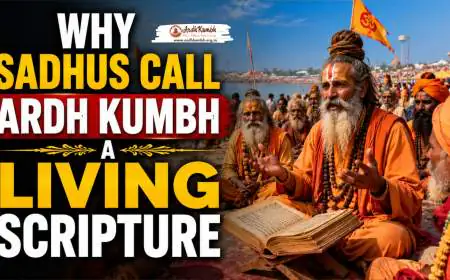
Let me start with the backbone of all knowledge transmission in Sanatan Dharma – the guru-shishya parampara (teacher-disciple tradition). This is not a classroom where the teacher talks and students take notes. This is a living relationship – often decades long – where the disciple lives with the guru, serves the guru, observes the guru at all times, and absorbs knowledge not just through words, but through osmosis. The Ardh Kumbh is the reunion of thousands of guru-shishya pairs. A young sadhu who has been living with his guru in a remote ashram for years comes to the Kumbh and introduces his guru to his guru’s guru (the param guru). Three generations of knowledge sit together under a tree. The young disciple watches how his guru behaves in the presence of his own teacher. He notices the humility, the attentiveness, the love. He learns more in that one hour of watching than in months of formal instruction. This is knowledge transmission by relationship, not by curriculum. And it happens thousands of times at every Kumbh. The guru-shishya parampara is fragile – it can break if the guru and disciple are separated for too long. The Kumbh repairs and strengthens this fragile chain by forcing gurus and disciples to meet, to travel together, to camp together, to bathe together, to eat together, and to remember why they chose each other. That meeting is knowledge transmission at its deepest.
Silent Transmission – When Words Are Useless
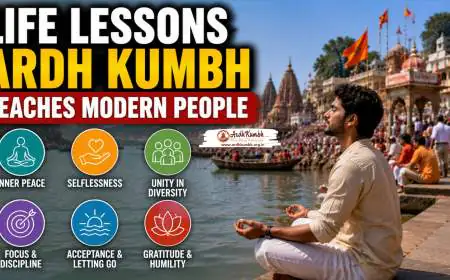
Let me introduce you to the most powerful and least understood method of knowledge transmission at the Kumbh: silence. Many saints take vows of silence (mauna). They do not speak a single word for years, sometimes for decades. How do they teach? Through presence. A silent saint sits on a platform at the Kumbh. Disciples sit at his feet. He does not speak. He does not gesture. He simply sits – still, calm, radiating a peace that is palpable. The disciples meditate in his presence. Their minds slow down. Their breathing deepens. They feel what inner stillness feels like – not by description, but by direct experience. That experience is the teaching. The silent saint has transmitted awareness without saying a single syllable. This is impossible to replicate in a book or video. You have to be there. You have to sit in the field of the saint‘s energy. The Ardh Kumbh brings thousands of such silent saints to one place. Their collective silence creates an atmosphere of stillness that affects every pilgrim who walks through the camps. You may not even notice it. But you feel it. Your shoulders drop. Your jaw unclenches. Your breath slows. That feeling is knowledge. It is the knowledge that peace is possible. And you received it from saints who never said a word.
Storytelling – The Eternal Campfire Tradition
Now let me talk about storytelling – the oldest form of education known to humanity. Before books, before schools, before internet, there were stories. Stories told around campfires at night. The Ardh Kumbh revives this ancient tradition every evening. After the aarti, after the bathing, the sadhus gather in their camps. A fire is lit (or a lantern hung). The younger sadhus sit in a circle. The old saint – often 80 or 90 years old – begins to speak. He does not lecture about philosophy. He tells stories. Stories of his guru. Stories of miracles he witnessed. Stories of foolish disciples who made mistakes (and what they learned). Stories of gods and demons, of kings and beggars, of love and loss, of death and liberation. The young sadhus listen – not with notebooks, but with open hearts. The stories enter their bones. They will remember these stories for decades. They will tell them to their own disciples at future Kumbhs. This is knowledge transmission through narrative. Neuroscience now confirms what saints have always known: stories activate more parts of the brain than facts. Stories are remembered longer. Stories change behavior more effectively. The Ardh Kumbh is a storytelling festival disguised as a religious gathering. Every story told under the stars is a seed planted in a young sadhu‘s soul. That seed will grow for years. And at the next Kumbh, it will flower into new stories for the next generation.
Trending Guides Now

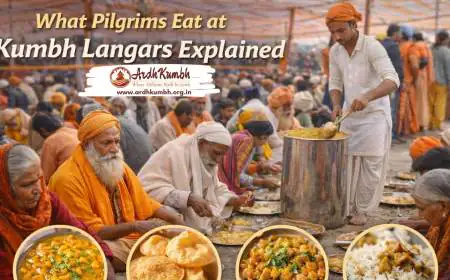
Who Are Naga Sadhus and Why They Lead Kumbh
Read Guide →
Biggest Crowds Ever Recorded at Ardh Kumbh
Read Guide →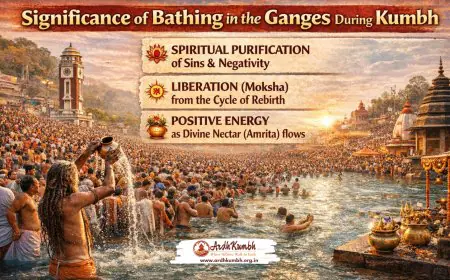
Significance of Bathing in the Ganges During Kumbh Mela Explained
Read Guide →
What Is the Story Behind the Ardh Kumbh Mela?
Read Guide →
Best Routes to Reach Haridwar for Ardh Kumbh Mela
Read Guide →
Ardh Kumbh 2027 Dates (Official) - Haridwar Snan Schedule
Read Guide →
How Ardh Kumbh Stayed Relevant Over Centuries
Read Guide →
Why Early Mornings Are Sacred
Read Guide →Initiation (Diksha) – The Rewiring of the Soul
Let me take you to the most sacred and hidden method of knowledge transmission at the Kumbh: initiation (diksha). Initiation is not teaching in the normal sense. It is not the transfer of information. It is the transfer of spiritual energy (shaktipat) from guru to disciple. It is a ritual – sometimes simple (a whispered mantra in the ear), sometimes elaborate (a fire ceremony with offerings). But the essence is always the same: the guru touches the disciple‘s forehead (or heart, or third eye) and awakens something that was sleeping. The disciple may shake, cry, laugh, or faint. They may see lights, hear sounds, or feel a rush of energy through their spine. After initiation, they are changed. They now have a direct experience of something beyond the mind. That experience is the knowledge. The guru has transmitted it – not through words, but through energy. The Ardh Kumbh is the prime time for initiation. Gurus from all over India come to the Kumbh specifically to initiate new disciples. Seekers come from far away hoping to find a guru who will initiate them. The energy of the Kumbh – the planetary alignment, the millions of devotees, the presence of thousands of enlightened beings – makes initiation more powerful at the Kumbh than at ordinary times. A mantra whispered at the Sangam during Ardh Kumbh is said to be hundreds of times more potent than the same mantra whispered in a room in Mumbai or New York. This is not superstition. This is energy geography. And the saints understand it deeply.
Living Example – The Guru Who Never Lectures
Here is a method of knowledge transmission that anyone can understand – but few can practice. Living example. The saint does not tell you to be compassionate. He shows you. You watch him feed a stray dog before he eats his own food. You watch him give his blanket to a shivering pilgrim on a cold night. You watch him smile at a child who has spilled chai on his only robe. You watch him meditate for hours without moving – and you realize that self-control is possible. You watch him greet a rival saint with respect – and you realize that ego can be conquered. This teaching – by living example – is irresistible. You cannot argue with it. You cannot dismiss it. You can only absorb it or feel ashamed. The Ardh Kumbh is a stage where thousands of saints are performing their lives – not for applause, but for imitation. The young sadhu who lives in his guru‘s camp for the duration of the Kumbh watches his guru every waking moment. How does the guru wake up? How does he wash? How does he eat? How does he talk to strangers? How does he handle criticism? How does he react when someone steals from him? The young sadhu absorbs all of this. Years later, when the young sadhu becomes a guru himself, he will remember not the lectures he heard, but the life he witnessed. That memory will guide his own behavior. That is knowledge transmission at its purest. And it happens thousands of times at every Kumbh.
Debate and Dialectic – Sharpening Wisdom Through Conflict
Let me now talk about a method that is loud, energetic, and surprising to those who think saints are always quiet and peaceful. Debate (shastrartha). At the Ardh Kumbh, saints from different philosophical schools – Advaita Vedanta, Dvaita Vedanta, Yoga, Nyaya, Mimamsa, Tantra – gather in tents and debate each other. Aggressively. Loudly. Passionately. They shout. They gesticulate. They quote scripture from memory. They insult each other’s logic (politely, but insult nonetheless). The audience – disciples and pilgrims – watches and learns. What do they learn? They learn that truth is not fragile. Truth can defend itself. They learn that different perspectives can coexist – and conflict can be respectful. They learn logic. They learn scripture. They learn public speaking. They learn how to think, not just what to think. The debate tradition at the Kumbh is ancient – as old as the Kumbh itself. It keeps Sanatan Dharma from stagnating. It forces saints to sharpen their arguments and examine their assumptions. And for the young disciple watching from the back of the tent, it is a masterclass in philosophical combat. He will remember the arguments he heard. He will rehearse them in his mind. He will use them years later when he is the one debating at the Kumbh. That is knowledge transmission through conflict – not violence, but intellectual sparring. And it is beautiful to witness.
The Passing of Mantras – The Sacred Whisper
Let me talk about mantras. Mantras are sound vibrations – specific syllables in Sanskrit that have specific effects on the mind and body when chanted correctly. A mantra is not a sentence with meaning. It is a tool. Like a scalpel in a surgeon‘s hand – dangerous if used incorrectly, life-saving if used correctly. Mantras are passed from guru to disciple – orally, secretly, personally. You cannot learn a mantra from a book or website. You must receive it directly from a qualified guru – usually whispered into your right ear (or left, depending on the tradition). The Ardh Kumbh is a marketplace of mantras. Gurus who have rare mantras – some thousands of years old – come to the Kumbh to find deserving disciples and pass the mantras on. Seekers come from far away hoping to receive a mantra that will transform their lives. The exchange is not monetary. The disciple must prove their sincerity, their discipline, their devotion. They may serve the guru for days or weeks at the Kumbh before the guru agrees to give the mantra. Then, one morning, in private, the guru whispers the mantra. The disciple repeats it back to ensure correct pronunciation. And then the disciple is bound to secrecy. They will never tell anyone the mantra – not their spouse, not their best friend, not their own disciples (until those disciples are ready). This oral, secret, personal transmission of mantras ensures that the power of the mantra is not diluted. The Ardh Kumbh is the backup for this fragile system. If a guru dies without passing his mantras, the mantras can be lost forever. So the guru comes to the Kumbh to find a disciple while he is still alive. That urgency is real. And it has preserved mantras for millennia.
The Role of Seva – Learning by Serving
Let me end the content section with a method that is open to everyone – not just disciples, but ordinary pilgrims too. Seva (selfless service). At the Ardh Kumbh, saints and their disciples run community kitchens (bhandaras), medical camps, lost-and-found booths, and water distribution points. They serve food to thousands of hungry pilgrims. They wash the feet of elderly visitors. They clean the toilets (yes, even saints clean toilets at the Kumbh). A young disciple who volunteers at his guru‘s bhandara learns lessons that no lecture can teach. He learns humility – when he serves food to a beggar and the beggar spits on the food and demands more. He learns patience – when the line for food is endless and his arms are aching. He learns equality – when he serves the same khichdi to a millionaire and a leper. He learns detachment – when the food runs out and hungry people shout at him, and he cannot get angry because he is representing his guru. This learning by serving is central to the saint‘s training. And the Ardh Kumbh is the greatest seva opportunity on Earth. Millions of pilgrims need food, water, shelter, medical care, and direction. The saints and their disciples provide it. In providing, they learn. That learning is knowledge transmission – not from book to brain, but from heart to heart, through action. It is the most practical and most transformative method of all.
Why the Ardh Kumbh Is Irreplaceable for Knowledge Transmission
You might ask, “Can’t knowledge be transmitted through books, videos, online courses, and Zoom calls?” No. Not this kind of knowledge. The knowledge that saints pass at the Kumbh is embodied. It is experiential. It is energetic. It is relational. It requires physical presence. It requires silence that cannot be recorded. It requires touch (in initiation). It requires smell (of incense, earth, river). It requires sight (of living saints meditating). It requires sound (of mantras chanted correctly). It requires time – weeks of living together, not hours of screen time. The Ardh Kumbh is the only place on Earth where all of these conditions come together at scale. Thousands of saints. Millions of seekers. Ancient methods of transmission that have survived for thousands of years. No institution could design this. No government could fund this. No corporation could monetize this. It exists because faith exists. And faith – when genuine – creates structures that reason cannot replicate. The saints will keep coming to the Kumbh. They will keep teaching through silence, stories, initiation, example, debate, mantra, and seva. And as long as they do, Sanatan Dharma will remain alive – not as a museum piece, but as a living, breathing, evolving, transmitting tradition. The Ardh Kumbh 2027 is coming. The invisible university will open its gates again. Will you enroll?
Frequently Asked Questions