


























































How Ardh Kumbh Helps Preserve Sanatan Dharma
Discover how Ardh Kumbh silently protects and preserves Sanatan Dharma through oral traditions, sadhu networks, ritual continuity, and living transmission of ancient wisdom.
The Living Fortress That No Army Could Destroy
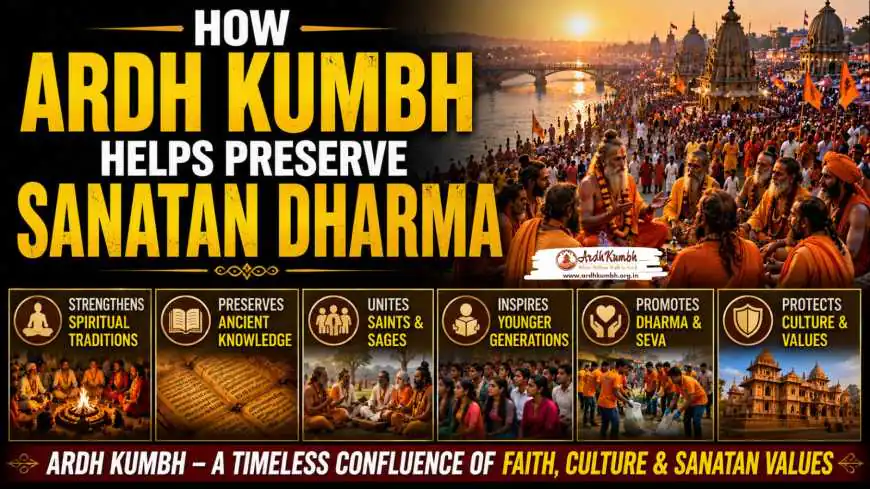
Let me tell you a truth that historians rarely write about. Sanatan Dharma – the eternal way that we now call Hinduism – has survived thousands of years of invasions, persecution, forced conversions, natural disasters, famines, plagues, and colonial oppression. No army could destroy it. No law could erase it. No propaganda could make it disappear. Why? Because Sanatan Dharma is not stored in books alone. It is not locked inside temples alone. It is not taught in schools alone. It is lived in gatherings like the Ardh Kumbh. The Ardh Kumbh is not just a festival. It is a living fortress – a temporary city where traditions are passed from generation to generation, where oral scriptures are chanted aloud for millions to hear, where debates between different schools of philosophy keep the wisdom alive and evolving, where young sadhus learn from old masters not in classrooms but by sitting at their feet in tent camps. The Ardh Kumbh is the immune system of Sanatan Dharma. Every six years, it activates and reminds the civilization of who it is, where it came from, and what it values. In this article, I will show you how this ancient gathering – messy, chaotic, and beautiful – has preserved a faith for millennia and will continue to do so for centuries to come. No hyperbole. Just the quiet miracle of living tradition.
The Oral Tradition – When Memory Beats the Written Word
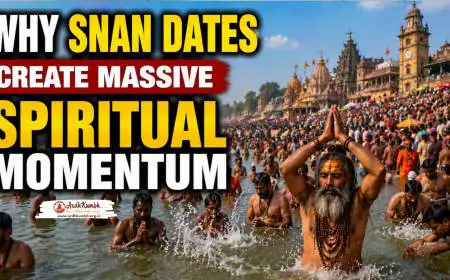
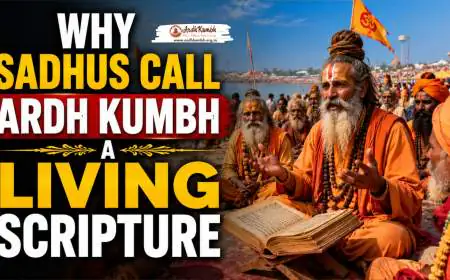
Let me start with something that will shock you. For most of Sanatan Dharma‘s history, the Vedas, Upanishads, Puranas, and mantras were not written. They were memorized and recited aloud – generation after generation. The written word came late. And even today, the purest transmission of scripture is oral – from guru to shishya (teacher to student), mouth to ear, heart to heart. Where does this oral transmission happen most intensely? At Kumbh and Ardh Kumbh. During the Mela, sadhus and scholars gather in camps and recite entire scriptures from memory. Young aspirants listen for hours, days, even weeks. They absorb the rhythm, the pronunciation, the energy of the words. This cannot be replicated by reading a book at home. The Ardh Kumbh turns scripture into performance and performance into living memory. When a Naga sadhu chants a Vedic hymn at the river bank at dawn, he is doing what his guru’s guru did two thousand years ago. The chain is unbroken. The Ardh Kumbh is where that chain is reinforced every six years. Without it, the oral tradition would weaken. The words would fade. But the Kumbh keeps them alive – loud, clear, and vibrating through millions of ears.
The Akhara Network – The Organizational Backbone of Dharma
Let me introduce you to the unsung heroes of Sanatan Dharma‘s survival – the akharas. These are monastic orders of sadhus, many of them warrior monks historically. There are thirteen major akharas today, including the Juna Akhara, Niranjani Akhara, Mahanirvani Akhara, and others. Each akhara has its own lineage, its own philosophical leaning, its own rituals, and its own leader (mahant). And every Kumbh and Ardh Kumbh, all thirteen akharas come together. They camp in designated areas. They process to the river in a fixed order. They discuss matters of Dharma in closed meetings. They settle disputes among sadhus. The akharas are the organizational backbone of Sanatan Dharma – not the government, not the temple committees, not the NGOs. And the Ardh Kumbh is where this backbone is maintained. Without the Kumbh, the akharas would become isolated, weak, and irrelevant. With the Kumbh, they remain a living network – connected, accountable, and powerful. When you see the Naga sadhus marching to the Sangam, you are not watching a parade. You are watching the infrastructure of Sanatan Dharma in motion. That infrastructure has preserved the faith through Muslim invasions, British rule, and modern secularism. And it will continue to do so as long as the Ardh Kumbh continues.
The Transmission of Sadhana – Learning by Living
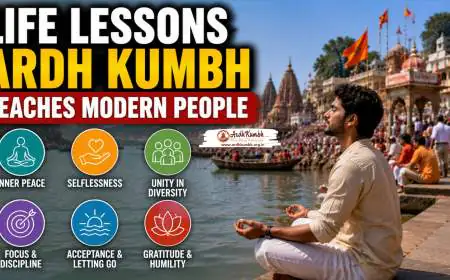
Here is something that textbooks cannot teach. Sanatan Dharma is not a set of beliefs. It is a set of practices – sadhana. Meditation. Yoga. Mantra. Ritual. Seva (service). You cannot learn sadhana from a book. You learn it by watching, doing, and living alongside those who have practiced for decades. The Ardh Kumbh is a living university of sadhana. A young sadhu from a remote village comes to the Kumbh and lives for weeks in the camp of a great master. He watches how the master wakes at 3 AM. He observes how the master breathes. He notices how the master eats (only once a day, in silence). He sees how the master interacts with strangers – with patience, with humor, with no anger. This learning is implicit, not explicit. It is caught, not taught. The Ardh Kumbh creates the conditions for this implicit learning to happen at massive scale. Thousands of young sadhus learn from old masters every Kumbh. Those young sadhus will become masters themselves. They will teach the next generation at the next Kumbh. The chain of sadhana transmission is unbroken because the Ardh Kumbh forces the generations to meet, to share space, to breathe the same dust, and to bathe in the same holy water. That meeting is preservation.
Trending Guides Now

Who Are Naga Sadhus and Why They Lead Kumbh
Read Guide →
Biggest Crowds Ever Recorded at Ardh Kumbh
Read Guide →
Why Haridwar Is Spiritually Central to Ardh Kumbh
Read Guide →
How Ardh Kumbh Evolved Over Centuries of Faith ?
Read Guide →
Best Routes to Reach Haridwar for Ardh Kumbh Mela
Read Guide →
Ardh Kumbh 2027 Dates (Official) - Haridwar Snan Schedule
Read Guide →
How Ardh Kumbh Stayed Relevant Over Centuries
Read Guide →
Why Early Mornings Are Sacred
Read Guide →The Preservation of Regional Diversity
Let me tell you something that will surprise many non-Hindus. Sanatan Dharma is not monolithic. It is not one book, one prophet, one church, one pope. It is thousands of lineages, traditions, deities, festivals, rituals, and philosophies. This diversity is its strength – but also its vulnerability. Without connection, regional traditions can drift apart, forget each other, and lose the sense of a shared Dharma. The Ardh Kumbh solves this problem. At the Kumbh, a Tamil Iyengar priest meets a Kashmiri Shaiva sadhu. A Bengali Shakta devotee sits next to a Gujarati Vaishnava. A Maharashtrian Warkari sings a bhajan that a Punjabi Udasi sadhu has never heard – but loves immediately. They exchange stories, practices, and blessings. They realize that despite their differences, they are family. The Ardh Kumbh is the family reunion of Sanatan Dharma – the one place where all regional traditions come together, see each other, and remember that they belong to the same eternal way. This reunion preserves the diversity by preventing fragmentation. It also preserves the unity by preventing isolation. Without the Kumbh, the regions might drift into separate religions. With the Kumbh, they remain one – diverse, but one.
The Protection of Endangered Rituals and Lineages
Let me break your heart a little. Many rituals and lineages of Sanatan Dharma are endangered. The priests who know the rare Vedic chants are dying without successors. The small temples in remote villages are closing because the next generation has moved to cities. The ancient arts of temple architecture, idol making, and ritual cooking are fading. The Ardh Kumbh is a lifeline for these endangered traditions. At the Mela, rare sadhus come out of hiding. A 100-year-old yogi who lives in a cave in the Himalayas appears at the Kumbh – for two weeks only. Disciples from around the world come to receive his teachings before he dies. A family of traditional Vedic chanters from a tiny village in Kerala sets up a tent and recites for hours. Students from Delhi and Mumbai record them (with permission) and learn from them. These encounters would never happen without the Ardh Kumbh. The Kumbh creates a temporary marketplace where rare spiritual goods – knowledge, lineage, initiation – are exchanged. That marketplace preserves what would otherwise be lost. Every Ardh Kumbh is a rescue mission for endangered traditions – happening silently, beautifully, and effectively.
The Role of Pilgrimage in Keeping Geography Sacred
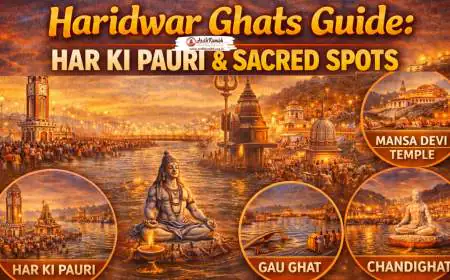
Here is a physical way that the Ardh Kumbh preserves Sanatan Dharma. It keeps the sacred geography of India alive. Sanatan Dharma is not just a set of ideas. It is rooted in specific places – rivers, mountains, confluences, forests, caves, temples. The Ardh Kumbh happens at Prayagraj (Sangam) and Haridwar (Ganga). These are tirthas – crossing points between the material and spiritual worlds. When millions of pilgrims travel to these tirthas every six years, they are doing something radical. They are saying, “These places are not ordinary. They are holy. And we will keep them holy by visiting them, bathing in them, worshipping at them, and telling our children about them.” This collective act of pilgrimage prevents the sacred geography from becoming mere geography. It protects the river banks from being sold to developers. It protects the ghats from being turned into shopping malls. It protects the memory of why these places matter. Without the Ardh Kumbh, the Sangam might still be a river meeting, but it would not be a living tirtha. The Kumbh keeps the tirtha alive – pulsing with faith, sweat, tears, and devotion. That aliveness is preservation of the highest order.
The Debate Tradition – Keeping Philosophy Sharp
Let me talk about something that most outsiders do not know. Sanatan Dharma has a long tradition of debate. Shastrartha – philosophical debate – is a sacred art. Different schools of Hindu philosophy (Vedanta, Yoga, Nyaya, Vaisheshika, Mimamsa, Samkhya) have disagreed with each other for millennia. They have debated the nature of reality, the existence of God, the validity of rituals, and the path to liberation. These debates keep Sanatan Dharma alive and evolving. Where do these debates happen most intensely today? At the Kumbh. During the Ardh Kumbh, camps of different philosophical schools set up stages and invite challengers. A Advaita Vedantin (non-dualist) debates a Dvaita Vedantin (dualist) for hours in front of a crowd of thousands. A devotee of Shiva debates a devotee of Vishnu about who is supreme – not with anger, but with respect, logic, and scriptural citations. The crowd claps, boos, and learns. This is philosophy as entertainment and education. This debate tradition keeps Sanatan Dharma from freezing into dogma. It ensures that questions are always asked. It ensures that answers are always tested. The Ardh Kumbh is the ring where philosophical boxing happens. And as long as the ring exists, Sanatan Dharma will remain sharp, alive, and self-correcting.
The Economic Ecosystem That Supports Dharma
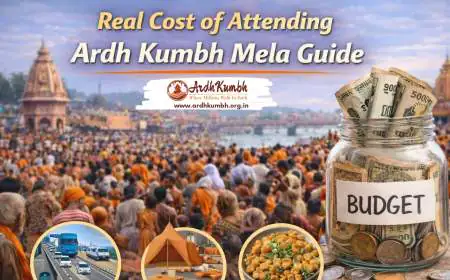
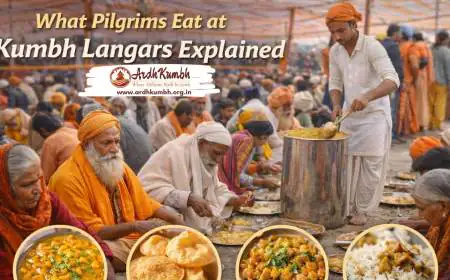
Let me get practical. Sanatan Dharma is not just spiritual. It is also material. Temples need money. Priests need food. Sadhus need donations. Pilgrims need transportation, housing, and food. The Ardh Kumbh creates a massive economic ecosystem that supports the institutions of Dharma. During the Mela, donations flow freely. Wealthy merchants sponsor entire bhandaras (community kitchens). Ordinary people give whatever they can – a few rupees, a blanket, a bag of rice. The akharas collect these donations and distribute them to temples, ashrams, and sadhus across India throughout the year. The Ardh Kumbh is the annual budgeting season for much of Sanatan Dharma‘s religious infrastructure. Without it, many temples would close, many sadhus would starve, and many rituals would stop. The Kumbh is not just a spiritual event. It is an economic lifeline. By concentrating millions of donors in one place at one time, it efficiently transfers resources to the preservers of Dharma. This is smart, ancient, and effective. And it is one of the most overlooked ways that the Ardh Kumbh keeps Sanatan Dharma alive.
The Transmission to the Next Generation – Children of the Kumbh
Let me end the content section with something hopeful. Children. The next generation of Sanatan Dharma. At the Ardh Kumbh, you will see children everywhere. Babies in their mothers‘ arms. Toddlers running through the dust. Teenagers carrying bags for their grandparents. What are these children learning? They are learning that faith is normal. That pilgrimage is normal. That holy rivers are normal. That sitting on the ground, eating with strangers, and waking before dawn for a ritual is normal. This implicit learning is far more powerful than any Sunday school. By the time these children become adults, the Ardh Kumbh will be in their bones. They will crave the dust, the crowds, the chants, the cold water. They will bring their own children. The cycle will continue. The Ardh Kumbh is not just for today or tomorrow. It is for the next hundred years. It is preserving Sanatan Dharma not by storing it in libraries, but by imprinting it on the minds and hearts of the young. That imprint is permanent. That is the deepest preservation of all. And it happens every six years, quietly, beautifully, at the river bank.
Why the Ardh Kumbh Will Keep Dharma Alive for Another Thousand Years
The Ardh Kumbh has already preserved Sanatan Dharma for thousands of years. Through invasions, colonization, modernization, and globalization – the Kumbh has endured. Not because it is powerful in a military sense. But because it is beloved. Millions of people love the Kumbh. They love the chaos. They love the sadhus. They love the chai. They love the feeling of belonging to something larger than themselves. That love is stronger than any army. That love will protect Sanatan Dharma long after the current generation is gone. The Ardh Kumbh will happen in 2027, 2033, 2039, and beyond. Each time, it will remind India and the world that Sanatan Dharma is not a relic. It is a living, breathing, evolving, dancing, crying, laughing, bathing civilization. And as long as the Ganga flows and the Sangam meets, the Kumbh will call its children home. And home is where Dharma lives forever.
Frequently Asked Questions