























































The Inner Discipline Ardh Kumbh Encourages
Discover the powerful inner disciplines that Ardh Kumbh silently teaches – patience, surrender, equality, detachment, and self-control beyond rituals.
The Unseen Teacher Hiding in Plain Sight
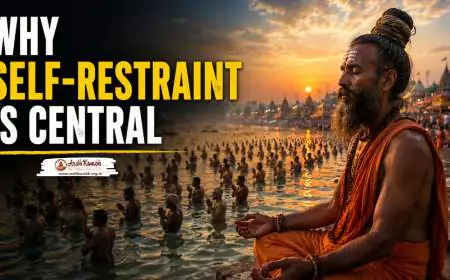
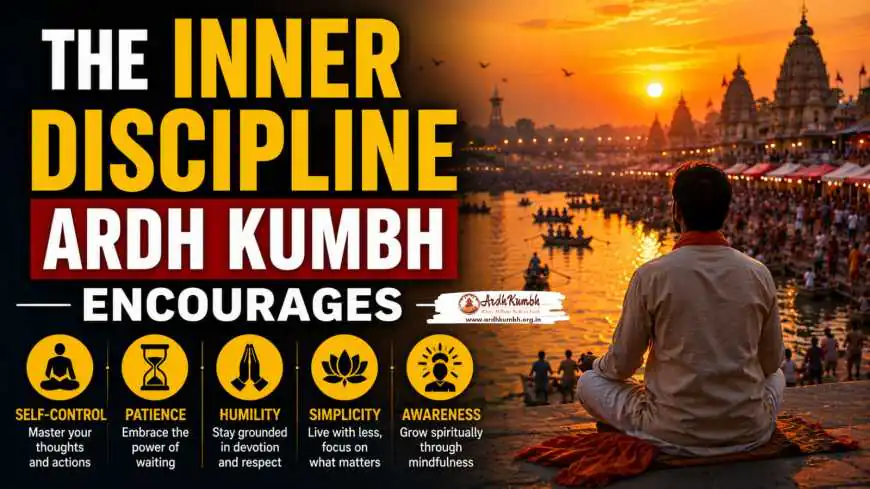
Let me tell you something that no tourist brochure will ever print. The Ardh Kumbh is not just a gathering. It is a school. A university without walls, without fees, without exams, but with the strictest teachers you will ever meet. Those teachers are not sadhus or gurus (though they help). Those teachers are hunger, cold, exhaustion, crowds, dust, noise, long walks, bad sleep, strangers, and your own impatience. The Ardh Kumbh does not hand you a syllabus. It does not give you a degree. But if you pay attention, it will teach you disciplines that no book can teach and no lecture can deliver. Inner disciplines. The kind that change how you live long after you have left the river bank. What are these disciplines? Patience when the line does not move. Surrender when your plan falls apart. Equality when you eat next to a millionaire and a beggar. Detachment when you lose your bag or your way. Self-control when your body screams for rest but your spirit asks you to walk one more mile. In this article, I will not list rituals or scriptures. I will show you how the Ardh Kumbh itself – the place, the people, the chaos – becomes your inner discipline teacher. And once you see that, you will never attend a Kumbh the same way again.
Patience – The First Lesson You Cannot Skip
Let me start with the hardest lesson. Patience. You will need it from the moment you arrive. The train will be late. The bus will be stuck. The taxi will overcharge you. The check-in at your tent will take hours. The line for food will stretch longer than your hunger. The walk to the ghat will take three times longer than you expected. And all of this will happen before you even see the river. The Ardh Kumbh is a machine designed to test your patience. Every single day. Why? Because patience is not a virtue in the abstract. It is a muscle. And muscles grow only when stressed. The Kumbh stresses your patience muscle continuously. You will want to shout at the slow walker in front of you. You will want to push the person who cuts the line. You will want to cry when you realize you have to walk another two kilometers because the road is closed. And in those moments, the Ardh Kumbh whispers to you: “Watch. Do not react. Just watch.” If you can watch your anger rise and fall without acting on it, you have learned patience. Not the fake patience of a meditation cushion, but the real patience of traffic, crowds, and delays. That patience will serve you every day of your life – in traffic jams, in office meetings, in family arguments. The Ardh Kumbh gives you intensive training in patience so that the rest of your life feels easy.
Surrender – When Your Plans Mean Nothing
Here is the second discipline. Surrender. Not the surrender of defeat, but the surrender of control. You will arrive at the Ardh Kumbh with a plan. “I will bathe at 6 AM, then visit the Naga sadhu camp, then eat at this bhandara, then attend the aarti at sunset.” Cute plan. The Ardh Kumbh will destroy it within hours. The bathing ghat will be too crowded at 6 AM, so you will bathe at 9 AM. The Naga sadhu you wanted to see will be meditating and not receiving visitors. The bhandara will have run out of food by the time you get there. The aarti will be so packed that you cannot even see the fire. Your plan is dead. Now what? You can fight reality. You can complain, get angry, blame the organizers, blame the crowd, blame yourself. Or you can surrender. You can say, “Okay. I do not control this place. This place controls me. Let me flow like the river.” When you surrender, you stop pushing against what is. You accept the delay. You accept the missed opportunity. You accept that you will eat cold food at 3 PM instead of hot food at noon. And in that acceptance, something miraculous happens. You relax. Your shoulders drop. Your jaw unclenches. You start noticing things you would have missed if your plan had worked. A child laughing. An old man singing. A stranger offering you chai. That is surrender. The Ardh Kumbh teaches it brutally and beautifully. And once you learn it, you stop fighting your life and start living it.
Equality – Eating Dirt Next to a Millionaire
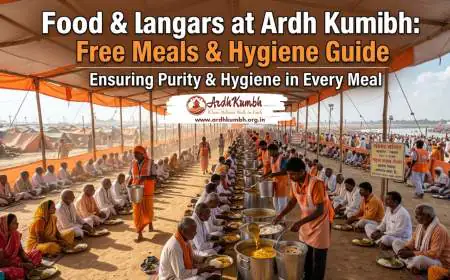
The third discipline is equality. In your regular life, you are separated from others by money, caste, education, job title, neighborhood, and clothes. You eat in different restaurants. You shop in different stores. You live in different neighborhoods. The Ardh Kumbh collapses all of that. Everyone walks on the same dusty roads. Everyone waits in the same long lines. Everyone uses the same portable toilets (and they are equally bad for everyone). Everyone sits on the same cold ground to eat the same khichdi from the same bhandara. The millionaire in cashmere and the beggar in rags stand shoulder to shoulder in the water. The politician and the sweeper sleep on the same cot in the same tent (if they are lucky). This is not socialism. This is spiritual equality. It is the recognition that before the divine, all human labels are meaningless. The Ganga does not ask for your bank statement before she blesses you. The Naga sadhu does not check your caste before he smiles at you. The Ardh Kumbh forces this equality upon you whether you like it or not. You cannot buy a VIP lane to the holy dip (well, some try, but it never works). You cannot escape the shared humanity of the Mela. And if you let it, this lesson will stay with you. You will stop looking down on the person who cleans your office. You will stop looking up to the person with a bigger car. You will see souls, not statuses. That is the discipline of equality. And the Ardh Kumbh teaches it for free.
Trending Guides Now

What Makes Ardh Kumbh Spiritually So Powerful?
Read Guide →
What Ardh Kumbh Symbolizes in Sanatan Dharma
Read Guide →
Can Ardh Kumbh Shape Your Daily Discipline? A Journey That Lasts Longer Than the Dip
Read Guide →
Why Ardh Kumbh Becomes a Turning Point in Life
Read Guide →
Best Routes to Reach Haridwar for Ardh Kumbh Mela
Read Guide →
Ardh Kumbh 2027 Dates (Official) - Haridwar Snan Schedule
Read Guide →
How Ardh Kumbh Stayed Relevant Over Centuries
Read Guide →
Why Early Mornings Are Sacred
Read Guide →Detachment – Losing Everything and Finding Peace
Let me talk about the fourth discipline – the one that scares people the most. Detachment. At the Ardh Kumbh, you will lose things. Your phone will be stolen or dropped. Your wallet will disappear. Your favorite shawl will be left behind on a ghat. Your family will be separated from you in the crowd (they will find you again, but for hours you will be alone). Your carefully packed bag will be soaked by a wave. Your expensive sandals will be taken by someone who needed them more. The Ardh Kumbh is a masterclass in detachment because it forces you to let go of your attachments to things. You will scream when you lose your phone. You will cry when you lose your wallet. And then, slowly, you will realize something. You are still alive. Your heart still beats. The river still flows. The Sun still rises. The things you lost were just things. They were not you. This realization is detachment. Not the detachment of a monk who owns nothing, but the detachment of a householder who knows that possessions are borrowed, not owned. The Ardh Kumbh will teach you this lesson whether you want to learn it or not. You will leave the Mela with less than you brought. But you will also leave with more – more freedom from the tyranny of stuff. That is a discipline that will save you thousands of dollars in therapy and shopping bills.
Self-Control – When Your Body Begs You to Stop
The fifth discipline is self-control. Your body will hate the Ardh Kumbh. Your feet will hurt from walking on uneven ground. Your back will ache from sleeping on a thin mattress. Your stomach will grumble because you ate strange food at a strange time. Your nose will itch from the dust. Your ears will ring from the constant noise. Your eyes will burn from the smoke of incense and diesel. Your body will beg you to stop. To rest. To go home. To never come back to this madness. And here is where the discipline of self-control enters. You will listen to your body – but you will not obey it blindly. You will rest when you must, but you will walk when your body says “no” but your spirit says “one more ghat”. You will eat when you are hungry, but you will not overeat just because the food is free. You will sleep when you are tired, but you will wake at 4 AM for the aarti because your discipline is stronger than your comfort. This is self-control – not self-punishment, but self-mastery. The Ardh Kumbh trains your will like a personal trainer trains your muscles. Every step you take when you want to stop is a rep. Every early morning you endure is a set. By the end of your pilgrimage, your will is stronger than when you arrived. And that stronger will goes home with you. It helps you wake for work. It helps you exercise when you are lazy. It helps you save money when you want to splurge. The Ardh Kumbh gives you a stronger will for free. You just have to earn it with your sweat and discomfort.
Humility – When You Realize You Are a Small Dot
The sixth discipline is humility. In your regular life, you are the center of your universe. Your problems are the biggest problems. Your opinions are the most important opinions. Your schedule is the most sacred schedule. The Ardh Kumbh will cure you of this delusion very quickly. You will stand among millions of people. Each of them has a story. Each of them has suffered. Each of them has hoped. Each of them is praying for something – health, wealth, forgiveness, peace, a child, a job, a miracle. And you are one of them. Not special. Not chosen. Just one. This realization is humbling. It cracks open your ego like a nut. You realize that your problems are not unique. Your pain is not special. Your importance is imaginary. This sounds depressing, but it is actually liberating. When you are not the center, you do not have to carry the weight of the world. You can just be. You can walk with the crowd instead of fighting it. You can flow with the river instead of swimming against it. That humility is not weakness. It is strength. The strongest people are not those who think they are gods. The strongest people are those who know they are dust – and are okay with that. The Ardh Kumbh teaches you to be dust. And dust, unlike ego, can never be hurt.
Gratitude – When You See What Others Do Not Have
The seventh discipline is gratitude. At the Ardh Kumbh, you will see poverty like you have never seen it. Beggars with missing limbs. Children with empty stomachs. Old women with no family to care for them. Sick pilgrims who have walked hundreds of kilometers with open sores on their feet. You will see suffering that your comfortable life has shielded you from. And you will feel two things. First, sadness. Deep, aching sadness for the pain of others. Second, gratitude. A shocking, humbling gratitude for the life you have. The roof over your head. The food in your refrigerator. The shoes on your feet. The health of your body. The love of your family. The Ardh Kumbh holds a mirror to your life and says, “Look. You have so much. And you complain so much.” That mirror is uncomfortable. But if you are brave enough to look, you will leave the Mela with a heart so full of gratitude that you will stop complaining about small things. The traffic will not anger you. The delayed flight will not ruin your day. The broken phone screen will not destroy your peace. Because you have seen what real suffering looks like. And you know, deep in your bones, that your life is a blessing. That gratitude is a discipline – one that the Ardh Kumbh teaches better than any guru or book.
Faith – Not Belief, But Trust in the Process
The eighth discipline is faith. Let me be careful here. I am not talking about religious faith – belief in a particular god or scripture. I am talking about existential faith. The trust that things will work out even when you cannot see how. At the Ardh Kumbh, you will be lost. You will be confused. You will be overwhelmed. You will not know where to go, when to eat, how to find your tent, or if you will ever sleep again. In those moments, you have two choices. Panic or trust. Panic will make everything worse. Trust – the faith that someone will help, that somehow you will find your way, that the crowd will carry you to safety – that trust will calm your nervous system and open your eyes to solutions you could not see when you were panicking. The Ardh Kumbh forces you to develop this faith because panicking is exhausting. After three days of panicking, you will give up and surrender to trust. And then you will notice that strangers help you. Volunteers guide you. Chance encounters lead you to exactly where you need to be. That faith – that trust in the process – is not naive. It is pragmatic. It works. And when you leave the Ardh Kumbh, you take that faith with you. You trust that your job search will work out. You trust that your illness will heal. You trust that your children will be fine. Not because you have evidence, but because you have experience – the experience of surviving the Ardh Kumbh. And if you can survive that, you can survive anything.
How These Disciplines Stay With You Long After You Leave
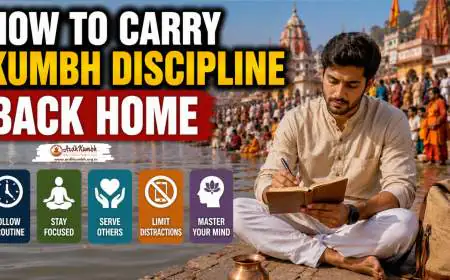
Here is the beautiful secret of the inner disciplines that the Ardh Kumbh teaches. They do not vanish when you leave. They follow you home. The patience you learned in the long line for the dip becomes the patience you have with your boss or your spouse. The surrender you learned when your plan collapsed becomes the surrender you feel when your life takes an unexpected turn. The equality you felt eating khichdi next to a stranger becomes the equality you practice when you respect the janitor at your office. The detachment you learned when you lost your phone becomes the detachment you feel when your car gets scratched or your investment loses value. The self-control you built by walking when your feet hurt becomes the self-control you use to stop eating junk food or quit smoking. The humility you felt standing among millions becomes the humility you carry when you succeed – you do not become arrogant because you remember how small you are. The gratitude you felt seeing suffering becomes the gratitude you feel every morning when you wake up healthy. The faith you developed in the chaos becomes the faith that anchors you in crisis. The Ardh Kumbh is not a vacation. It is a training camp for the soul. You go as a recruit. You leave as a soldier. Not a soldier who fights others, but a soldier who has mastered themselves.
Why You Should Go Even If You Never Bathe
If you have read this far, you now understand something profound. The inner disciplines of the Ardh Kumbh have nothing to do with bathing. They have everything to do with being in a place that challenges your ego, your comfort, and your control. You can receive these disciplines even if you never touch the water. You just need to show up. You need to walk the dusty roads. You need to sleep in the noisy tents. You need to eat the simple food. You need to talk to strangers. You need to get lost. You need to lose things. You need to wait in lines. You need to feel the cold, the heat, the hunger, the exhaustion, the frustration, and the joy. All of it is teaching you. The Ardh Kumbh is not a place you visit. It is a teacher you meet. And like all great teachers, it does not give you answers. It gives you experiences. And from those experiences, you extract your own discipline. So go. Not because you want to bathe. Go because you want to grow. Go because you want to be tested. Go because you want to come back stronger, kinder, calmer, and wiser. The river is waiting. The crowd is waiting. Your inner teacher is waiting. Do not keep it waiting too long.
Frequently Asked Questions