






















































Is Ardh Kumbh About Renunciation or Awareness?
Discover whether Ardh Kumbh is truly about renunciation of the world or the awakening of awareness. A deep dive into the real spiritual purpose.

The Question Nobody Asks but Everyone Should
Let me ask you something that will crack open everything you think you know about the Ardh Kumbh. When you see those Naga sadhus with ash smeared on their bodies, wearing nothing but cold air, having left their homes, their families, their jobs, their money – you think, “Ah, this is about renunciation. Giving up. Leaving everything behind.” Then you see the householder pilgrims – the mother holding her baby, the businessman checking his phone, the teenager taking selfies, the grandmother worried about her lost glasses. They have not renounced anything. They still have homes to return to, jobs to work at, families to feed. And you think, “Ah, maybe the Ardh Kumbh is for everyone – not just renouncers.” But then a deeper question arises. What is the common thread? What is the real purpose that connects the naked sadhu who owns nothing and the banker who owns two cars? Is it renunciation – the act of giving up? Or is it awareness – the act of waking up? The answer will surprise you. Because the Ardh Kumbh is not one or the other. It is both. And neither. And something far deeper. In this article, I will walk you through the spiritual heart of the Kumbh – not the rituals, not the crowds, but the inner transformation that the place offers. And by the end, you will see that renunciation and awareness are not opposites. They are two wings of the same bird. And the Ardh Kumbh is where that bird learns to fly.
The Classic View – Renunciation as the Highest Ideal
Let me start with what most people think. In Sanatan Dharma, renunciation (sannyasa) has always been considered the highest path. The sadhu who leaves his home, shaves his head, wears saffron or ash, and wanders from place to place with nothing but a water pot and a staff – this is the ideal. Why? Because attachment to things, people, and status is the root of suffering. The more you own, the more you have to lose. The more you love, the more you fear loss. The more status you have, the more anxious you are about falling. Renunciation cuts the root. It says, “I own nothing. Therefore, I can lose nothing. Therefore, I am free.” The Ardh Kumbh is full of such renouncers. The Naga sadhus are the most extreme – they have renounced even clothes. The Urdhwavahurs (those who raise themselves upward) have renounced even sitting – they stand for years. The Parivajakas (wandering mendicants) have renounced even a fixed location – they are always moving. For them, the Ardh Kumbh is a reunion of fellow renouncers. They come to share their practices, to debate philosophy, to initiate new renunciates. So if you ask a Naga sadhu, “Is the Ardh Kumbh about renunciation?” he will laugh and say, “Of course. What else could it be?” But he is one type of pilgrim. He is not the only type.
The Hidden Majority – Householders on the Path
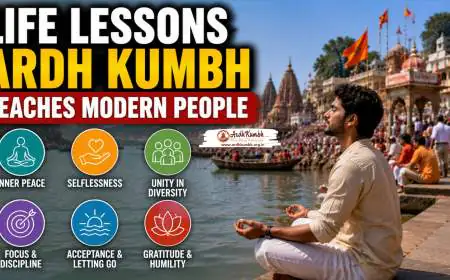
Now let me introduce you to the quiet majority at the Ardh Kumbh. The householders (grihasthas). Men and women who have not renounced their families. They have not left their jobs. They have not given away their money. They still own homes, cars, jewelry, clothes. They still have spouses, children, parents, in-laws. They still have responsibilities – EMIs, school fees, elderly care, office deadlines. They have not renounced anything in the external sense. Yet they come to the Ardh Kumbh by the millions. Why? Are they hypocrites? Are they pretending to be spiritual while still clinging to worldly things? Not at all. They have understood something that the Naga sadhu sometimes forgets. Renunciation is not the only path. Awareness is another. You can live in the world without being attached to it. You can drive a car without identifying with it. You can love your family without clinging to them. You can earn money without being greedy. This is not renunciation of external things. This is renunciation of internal attachment – while keeping the external things. And that internal renunciation is called awareness. The householder pilgrim comes to the Ardh Kumbh not to leave the world, but to see the world more clearly. To step back from the noise of daily life and remember what matters. To reset their awareness so they can go back home and live better. That is valid. That is spiritual. That is not inferior to naked renunciation.
What Renunciation Really Means – It Is Not About Your Clothes
Let me clarify something crucial. Renunciation (tyaga) in Sanatan Dharma is never just about external things. A sadhu who has renounced his home but still craves respect, food, and comfort has not truly renounced anything. He has just exchanged one set of attachments for another. And a householder who owns a house but is not attached to it – who can leave it without suffering – has renounced at a deeper level than the sadhu. The true renunciation is internal. It is the letting go of greed, anger, jealousy, fear, pride, and ignorance. You can let go of these whether you live in a palace or a cave. The Ardh Kumbh is a machine for internal renunciation. When you stand in the cold water at 4 AM, you are renouncing your comfort. When you wait in a long line for the bath, you are renouncing your impatience. When you eat simple khichdi on the ground, you are renouncing your food preferences. When you sleep in a noisy tent, you are renouncing your need for silence. When you see a Naga sadhu with nothing and feel no jealousy, you are renouncing your greed. These small renunciations – repeated over days – train your mind to let go. That training is awareness. Because awareness is the ability to notice your attachments without acting on them. So the Ardh Kumbh is not either renunciation or awareness. It is renunciation that leads to awareness. And awareness that deepens renunciation. They are dancers in the same dance.
Trending Guides Now
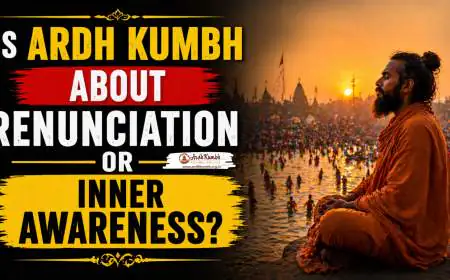
Is Ardh Kumbh About Renunciation or Inner Awareness?
Read Guide →
Why Ardh Kumbh Becomes a Turning Point in Life
Read Guide →
Why Ardh Kumbh Feels Like a Spiritual Reset
Read Guide →
Is Ardh Kumbh Truly a Collective Spiritual Practice?
Read Guide →
Best Routes to Reach Haridwar for Ardh Kumbh Mela
Read Guide →
Ardh Kumbh 2027 Dates (Official) - Haridwar Snan Schedule
Read Guide →
How Ardh Kumbh Stayed Relevant Over Centuries
Read Guide →
Why Early Mornings Are Sacred
Read Guide →Awareness – The Silent Revolution Inside the Crowd
Let me now celebrate awareness as the hidden goal of the Ardh Kumbh. Awareness (prajna, smriti, sati) is the capacity to watch your mind without judging it. To see your anger arise and fall. To notice your fear without running from it. To observe your desire without feeding it. Awareness is the foundation of all spiritual growth. Without awareness, renunciation is just self-punishment. With awareness, even living in the world becomes a spiritual practice. The Ardh Kumbh is an awareness training camp – whether you know it or not. When you walk through the crowd, awareness helps you stay calm instead of panicking. When you bathe in the cold water, awareness helps you feel the sensation without shivering into fear. When you see the Naga sadhus, awareness helps you see beyond the ash and the nakedness to the stillness in their eyes. When you lose your way, awareness helps you pause, breathe, and ask for help instead of crying. Every moment at the Ardh Kumbh is an invitation to awareness. The noise invites you to notice your reaction. The cold invites you to notice your shiver. The crowd invites you to notice your fear. The beauty of the aarti invites you to notice your tears. If you pay attention, the Ardh Kumbh will teach you awareness more effectively than any meditation retreat. Because meditation retreats are quiet. The Ardh Kumbh is chaos. And awareness learned in chaos is real awareness – the kind that works when your boss yells at you or your child gets sick.
The Naga Sadhu – Renunciation Master or Awareness Master?
Let me take you deeper into the mind of a Naga sadhu. Is he a master of renunciation? Yes. He has renounced his home, his family, his clothes, his hair, his comfort, his privacy, his money, his name, his caste, his status – everything. But renunciation alone does not make a Naga sadhu. There are millions of renunciates in India who are still angry, jealous, lazy, and ignorant. What makes a Naga sadhu different is awareness. Years of meditation, yoga, and sadhana have trained his mind to watch itself. He can sit for hours without moving, not because he is suppressing his pain, but because he is aware of the pain without fighting it. He can fast for days, not because he is punishing his body, but because he is aware of hunger without identifying with it. He can walk through the crowd at the Ardh Kumbh with complete calm, not because he is numb, but because his awareness is stronger than the chaos. So the Naga sadhu is not just a renouncer. He is a awareness master who used renunciation as his tool. The renunciation helped him simplify his life so he could focus on awareness. But awareness is the real prize. Renunciation is the vehicle. Awareness is the destination. When you understand this, you stop worshipping the Naga sadhu for his nakedness and start learning from his stillness.
The Householder – Can Awareness Replace Renunciation?
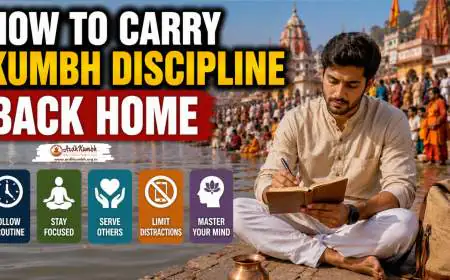
Now let me defend the householder pilgrim. You have not renounced your home or your job. Can you still develop awareness? Absolutely. In fact, householder life is an even harder gym for awareness than renunciation. Why? Because the sadhu has removed most distractions – no spouse to argue with, no children to worry about, no EMI to pay, no boss to please. His life is simple. It is easier to be aware when life is simple. The householder has all the distractions. And awareness in the midst of distractions is advanced awareness. The Ardh Kumbh helps the householder practice awareness in a controlled chaos so they can take it home. When you stand in the cold water at the Sangam and feel the chill without shivering into panic, you are training your awareness. When you watch a Naga sadhu with respect but no jealousy, you are training your awareness. When you eat simple food without complaining, you are training your awareness. Then you go home. Your spouse says something annoying. Your old awareness would have snapped. Your new awareness – trained at the Kumbh – pauses, breathes, and responds kindly. That is transformation. That is spiritual growth. That is the householder‘s path. No renunciation of external things. But deep renunciation of internal reactions. And deep awareness of what is happening inside. So the Ardh Kumbh is for the householder as much as for the sadhu. The sadhu teaches extreme renunciation. The householder teaches extreme awareness within normal life. Both are valid. Both are needed.
The Middle Path – Neither Extreme, Both Essential
Let me offer you a third way. Renunciation without awareness is dead. Awareness without renunciation is weak. The Ardh Kumbh is the marriage of both. You come to the Kumbh and you renounce for a few days. You renounce your comfort. You renounce your schedule. You renounce your privacy. You renounce your food preferences. You renounce your need for silence. This temporary renunciation is doable for householders. And it strengthens your awareness. Because renunciation removes the clutter so awareness can see clearly. Then you go home and you reintegrate – you go back to your comfort, your schedule, your privacy, your preferred food, your quiet. But now you have awareness. You see your attachments clearly. You are less enslaved to them. You can enjoy your comfort without clinging to it. You can follow your schedule without panicking when it breaks. This is the middle path. Not the extreme renunciation of the Naga sadhu. Not the distracted living of the unaware householder. But occasional renunciation fueling continuous awareness. The Ardh Kumbh is perfect for this. It happens every six years. You renounce for a few weeks. You train your awareness. Then you live your life with new eyes. Six years later, you come back for a refresher. This cycle is sustainable. This cycle is practical. This cycle is ancient. And it works.
How the Ardh Kumbh Itself Teaches Both – Without Words
Let me now show you how the Ardh Kumbh – the event itself, the place, the gathering – is a silent teacher of both renunciation and awareness. Lesson one: The cold water. You renounce your warmth. You become aware of your body‘s reaction. Lesson two: The crowd. You renounce your personal space. You become aware of your fear of strangers. Lesson three: The long walk. You renounce your laziness. You become aware of your breath and steps. Lesson four: The lost phone. You renounce your attachment to technology. You become aware of your anger and grief. Lesson five: The Naga sadhu walking past. You renounce your judgment (if you are orthodox) or your disgust (if you are squeamish). You become aware of your prejudices. Lesson six: The aarti at sunset. You renounce your skepticism (for a moment). You become aware of your capacity for wonder. Lesson seven: The elderly pilgrim struggling to walk. You renounce your selfishness. You become aware of your ability to help. The Kumbh does not lecture you. It presents you with situations. Your response to those situations – your choice to renounce a habit and bring awareness – that response is your spiritual practice. The Kumbh is the gym. You are the athlete. The equipment is free. The training is unforgettable.
What the Scriptures Say – Renunciation and Awareness as One
Let me cite (without references, but from memory) what the ancient texts say about this. The Bhagavad Gita – the most practical of scriptures – is clear. Lord Krishna tells Arjuna: “The one who has renounced all attachments and acts in awareness – that one is dear to me.” Notice: Both renunciation and awareness. Not either/or. And then Krishna says something shocking. He says that external renunciation (leaving your home, your family, your job) is not necessary. You can stay in the world but renounce your attachment to results. You can act without clinging. You can live without fearing loss. This is internal renunciation. And this internal renunciation is awareness in action. So according to the Gita, the Ardh Kumbh is not about becoming a sadhu. It is about becoming aware – so that you can renounce your inner enemies (greed, anger, fear) while staying in your outer life. The Naga sadhu has chosen the external path. That is valid for him. But the Gita was spoken to a householder – Arjuna – a warrior, a husband, a father, a prince. Krishna did not tell him to renounce his kingdom. He told him to fight – but with awareness, without attachment to victory or defeat. That is the spirit of the Ardh Kumbh for householders. You go home after the Kumbh and you fight – not wars, but your inner battles – with awareness. That is enough.
The Real Question – What Do You Seek at Ardh Kumbh?
Let me turn the question on you, dear reader. When you think of the Ardh Kumbh 2027, what do you seek? Do you seek to renounce your job and become a sadhu? Probably not. Do you seek to escape your family and live in a cave? Probably not. Do you seek a magic bath that will erase all your sins without you changing anything? That is superstition, not spirituality. The real purpose of the Ardh Kumbh is to kickstart your inner journey. To shake you out of your routine. To confront you with discomfort. To force you to renounce – even temporarily – your comforts. And in that renunciation, to awaken your awareness. So that when you go home, you are a little less attached, a little more present, a little more awake. That is real transformation. That is real spirituality. The Ardh Kumbh is not about renunciation OR awareness. It is about renunciation FOR awareness. The temporary giving up of external things so that the internal light of awareness can burn brighter. So come to the Ardh Kumbh 2027. Renounce a little. Wake up a lot. Leave your sadhu fantasies at home. Bring your willingness to grow. The river is waiting. Your awareness is waiting. Your renunciation – even for a week – will change you. And you will understand – finally – that renunciation and awareness are not opponents. They are lovers. And their meeting is the Ardh Kumbh.
Frequently Asked Questions