Why Pilgrims Carry Almost Nothing at Kumbh
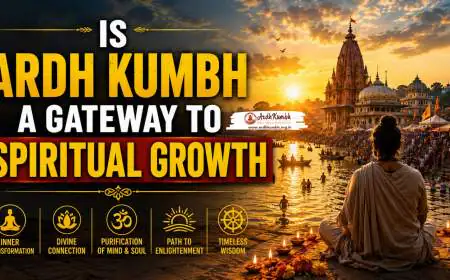
At the Kumbh Mela, one of the most visually striking and philosophically profound aspects of the pilgrimage is how lightly most devotees travel. In an age where travel is often associated with heavy luggage, multiple conveniences, and meticulous planning, the Kumbh presents a radically different approach. Here, pilgrims arrive with almost nothing—sometimes just a cloth bag, a pair of simple garments, and a few essentials. This is not accidental or forced; it is intentional, meaningful, and deeply rooted in spiritual philosophy.
The practice of carrying minimal belongings reflects a powerful intersection of practicality, faith, cultural tradition, and inner discipline. It is a conscious decision that aligns the outer journey with the inner goal of the pilgrimage. By reducing physical baggage, pilgrims also begin to release mental, emotional, and material burdens. This act transforms the Kumbh experience from a physical gathering into a profound lesson in simplicity, detachment, and spiritual clarity.
The Spiritual Foundation of Minimalism at Kumbh
At its core, the Kumbh is not a journey toward a destination but a movement inward. The philosophy that guides this transformation is deeply connected to the concept of detachment—living in the world without being bound by it. Carrying fewer possessions becomes a symbolic and practical expression of this principle.
Material possessions often represent identity, security, and attachment. When pilgrims consciously choose to carry almost nothing, they are making a statement: that their sense of self is not dependent on what they own. This act creates a shift in awareness. Instead of focusing on maintaining and protecting belongings, the mind becomes free to observe, reflect, and engage in spiritual practices.
Minimalism, in this context, is not deprivation. It is liberation. It removes layers of distraction and allows individuals to experience life in its raw, unfiltered form. This clarity becomes the foundation for deeper spiritual insight.
Detachment as a Lived Experience
The concept of detachment is often discussed in philosophical or religious texts, but at Kumbh, it is lived in a tangible way. When a pilgrim chooses to carry only what is absolutely necessary, they are practicing detachment in action.
This detachment operates on multiple levels:
- Physical detachment from material objects
- Emotional detachment from comfort and convenience
- Mental detachment from constant control and planning
By stepping away from excess, pilgrims begin to understand how much of their daily life is shaped by unnecessary attachments. The absence of these attachments creates a sense of lightness—both physically and mentally.
This experience often leads to a powerful realization: that peace does not come from accumulation, but from release.
Practical Realities of the Kumbh Environment
While the spiritual reasons are central, the practical nature of Kumbh also supports minimalism. The environment is dynamic, crowded, and constantly moving. Pilgrims often walk long distances, navigate dense crowds, and stay in temporary accommodations.
Carrying heavy luggage in such conditions becomes not just inconvenient, but impractical. A lighter load allows for:
- Easier mobility through crowded spaces
- Greater flexibility in movement and decision-making
- Reduced physical strain and fatigue
Temporary living arrangements further reinforce this approach. Tents, shared spaces, and open environments do not accommodate large amounts of personal belongings. Pilgrims adapt naturally, bringing only what they can comfortably manage.
This practical necessity aligns perfectly with the spiritual philosophy, creating a seamless integration of purpose and environment.
Trust in Community and Collective Support
One of the most remarkable aspects of Kumbh is the system of collective support that operates through acts of service. Pilgrims are not isolated individuals; they are part of a vast, interconnected community.
Food, water, and basic necessities are often available through voluntary service initiatives. This reduces the need for individuals to carry their own supplies. More importantly, it builds a sense of trust—trust in the community, in the system, and in the journey itself.
This trust allows pilgrims to let go of the need to control every aspect of their experience. Instead of preparing for every possible scenario, they rely on the flow of the event and the support of others. This shift from control to trust is a key aspect of spiritual growth.
Influence of Ascetic Traditions
The presence of saints, ascetics, and renunciates at Kumbh plays a significant role in shaping the behavior of pilgrims. These individuals embody the ideals of simplicity and detachment, often living with almost no possessions.
Their lifestyle serves as a powerful example. It demonstrates that a meaningful and fulfilled life does not require accumulation. Instead, it requires clarity, discipline, and inner focus.
Pilgrims observing these figures often feel inspired to adopt similar practices, even if only temporarily. Carrying less becomes a way to align with these ideals and participate in a shared spiritual culture.
Psychological Freedom Through Simplicity
Modern life is often characterized by complexity—multiple responsibilities, constant communication, and an overwhelming number of choices. This complexity creates mental clutter, leading to stress and distraction.
At Kumbh, minimalism offers a counterbalance. With fewer possessions to manage, the mind experiences a sense of relief. There is less to worry about, less to organize, and less to protect.
This simplicity creates space for:
- Mindfulness and awareness
- Emotional stability
- Deeper engagement with the present moment
The absence of excess allows individuals to reconnect with themselves in a way that is often difficult in daily life.
The Symbolism of Traveling Light
Carrying almost nothing is not just a practical choice—it is a symbolic act. It represents a willingness to let go, to trust, and to embrace the journey without unnecessary baggage.
This symbolism extends beyond physical objects. It encourages pilgrims to reflect on what they are carrying internally:
- Unresolved emotions
- Past regrets
- Future anxieties
Just as they reduce their physical load, they are invited to release these internal burdens. The journey becomes not just a movement through space, but a process of inner cleansing.
Cultural Continuity of Simple Pilgrimage
The tradition of traveling light is deeply embedded in the history of Indian pilgrimage. Long before modern transportation and infrastructure, pilgrims undertook journeys on foot, carrying only what they could manage.
This historical context shaped a culture of simplicity. Over time, it became more than a necessity—it became a value. Even today, when more resources are available, many pilgrims choose to maintain this tradition.
This continuity connects present-day participants with generations of pilgrims who came before them. It reinforces a sense of belonging to a larger spiritual lineage.
Minimalism as Discipline
Choosing to carry less requires discipline. It involves making conscious decisions about what is truly necessary and what can be left behind.
This discipline extends beyond packing. It influences behavior, thought patterns, and interactions. Pilgrims learn to:
- Prioritize essentials
- Adapt to changing परिस्थितियाँ
- Remain calm in uncertainty
This training of the mind is one of the most valuable outcomes of the Kumbh experience. It builds resilience and prepares individuals to handle challenges with greater ease.
Environmental Awareness and Responsibility
In a gathering of millions, the impact of consumption becomes highly visible. Minimalism naturally reduces waste and promotes more sustainable practices.
By carrying less, pilgrims contribute to:
- Reduced environmental strain
- Lower waste generation
- Cleaner surroundings
This awareness aligns with a broader understanding of responsibility—not just toward oneself, but toward the environment and the community.
Redefining Comfort and Necessity
One of the most transformative aspects of traveling light is the redefinition of comfort. In daily life, comfort is often associated with abundance and convenience. At Kumbh, it is redefined as adaptability and acceptance.
Pilgrims discover that:
- Basic needs are sufficient
- Happiness does not depend on luxury
- Peace can exist in simplicity
This shift in perspective has lasting effects, influencing how individuals approach life even after the pilgrimage.
Inner Wealth Over Outer Possessions
The Kumbh experience emphasizes a fundamental truth: that true wealth lies within. External possessions may provide temporary comfort, but they do not guarantee lasting fulfillment.
By carrying almost nothing, pilgrims are encouraged to explore their inner resources:
- Faith
- Patience
- Compassion
- Awareness
These qualities become the foundation of a richer, more meaningful life.
Integration Into Daily Life
The lessons learned at Kumbh do not end with the journey. Many pilgrims carry these insights back into their daily lives, making conscious changes in how they live.
This may include:
- Simplifying their lifestyle
- Reducing unnecessary consumption
- Prioritizing experiences over possessions
These changes reflect a deeper understanding of what truly matters.
A Quiet Transformation Through Lightness
The act of carrying almost nothing at Kumbh may seem simple on the surface, but it holds profound significance. It is a practice that integrates philosophy, practicality, and personal transformation into a single gesture.
In a world that often encourages accumulation, Kumbh offers a different message—one of release, simplicity, and trust. It shows that by letting go of excess, individuals can gain clarity, freedom, and a deeper connection to themselves and the world around them.
The lightness that pilgrims carry is not just physical. It is a reflection of an inner state—one that is unburdened, aware, and open. Through this lightness, the journey becomes not just easier, but more meaningful.
And in that simplicity lies one of the most powerful teachings of Kumbh: that sometimes, the less we carry, the more we truly receive.