























































How Ardh Kumbh Influenced Social Reform
Discover how Ardh Kumbh influenced social reform in India by promoting equality, unity, and cultural transformation through mass participation.
How Ardh Kumbh Influenced Social Reform
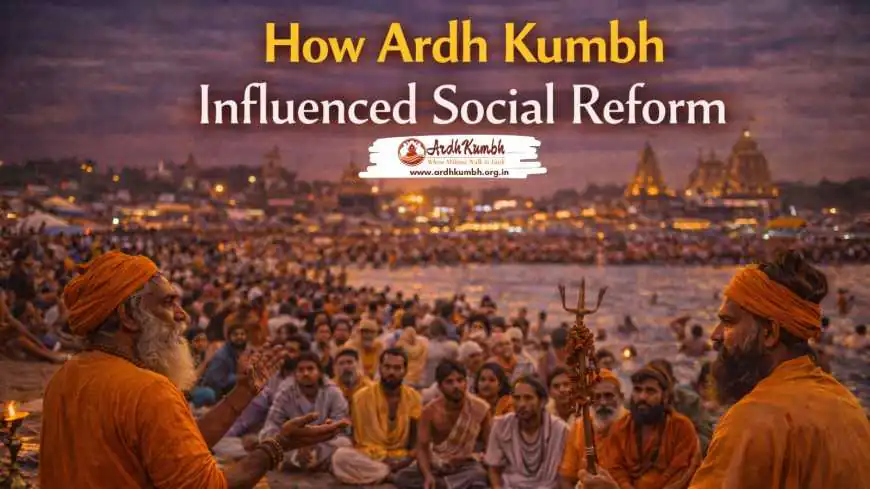
Ardh Kumbh has historically functioned as more than a religious congregation. It has acted as a dynamic social platform where ideas, values, and reformist movements have spread across communities. By bringing together millions from different regions, castes, and economic backgrounds, Ardh Kumbh created a natural environment for social transformation. It enabled the exchange of progressive thoughts, challenged rigid social hierarchies, and reinforced the principles of unity, equality, and shared identity within Indian society.
Understanding Ardh Kumbh Social Reform in Historical Context
The concept of Ardh Kumbh social reform emerges from its role as one of the largest human gatherings in history. Long before modern communication systems, Ardh Kumbh served as a living network where ideas traveled faster than written texts.
Saints, scholars, and reformers used this platform to:
- Address social inequalities
- Promote ethical living
- Encourage unity across communities
Unlike isolated reform movements, Ardh Kumbh allowed ideas to scale instantly, reaching millions in a single event cycle.
Trending Guides Now
What Is the Story Behind the Ardh Kumbh Mela?
Read Guide →
The Untold Stories of Har Ki Pauri
Read Guide →
How Saints and Sadhus Define the Ardh Kumbh Tradition
Read Guide →
Ancient Scriptures That Clearly Explain Ardh Kumbh
Read Guide →
Best Routes to Reach Haridwar for Ardh Kumbh Mela
Read Guide →
Ardh Kumbh 2027 Dates (Official) - Haridwar Snan Schedule
Read Guide →
Why Early Mornings Are Sacred
Read Guide →
How Ardh Kumbh Stayed Relevant Over Centuries
Read Guide →This made it a powerful engine of grassroots social transformation.
Kumbh Mela Social Impact on Caste and Equality
One of the most significant contributions of Kumbh Mela social impact lies in its challenge to rigid caste structures.
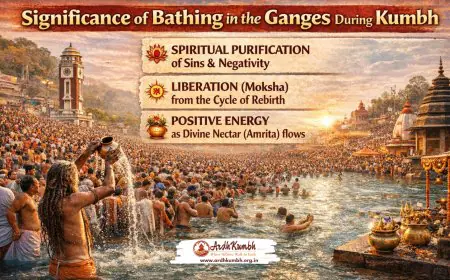
At Ardh Kumbh, the act of taking a holy dip in the same river symbolizes:
- Equality before the divine
- Shared spiritual identity
- Dissolution of social barriers
People from all castes stand shoulder to shoulder, participating in the same rituals.
This collective participation subtly reshapes societal perceptions by reinforcing the idea that:
Spiritual worth is not determined by social hierarchy.
Over time, this has contributed to broader conversations around social equality in Kumbh and beyond.
Role of Saints in Religious Reform India
The presence of saints and spiritual leaders has been central to religious reform India through Ardh Kumbh.
These leaders use the gathering to:
- Deliver discourses on moral values
- Critique social injustices
- Advocate for inclusive practices
Their influence extends far beyond the event, as followers carry these teachings back to their communities.
In many cases, reformist ideas that began as sermons at Ardh Kumbh later evolved into larger movements across India.
Mass Gatherings and Social Change Dynamics
The scale of Ardh Kumbh creates a unique environment for mass gatherings social change.
When millions witness the same message simultaneously, it leads to:
- Faster acceptance of new ideas
- Collective validation of reformist thoughts
- Reduced resistance to change
This phenomenon can be understood as social momentum, where change gains strength through numbers.
The gathering becomes a catalyst where individual awareness transforms into collective action.
Sadhu Influence Society Through Public Discourse
The role of ascetics and spiritual leaders highlights the depth of Sadhu influence society.
At Ardh Kumbh:
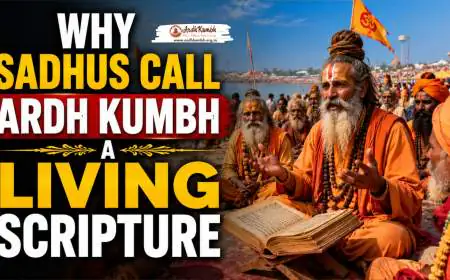
- Sadhus act as educators and guides
- Akharas organize discussions on ethics and dharma
- Public teachings address contemporary issues
These interactions create a bridge between tradition and modernity, ensuring that Sanatan Dharma reform remains relevant to changing times.
Pilgrimage and Social Change Across Regions
The mobility of pilgrims plays a crucial role in spreading reformist ideas.
After attending Ardh Kumbh, participants return to their regions carrying:
- New perspectives
- Updated social attitudes
- Reinforced spiritual values
This creates a ripple effect where pilgrimage and social change become interconnected.
The event acts as a central hub, while society becomes the network through which ideas flow outward.
Women’s Participation and Social Transformation India
Another key dimension of social transformation India through Ardh Kumbh is the active participation of women.
Women engage in:
- Rituals
- Spiritual discussions
- Community activities
Their visible presence in such a large-scale religious event reinforces:
- Gender inclusion
- Spiritual equality
- Social recognition
Over time, this contributes to gradual shifts in societal attitudes toward women’s roles in both religious and public life.
Faith Driven Reform India and Moral Frameworks
Faith driven reform India finds a strong foundation in Ardh Kumbh.
Rather than enforcing change through authority, the event promotes reform through:
- Shared belief systems
- Moral teachings
- Collective experiences
This approach is highly effective because it aligns reform with existing cultural values, making it more acceptable and sustainable.
It ensures that change feels organic rather than imposed.
Cultural Integration and Unity in Diversity Kumbh
India’s diversity finds a powerful expression in unity in diversity Kumbh.
People from different:
- Languages
- Regions
- Traditions
come together under a single spiritual framework.
This interaction fosters:
- Cultural exchange
- Mutual respect
- National integration
Such experiences reduce social fragmentation and strengthen collective identity.
Indian Spiritual Reform History Through Kumbh Platforms
Throughout Indian spiritual reform history, large gatherings like Ardh Kumbh have played a crucial role in shaping societal values.
They have:
- Preserved traditions
- Encouraged adaptation
- Facilitated dialogue between old and new ideas
This balance between continuity and change is what allows Sanatan Dharma to remain dynamic and relevant.
The Psychological Engine Behind Reform
Beyond visible changes, Ardh Kumbh influences reform at a psychological level.
Participants experience:
- A sense of belonging
- Emotional upliftment
- Reinforced belief in shared values
These internal shifts translate into external actions, gradually transforming society.
The event acts as a mirror and a catalyst, reflecting existing issues while inspiring solutions.
A River That Carries More Than Water
If one looks closely, the rivers of Ardh Kumbh do more than flow through geography. They flow through society itself, carrying ideas, dissolving barriers, and reshaping collective consciousness.
Each gathering becomes a turning point where tradition meets transformation, where faith becomes a vehicle for reform, and where millions unknowingly participate in shaping a more inclusive and unified society.
In this vast convergence, change does not arrive as a storm. It moves like a current, steady, persistent, and impossible to ignore.
Frequently Asked Questions